


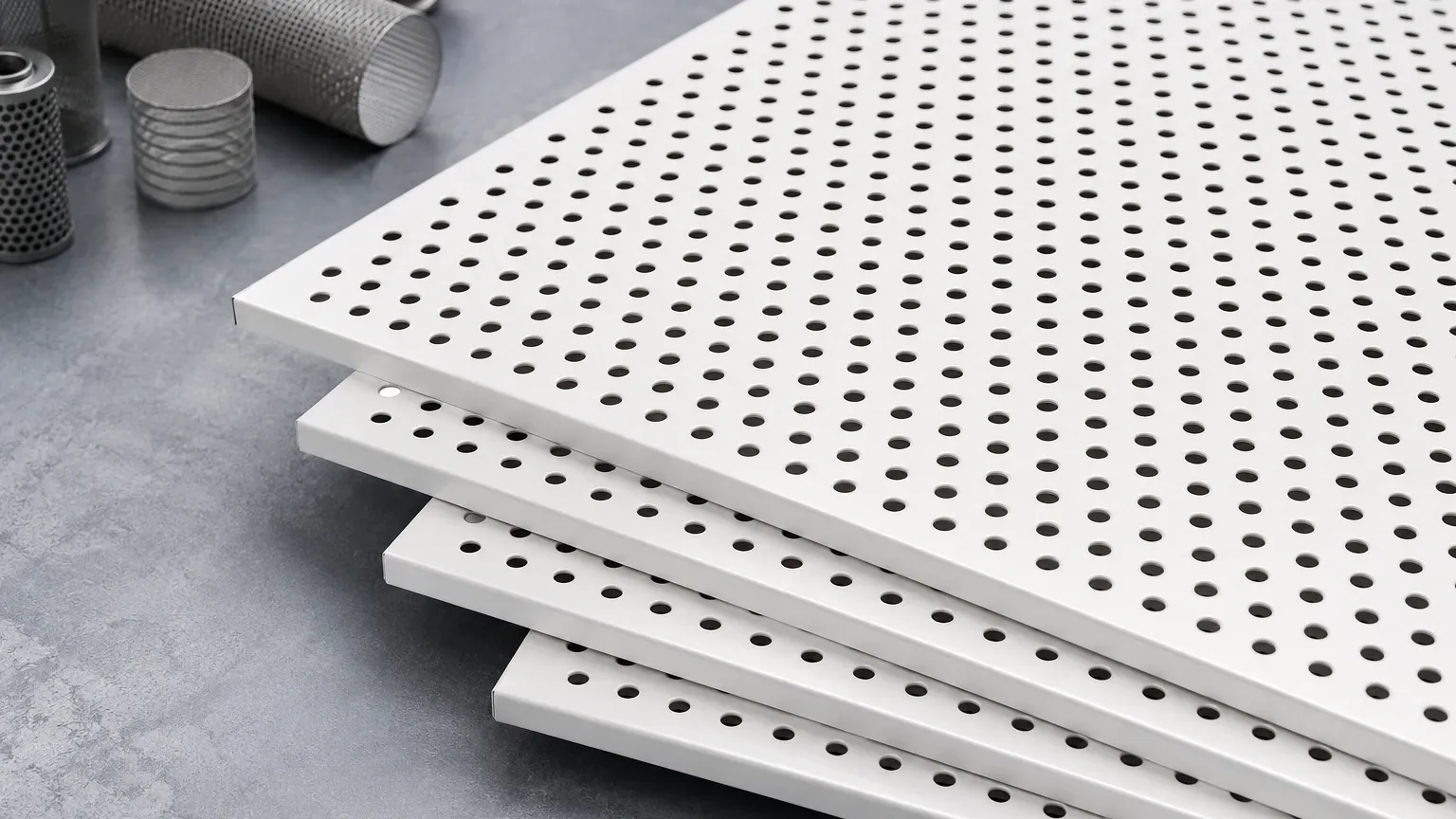
White Perforated Metal Panel
In the landscape of industrial components and architectural engineering, the white perforated metal panel serves as a versatile solution that bridges the gap between functional performance and aesthetic integration. While often recognized for its visual appeal in modern design, the technical utility of these panels in filtration, ventilation, and protective screening is significant. For engineers and procurement specialists, selecting the right Perforated & Expanded Metal requires a deep understanding of material properties, coating technologies, and the specific mechanical requirements of the application environment.
Industrial filtration and equipment manufacturing often demand components that can withstand corrosive environments while maintaining structural integrity. Kaifil, as a specialist in custom stainless steel filtration solutions, provides precision-engineered metal components designed to meet these rigorous standards. This guide explores the technical specifications, selection criteria, and industrial applications of white perforated metal panels to assist technical teams in making informed purchasing decisions.
Understanding Perforated & Expanded Metal in Industrial Applications
Before specifying a finish or color, it is essential to distinguish between the two primary manufacturing methods for these metal components.
Perforated Metal
Perforated metal is produced by mechanically punching or laser-cutting holes into a solid sheet of metal. This process allows for extremely precise hole patterns, ranging from standard round and square holes to complex custom geometries. In the context of industrial filtration, perforated sheets often serve as the outer support cage for filter cartridges or as primary strainers in high-flow systems. The precision of the punching process ensures a consistent open area, which is critical for calculating flow rates and pressure drops.
Expanded Metal
Expanded metal is created by simultaneously slitting and stretching a metal sheet. This process creates diamond-shaped openings without any material waste. While expanded metal offers an excellent strength-to-weight ratio, it is generally less precise for fine filtration compared to perforated metal. However, it is frequently used as a protective guard or a support layer in multi-stage filtration systems where high structural rigidity is required.
When these materials are processed into a white perforated metal panel, they undergo additional surface treatments that enhance both their durability and their suitability for specific environments, such as food processing or cleanroom facilities.
Technical Characteristics of the White Perforated Metal Panel
The "white" designation typically refers to a specialized surface finish applied to the base metal. For industrial use, this is rarely just a layer of paint; it is an engineered coating designed for longevity and resistance to environmental stressors.
Material Substrates
While Kaifil specializes in stainless steel, perforated panels can be manufactured from several substrates depending on the application:
* Stainless Steel (304, 316, 316L): The gold standard for filtration and chemical processing due to its inherent corrosion resistance. White coatings on stainless steel are often used for aesthetic consistency or to provide an extra layer of protection in highly caustic environments.
* Aluminum: Lightweight and naturally resistant to oxidation. Aluminum is the most common substrate for architectural white panels and HVAC grilles.
* Carbon Steel: Cost-effective for indoor applications but requires a high-quality powder coating to prevent rust.
Coating Technologies
The most common method for achieving a white finish on industrial metal panels is electrostatic powder coating. Unlike liquid paint, powder coating involves applying a dry powder that is then cured under heat to form a hard, continuous skin. This finish provides several advantages:
* Impact Resistance: Less prone to chipping or scratching during installation and maintenance.
* Chemical Resistance: Protects the underlying metal from cleaning agents and industrial chemicals.
* Uniformity: Ensures that the edges of the perforations—the most vulnerable points for corrosion—are fully sealed.
Engineering Considerations: Hole Patterns and Open Area
For engineers, the most critical aspect of a white perforated metal panel is its performance profile, which is dictated by the perforation pattern. The "open area" is the percentage of the sheet that is occupied by holes, and it directly impacts the panel’s functionality.
Calculating Open Area
The formula for calculating the open area of a round-hole pattern with a 60-degree staggered pitch is:
`Open Area % = (D² × 90.69) / R²`
*(Where D = Hole Diameter and R = Center-to-Center Distance/Pitch)*
In filtration applications, the open area must be balanced against the structural strength of the panel. A higher open area allows for greater flow and lower pressure drop but reduces the panel's ability to withstand mechanical stress or high-pressure differentials.
Common Hole Patterns
1. Round Holes: The most popular choice for filtration and general industrial use. They offer the best balance of strength and open area.
2. Square Holes: Provide a higher open area for applications requiring maximum airflow or visibility, though they may have lower structural integrity at the corners.
3. Slotted Holes: Often used in sorting and sifting applications where the shape of the particles or the direction of flow is a factor.
Performance Benefits of Powder-Coated White Finishes
Choosing a white finish for Perforated & Expanded Metal components is often a strategic decision based on performance requirements rather than just visual preference.
Thermal Management and Reflectivity
White surfaces have high solar reflectance and high thermal emittance. In HVAC systems or outdoor enclosures for sensitive electronics, a white perforated metal panel can help maintain lower internal temperatures by reflecting radiant heat. This is a critical consideration for outdoor equipment housings and industrial cooling towers.
Hygiene and Cleanability
In the food and beverage and pharmaceutical industries, cleanliness is paramount. A white powder-coated finish makes it easier for maintenance teams to identify contaminants, dust, or biological growth. The smooth, non-porous surface of a high-quality powder coating prevents the accumulation of bacteria and allows for rigorous Washdown procedures using industrial detergents.
Corrosion Protection in Humid Environments
While stainless steel is naturally resistant to rust, the addition of a specialized white coating provides an extra barrier against moisture and salt air. This is particularly useful in coastal industrial facilities or water treatment plants where the atmosphere is consistently humid and corrosive.
Industrial and Architectural Applications
The versatility of the white perforated metal panel allows it to be utilized across a wide spectrum of sectors.
Industrial Filtration Support
In many filtration systems, the primary filter media (such as wire mesh or synthetic fabric) is fragile. A perforated metal panel serves as the "skeleton" or support cage, holding the media in place against high-pressure flow. When used in cleanroom environments, a white finish ensures that the support structure does not shed metallic particles and remains easy to inspect.
Acoustic Dampening and Sound Control
Perforated panels are frequently used in sound absorption systems. By placing acoustic insulation behind a white perforated metal panel, engineers can create effective sound barriers for industrial machinery or generator rooms. The white finish allows these functional components to blend into the interior design of a facility without compromising acoustic performance.
HVAC and Ventilation
White perforated panels are the standard for air diffusers and return grilles in commercial and industrial HVAC systems. They provide the necessary airflow while concealing the internal ductwork and maintaining a clean, professional appearance.
Safety Guarding and Machine Enclosures
In manufacturing environments, perforated metal provides a protective barrier that allows for visibility and airflow while preventing accidental contact with moving parts. A white finish can improve visibility within the enclosure by reflecting internal lighting, making it easier for operators to monitor equipment status.
Selection Guide for Procurement and Engineering Teams
When sourcing white perforated metal panels, technical professionals should confirm several key parameters to ensure the product meets the long-term needs of the project.
1. Specification of the Coating
Not all white coatings are equal. For outdoor or harsh industrial use, specify a "Super Durable" polyester powder or a PVDF coating. These are engineered to resist UV degradation and chemical exposure far better than standard epoxy powders.
2. Edge Margins and Blank Areas
Engineers must specify if the panel requires "margins" (solid borders around the perforated area). Margins are essential for welding or bolting the panel into a frame. Without clearly defined margins, the perforations may run to the very edge, making installation difficult and potentially weakening the structure.
3. Flatness and Tolerances
The perforation process can introduce internal stresses into the metal, causing it to curl or bow. For high-precision applications, such as filter assembly or architectural facades, ensure the manufacturer uses leveling equipment to provide a flat panel within specified tolerances.
4. Total Cost of Ownership (TCO)
While a white-coated carbon steel panel may have a lower initial purchase price, the long-term costs of maintenance and potential replacement due to corrosion should be factored in. For critical industrial applications, a powder-coated stainless steel panel often provides the lowest TCO over the equipment's lifecycle.
Customization Options and Manufacturing Capabilities
At Kaifil, we understand that standard off-the-shelf components rarely meet the specific demands of complex industrial systems. Customization is at the core of our manufacturing philosophy. When ordering a white perforated metal panel, customers can specify:
* Custom Hole Geometries: Beyond round and square, we can produce patterns tailored to specific flow dynamics or particle sizes.
* Variable Pitch: Adjusting the distance between holes to create reinforced zones within a single panel.
* Precision Forming: We don't just provide flat sheets; we can roll, bend, and weld perforated panels into cylinders, cones, or custom-shaped filter housings.
* Specialized Finishes: From high-gloss white for laboratory environments to matte finishes for reduced glare in control rooms.
Our engineering team works closely with global customers to ensure that the material selection, hole pattern, and surface treatment are perfectly aligned with the intended application, whether it is a high-pressure hydraulic filter or a large-scale industrial ventilation system.
Maintenance and Lifecycle Management
To maximize the lifespan of a white perforated metal panel, a regular maintenance schedule should be implemented.
* Cleaning: Use mild detergents and soft brushes. Avoid abrasive cleaners or high-pressure washers that could mar the powder-coated surface.
* Inspection: Regularly check for signs of coating failure, especially around the edges of the perforations. Early detection of chips or scratches allows for touch-up repairs before sub-surface corrosion begins.
* Replacement Cycles: In filtration applications, the perforated support panel should be inspected whenever the primary filter media is replaced. While the metal panel is designed for durability, fatigue from pressure pulsations can eventually lead to stress cracking.
Conclusion
The white perforated metal panel is more than an aesthetic choice; it is a highly engineered component that provides essential functionality in filtration, protection, and climate control. By understanding the interplay between material substrate, perforation pattern, and coating technology, engineers can select a solution that offers both durability and performance.
For those seeking reliable, high-performance Perforated & Expanded Metal solutions, Kaifil provides the technical expertise and manufacturing flexibility required to meet the most demanding industrial standards. From initial design and material selection to final coating and delivery, we ensure that every panel contributes to the efficiency and longevity of your industrial systems.
