


4 X 8 Perforated Metal Sheet
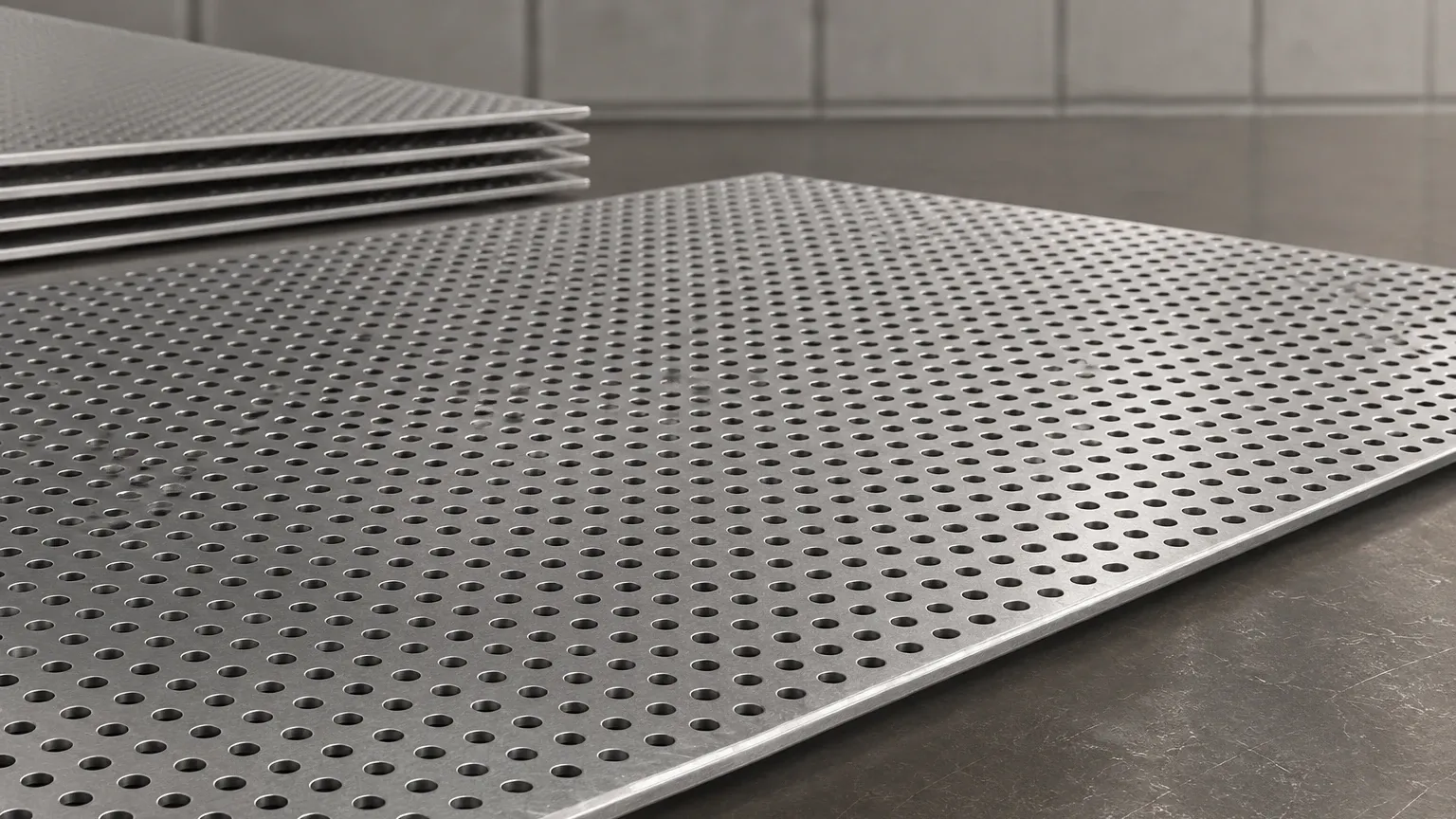
In the realm of industrial manufacturing and filtration, the 4 x 8 perforated metal sheet represents one of the most versatile and widely utilized standard dimensions. Measuring 48 inches by 96 inches, this format serves as a foundational component for engineers and procurement specialists across various sectors, including chemical processing, food and beverage production, and pharmaceutical manufacturing. As a specialized manufacturer of stainless steel filtration solutions, Kaifil understands that selecting the correct perforated metal involves more than just choosing a size; it requires a deep understanding of material properties, hole geometry, and fluid dynamics.
Perforated metal is produced by mechanically punching or laser-cutting holes into a solid metal sheet. This process creates a medium that offers structural integrity while allowing for the controlled passage of air, light, liquid, or sound. When integrated into industrial systems, these sheets often function as primary filters, support structures for finer mesh, or protective guards for sensitive machinery.
Technical Specifications of the 4 x 8 Format
The 4 x 8 perforated metal sheet is a standard in the North American and global markets because it aligns with common industrial rack sizes and machining beds. However, the performance of the sheet is dictated by several critical technical parameters that go beyond its outer dimensions.
Thickness and Gauge
The thickness of the sheet, often measured in gauge or millimeters, determines its mechanical strength and weight. In industrial filtration, thicknesses typically range from 26 gauge (thin, flexible) to 1/4 inch or thicker (heavy-duty structural). For high-pressure hydraulic applications or large-scale water treatment, thicker sheets are preferred to prevent deformation under load. Conversely, thinner sheets are easier to roll into cylindrical filter cartridges.
Hole Patterns and Geometry
The arrangement of the perforations significantly impacts both the strength of the sheet and its filtration efficiency. The three most common patterns include:
1. Staggered Round Holes: The most popular configuration, offering a high strength-to-weight ratio and a wide range of open area percentages. Usually set at a 60-degree angle, this pattern ensures uniform stress distribution.
2. Straight Line Round Holes: Used when specific alignment is required for aesthetics or mechanical tracking, though generally weaker than staggered patterns.
3. Slotted Holes: Ideal for sorting and grading applications where elongated particles must be separated from liquids or finer solids.
Open Area Calculation
For engineers, the "open area" is perhaps the most vital metric. It is the percentage of the sheet that is comprised of holes versus solid metal. This percentage determines the flow rate and pressure drop across the filter. A higher open area allows for greater throughput but reduces the structural rigidity of the 4 x 8 perforated metal sheet. The calculation for a 60-degree staggered pattern is typically:
*Open Area % = (D² × 90.69) / R²*
(Where D is the hole diameter and R is the center-to-center pitch).
Material Selection for Industrial Environments
At Kaifil, the emphasis is often on stainless steel due to its superior performance in demanding environments. While 4 x 8 sheets are available in carbon steel or aluminum, industrial filtration usually demands the corrosion resistance and thermal stability of specialized alloys.
Stainless Steel 304 vs. 316
* Grade 304: The standard industrial grade, providing excellent corrosion resistance and formability. It is suitable for most food processing and general industrial applications.
* Grade 316/316L: Contains molybdenum, which provides significantly higher resistance to chlorides and pitting. This is the preferred choice for marine environments, pharmaceutical production, and chemical processing where aggressive solvents are present.
Specialized Alloys
In high-temperature or highly acidic environments, exotic alloys like Monel, Inconel, or Hastelloy may be required. These materials maintain their structural integrity at temperatures where standard stainless steel would oxidize or lose tensile strength.
Engineering Considerations: Perforated & Expanded Metal
When evaluating Perforated & Expanded Metal for a project, it is essential to distinguish between these two manufacturing methods. While both provide a porous metal surface, their mechanical properties differ.
Perforated Metal is created by removing material (the "slugs") from the sheet. This results in a flat, precise surface with highly accurate hole diameters. It is the gold standard for precision filtration where specific particle retention sizes are required.
Expanded Metal is produced by slitting and stretching the sheet simultaneously. This process creates diamond-shaped openings and involves no material waste. While expanded metal is often more cost-effective and provides excellent grip or reinforcement, it lacks the precision of perforated metal for fine filtration tasks. Engineers must decide between the precision of perforation and the cost-efficiency of expansion based on the specific requirements of the fluid stream.
Applications in Industrial Filtration
The 4 x 8 perforated metal sheet serves as the raw material for a vast array of filtration components. Its large surface area allows for the fabrication of multiple parts from a single sheet, optimizing material usage.
Filter Cartridge Cores
In many liquid filtration systems, a perforated metal cylinder acts as the internal core of a filter cartridge. It provides the necessary structural support to prevent the collapse of finer filter media (such as wire mesh or paper) under high differential pressure. The 4 x 8 format allows for the production of long, seamless cores for high-capacity industrial housings.
Strainers and Baskets
In the food and beverage industry, large perforated baskets are used to remove pulp, seeds, or large particulates from liquids. The durability of stainless steel 4 x 8 sheets ensures that these baskets can withstand frequent high-pressure cleaning and sterilization (CIP/SIP) cycles without degrading.
Acoustic and Airflow Control
Beyond liquid filtration, perforated sheets are used in industrial HVAC systems and engine silencers. The hole size and spacing are engineered to tune sound frequencies or to ensure laminar airflow across heat exchangers.
Quality Evaluation and Purchasing Criteria
When procuring a 4 x 8 perforated metal sheet, engineers must look beyond the basic dimensions to ensure the product meets technical standards. Poorly manufactured sheets can lead to system failures or premature wear.
Flatness and Camber
During the punching process, the metal can experience internal stresses that cause it to bow or twist. High-quality sheets undergo a leveling process to ensure they are perfectly flat. This is critical if the sheet is to be laser-cut or welded into a larger assembly, as any deviation in flatness can lead to misalignment.
Burrs and Surface Finish
The punching action can leave sharp edges or "burrs" on the exit side of the hole. In pharmaceutical or food-grade applications, these burrs are unacceptable as they can trap bacteria or shed metal particles into the product stream. Kaifil utilizes advanced deburring and polishing techniques, such as electropolishing, to ensure a smooth, sanitary finish.
Margins and Blank Areas
A standard 4 x 8 perforated metal sheet may come with "minimum margins" (perforations extending to the edge) or "finished margins" (a solid border around the perimeter). For custom filtration components, engineers often specify blank areas where welding or mounting hardware will be attached. Confirming these margin requirements before production is essential to avoid structural weaknesses at the weld points.
Customization and OEM Solutions
While the 4 x 8 sheet is a standard size, many industrial applications require customized configurations. Kaifil specializes in tailoring these components to meet specific engineering challenges. This includes:
* Custom Hole Sizes: Moving beyond standard fractional sizes to precise decimal diameters for exact particle retention.
* Variable Pitch: Adjusting the distance between holes to create zones of different flow rates across a single sheet.
* Secondary Fabrication: Rolling, welding, and flanging the perforated sheets into finished filter components ready for installation.
By working closely with a manufacturer that understands the nuances of metal fabrication and filtration science, purchasing teams can reduce the total cost of ownership. A properly specified perforated sheet lasts longer, requires less maintenance, and ensures the purity of the end product.
Conclusion: Selecting the Right Component
The 4 x 8 perforated metal sheet is more than a commodity; it is a critical engineering component that dictates the efficiency and reliability of industrial filtration systems. Whether you are designing a high-pressure hydraulic filter or a sanitary food-grade strainer, the choice of material, hole pattern, and open area will have a direct impact on your system's performance.
Engineers should confirm the chemical compatibility of the alloy, the required flow dynamics (pressure drop), and the necessary mechanical tolerances before finalizing a purchase. By leveraging the expertise of a specialized manufacturer like Kaifil, organizations can ensure they receive perforated solutions that are not only dimensionally accurate but also optimized for the rigors of industrial processing. For those evaluating their options, it is advisable to Review product options and application support to find the precise balance of durability and filtration performance.
