


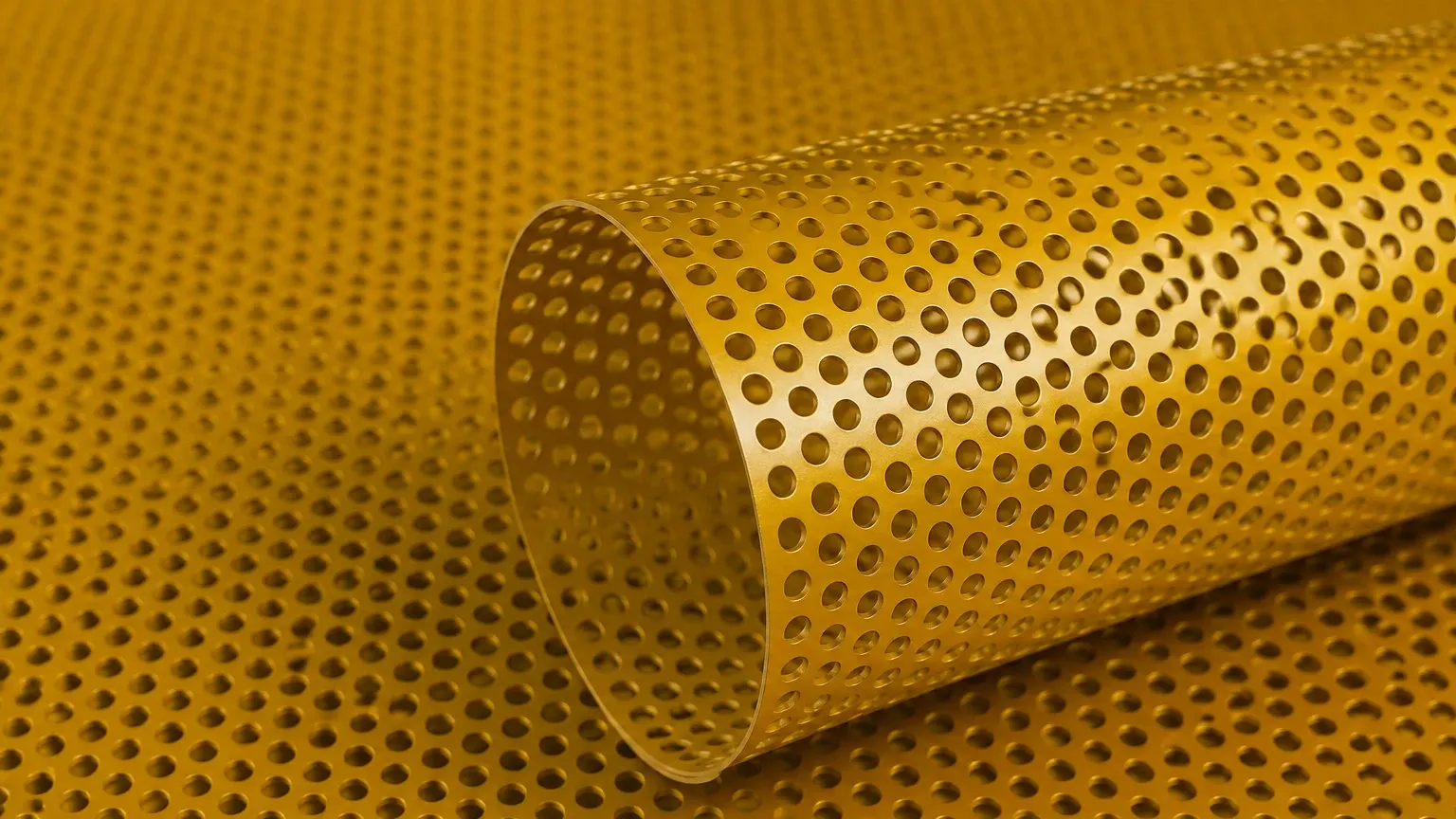
Yellow Perforated
In industrial environments, the functional requirements of filtration and structural components often intersect with safety and visibility standards. Yellow perforated metal represents a specialized category of industrial materials where the mechanical advantages of precision-engineered hole patterns are combined with high-visibility coatings. Whether utilized for machine guarding, architectural safety elements, or specialized sorting equipment, understanding the technical specifications of yellow perforated components is essential for engineering and procurement teams.
At its core, the production of these components involves the modification of Perforated & Expanded Metal through advanced coating processes. This article examines the engineering considerations, material selection, and application-specific requirements that define the performance of yellow perforated solutions in demanding industrial sectors.
Technical Fundamentals of Perforated & Expanded Metal
To understand the performance of yellow perforated products, one must first evaluate the base substrate and the mechanical process used to create the mesh or screen. Industrial filtration and guarding rely on two primary manufacturing methods: perforation and expansion.
Perforation Processes
Perforated metal is created by punching a series of holes into a solid metal sheet. This process allows for extreme precision in hole diameter, pitch (the distance between hole centers), and pattern (staggered or straight). For industrial applications, the "Open Area" percentage is a critical calculation, as it determines both the flow rate for filtration and the structural integrity of the panel. For example, a 60-degree staggered round hole pattern provides the highest strength-to-open-area ratio, making it a standard choice for heavy-duty industrial guards.
Expansion Processes
Expanded metal is produced by simultaneously slitting and stretching the metal sheet. This creates a diamond-shaped opening without any material waste. While expanded metal offers excellent structural rigidity and a high strength-to-weight ratio, it presents a more complex surface for coating compared to flat perforated sheets. When specifying yellow perforated or expanded components, engineers must consider how the three-dimensional geometry of expanded metal will affect the uniformity of the yellow finish.
The Engineering of Yellow Perforated Coatings
The term "yellow perforated" typically refers to carbon steel, aluminum, or stainless steel substrates that have undergone a secondary finishing process. The choice of coating technology is as critical as the choice of the base metal, particularly when the component is exposed to corrosive chemicals or outdoor environments.
Powder Coating vs. Liquid Painting
For most industrial B2B applications, powder coating is the preferred method for achieving a durable yellow finish. The process involves applying an electrostatic charge to the perforated metal and then spraying it with dry plastic powder (typically polyester, epoxy, or a hybrid). The component is then cured in an oven, where the powder melts and forms a continuous, hard-wearing layer.
* Durability: Powder coating provides superior resistance to chipping, scratching, and fading compared to liquid paint.
* Uniformity: The electrostatic process ensures that the coating reaches the interior edges of the perforated holes, which is vital for preventing edge corrosion.
* Environmental Resistance: UV-stable polyester powders are used for outdoor yellow perforated panels to prevent the "chalking" or fading that can occur with prolonged sun exposure.
Color Standardization (RAL and Safety Yellow)
In industrial safety, "yellow" is not a generic term. Most engineering specifications require adherence to specific color standards, such as RAL 1021 (Colza Yellow) or RAL 1023 (Traffic Yellow). These standards ensure that replacement panels match existing infrastructure and comply with international safety signaling protocols, such as those defined by OSHA or ISO.
Industrial Applications and Safety Compliance
Yellow perforated components serve dual roles: they act as a physical barrier or filter while providing a visual warning to personnel. Their application spans across multiple sectors, each with unique performance demands.
Machine Guarding and Enclosures
In the manufacturing and hydraulic sectors, yellow perforated metal is the industry standard for machine guards. According to safety regulations (such as OSHA 1910.212), guards must be designed to prevent the operator from having any part of their body in the danger zone during the operating cycle. The perforated nature of the metal allows for airflow to cool machinery and provides visibility for inspection, while the yellow coating alerts workers to the presence of moving parts or high-pressure systems.
Industrial Filtration and Sorting
In certain chemical processing or waste management facilities, yellow perforated screens are used to categorize different stages of the filtration process. Color-coding allows operators to quickly identify the micron rating or the specific chemical compatibility of a filter cartridge or screen at a distance, reducing the risk of cross-contamination or installation errors.
Architectural and Perimeter Safety
For industrial walkways, stair treads, and mezzanine flooring, yellow expanded metal provides a non-slip surface with high visibility. This is particularly important in low-light environments or facilities where heavy machinery and pedestrian traffic coexist. The open area of the Perforated & Expanded Metal ensures that liquids or debris do not accumulate on the surface, maintaining a safe environment.
Engineering Considerations for Selection
When specifying yellow perforated metal for a project, engineers must look beyond the color and focus on the technical variables that affect long-term performance.
Material Compatibility and Base Metal
* Carbon Steel: The most cost-effective option for indoor machine guards. However, it requires a high-quality powder coating to prevent rust.
* Aluminum: Ideal for weight-sensitive applications or outdoor environments where corrosion resistance is a priority. It bonds well with yellow powder coatings.
* Stainless Steel: Used in pharmaceutical or food and beverage applications. While stainless steel is naturally corrosion-resistant, a yellow coating may be applied for safety identification. Engineers must ensure the coating is food-grade if it comes into contact with products.
The Impact of Coating on Hole Tolerance
One often-overlooked factor is the thickness of the yellow coating. A standard industrial powder coating adds between 60 to 100 microns (2.4 to 4 mils) to the surface. In precision filtration applications, this thickness can significantly reduce the effective diameter of the perforated holes. If a project requires a specific 2mm hole size for filtration, the raw perforation must be slightly larger to account for the coating thickness.
Open Area Calculations
The open area percentage is crucial for ventilation and flow. For a round hole, 60-degree staggered pattern, the formula is:
OA = (D² × 90.69) / P²
Where:
* D = Hole Diameter
* P = Pitch
When applying a yellow finish, the "D" value decreases slightly. Engineers should confirm with the manufacturer whether the specified open area refers to the pre-coated or post-coated state.
Performance Evaluation and Quality Control
To ensure the longevity of yellow perforated components, several quality control tests are standard in the B2B supply chain:
1. Cross-Hatch Adhesion Test: This test evaluates how well the yellow coating adheres to the metal substrate. A lattice pattern is cut into the coating, and tape is applied and removed to check for peeling.
2. Salt Spray Testing (ASTM B117): Crucial for components used in coastal or chemical environments, this test measures how many hours the yellow perforated panel can withstand a saline mist before showing signs of red rust or coating failure.
3. Impact Resistance: Given that these components are often used as guards, the coating must be flexible enough to withstand impacts without cracking, which would expose the base metal to corrosion.
Maintenance and Total Cost of Ownership
While the initial cost of yellow perforated metal is higher than unfinished metal, the total cost of ownership is often lower due to reduced maintenance and enhanced safety. The yellow coating protects the substrate from oxidation, extending the replacement cycle. Maintenance typically involves simple cleaning with non-abrasive detergents to maintain visibility. In high-wear environments, engineers should specify a high-durability polyester coating to resist the abrasive effects of industrial dust or frequent wash-downs.
Conclusion: Specifying the Right Solution
Selecting the appropriate yellow perforated component requires a balance between mechanical filtration needs, structural requirements, and safety standards. By understanding the relationship between the base Perforated & Expanded Metal and the finishing process, procurement teams can ensure they receive a product that meets both functional and regulatory demands.
Before finalizing a purchase, engineers should confirm the following with their manufacturer:
* The exact RAL color code required for the application.
* The base metal grade (e.g., 304 vs. 316 stainless steel or 5052 aluminum).
* The post-coating hole diameter and open area percentage.
* The environment's corrosivity to determine the necessary coating thickness and type.
By addressing these technical details during the design phase, industrial facilities can achieve reliable, high-visibility filtration and guarding solutions that stand up to the rigors of the modern factory floor.
