


Perforated Metal 1 8
In the realm of industrial filtration and structural engineering, precision is the primary determinant of performance. Perforated metal with 1/8-inch specifications—whether referring to hole diameter, material thickness, or center-to-center spacing—represents one of the most versatile configurations used across the chemical, food and beverage, and pharmaceutical sectors. As a foundational component in filtration systems, Perforated & Expanded Metal serves as both a primary screening medium and a robust support structure for finer mesh layers.
Selecting the correct perforated metal 1 8 specification requires a deep understanding of fluid dynamics, material science, and mechanical stress. For engineers and procurement teams, the choice is rarely about the hole size alone; it involves a complex calculation of open area, flow rates, and environmental resistance. This guide examines the technical nuances of 1/8-inch perforated metal to assist in informed decision-making for demanding industrial applications.
Understanding the Specifications of Perforated Metal 1/8
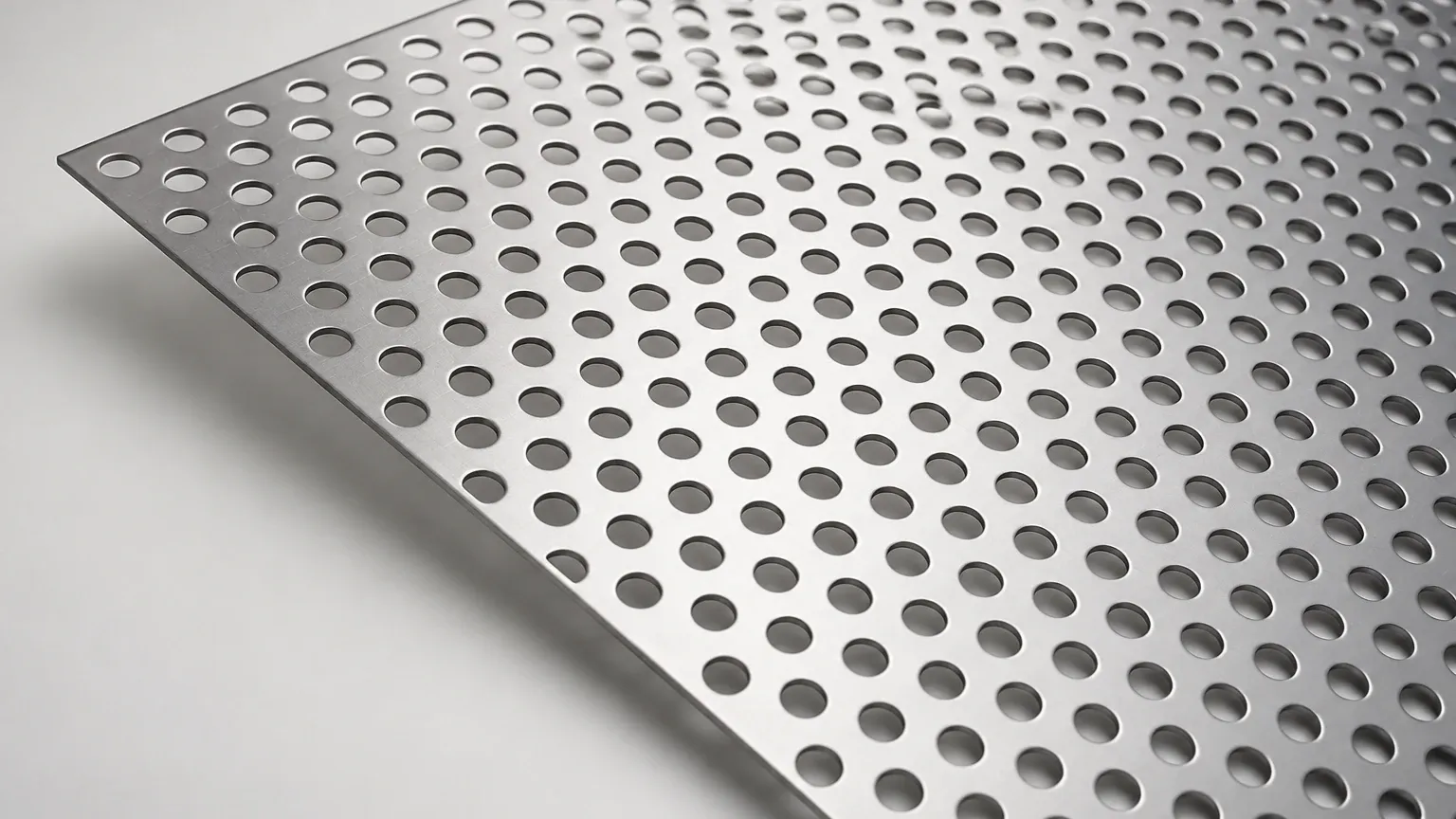
When an engineer specifies "1/8" for perforated metal, it typically refers to a 1/8-inch (0.125") hole diameter. However, the performance of the sheet is governed by how these holes are arranged. The two most common configurations are staggered centers and straight rows.
Staggered vs. Straight Centers
A 60-degree staggered pattern is the industry standard for perforated metal 1 8 applications. In this configuration, the holes are offset, providing the highest degree of structural integrity and a uniform distribution of open area. For a 1/8-inch hole, a common pitch (center-to-center distance) is 3/16-inch. This arrangement ensures that the metal bridges between the holes remain strong enough to resist deformation under pressure while allowing for efficient throughput.
Straight row patterns, while easier to align for certain architectural or aesthetic purposes, often lack the mechanical strength of staggered patterns. In high-pressure hydraulic or chemical processing environments, staggered 1/8-inch perforations are preferred to prevent the "zipper effect," where the material fails along a straight line of holes under stress.
Open Area Calculations
The percentage of open area is a critical metric for any filtration or ventilation system. For a standard 1/8-inch hole on 3/16-inch staggered centers, the open area is approximately 40%. This balance is ideal for applications requiring significant airflow or liquid throughput without compromising the sheet's ability to act as a rigid barrier. If the application requires a higher flow rate, the pitch can be reduced, though this necessitates a thinner gauge of metal to prevent tool breakage during the punching process.
Material Properties and Environmental Compatibility
The utility of perforated metal 1 8 is largely dictated by the alloy from which it is manufactured. In industrial settings, stainless steel is the predominant choice due to its longevity and resistance to degradation.
Stainless Steel 304 vs. 316
For most general-purpose industrial applications, Grade 304 stainless steel provides excellent corrosion resistance and formability. It is widely used in food processing and HVAC systems where moisture is present but chemical exposure is limited.
However, in more aggressive environments—such as marine applications, pharmaceutical manufacturing, or chemical processing—Grade 316 stainless steel is required. The addition of molybdenum in 316 stainless steel enhances resistance to chlorides and acids. When specifying perforated metal 1 8 for a filter cartridge used in brine filtration or acidic chemical baths, 316 stainless steel ensures that the 1/8-inch apertures remain precise and do not widen due to corrosive pitting.
Gauge and Thickness Considerations
The thickness of the metal sheet (the gauge) must be compatible with the hole diameter. A general engineering rule for perforation is that the material thickness should not exceed the hole diameter. For a 1/8-inch hole, the material is typically 11 gauge (approx. 0.120") or thinner. Attempting to punch 1/8-inch holes in thicker plates can lead to excessive tool wear, burr formation, and internal stresses that may cause the sheet to warp.
The Role of 1/8-Inch Perforations in Industrial Filtration
In the context of filtration, perforated metal 1 8 often serves as a "coarse" filter or a protective outer shroud. Its primary functions include:
1. Primary Screening: In water treatment or intake systems, 1/8-inch holes are used to remove large debris, such as pebbles or organic matter, before the fluid reaches more sensitive downstream components.
2. Support for Fine Mesh: In high-pressure hydraulic filters or pleated filter cartridges, the perforated metal acts as a rigid skeleton. A fine stainless steel wire mesh is often wrapped around or bonded to the 1/8-inch perforated core. This allows the fine mesh to perform the actual filtration while the perforated metal provides the mechanical strength to withstand high differential pressures.
3. Flow Diffusion: In gas processing, perforated sheets with 1/8-inch openings are used to diffuse high-velocity gas streams, ensuring even distribution across a catalyst bed or a secondary filter element. This prevents "channeling," where the fluid takes the path of least resistance and bypasses the filter media.
Engineering Considerations: Open Area and Structural Integrity
When integrating perforated metal 1 8 into a system design, engineers must account for the trade-off between transparency (open area) and strength.
Pressure Drop (Delta P)
A 40% open area provides a predictable pressure drop across the medium. However, as the filter accumulates debris, the effective open area decreases, leading to a rise in differential pressure. Designers must calculate the "clean" pressure drop and establish a maintenance threshold. Because 1/8-inch holes are relatively large compared to micron-rated mesh, they are less prone to rapid blinding, making them an excellent choice for pre-filtration stages where high solids loading is expected.
Flatness and Stress Relief
The process of punching thousands of 1/8-inch holes into a metal sheet introduces significant internal stress. This often results in "oil canning" or bowing of the sheet. For precision applications, such as those involving rotating machinery or tight-tolerance housings, the perforated metal must undergo a leveling process. At Kaifil, we ensure that our custom-manufactured components meet strict flatness tolerances to facilitate seamless integration into larger assemblies.
Customization Options and Manufacturing Precision
Standard off-the-shelf perforated sheets often fail to meet the specific requirements of specialized industrial equipment. Customization is where the value of a professional manufacturer becomes apparent.
Margins and Blank Areas
In many B2B applications, a perforated sheet requires "margins"—solid, unperforated edges that allow for welding, bolting, or seating into a frame. A standard sheet might have random perforations that run to the edge, which complicates the welding process and creates weak points. Custom perforated metal 1 8 can be produced with specified blank areas to match the exact dimensions of the filter housing or structural frame.
Hole Shape Variations
While round holes are the most common for 1/8-inch specifications due to their structural stability and ease of manufacturing, square or hexagonal holes are also available. Square holes offer a higher open area (up to 60% or more) but at the cost of reduced mechanical strength. Hexagonal holes provide a middle ground, often used in high-efficiency ventilation where airflow is the primary concern.
Secondary Processing
Beyond the initial perforation, industrial components often require secondary operations such as:
* Rolling: Forming the perforated sheet into a cylinder for filter cartridges.
* Degreasing: Removing lubricants used during the punching process, essential for food-grade and pharmaceutical applications.
* Deburring: Ensuring the edges of the 1/8-inch holes are smooth to prevent turbulence and material buildup.
Installation and Maintenance Best Practices
To maximize the lifespan of perforated metal 1 8 components, proper installation and maintenance protocols must be followed.
Secure Mounting
In high-vibration environments, such as those found in mining or large-scale chemical processing, perforated sheets must be securely fastened. If the sheet is allowed to vibrate against its frame, the edges of the 1/8-inch holes can act as stress concentrators, leading to fatigue cracking. Using compatible gaskets and ensuring uniform tension across the mounting surface can mitigate these risks.
Cleaning and Longevity
One of the primary advantages of using stainless steel perforated metal is its cleanability. Unlike synthetic filter media, 1/8-inch perforated stainless steel can be cleaned using high-pressure water jets, steam, or chemical solvents. In systems where "Clean-in-Place" (CIP) is a requirement, the smooth surface of the perforated metal prevents the entrapment of bacteria or contaminants, ensuring compliance with hygiene standards in the food and beverage industry.
Conclusion: Selecting the Right Partner for Perforation
The selection of perforated metal 1 8 is a critical decision that impacts the efficiency, safety, and durability of industrial systems. Whether the requirement is for a simple protective screen or a complex, high-pressure filter core, the technical specifications must be exact.
At Kaifil, we specialize in providing tailored filtration solutions that go beyond standard catalog items. Our expertise in material selection, hole pattern optimization, and precision manufacturing ensures that every component performs reliably in its intended environment. By focusing on the specific needs of engineers and purchasing teams, we help optimize the total cost of ownership through durable, high-performance filtration products. For those seeking technical guidance or customized designs, reviewing the available Perforated & Expanded Metal options is the first step toward achieving superior filtration results.
