


Perforated or
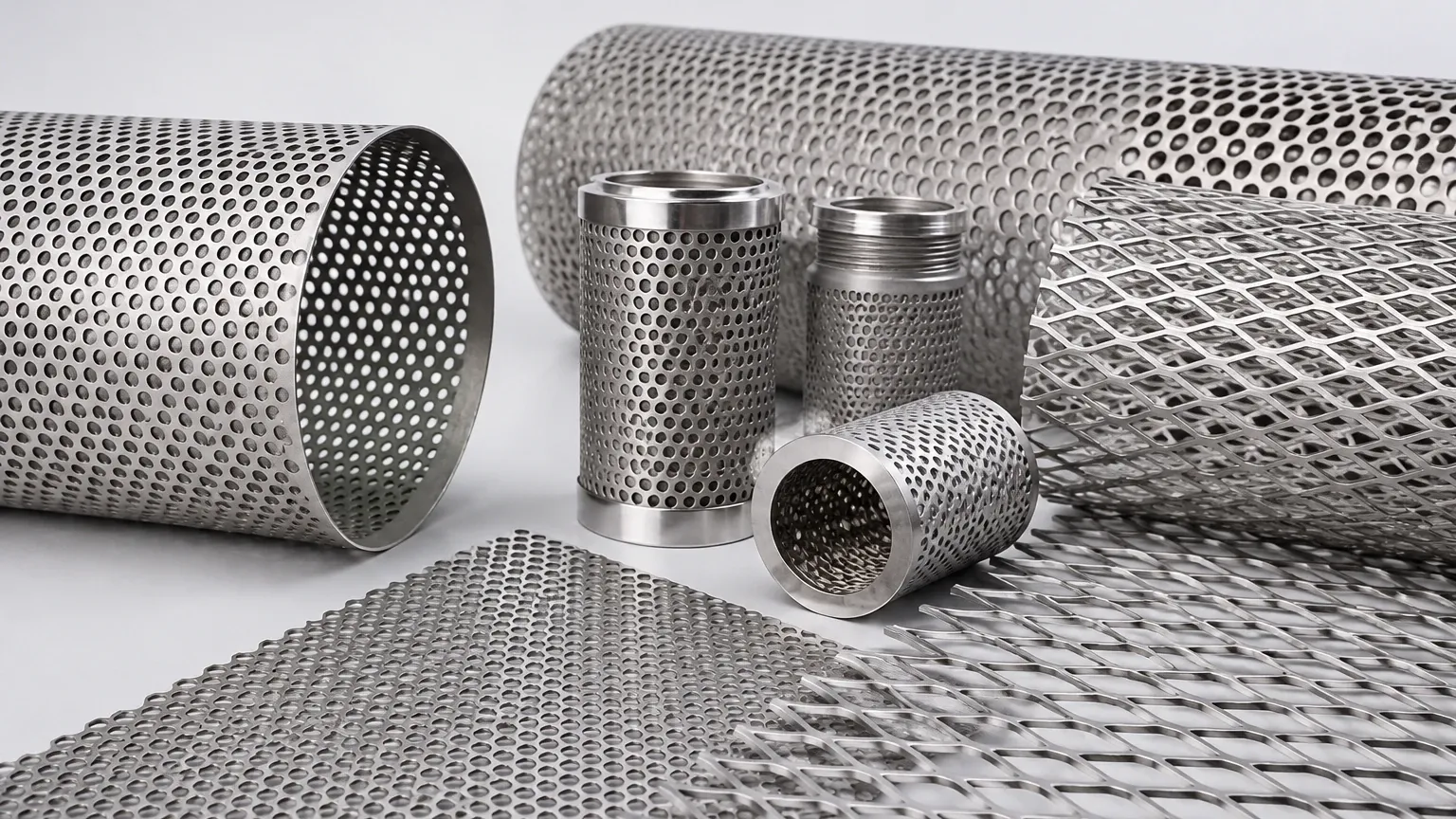
In the realm of industrial filtration and structural component design, selecting the right base material is a critical engineering decision that impacts flow dynamics, structural integrity, and long-term operational costs. When evaluating metal substrates for filter supports, strainers, or protective guards, the choice often narrows down to two primary options: perforated or expanded metal.
While both materials serve as versatile solutions for fluid management and mechanical protection, they are manufactured through vastly different processes, resulting in distinct physical properties. For engineers and procurement teams at OEM firms, understanding the technical nuances between Perforated & Expanded Metal is essential for optimizing system performance and ensuring material compatibility in demanding environments like chemical processing, hydraulic systems, and food production.
Manufacturing Processes and Material Efficiency
The fundamental difference between these two materials begins at the production stage. This stage dictates the physical characteristics, the amount of material waste, and ultimately, the unit cost.
Perforated Metal Production
Perforated metal is produced through a cold-punching process. A metal sheet (typically stainless steel, carbon steel, or aluminum) is fed through a high-speed press equipped with a die set. As the press cycles, it punches out specific shapes—most commonly round, square, or slotted holes. The material removed during this process, known as the "slug," is typically recycled, but the energy and material loss associated with punching contribute to the overall cost structure. This method allows for extreme precision in hole placement and size, which is vital for high-accuracy filtration applications.
Expanded Metal Production
In contrast, expanded metal is manufactured by simultaneously slitting and stretching the metal sheet. A knife-like tool cuts the sheet in a specific pattern, and the machine then pulls the material apart, creating a diamond-shaped mesh. Because the metal is stretched rather than punched, there is virtually no material waste. A single sheet of raw material can be expanded into a much larger surface area. This makes expanded metal a highly resource-efficient choice, though it offers less control over specific aperture geometry compared to perforated options.
Structural Integrity and Mechanical Properties
When deciding between perforated or expanded metal for a filtration core or a protective housing, mechanical strength is often the deciding factor.
Strength-to-Weight Ratio
Expanded metal is renowned for its exceptional strength-to-weight ratio. Because it is a single piece of metal without any welds or joints, the structural continuity remains intact. The strands and bonds (the intersections where the strands meet) are set at an angle to the plane of the sheet, which adds inherent rigidity and allows the material to withstand significant pressure without deforming. This is particularly advantageous in high-pressure hydraulic filters where the substrate must support a fine wire mesh media under heavy loads.
Rigidity and Flatness
Perforated metal generally offers greater rigidity and a flatter profile. Since the material remains in a single plane (unless further formed into a cylinder), it is easier to integrate into assemblies that require tight tolerances. In filtration systems where a flat, smooth surface is required to prevent turbulence or to facilitate easy cleaning, perforated stainless steel is the preferred choice. Furthermore, the solid "margins" (the unperforated edges of the sheet) provide additional structural support and simplify the welding of the component into a filter housing.
Filtration Performance and Flow Dynamics
From a technical filtration perspective, the choice between these materials affects how fluids or gases move through the system. Engineers must balance the need for particle retention with the requirement for low pressure drop.
Open Area Calculations
The "open area" refers to the percentage of the sheet that consists of holes.
- Perforated Metal: Offers highly predictable open areas, often ranging from 10% to 60% or more. Because the hole size and pitch (distance between centers) are precisely controlled, engineers can calculate exact flow rates and pressure drops across the filter element.
- Expanded Metal: Typically provides a larger open area, often exceeding 70%. This makes it ideal for applications where maximum flow is required and pressure drop must be kept to an absolute minimum. However, the 3D nature of the diamond mesh can create more turbulence than a flat perforated sheet.
Precision and Particle Retention
Perforated metal is superior for applications requiring precise particle retention. If a filter needs to block particles of exactly 2mm, a perforated sheet with 2mm round holes provides a consistent barrier. Expanded metal, with its diamond-shaped openings, has varying dimensions across the aperture, making it less suitable for precise sieving but excellent as a coarse pre-filter or a support structure for finer mesh layers.
Material Selection and Corrosion Resistance
In industries such as chemical processing and pharmaceutical manufacturing, the choice of alloy is as important as the physical structure. Kaifil specializes in stainless steel solutions, which are the industry standard for these demanding environments.
Stainless Steel Grades
- 304/304L: The most common grade, offering excellent corrosion resistance and formability for general industrial use.
- 316/316L: Contains molybdenum, which provides superior resistance to chlorides and pitting. This is essential for marine environments, food processing involving brine, and aggressive chemical filtration.
- Specialty Alloys: For extreme temperatures or highly acidic environments, materials like Monel, Inconel, or Hastelloy can be perforated or expanded, though these require specialized tooling and expertise.
Economic Considerations: Total Cost of Ownership
When evaluating the cost of perforated or expanded metal, B2B buyers must look beyond the initial purchase price. The total cost of ownership involves material efficiency, fabrication labor, and the replacement cycle.
1. Material Cost: Expanded metal is almost always cheaper per square foot because it uses less raw material to cover the same area. There is no "slug" waste, which is a significant factor when using expensive alloys like 316L stainless steel.
2. Fabrication Costs: Perforated metal is often easier to weld, roll into cylinders, and finish. The flat surface and solid margins reduce the time required for assembly. Expanded metal may require more care during welding to ensure the strands do not burn through.
3. Durability and Maintenance: In high-vibration environments, the monolithic structure of expanded metal can resist fatigue better than some perforated patterns. Conversely, in food and beverage applications, the smooth, flat surface of perforated metal is much easier to clean and sterilize (CIP – Clean-in-Place), reducing downtime and labor costs.
Application Guide: When to Choose Which?
To assist in the selection process, the following guidelines represent common industry practices for these materials:
Choose Perforated Metal When:
* Precision is Paramount: You need exact hole sizes for specific particle retention.
* Smoothness is Required: The application involves delicate filter media that could be snagged by the edges of expanded metal.
* High Pressure Support: You need a rigid internal core for a high-pressure hydraulic or liquid filter cartridge.
* Aesthetic or Sanitary Requirements: You are designing equipment for food, beverage, or pharmaceutical use where easy cleaning is mandatory.
Choose Expanded Metal When:
* Weight is a Concern: You need a lightweight but strong protective guard or support structure.
* High Flow, Low Pressure: The system requires maximum throughput with minimal resistance.
* Cost Sensitivity: You are covering large surface areas and need to minimize material expenditure.
* Grip or Diffusion: You need a material that provides mechanical grip or helps diffuse flow patterns across a wider area.
Technical Confirmation for Procurement
Before finalizing a purchase order for Perforated & Expanded Metal, engineering teams should confirm several critical specifications with the manufacturer. These details ensure the component will perform as expected in the field:
* Hole Pattern (for Perforated): Staggered patterns (60-degree) are generally stronger and provide more open area than straight patterns.
* Strand and Bond Dimensions (for Expanded): These dictate the strength and the "depth" of the mesh.
* Surface Finish: Does the application require de-burring, pickling, or electropolishing? For filtration, removing burrs is critical to prevent media damage.
* Dimensional Tolerances: Confirm the acceptable variance in sheet size, flatness, and hole alignment, especially for OEM parts that must fit into automated assembly lines.
Conclusion
The decision between perforated or expanded metal is not merely a matter of price; it is a technical choice that influences the efficiency, safety, and longevity of industrial filtration systems. Perforated metal offers the precision and rigidity required for high-spec filtration cores and sanitary applications. Expanded metal provides a cost-effective, high-flow alternative with an exceptional strength-to-weight ratio for guards and supports.
As a professional manufacturer, Kaifil provides the technical expertise necessary to navigate these choices. By focusing on material integrity, precision manufacturing, and customized designs, we ensure that every filtration component—whether perforated or expanded—meets the rigorous demands of modern industrial environments. Engineers and purchasing teams are encouraged to evaluate their specific flow requirements and environmental stressors to select the material that offers the best balance of performance and value.
