


3d Warehouse Perforated Metal
In the contemporary landscape of industrial design and mechanical engineering, the integration of digital modeling and physical manufacturing has become a standard workflow. For engineers and procurement specialists, platforms like SketchUp’s 3D Warehouse serve as a primary repository for conceptualizing complex systems. However, when a project moves from the screen to the factory floor, the transition from a generic 3d warehouse perforated metal model to a high-performance industrial component requires a deep understanding of technical specifications, material science, and manufacturing constraints.
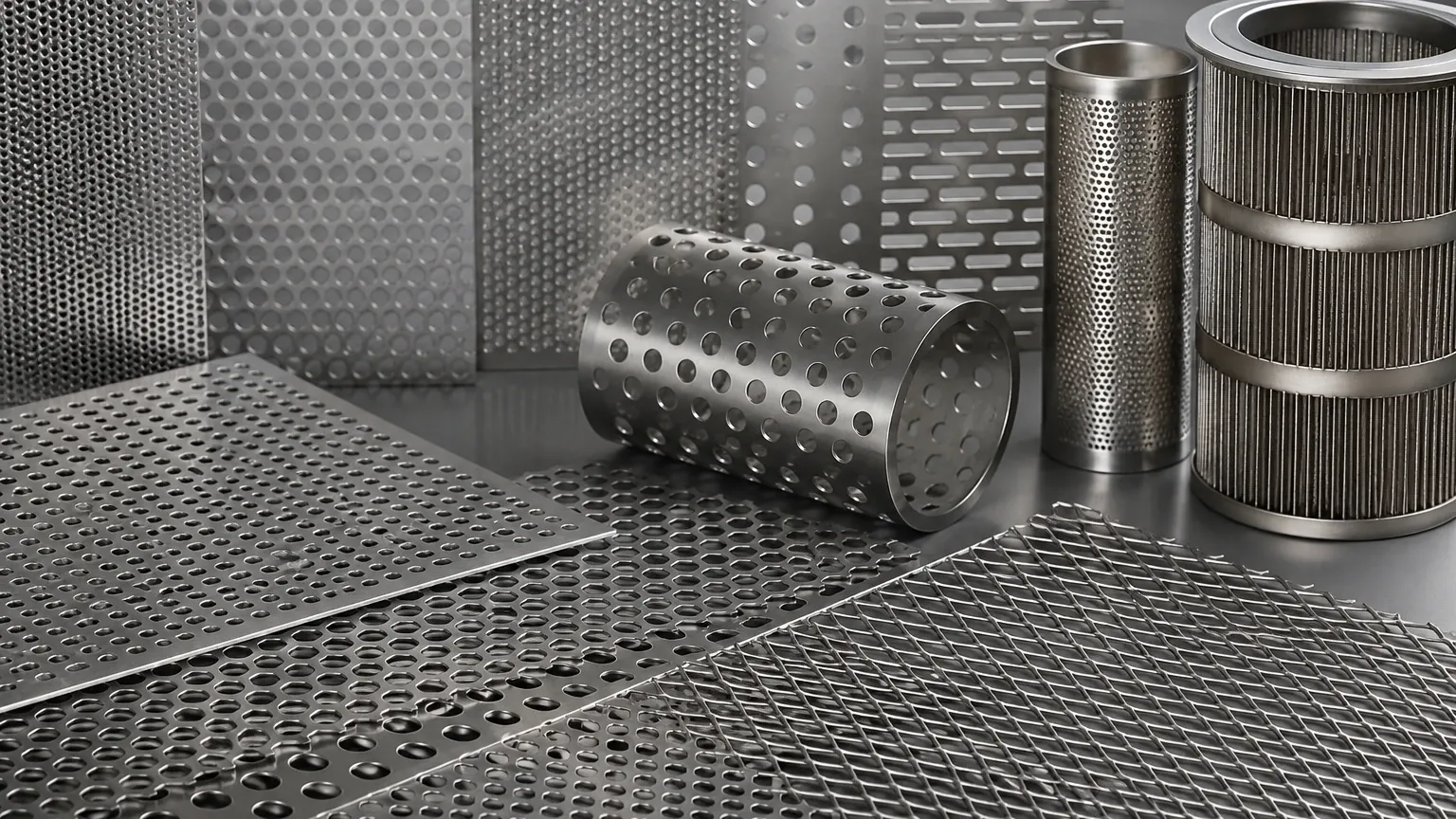
Industrial filtration and structural support systems rely on the precision of Perforated & Expanded Metal to ensure operational efficiency. While digital models provide a visual baseline, the actual performance of these components in demanding environments—such as chemical processing, food production, or hydraulic systems—is determined by factors that a standard 3D model often fails to capture. This guide explores how to bridge the gap between digital visualization and the procurement of professional-grade filtration solutions.
The Role of 3D Modeling in Industrial Filtration Design
Digital assets found in the 3D Warehouse are invaluable for architectural visualization and preliminary spatial planning. They allow design teams to quickly populate a 3D environment with components that represent the intended final product. For an engineer designing a filtration assembly, a 3d warehouse perforated metal component helps in identifying potential interference issues, determining the scale of the equipment, and communicating the design intent to stakeholders.
Despite these advantages, generic models often lack the metadata necessary for industrial-grade manufacturing. A model might represent a perforated sheet with a specific hole pattern, but it rarely accounts for the tolerances required for high-pressure environments or the specific metallurgical properties needed for chemical resistance. In professional B2B applications, the 3D model is the starting point, not the final specification. The goal for any engineering team is to move beyond the visual representation and define the exact parameters that Kaifil and other precision manufacturers require to produce a functional part.
Transitioning from 3D Warehouse Perforated Metal Models to Physical Specs
When an engineer downloads a 3d warehouse perforated metal asset, the primary focus is often on aesthetics or basic geometry. However, for industrial filtration, the "open area" is the most critical metric. The open area determines the flow rate and the pressure drop across the filter medium. A generic model may have a 40% open area visually, but the application might require a 51% open area to prevent pump cavitation or system overheating.
To transition from a digital concept to a manufacturing-ready specification, engineers must evaluate the following:
* Hole Geometry: Is the pattern round, square, or slotted? Round holes are typically the most cost-effective and structurally sound for high-pressure filtration.
* Pitch and Arrangement: Are the holes staggered (60-degree or 45-degree) or in a straight line? Staggered patterns generally provide higher strength and more uniform flow.
* Sheet Thickness (Gauge): Digital models often treat metal sheets as having zero thickness or a nominal value. In reality, the thickness of the Perforated & Expanded Metal must be balanced against the desired filtration accuracy and the structural load of the fluid or gas being filtered.
* Margins and Unperforated Areas: A 3D model might show holes all the way to the edge, but for welding or mounting in a filter housing, specific unperforated margins are often required to maintain structural integrity.
Engineering Parameters for Custom Perforated & Expanded Metal
Kaifil specializes in manufacturing components that meet the rigorous demands of industrial sectors. When moving beyond a 3d warehouse perforated metal placeholder, engineers must confirm technical details that ensure the longevity of the component.
Open Area Calculations
The formula for calculating the open area of a staggered round hole pattern is:
`% Open Area = (D² x 90.69) / P²`
Where `D` is the hole diameter and `P` is the center-to-center pitch.
In industrial filtration, even a 5% deviation from the calculated open area can lead to significant performance degradation over time. By providing these exact figures to a manufacturer, you ensure that the physical product matches the hydraulic requirements of your system, rather than just the visual requirements of a 3D model.
Structural Reinforcement
Expanded metal differs from perforated metal in its manufacturing process; it is slit and stretched rather than punched. This creates a diamond-shaped mesh that is often stronger per pound than the original sheet. For applications involving heavy particulate loads or high-velocity flows, expanded metal provides the necessary rigidity to support finer mesh layers in a multi-stage filter cartridge.
Material Selection and Durability in Industrial Applications
A significant limitation of searching for 3d warehouse perforated metal is the lack of material specificity. In a CAD environment, a texture might be labeled "Stainless Steel," but in a chemical processing plant or a pharmaceutical cleanroom, the specific grade of stainless steel is the difference between a successful operation and a catastrophic equipment failure.
Kaifil utilizes high-grade materials to ensure durability in demanding environments:
1. 304 Stainless Steel: The industry standard for general filtration, offering good corrosion resistance and excellent formability. It is widely used in food and beverage applications where hygiene is paramount.
2. 316/316L Stainless Steel: Contains molybdenum, which provides superior resistance to chlorides and acids. This is the preferred choice for marine environments, chemical processing, and pharmaceutical manufacturing.
3. Specialty Alloys: For extreme temperatures or highly corrosive media, materials like Monel, Inconel, or Hastelloy may be required. These are rarely represented accurately in generic 3D models but are essential for high-stakes industrial projects.
Beyond the material itself, the surface finish must be considered. While a 3D model looks perfect on a screen, physical metal may require electropolishing to remove burrs and improve corrosion resistance, or passivation to restore the protective chromium oxide layer after the perforation process.
From Digital Concept to Manufacturing: The Procurement Process
For purchasing teams and engineers, the goal of using a 3d warehouse perforated metal model is often to reach the RFQ (Request for Quote) stage faster. However, providing a SketchUp file to a manufacturer is rarely sufficient. To ensure a smooth procurement process and a product that meets performance expectations, the following documentation should be prepared:
* Technical Drawings: Convert the 3D concept into a 2D technical drawing that specifies dimensions, tolerances, and hole patterns.
* Application Environment: Disclose the operating temperature, pressure, and the nature of the fluid or gas being filtered. This allows the manufacturer to suggest the most appropriate material and thickness.
* Customization Requirements: Does the part need to be rolled into a cylinder, welded into a cartridge, or fitted with custom end caps? Kaifil’s OEM capabilities allow for the integration of Perforated & Expanded Metal into complex, ready-to-install filtration components.
* Compliance Standards: Ensure the product meets industry-specific certifications, such as FDA compliance for food contact or ISO standards for quality management.
By confirming these details early, engineers can avoid the common risks associated with generic digital assets, such as improper fitment, premature corrosion, or insufficient flow capacity.
Optimizing Filtration Performance through Precision Engineering
The ultimate value of a filtration component is not its appearance in a digital warehouse but its performance in the field. Precision-engineered perforated metal serves as the backbone for many filtration systems, providing the structural support for finer wire mesh or acting as a primary screen for large particulates.
When you move from a 3d warehouse perforated metal model to a custom-manufactured solution from Kaifil, you gain access to engineering expertise that optimizes the balance between filtration accuracy and structural durability. This includes considerations for the "total cost of ownership," where a slightly more expensive material or a more complex hole pattern can lead to longer replacement cycles and reduced maintenance downtime.
In hydraulic systems, for example, the perforated core of a filter cartridge must withstand high collapse pressures. A visual model cannot simulate these stresses, but a manufacturer can calculate the required wall thickness and hole density to ensure the core does not fail under peak loads. This level of technical validation is what separates a professional industrial component from a generic digital asset.
Conclusion
While a 3d warehouse perforated metal model is a useful tool for the initial stages of design and visualization, it is only a shadow of the final industrial product. For engineers and procurement professionals, the path to a successful project involves translating those digital concepts into rigorous technical specifications.
By focusing on material selection, precise open area calculations, and the specific demands of the application environment, you can ensure that your Perforated & Expanded Metal components provide reliable, long-term performance. Kaifil remains committed to supporting global customers through this transition, offering the manufacturing expertise and quality assurance necessary to turn digital designs into high-performance filtration reality.
