


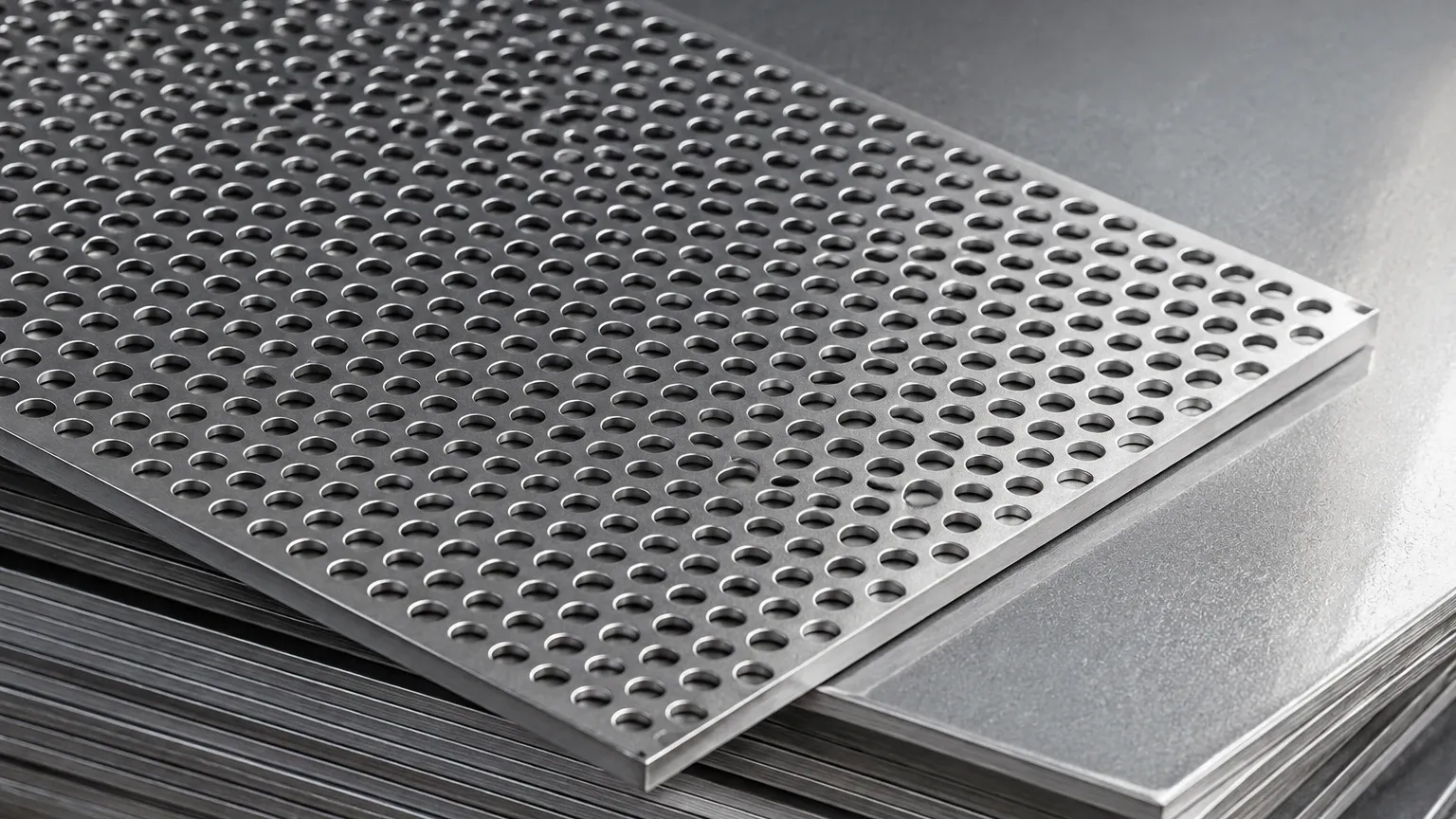
Perforated Metal Sheet 6mm
In industrial filtration and structural engineering, the specification of a perforated metal sheet 6mm often serves as a critical baseline for heavy-duty performance. Whether the "6mm" refers to the hole diameter, the pitch between centers, or the thickness of the plate itself, these dimensions dictate the mechanical integrity, flow characteristics, and filtration efficiency of the component. Selecting the correct configuration requires a deep understanding of material science, fluid dynamics, and manufacturing tolerances.
As a specialized manufacturer of stainless steel filtration solutions, Kaifil provides precision-engineered Perforated & Expanded Metal components designed to withstand demanding industrial environments. This guide explores the technical nuances of specifying 6mm perforated metal sheets, focusing on engineering considerations, material selection, and application-specific performance.
Understanding the Specifications of 6mm Perforated Metal
When an engineer requests a perforated metal sheet 6mm, the specification must be clarified across three primary dimensions: hole diameter, sheet thickness, and pitch. In B2B procurement, ambiguity in these measurements can lead to significant performance deviations.
Hole Diameter and Geometry
A 6mm hole diameter is a standard size for coarse filtration, drainage, and protective screening. While round holes are the most common due to their structural stability and ease of manufacturing, square, hexagonal, or slotted patterns may be utilized depending on the specific application. Round holes provide the most uniform distribution of stress across the metal sheet, reducing the risk of fatigue failure under high-pressure flow.
Sheet Thickness
If the 6mm refers to the gauge or thickness of the metal, the sheet is classified as a heavy-duty plate. Perforating a 6mm thick stainless steel sheet requires high-tonnage CNC punching equipment. The thickness-to-hole ratio is a vital engineering constraint; typically, the hole diameter should not be smaller than the material thickness to prevent excessive tool wear or mechanical deformation of the sheet.
Pitch and Pattern Arrangement
The pitch—the distance from the center of one hole to the center of the adjacent hole—determines the "open area" percentage. For a 6mm hole, a staggered 60-degree pattern is often preferred over a straight row pattern. The staggered arrangement maximizes the number of holes per square inch while maintaining the structural rigidity of the metal bridges between the perforations.
Material Selection for Industrial Environments
The performance of a perforated metal sheet 6mm is largely defined by its metallurgy. In industrial filtration, where exposure to corrosive chemicals, high temperatures, and abrasive particulates is common, stainless steel is the industry standard.
* Grade 304 Stainless Steel: This is the most versatile and widely used grade. It offers excellent corrosion resistance and formability, making it suitable for food processing, architectural applications, and general industrial screening.
* Grade 316/316L Stainless Steel: For marine environments, chemical processing, or pharmaceutical applications, Grade 316 is required. The addition of molybdenum enhances resistance to pitting and crevice corrosion, particularly in chloride-rich environments.
* Specialty Alloys: In high-temperature or extremely acidic conditions, alloys such as Duplex stainless steel or Monel may be used to ensure the longevity of the filtration system.
Kaifil emphasizes material traceability and quality control to ensure that every perforated metal sheet 6mm meets the specific chemical and mechanical requirements of the project.
Engineering Calculations: Open Area and Flow Rates
For engineers, the most critical performance metric of a perforated metal sheet is the percentage of open area. This figure directly impacts the pressure drop ($ΔP$) across the filter and the velocity of the fluid passing through the media.
Calculating Open Area
For a standard 60-degree staggered pattern with a 6mm hole diameter ($D$) and a specific pitch ($P$), the formula for the percentage of open area is:
Open Area % = (D² × 90.69) / P²
If the pitch is 9mm for a 6mm hole, the open area would be approximately 40.3%. Increasing the open area improves flow rates but decreases the mechanical strength of the sheet. Engineers must balance these two factors, especially in hydraulic systems where the perforated sheet acts as a support for finer wire mesh layers.
Pressure Drop Considerations
In filtration applications, a 6mm perforated metal sheet often serves as the primary strainer or the structural core of a filter cartridge. If the open area is too low, the resulting high velocity can cause turbulence, leading to increased energy consumption and potential damage to downstream components. Conversely, if the sheet is too thin or the bridges too narrow, the pressure differential across the filter could cause the media to collapse.
Applications in Industrial Filtration and Support
The versatility of the perforated metal sheet 6mm allows it to function in various capacities across multiple sectors, including chemical processing, water treatment, and food production.
Filter Cartridge Cores
In high-pressure hydraulic and process filtration, perforated metal sheets are rolled and welded into cylindrical cores. These cores provide the necessary structural support for pleated wire mesh or fiber media. A 6mm hole pattern allows for high flow while ensuring the outer filtration layers do not migrate or deform under pressure.
Coarse Strainers and Intake Screens
For water treatment and power generation, 6mm perforated sheets are used as primary intake screens to remove large debris, such as stones or organic matter, before the fluid reaches finer filtration stages. The durability of stainless steel ensures these screens can withstand the abrasive force of constant flow.
Vibratory Sifters and Centrifuges
In the food and beverage industry, perforated sheets are used in vibratory separators to grade bulk materials. The precision of the 6mm perforation is vital for maintaining consistent product quality and ensuring that undersized or oversized particles are accurately diverted.
Comparison: Perforated vs. Expanded Metal for 6mm Requirements
When specifying Perforated & Expanded Metal, it is important to distinguish between the two manufacturing processes, as they offer different mechanical properties.
* Perforated Metal: Created by punching holes into a solid sheet. This process offers the highest level of precision in terms of hole size and placement. It is ideal for applications requiring specific flow calculations and a smooth surface finish.
* Expanded Metal: Created by slitting and stretching the metal simultaneously. This process results in a diamond-shaped opening. While expanded metal is more cost-effective (as there is no material waste), it lacks the precise circular geometry of a 6mm perforated hole. However, it provides excellent grip and structural rigidity, making it suitable for walkways or heavy-duty guards.
For most precision filtration applications, the perforated metal sheet 6mm is the preferred choice due to its predictable flow patterns and ease of cleaning.
Selection Criteria and Procurement Considerations
Choosing the right perforated metal sheet 6mm involves more than just selecting a hole size. Purchasing teams and engineers should evaluate the following criteria to ensure total cost of ownership is optimized:
1. Tolerance Requirements: Standard commercial tolerances may not be sufficient for precision filter housings. Specify the required tolerance for hole diameter, pitch, and sheet flatness.
2. Edge Configurations: Do you require a "plain margin" (an unperforated border) around the sheet? Margins are essential for welding the sheet into a frame or cylinder without damaging the perforation pattern.
3. Surface Finish: For pharmaceutical or food-grade applications, the perforated sheet may require electropolishing or pickling to remove burrs and improve corrosion resistance.
4. Flatness and Leveling: The punching process can introduce internal stresses that cause the sheet to curl. Precision leveling is necessary if the sheet is to be used in automated assembly or high-tolerance machinery.
Maintenance and Service Life in Demanding Applications
The longevity of a perforated metal sheet 6mm depends on its operating environment and maintenance schedule. In filtration systems, the primary cause of failure is often blinding (clogging) or erosion-corrosion.
* Cleaning Cycles: In systems where the perforated sheet acts as a primary strainer, regular backwashing or manual cleaning is required to prevent the buildup of solids. Stainless steel's ability to withstand high-pressure steam cleaning (CIP/SIP) makes it ideal for the pharmaceutical and food industries.
* Erosion Monitoring: In high-velocity applications containing abrasive particles, the edges of the 6mm holes may erode over time, gradually increasing the hole size and reducing filtration accuracy. Regular inspection of the filter media is recommended to ensure the integrity of the system.
Customization and OEM Capabilities
At Kaifil, we recognize that standard off-the-shelf components often fail to meet the rigorous demands of specialized industrial processes. Our manufacturing capabilities allow for the production of customized perforated metal sheets tailored to specific engineering drawings. From selecting the appropriate stainless steel grade to defining complex hole patterns and margins, we work closely with technical teams to deliver reliable filtration components.
Whether you require a perforated metal sheet 6mm for a new hydraulic system or as a replacement component for an existing chemical processor, understanding the technical boundaries of the material is the first step toward achieving efficient and durable performance.
For more information on material compatibility and custom design options, Review product options and application support to find the optimal solution for your industrial filtration needs.
