


600×600 Metal Perforated Ceiling Tiles
In industrial and commercial architecture, the selection of ceiling systems extends beyond aesthetic considerations to encompass structural integrity, acoustic control, and environmental resistance. The 600×600 metal perforated ceiling tiles represent a standardized modular solution designed to meet these rigorous engineering requirements. As a specialized manufacturer of stainless steel filtration and precision metal components, Kaifil provides technical insights into how these components are engineered, the materials utilized, and the performance metrics essential for industrial applications.
Selecting the appropriate ceiling tile involves understanding the interplay between material science and mechanical design. These tiles are not merely decorative covers; they are functional components of a building's HVAC, acoustic, and safety systems. By utilizing advanced Perforated & Expanded Metal techniques, manufacturers can tailor these tiles to specific industrial environments, from chemical processing plants to high-traffic commercial hubs.
Technical Specifications and Material Selection
The performance of a 600×600 metal perforated ceiling tile is primarily dictated by its base material. In industrial contexts, three primary metals are utilized, each offering distinct mechanical properties:
Stainless Steel (Grade 304 and 316)
Stainless steel is the preferred choice for environments requiring high corrosion resistance and hygiene. Grade 304 is suitable for general industrial use, while Grade 316, containing molybdenum, is reserved for marine environments or chemical processing facilities where exposure to chlorides and acids is prevalent. Stainless steel tiles offer superior longevity and ease of sterilization, making them ideal for pharmaceutical and food processing cleanrooms.
Aluminum Alloys
Aluminum is valued for its high strength-to-weight ratio. It is naturally resistant to corrosion through the formation of a protective oxide layer. Aluminum tiles are significantly lighter than steel, reducing the dead load on the ceiling suspension system and simplifying installation in large-scale facilities.
Galvanized Steel
For interior applications where cost-efficiency is a priority and moisture levels are controlled, galvanized steel provides a robust solution. The zinc coating offers sacrificial protection against oxidation, though it is generally less durable than stainless steel in aggressive chemical environments.
Engineering the Perforation Pattern
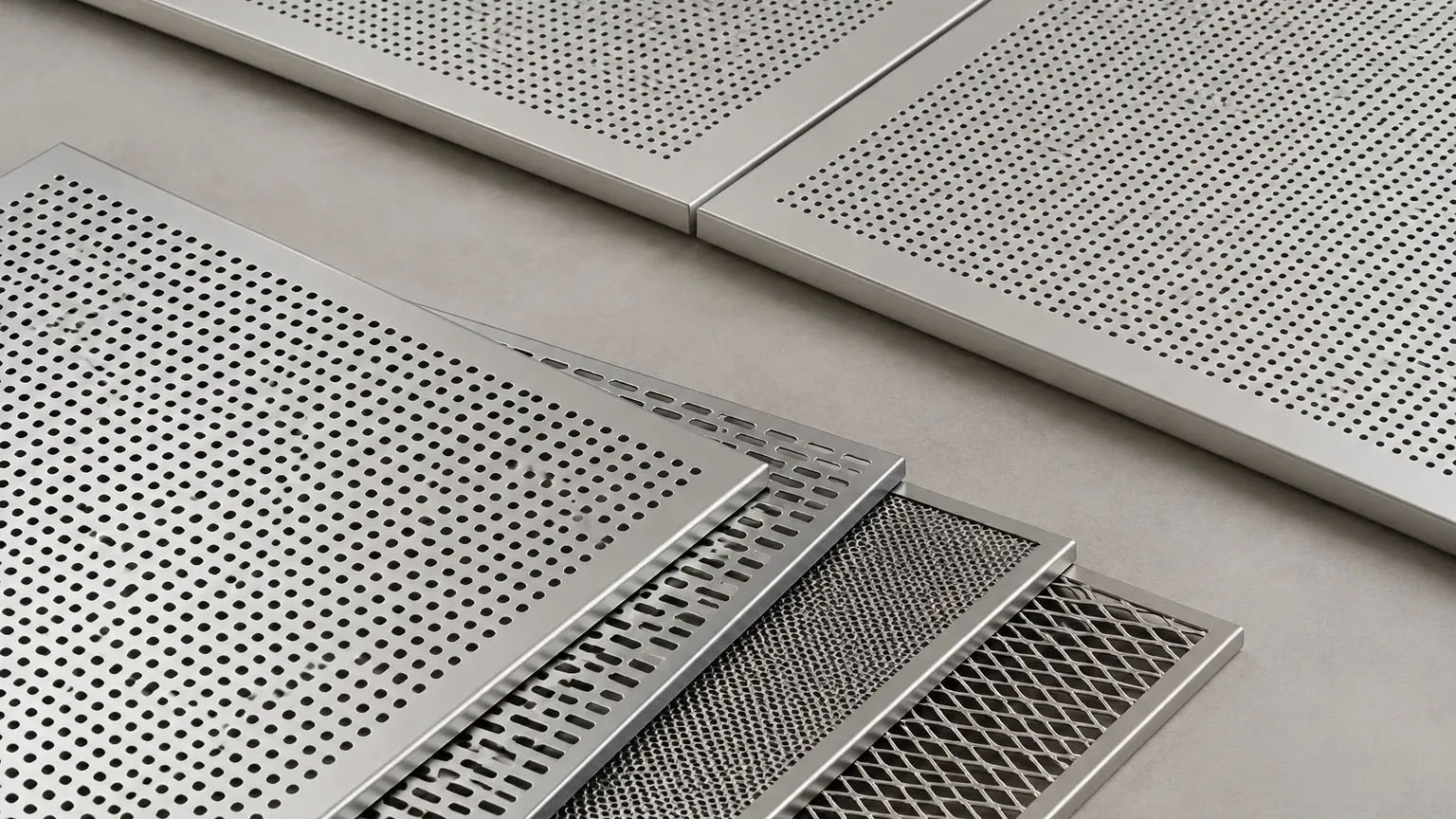
The "perforation" in 600×600 metal perforated ceiling tiles is a critical engineering feature that determines the tile's functional characteristics. The pattern is defined by the hole shape, size, and pitch (the distance between the centers of adjacent holes).
Open Area Percentage
The open area is the ratio of the area of the holes to the total area of the tile, expressed as a percentage. This metric is vital for engineers calculating airflow for HVAC systems. A higher open area allows for greater air throughput but may reduce the structural rigidity of the tile. Common open area percentages range from 10% to 50%, depending on the ventilation requirements of the space.
Hole Geometry
* Round Perforations: The most common and structurally stable pattern. Round holes can be arranged in a 60-degree staggered pattern, which provides the highest strength while maintaining significant open area.
* Square Perforations: Often chosen for specific aesthetic requirements or when a higher open area is needed for maximum airflow.
* Slotted Perforations: Utilized in specialized applications where directional airflow or specific drainage characteristics are required.
Acoustic Performance and Sound Absorption
One of the primary technical reasons for specifying perforated metal ceiling tiles is acoustic management. In industrial settings, excessive noise can impact worker safety and operational efficiency. Perforated tiles act as a conduit for sound waves to pass through the metal surface into an absorbent medium.
To achieve high Noise Reduction Coefficient (NRC) ratings, these tiles are often fitted with an acoustic fleece or mineral wool backing. The sound waves enter through the perforations in the Perforated & Expanded Metal surface and are trapped or dissipated by the backing material. Engineers must specify the hole diameter and spacing carefully; if the holes are too small or too far apart, the sound waves will reflect off the metal surface rather than being absorbed.
Manufacturing Precision and Edge Profiles
The manufacturing of 600×600 metal perforated ceiling tiles requires high-precision CNC punching or laser cutting equipment to ensure dimensional consistency. Given that these tiles must fit into a standard T-bar grid system, tolerances must be strictly maintained.
Edge Configurations
* Lay-in (Square Edge): The tile sits directly on the flange of the T-grid. This is the simplest and most common installation method.
* Tegular (Flush or Recessed): The tile has a machined edge that allows it to hang slightly below the grid, creating a shadowed effect and masking the grid system.
* Clip-in (Concealed Grid): The tiles are clipped into a hidden carrier system from below, providing a seamless appearance and preventing unauthorized access to the ceiling void, which is often required in high-security or high-hygiene areas.
Performance Expectations in Demanding Applications
When specifying 600×600 metal perforated ceiling tiles for industrial projects, several performance factors must be evaluated beyond simple dimensions:
Fire Resistance
Metal is inherently non-combustible. In many jurisdictions, metal ceiling systems are classified as Class A or Class 0 for fire spread and smoke development. This makes them a safer alternative to mineral fiber or plastic-based ceiling solutions in high-risk industrial zones.
Cleanroom and Hygiene Compliance
In pharmaceutical and semiconductor manufacturing, particle shedding is a critical concern. Stainless steel perforated tiles, when finished correctly, do not shed particles and can withstand rigorous cleaning cycles with deionized water or chemical disinfectants. The smooth surface of the metal prevents the accumulation of dust and microbial growth.
Structural Load Capacity
Engineers must consider the weight of the tiles and any additional loads, such as integrated lighting fixtures, fire sprinklers, or security cameras. Perforated metal tiles offer a high strength-to-weight ratio, ensuring that the ceiling system remains stable even under the vibration of heavy industrial machinery.
Key Evaluation Criteria for Purchasing Teams
Procurement professionals and engineers should confirm the following technical details before finalizing a supplier for 600×600 metal perforated ceiling tiles:
1. Material Grade Certification: Ensure the supplier provides mill test reports (MTRs) for the stainless steel or aluminum grades specified to guarantee chemical composition and mechanical properties.
2. Coating Thickness and Quality: If the tiles are powder-coated or anodized, the thickness (measured in microns) and the quality of the finish must be verified to ensure long-term resistance to chipping, scratching, and UV degradation.
3. Acoustic Testing Data: Request independent laboratory test reports for NRC ratings if the project has specific sound attenuation requirements.
4. Dimensional Tolerance: Confirm that the tiles meet international standards for squareness and flatness to avoid installation delays caused by misaligned grid systems.
Maintenance and Total Cost of Ownership
While the initial cost of 600×600 metal perforated ceiling tiles may be higher than mineral fiber alternatives, the total cost of ownership (TCO) is often lower in industrial environments. Metal tiles are highly durable and resistant to impact, moisture, and sagging.
Replacement Cycles
Unlike traditional ceiling tiles that may need replacement due to water damage or staining, metal tiles can last for decades. They are easily removable for maintenance access to overhead utilities without the risk of breakage.
Cleaning Protocols
For stainless steel installations, regular wiping with a pH-neutral detergent is usually sufficient. In more demanding environments, steam cleaning or pressure washing may be used, provided the acoustic backing is protected or designed for such exposure. This ease of maintenance ensures that the facility remains compliant with health and safety standards over its operational lifespan.
Customization and OEM Capabilities
Many industrial projects require non-standard solutions. Manufacturers like Kaifil specialize in providing customized Perforated & Expanded Metal components that go beyond standard catalog items. Customization options include:
* Variable Perforation Patterns: Creating zones of high and low airflow within a single tile to optimize cooling for specific equipment.
* Integrated Cut-outs: Pre-punched openings for specialized sensors, high-output LED lighting, or industrial ventilation ducts.
* Non-Standard Sizes: While 600×600 is the standard, custom dimensions may be required for perimeter infills or unique architectural layouts.
By focusing on technical precision and material integrity, 600×600 metal perforated ceiling tiles serve as a reliable, high-performance solution for the most demanding industrial and commercial ceiling applications. Their ability to integrate airflow, acoustic control, and structural durability makes them an essential component in modern facility design.
