


Armstrong Strainers
In the landscape of industrial fluid handling and steam system management, the protection of downstream equipment is a primary engineering concern. Armstrong strainers have long been a staple in these environments, serving as the first line of defense against pipe scale, weld beads, and other foreign debris that can compromise the integrity of traps, valves, and pumps. For engineers and procurement professionals, understanding the technical nuances of these components—and the critical role of the internal filtration media—is essential for maintaining system efficiency and reducing total cost of ownership.
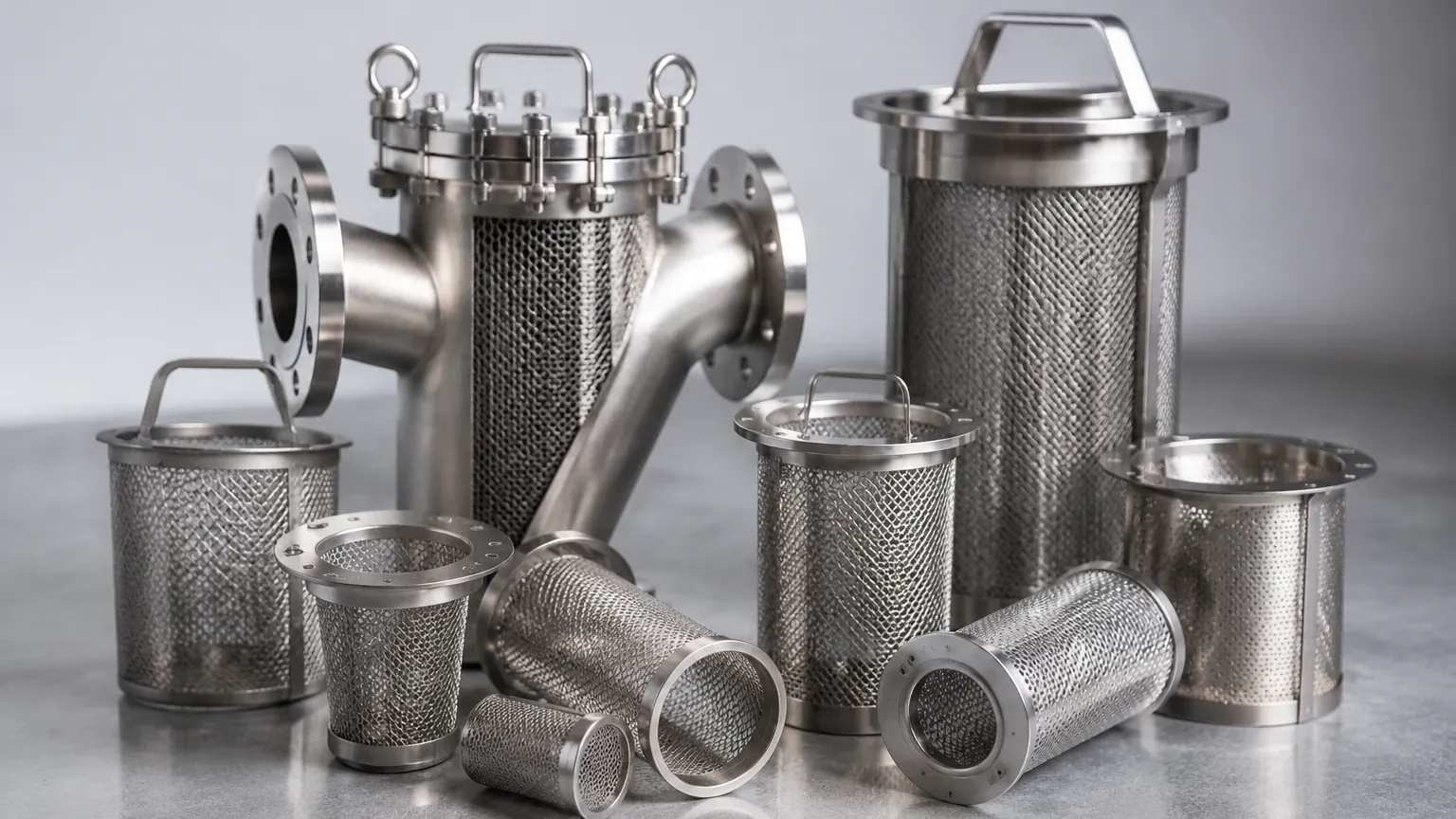
As a manufacturer specializing in high-performance filtration solutions, Kaifil recognizes that the effectiveness of any strainer housing is ultimately determined by the quality and precision of its internal Strainers & Baskets. Whether you are specifying new installations or sourcing replacement components for existing Armstrong strainers, technical alignment between the process requirements and the filtration hardware is non-negotiable.
Understanding the Role of Armstrong Strainers in Industrial Systems
Armstrong strainers are primarily designed to remove solids from flowing fluids, including steam, gas, and liquids. They are categorized by their configuration, with Y-type and T-type (or basket) designs being the most prevalent in industrial applications. Each configuration serves a specific hydraulic and maintenance purpose.
Y-Type Strainers
In steam and gas lines, Y-type strainers are the standard choice due to their ability to handle high pressures and their compact footprint. The "Y" shape allows the debris to be collected in a pocket that can be easily blown down via a drain valve without interrupting the flow. This is particularly critical in steam systems where condensate and scale can cause erosion in high-velocity lines.
Basket (T-Type) Strainers
For liquid applications where the volume of debris might be higher, basket-style strainers provide a larger collection area. These are often used in suction lines for pumps or in cooling water systems. The vertical orientation of the basket allows for higher dirt-holding capacity and lower pressure drop compared to Y-types of the same pipe size.
Key Engineering Considerations for Strainer Selection
When evaluating armstrong strainers or looking for compatible replacement internals, several engineering parameters must be analyzed to ensure the component does not become a bottleneck in the system.
Pressure Drop (Delta P)
Every strainer introduces a degree of resistance to the flow. The clean pressure drop is a function of the fluid velocity, viscosity, and the "open area ratio" of the internal mesh or perforated plate. A common engineering benchmark is to maintain an open area ratio of at least 4:1 relative to the cross-sectional area of the pipe. If the mesh is too fine for the application, the pressure drop will escalate rapidly, leading to cavitation in pumps or reduced thermal efficiency in steam heat exchangers.
Material Compatibility
While the housing of Armstrong strainers may be cast iron, carbon steel, or stainless steel, the internal basket or screen must be selected based on the chemical properties of the fluid and the operating temperature. For most industrial applications, Grade 304 or 316 stainless steel is preferred for its corrosion resistance and mechanical strength under thermal cycling.
Micron Rating vs. Mesh Count
Engineers must distinguish between mesh count (the number of openings per linear inch) and the actual micron rating (the size of the largest particle that can pass through). In steam systems, a 20-mesh to 40-mesh screen is often sufficient to protect traps. However, in precision chemical processing or hydraulic systems, much finer filtration—often requiring multi-layer sintered wire mesh—may be necessary.
The Importance of High-Quality Replacement Strainers & Baskets
The housing of a strainer is a static pressure vessel that can last for decades, but the internal filtration element is a wear part. Over time, high-velocity flow and abrasive particles can cause mesh blinding, wire breakage, or structural deformation of the basket.
Using high-quality replacement Strainers & Baskets is vital for several reasons:
1. Structural Integrity: Under high differential pressure, a poorly manufactured basket can collapse, sending both the captured debris and pieces of the damaged mesh downstream into sensitive equipment.
2. Seating and Bypass: A replacement element must fit the housing's machined seats perfectly. Even a 1mm gap can allow "bypass," where the fluid flows around the filter rather than through it, rendering the strainer useless.
3. Ease of Cleaning: Precision-welded baskets with smooth surface finishes are easier to clean during maintenance cycles, reducing downtime and labor costs.
Kaifil specializes in manufacturing custom stainless steel internals that meet or exceed the specifications of original equipment manufacturers. By focusing on the structural reinforcement of the baskets, we ensure that the filtration media remains intact even during system upsets or high-pressure surges.
Technical Specifications and Performance Metrics
To optimize the performance of armstrong strainers, technical teams should confirm the following specifications during the procurement process:
* Perforation Patterns: For heavy-duty applications, a perforated metal backup tube (often with 1/8" or 1/4" holes) provides the necessary mechanical support for a finer inner wire mesh.
* Flow Capacity (Cv Value): This coefficient helps engineers calculate the flow rate at a given pressure drop. High-performance baskets are designed to maximize this value while maintaining filtration efficiency.
* Gasket and Seal Selection: In steam applications, graphite or spiral-wound gaskets are typically required for the strainer cap to prevent leaks at high temperatures.
* Closure Types: For basket strainers, the choice between a bolted cover and a quick-opening clamp depends on the frequency of cleaning. Quick-opening covers reduce maintenance time but may have lower pressure ratings.
Maintenance and Longevity: Optimizing Strainer Performance
A strainer is only effective if it is maintained. In many industrial plants, strainers are "out of sight, out of mind" until a downstream failure occurs. Implementing a proactive maintenance strategy involves several key steps:
Differential Pressure Monitoring
The most accurate way to determine when a strainer needs cleaning is by monitoring the pressure drop across the unit. Installing gauges upstream and downstream allows operators to see exactly when the basket is reaching its dirt-holding capacity. Cleaning should typically occur when the differential pressure reaches 5-10 psi over the clean drop.
Cleaning Procedures
For Y-strainers, regular blow-down via the drain valve can remove loose sediment. However, for sticky or tenacious debris, the cap must be removed, and the screen manually cleaned. It is recommended to have a spare set of baskets on hand so that a clean set can be installed immediately, allowing the dirty set to be cleaned offline without extending downtime.
Inspection for Erosion
High-velocity steam can cause "wire drawing" or erosion on the mesh. During every maintenance cycle, the internals should be inspected for thinning of the wire or holes in the mesh. If the structural integrity of the basket is compromised, it should be replaced immediately to prevent catastrophic failure.
Customization and OEM Solutions for Specialized Applications
While standard armstrong strainers cover a wide range of needs, certain industrial processes require customized filtration components. This is where Kaifil’s manufacturing expertise provides significant value. Standard off-the-shelf baskets may not always align with the specific viscosity of a new chemical product or the extreme temperature requirements of a specialized thermal process.
Customization options include:
* Magnetic Inserts: For systems where fine iron or steel particles (magnetite) are a concern, magnetic rods can be added to the center of the basket to capture sub-micron metallic debris that would otherwise pass through the mesh.
* Reinforced Liners: For high-viscosity fluids like resins or heavy oils, we can provide heavy-duty mesh liners that resist the high shearing forces generated during filtration.
* Specialty Alloys: While SS304 and SS316 are standard, applications involving seawater or highly acidic fluids may require Monel, Hastelloy, or Duplex stainless steel internals.
By working closely with global customers, Kaifil develops high-performance filtration components that integrate seamlessly into existing strainer housings, ensuring that even legacy systems can benefit from modern material science and engineering.
Conclusion: Ensuring System Reliability
Armstrong strainers are essential components for the longevity of industrial fluid systems, but their performance is inextricably linked to the quality of the internal filtration media. Engineers must look beyond the cast housing and focus on the technical specifications of the baskets and screens to ensure they meet the demands of the application.
By prioritizing correct sizing, material compatibility, and structural integrity, and by partnering with specialized manufacturers for high-quality Strainers & Baskets, industrial facilities can significantly reduce maintenance costs and prevent unplanned outages. Whether you are managing a complex steam network or a critical chemical process, the right filtration strategy is a fundamental investment in operational reliability.
