


Strainers Drain
In industrial fluid handling, the management of drainage systems is as critical as the primary process lines. The term "strainers drain" refers to the specialized application of filtration components designed to remove solid contaminants from liquid waste or process runoff before it enters secondary systems, pumps, or municipal sewer lines. For engineers and facility managers, selecting the correct Strainers & Baskets is a prerequisite for preventing downstream clogging, protecting expensive pumping equipment, and ensuring compliance with environmental discharge regulations.
Industrial drainage is rarely just about water. It often involves corrosive chemicals, high-temperature fluids, and varying loads of particulate matter. Therefore, the design and material integrity of the strainer are paramount. A failure in a drainage strainer can lead to catastrophic backup, environmental fines, and significant maintenance downtime.
The Role of Strainers in Industrial Drainage Systems
The primary function of a strainer in a drainage context is the mechanical removal of solids. Unlike fine filtration, which may target sub-micron particles, drainage straining typically focuses on larger debris that could obstruct pipes or damage rotating equipment.
In many chemical processing plants, the drainage system collects wash-down water, overflow, and byproduct runoff. If this fluid contains metal shavings, plastic pellets, or organic solids, it can quickly accumulate in elbows and valves. By implementing a robust strainers drain strategy, facilities create a "last line of defense." This protects the integrity of the entire plant infrastructure.
Furthermore, in applications like food and beverage processing, drainage strainers must handle organic waste while remaining easy to sanitize. The accumulation of solids in a drain can become a breeding ground for bacteria, making the choice of a high-quality stainless steel basket essential for maintaining hygiene standards.
Material Selection for Durability and Chemical Resistance
When specifying components for industrial drainage, material selection is the most significant factor affecting the total cost of ownership. While plastic or low-grade carbon steel options exist, they often fail under the thermal and chemical stresses of an industrial environment.
Stainless Steel (304 and 316)
Stainless steel is the industry standard for high-performance drainage strainers. Grade 304 offers excellent resistance to many atmospheric environments and various corrosive media. However, for drainage systems handling chlorides or acidic process runoff, Grade 316 is preferred due to its molybdenum content, which provides superior pitting resistance.
Corrosion and Erosion
Drainage fluids are often unpredictable. They may contain abrasive particles that cause erosion-corrosion, where the physical impact of solids strips away the protective oxide layer of the metal, accelerating chemical attack. Utilizing precision-manufactured stainless steel wire mesh or perforated plate ensures that the strainer can withstand these mechanical stresses over long service lives.
Key Engineering Parameters for Strainer Selection
Selecting a strainer for a drainage application requires more than matching pipe sizes. Engineers must evaluate several technical variables to ensure the component performs reliably under peak load conditions.
1. Open Area Ratio (OAR)
The Open Area Ratio is the relationship between the total area of the holes in the strainer element and the internal cross-sectional area of the inlet pipe. For drainage systems, where gravity flow or low-pressure pumps are common, a high OAR (typically 4:1 or higher) is necessary to minimize pressure drop and prevent the strainer from becoming a bottleneck.
2. Mesh and Perforation Size
The "strainers drain" requirement is defined by the smallest particle that must be captured. If the mesh is too coarse, downstream equipment remains at risk. If it is too fine, the strainer will clog prematurely, requiring frequent manual intervention. Engineers must balance the protection of the pump (often requiring 1/8" or 1/16" perforations) with the operational reality of the waste stream.
3. Flow Velocity and Pressure Drop
In pressurized drainage lines, the velocity of the fluid impacts the efficiency of the strainer. High velocity can force flexible contaminants through the mesh or cause rapid wear on the strainer basket. Calculating the clean pressure drop (ΔP) is essential to ensure that the system has sufficient head to maintain flow even as the strainer begins to collect debris.
Comparison of Basket Strainers vs. Y-Strainers in Drainage
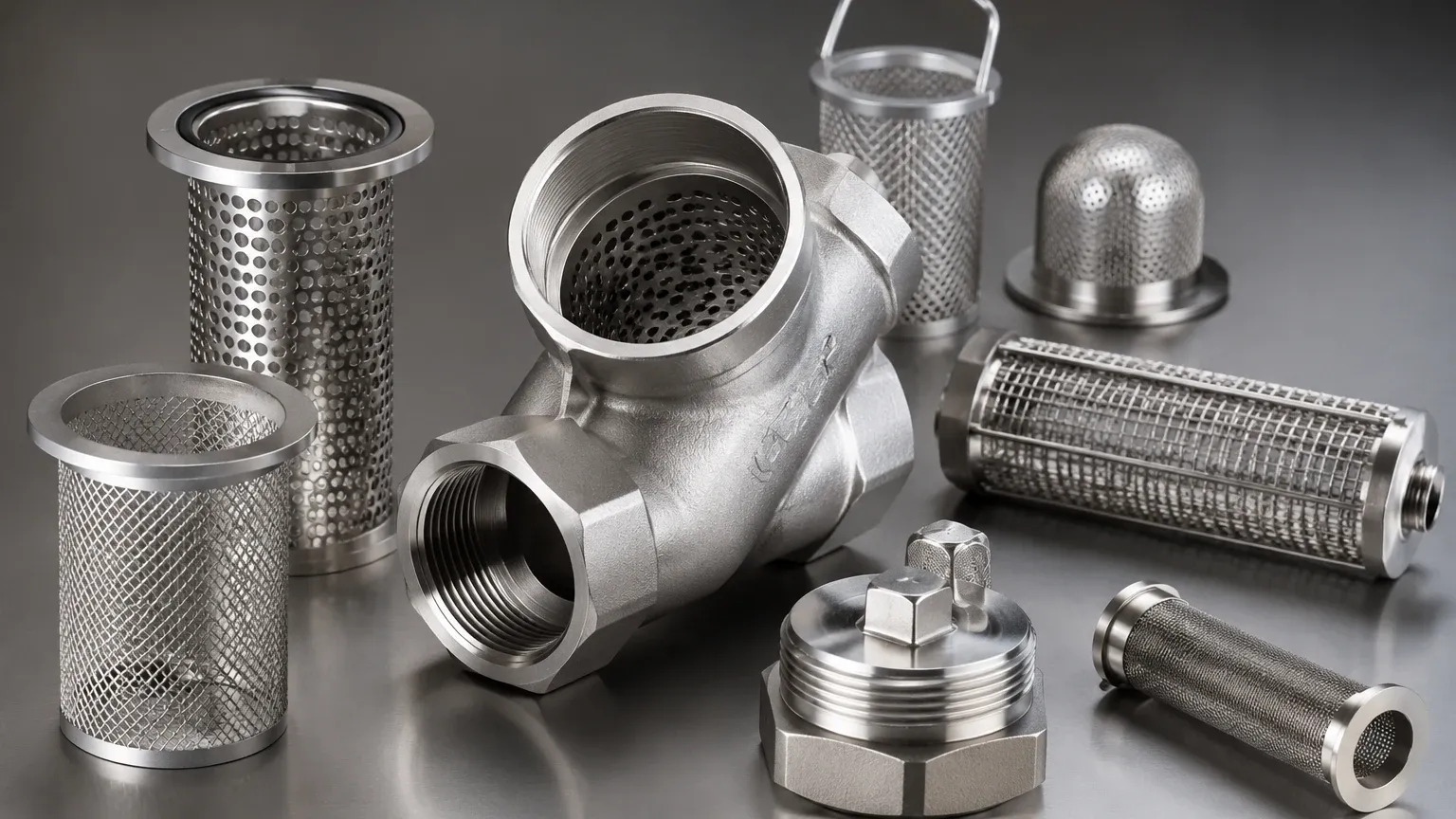
Two primary configurations dominate the industrial drainage market: Basket strainers and Y-strainers. Each has specific engineering trade-offs.
Basket Strainers
Basket strainers are designed for applications where high flow capacity is required and where the solids load is relatively high. Because the "basket" can hold a larger volume of debris than a Y-strainer, it is the preferred choice for main drainage headers. The top-loading design allows for easy removal and cleaning without the need to drain the entire housing in many configurations. In a strainers drain application, the basket's larger surface area significantly extends the time between cleaning cycles.
Y-Strainers
Y-strainers are typically used in smaller diameter pipes where the amount of material to be removed is low. They are more compact and can be installed in both horizontal and vertical positions. However, their debris-holding capacity is limited. In drainage systems, they are often used as secondary protection immediately preceding a sensitive instrument or a small dosing pump.
Maintenance Protocols and Total Cost of Ownership
The "fit and forget" mentality is a leading cause of failure in industrial drainage. A clogged strainer increases backpressure, which can lead to seal failures in pumps or upstream flooding.
Cleaning Cycles
Establishing a maintenance schedule based on differential pressure is the most effective way to manage drainage strainers. Installing pressure gauges upstream and downstream of the strainer allows operators to see exactly when the basket is reaching capacity. In automated systems, these gauges can trigger an alarm or a bypass valve.
Blow-off Valves
Many industrial strainers are equipped with a blow-off port at the bottom of the housing. This allows for the removal of accumulated sediment without opening the housing. For drainage systems with heavy silt or sand, regular blow-off procedures can significantly extend the interval between full basket cleanings.
Durability and Replacement
While the initial cost of a precision-engineered stainless steel strainer is higher than a generic alternative, the total cost of ownership is lower. A durable 316 stainless steel basket from a specialized manufacturer like Kaifil can withstand repeated high-pressure wash-downs and chemical cleanings that would degrade lesser materials in months.
Custom OEM Solutions for Complex Drainage Requirements
Standard off-the-shelf strainers often fail to meet the specific spatial or performance constraints of specialized industrial plants. This is where custom manufacturing becomes essential.
For example, a chemical processing plant may have a drainage trench that requires a non-standard rectangular basket strainer, or a pharmaceutical facility may require a specific surface finish (Ra value) to prevent bacterial adhesion. Customization options include:
* Variable Mesh Liners: Adding a fine wire mesh liner to a heavy-duty perforated basket to achieve dual-stage filtration.
* Reinforced Structures: For high-pressure drainage applications, baskets can be reinforced with internal frames to prevent collapsing under heavy debris loads.
* Specialized Alloys: Beyond standard stainless steel, manufacturers can utilize Duplex or Super Duplex steels for extremely aggressive environments.
By working with a manufacturer that understands the nuances of Strainers & Baskets, engineering teams can develop solutions that are tailored to their specific fluid dynamics and particulate profiles.
Addressing Common Engineering Challenges
Handling High-Viscosity Fluids
In some industrial drainage scenarios, such as oil processing or heavy chemical manufacturing, the fluid may be highly viscous. Standard straining calculations must be adjusted for viscosity, as higher resistance to flow will significantly increase the pressure drop across the mesh. In these cases, oversized strainer housings are often employed to increase the available surface area.
Preventing Air Entrainment
In gravity-fed drainage systems, air can become trapped in the strainer housing, leading to air locks that stop the flow. Selecting a strainer with an integrated vent valve or a design that allows for self-venting is critical for maintaining continuous drainage in low-pressure systems.
Environmental Compliance
As environmental regulations tighten, the role of the strainers drain becomes a matter of legal compliance. Capturing micro-plastics or heavy metal particulates at the source—within the plant's drainage system—is far more cost-effective than treating the entire volume of effluent at a wastewater treatment plant. High-precision wire mesh strainers allow facilities to target specific particle sizes mandated by their discharge permits.
Conclusion: Selecting the Right Partner for Filtration
The efficiency of an industrial drainage system is only as reliable as its weakest component. A poorly specified strainer will either allow damaging debris to pass through or cause operational bottlenecks due to frequent clogging. By focusing on material quality, engineering parameters like OAR and pressure drop, and the specific needs of the application, engineers can implement a filtration strategy that protects both equipment and the environment.
Kaifil provides the technical expertise and manufacturing precision required to produce high-performance stainless steel filtration components. Whether the application requires a standard basket for a cooling water drain or a custom-engineered solution for a corrosive chemical line, the focus remains on durability, accuracy, and long-term performance. For technical specifications and to explore the range of available Strainers & Baskets, consulting with a dedicated manufacturer ensures that your drainage system is optimized for the specific challenges of your industrial environment.
