


Wire Mesh Filter
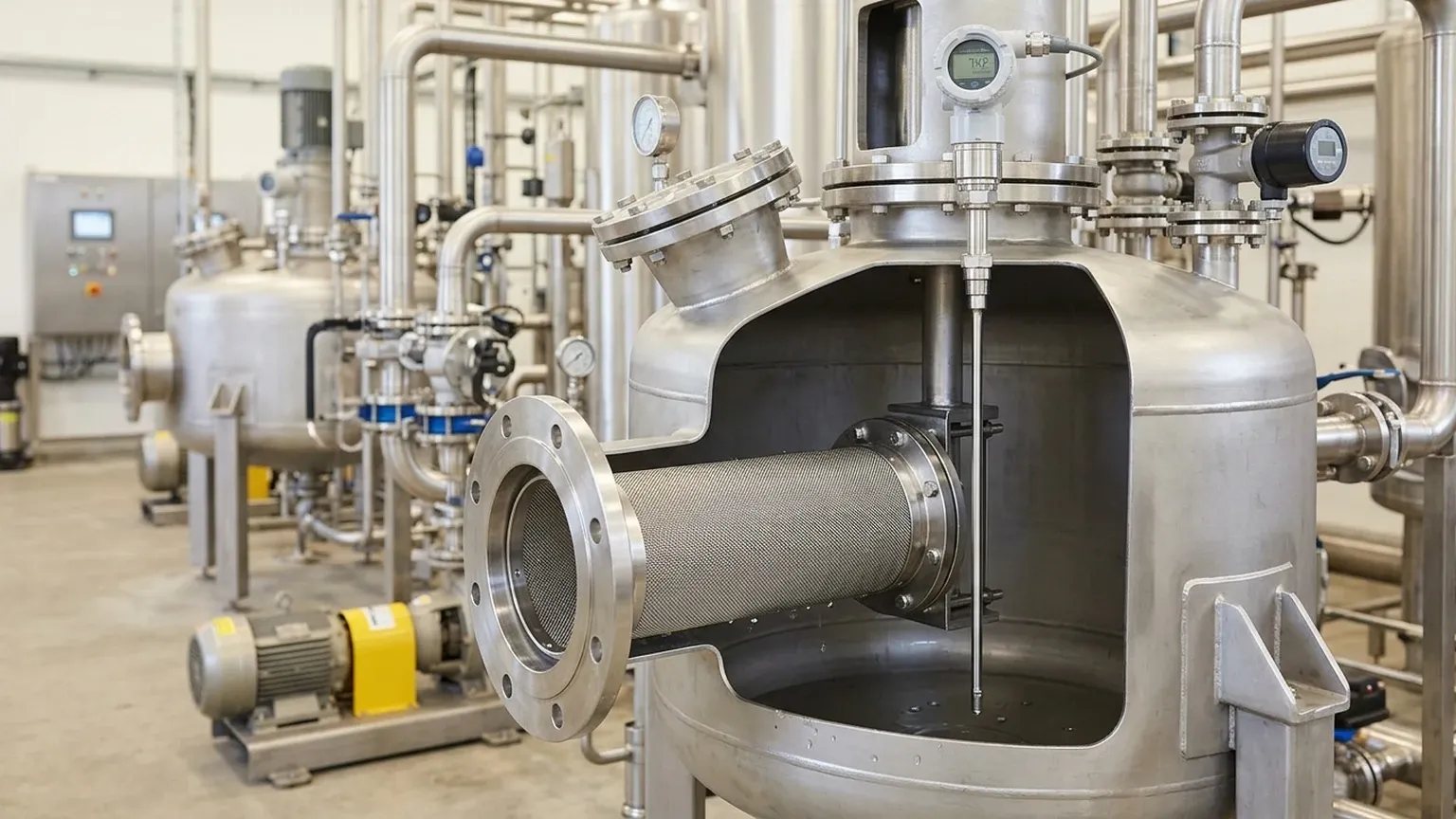
In industrial process engineering, the integrity of fluid systems depends heavily on the efficiency and durability of filtration components. A wire mesh filter serves as a critical mechanical barrier, designed to remove particulate matter from liquid or gaseous streams to protect downstream equipment, ensure product purity, and maintain system pressure stability. Unlike disposable polymer-based filters, stainless steel wire mesh solutions offer high mechanical strength, thermal resistance, and the ability to be cleaned and reused, making them a preferred choice for demanding B2B applications.
Selecting the appropriate filtration component requires a deep understanding of fluid dynamics, material science, and the specific geometric constraints of the machinery involved. This guide examines the technical parameters of Wire Mesh Filter Cylinders & Tubes, providing engineers and purchasing teams with the factual framework necessary to specify the right filtration solution for their industrial environment.
1. Operating Principles of Wire Mesh Filtration
At its core, a wire mesh filter operates on the principle of surface filtration. As a contaminated fluid passes through the precision-woven apertures of the mesh, particles larger than the pore size are captured on the upstream surface.
Surface vs. Depth Filtration
While depth filters (such as felt or wound cartridges) trap particles within a thick matrix, wire mesh provides a defined, two-dimensional barrier. This yields several engineering advantages:
* Predictable Micron Ratings: The geometric consistency of woven wire allows for precise control over the maximum particle size that can pass through.
* Low Pressure Drop: The high open-area ratio of stainless steel mesh minimizes resistance to flow, reducing energy consumption in pumping systems.
* Ease of Cleaning: Because contaminants are held on the surface, they can often be removed via backwashing, ultrasonic cleaning, or chemical baths, extending the service life of the component.
Weave Types and Their Impact
The performance of a filter cylinder or tube is largely dictated by the weave pattern of the wire. Common industrial weaves include:
* Plain Weave: The simplest pattern, offering high flow rates and standard filtration accuracy.
* Dutch Weave: Utilizes different wire diameters in the warp and shute directions to create a denser, stronger mesh with finer filtration capabilities (often down to 5-10 microns).
* Twill Weave: Allows for heavier wires in a given mesh count, increasing the mechanical durability of the filter under high-pressure conditions.
2. Material Selection and Chemical Compatibility
Industrial filtration often occurs in aggressive environments involving corrosive chemicals, extreme temperatures, or high-pressure steam. The material of construction is the most significant factor in determining the longevity of a wire mesh filter.
Stainless Steel Grades
Kaifil primarily utilizes stainless steel for its superior mechanical properties and corrosion resistance. The two most common grades are:
* AISI 304: Suitable for general industrial use, food and beverage processing, and applications where moisture is present but chemical aggression is low.
* AISI 316L: The "L" denotes low carbon, which improves weldability and resistance to intergranular corrosion. This grade is essential for pharmaceutical, chemical processing, and marine environments where resistance to chlorides and acids is required.
Specialized Alloys
For environments exceeding the capabilities of standard stainless steel—such as highly acidic chemical baths or extreme high-temperature exhaust—specialized alloys like Monel, Inconel, or Hastelloy may be specified. These materials prevent premature failure due to pitting, stress corrosion cracking, or oxidation.
3. Structural Configurations: Cylinders and Tubes
To withstand the differential pressure ($\\Delta P$) inherent in industrial flow systems, the wire mesh must be formed into a stable structural shape. Wire Mesh Filter Cylinders & Tubes are the most common configurations due to their inherent hoop strength and ease of integration into pipework.
Single-Layer vs. Multi-Layer Construction
* Single-Layer Filters: Best suited for low-pressure applications or as primary strainers. They are lightweight and cost-effective but may deform under heavy particulate loading.
* Multi-Layer Sintered Mesh: For high-pressure environments, multiple layers of mesh are diffusion-bonded (sintered) together. This process creates a monolithic structure that combines a fine filtration layer with coarser drainage and support layers, providing immense structural integrity without sacrificing filtration accuracy.
Reinforcement and Support
In many hydraulic or high-viscosity applications, the wire mesh is wrapped around or inserted into a perforated metal core. This support tube prevents the mesh from collapsing or bursting when the differential pressure increases as the filter becomes loaded with contaminants.
4. Key Selection Criteria for Engineers
When specifying a wire mesh filter, engineers must move beyond simple dimensions and consider the total operating context. The following parameters should be clearly defined before procurement:
Micron Rating (Absolute vs. Nominal)
* Nominal Rating: Indicates the ability of the filter to retain a majority of particles of a specific size (e.g., 95% of 20-micron particles). It is a general guideline but not a guarantee of total retention.
* Absolute Rating: Refers to the diameter of the largest hard spherical particle that will pass through the filter under specified test conditions. For critical pharmaceutical or semiconductor applications, absolute ratings are mandatory.
Flow Rate and Viscosity
The flow velocity through the mesh affects both filtration efficiency and the rate of pressure drop. High-viscosity fluids (such as heavy oils or polymers) require a larger surface area or a coarser mesh to maintain an acceptable flow rate without exceeding the structural limits of the filter.
Operating Temperature and Pressure
Stainless steel filters can operate at temperatures exceeding 500°C, but the mechanical strength of the mesh decreases as temperature rises. Furthermore, the maximum allowable differential pressure must be calculated to determine if additional internal or external reinforcement is required.
5. Customization and OEM Integration
One of the primary advantages of working with a specialized manufacturer like Kaifil is the ability to customize every aspect of the filter component. Off-the-shelf solutions rarely meet the precise needs of complex industrial machinery.
Dimensional Precision
Filter cylinders can be manufactured to exact tolerances in terms of length, inner diameter (ID), and outer diameter (OD). This ensures a bypass-free fit within the filter housing, which is critical for maintaining system integrity.
End Fittings and Connections
Customization extends to the interfaces of the filter. Options include:
* Threaded Connectors (NPT/BSP): For direct integration into piping.
* Flanges: For high-pressure or large-diameter systems.
* Standardized End Caps (DOE, SOE, 222/226): To ensure compatibility with existing industrial filter housings.
* Gasket Materials: Selection of EPDM, Viton, or PTFE gaskets based on the chemical nature of the fluid.
6. Maintenance, Cleaning, and Total Cost of Ownership
While the initial cost of a stainless steel wire mesh filter is higher than that of a disposable cartridge, the total cost of ownership (TCO) is often significantly lower due to the component's longevity and reusability.
Cleaning Protocols
To maintain optimal performance, a regular cleaning cycle should be established. Methods include:
1. Backpulsing/Backwashing: Reversing the flow of the fluid to dislodge surface particles. This can often be automated within the system.
2. Ultrasonic Cleaning: Using high-frequency sound waves in a cleaning solvent to remove fine particulates lodged deep within the mesh pores.
3. Chemical Cleaning: Using acids or alkalis to dissolve organic or inorganic scaling, provided the mesh material is compatible.
Determining Replacement Cycles
Despite being cleanable, wire mesh filters eventually reach the end of their service life. Signs that replacement is necessary include:
* Permanent Pressure Drop: When the "clean" pressure drop remains high even after thorough cleaning, indicating irreversible pore blinding.
* Mechanical Fatigue: Visible signs of mesh fraying, pleat deformation, or weld failure.
* Media Migration: In lower-quality filters, individual wires may break and enter the downstream flow, which can be catastrophic in food or pharmaceutical production.
7. Application Risks and Mitigation
Engineers must be aware of potential failure modes when implementing wire mesh filtration. The most common risk is "blinding" or "plugging," where the nature of the contaminant (such as fibrous or gelatinous materials) makes surface filtration difficult. In these cases, a coarser pre-filter or a different mesh geometry may be required to prevent rapid pressure spikes.
Another risk is galvanic corrosion, which occurs if the filter material is significantly different from the housing material in an electrolytic fluid. Ensuring material consistency across the fluid path is a standard engineering best practice for mitigating this risk.
Conclusion
The selection of Wire Mesh Filter Cylinders & Tubes is a technical decision that impacts the reliability and efficiency of the entire industrial process. By focusing on precise micron ratings, appropriate material grades, and robust structural designs, engineers can ensure that their filtration systems provide consistent performance under the most demanding conditions.
Kaifil's expertise in custom stainless steel filtration allows for the development of tailored solutions that address specific flow rates, chemical challenges, and mechanical constraints. Whether for hydraulic systems, chemical processing, or water treatment, a well-engineered wire mesh filter is an investment in the long-term stability and safety of industrial operations.
