


Eaton Strainers Distributors
In industrial fluid handling systems, the selection of filtration components is a critical engineering decision that impacts the longevity of downstream equipment such as pumps, valves, and heat exchangers. For many procurement and engineering teams, identifying reliable Eaton strainers distributors is the primary step in securing standard filtration hardware. However, the process involves more than simply matching part numbers. It requires a deep understanding of application requirements, material compatibility, and the trade-offs between off-the-shelf distribution and custom-engineered filtration solutions.
Industrial strainers are designed to remove large particles from liquid streams, protecting sensitive components from mechanical damage and preventing system clogging. Whether a facility utilizes simplex, duplex, or Y-strainers, the performance of the system relies heavily on the integrity of the internal baskets and the precision of the housing design.
Understanding the Role of Industrial Strainer Distributors
Distributors serve as the vital link between large-scale manufacturers and the end-user. When searching for Eaton strainers distributors, industrial buyers typically look for three primary value-added services: inventory availability, technical support, and logistical efficiency.
Inventory and Availability
Standard distributors maintain stock of common sizes and materials, which is essential for emergency replacements or routine maintenance. For facilities operating 24/7, a distributor’s ability to provide immediate shipping on standard Strainers & Baskets can prevent costly unplanned downtime. However, inventory is often limited to high-volume items, meaning specialized configurations or exotic materials may still carry significant lead times.
Technical Consultation
A qualified distributor should offer more than a transaction. Engineers often require assistance with sizing and selection, ensuring that the selected strainer can handle the required flow rate without exceeding the allowable pressure drop. This involves calculating the CV (flow coefficient) and understanding the viscosity of the fluid at various operating temperatures.
Key Evaluation Criteria for Strainers & Baskets
When evaluating options provided by Eaton strainers distributors or alternative manufacturers, technical professionals must focus on the specifications of the internal components. The basket is the heart of the strainer, and its design dictates the efficiency of the entire filtration process.
Material Selection and Chemical Compatibility
Stainless steel is the industry standard for most industrial applications due to its corrosion resistance and structural strength.
- SS304: Suitable for general-purpose applications, water treatment, and mildly corrosive environments.
- SS316/316L: Preferred for chemical processing, pharmaceutical production, and marine environments where chloride resistance is necessary.
- Specialty Alloys: For highly aggressive media, materials like Monel or Hastelloy may be required, though these are rarely available as stock items through standard distributors.
Filtration Precision and Mesh Ratings
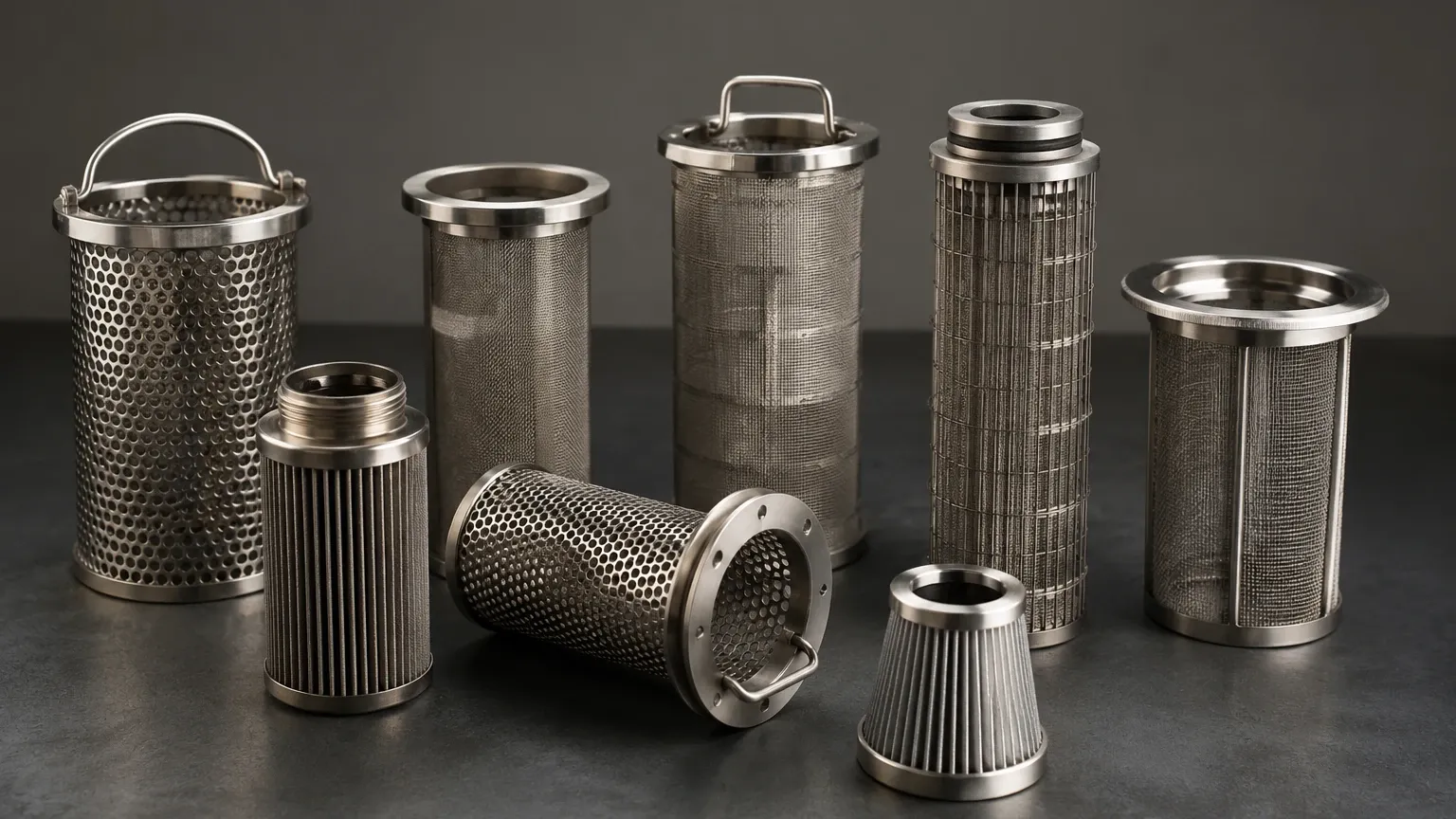
The choice between perforated metal and wire mesh depends on the target particle size. Perforated baskets are typically used for coarse straining (e.g., 1/8" or 1/16" holes), while wire mesh liners are added for finer filtration requirements (e.g., 20 mesh to 400 mesh). Engineers must ensure that the "open area ratio" of the basket is sufficient—typically at least 6:1 relative to the pipe cross-sectional area—to minimize pressure drop and extend the time between cleaning cycles.
Common Challenges with Standard Distribution Models
While working with Eaton strainers distributors is a standard practice, engineering teams often encounter limitations that can affect long-term operational efficiency. Understanding these challenges allows for better strategic planning.
Lead Times for Non-Standard Components
Standard distribution is optimized for high-volume, standard-spec hardware. If an application requires a non-standard flange rating, a specific seal material (such as Kalrez or PTFE-encapsulated O-rings), or a reinforced basket for high-differential pressure scenarios, the lead times from a major brand's distribution network can extend to several weeks or months.
Customization Constraints
Many industrial processes do not fit into a "one size fits all" category. A standard strainer housing might not fit into an existing piping footprint, or a specific process might require a unique basket handle design for easier maintenance in tight spaces. Distributors are often limited by the manufacturer's catalog, making it difficult to source modified or bespoke components that meet specific site requirements.
Technical Specifications to Confirm Before Purchase
Before finalizing an order through any distribution channel, engineers should confirm several critical parameters to ensure the equipment is fit for purpose. Relying solely on a brand name is insufficient for high-stakes industrial environments.
1. Design Pressure and Temperature: Verify that the housing and the internal basket can withstand the maximum surge pressures and operating temperatures of the system. This is particularly important in steam or high-temperature oil applications.
2. Seal and Gasket Materials: Ensure the elastomers used in the strainer cover are compatible with the process fluid. Common options include Buna-N, EPDM, and Viton.
3. Connection Types: Confirm whether the system requires NPT (threaded), RF Flanged, or Socket Weld connections. Misalignment in connection types is a frequent cause of installation delays.
4. Differential Pressure Limits: Ask for the maximum allowable differential pressure (${\Delta}P$) for the basket before structural deformation occurs. This is critical for systems with high solids loading.
Why Engineering Teams Consider Custom Manufacturing Alternatives
In many cases, the limitations of standard distribution lead technical professionals to seek out manufacturers like Kaifil who specialize in custom stainless steel filtration solutions. While Eaton strainers distributors provide excellent general-purpose hardware, custom manufacturers offer several distinct advantages for specialized industrial applications.
OEM Compatibility and Retrofitting
One of the most frequent requirements for maintenance teams is the replacement of baskets for existing strainer housings. Custom manufacturers can produce high-quality replacement Strainers & Baskets that meet or exceed the original equipment manufacturer (OEM) specifications. This is especially useful when the original brand has discontinued a specific model or when the lead time for an OEM replacement is prohibitive.
Enhanced Durability and Design
Standard baskets may fail prematurely in applications with high flow velocities or heavy particulate loads. A custom manufacturer can reinforce the basket structure with heavier gauge perforated metal or add internal supports to prevent collapse. Furthermore, customization allows for the optimization of the filtration surface area, potentially reducing the frequency of cleaning and lowering the total cost of ownership.
Direct Engineering Collaboration
Unlike a distributor who acts as a middleman, working directly with a manufacturer allows for a collaborative engineering process. This ensures that the filtration accuracy, material selection, and structural design are perfectly aligned with the specific demands of chemical processing, food and beverage production, or hydraulic systems.
Maintenance and Replacement Cycles for Strainer Baskets
To maintain the efficiency of an industrial filtration system, a rigorous maintenance schedule is required. The performance of the strainer is only as good as the condition of its internal basket.
Cleaning Protocols
Baskets should be cleaned whenever the differential pressure reaches a predetermined limit (usually 5-10 psi above the clean pressure drop). In automated systems, this may trigger a backwash cycle or an alarm for manual intervention. Using the correct cleaning methods—such as ultrasonic cleaning or high-pressure water jets—is essential to avoid damaging the delicate wire mesh.
Identifying Signs of Wear
During routine inspections, maintenance personnel should look for:
- Structural Fatigue: Cracks in the welds or deformation of the basket frame.
- Bypass: Gaps between the basket and the housing seat, which allow unfiltered fluid to pass through.
- Mesh Blinding: Permanent clogging of the mesh pores that cannot be removed by standard cleaning, indicating the need for a replacement.
Conclusion: Strategic Selection for Industrial Filtration
Identifying the right Eaton strainers distributors is a logical step for many standard industrial projects. However, for engineers managing complex processes or demanding environments, the decision-making process must go deeper. By evaluating material compatibility, filtration precision, and the potential need for customization, facilities can ensure they are not just buying a component, but investing in the reliability of their entire system.
Whether sourcing standard units through a distributor or collaborating with a custom manufacturer for high-performance filtration components, the goal remains the same: achieving efficient, durable, and cost-effective filtration. For those requiring precision-engineered solutions or specialized replacement components, exploring the capabilities of dedicated manufacturers often provides the flexibility and technical rigor that standard distribution cannot match.
