


Strainers Fence
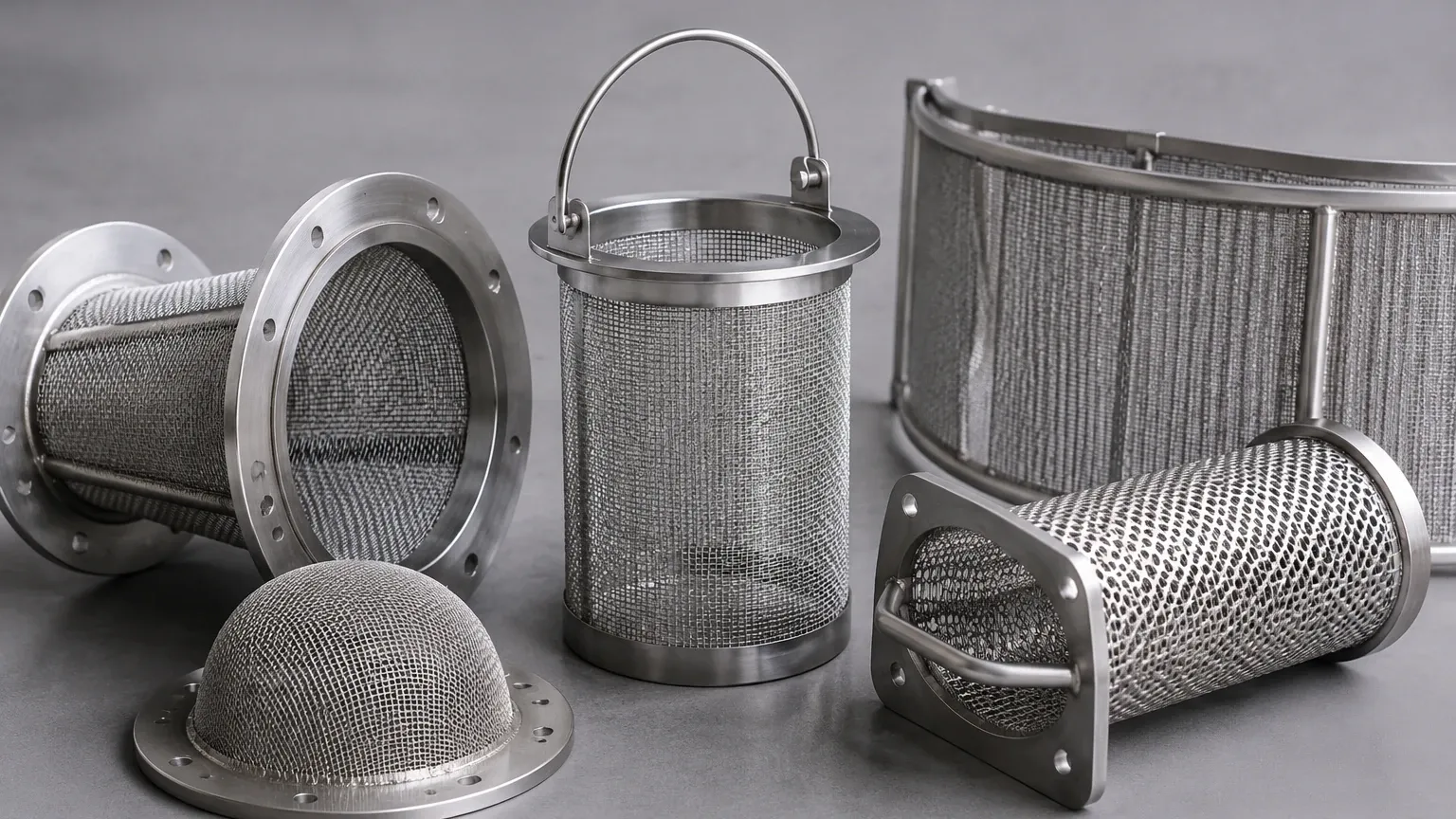
In industrial fluid processing, the term "fence" often describes a critical barrier designed to prevent the passage of unwanted materials while allowing the desired medium to flow through. When applied to high-performance filtration, the concept of a strainers fence refers to the precision-engineered wire mesh or perforated metal barrier within industrial Strainers & Baskets. These components serve as the first line of defense for downstream equipment, such as pumps, valves, heat exchangers, and spray nozzles, ensuring that particulate matter does not compromise system integrity or product quality.
For engineers and procurement professionals, understanding the technical nuances of these filtration "fences" is essential for optimizing system performance and reducing the total cost of ownership. This guide explores the engineering principles, material considerations, and application-specific requirements for industrial strainers and baskets.
The Role of Strainers and Baskets in Industrial Fluid Systems
Industrial strainers are coarse filters designed to remove larger particles from a process stream. Unlike fine membrane filters that may operate at the sub-micron level, strainers typically handle particles ranging from several millimeters down to approximately 40 microns. The primary objective is protection: by acting as a robust fence, these components prevent mechanical damage and clogging in complex piping systems.
In a typical industrial setup, a strainer basket is housed within a pressure vessel. As fluid enters the housing, it is forced through the mesh or perforated screen. The solids are trapped within the basket (the fence), while the cleaned fluid continues through the outlet. Because these systems often handle high flow rates and varying pressures, the structural integrity of the strainer is as important as its filtration accuracy.
Kaifil specializes in manufacturing these critical components using high-grade stainless steel, ensuring that the filtration barrier can withstand the mechanical stresses of industrial operation without bypassing or collapsing. Whether used in chemical processing, water treatment, or food production, the effectiveness of the strainer depends entirely on the design of its internal mesh fence.
Understanding the "Fence" in Filtration: Mesh and Perforated Media
The "fence" within a strainer is typically constructed from one of two types of media: perforated metal or woven wire mesh. Often, a combination of both is used to achieve the necessary balance of filtration precision and structural strength.
Perforated Metal Screens
Perforated metal serves as the primary structural layer. It is created by punching holes of specific shapes and sizes into a metal sheet. In many heavy-duty applications, a perforated basket acts as the standalone strainer fence for removing large debris like scale, welding slag, or stones. The key variables here are the hole diameter and the "open area" percentage. A higher open area reduces pressure drop but may compromise the physical strength of the basket.
Woven Wire Mesh
For finer filtration requirements, a woven wire mesh is lined inside or outside the perforated metal support. This mesh acts as a much tighter strainers fence, capable of capturing fine sand, fibers, or small particulates. Engineers must choose between different weave types:
* Plain Weave: The most common type, where wires cross over and under each other alternately. It provides a consistent pore size and is easy to clean.
* Dutch Weave: Uses heavier warp wires and smaller shute wires, resulting in a much denser mesh with higher pressure resistance and finer filtration capabilities.
* Twilled Weave: Allows for thicker wires in a given mesh count, increasing the durability of the fence in high-vibration or high-pressure environments.
Engineering Specifications for Custom Strainer Baskets
When designing a strainers fence for a specific industrial application, several engineering parameters must be confirmed to ensure the component performs as expected. A poorly specified strainer can lead to frequent clogging, excessive pressure drops, or even catastrophic failure of the filtration media.
Open Area Ratio
The ratio of the total area of the holes in the strainer to the cross-sectional area of the inlet pipe is a critical metric. For most industrial applications, a ratio of 4:1 or 6:1 is recommended. This ensures that even as the basket begins to fill with debris, there is still enough unobstructed area to maintain flow without a significant increase in backpressure. A "fence" with a low open area ratio will require more frequent cleaning and may cause pump cavitation.
Pressure Drop (Delta P)
Pressure drop is the difference in fluid pressure between the inlet and outlet of the strainer. An clean strainer should have a minimal pressure drop. As the strainers fence captures more particles, the Delta P increases. Engineers must specify the maximum allowable pressure drop before the system requires a cleaning cycle. If the fence is not strong enough to handle the pressure differential, the mesh may tear or the basket may deform.
Micron Rating vs. Mesh Count
It is vital to distinguish between mesh count (the number of openings per linear inch) and the micron rating (the actual size of the openings). A 100-mesh screen made with thick wire will have smaller openings than a 100-mesh screen made with thin wire. Specifying the required micron rating ensures that the strainers fence actually captures the target particle size.
Material Selection for Harsh Industrial Environments
The longevity of a strainers fence is largely determined by its material composition. Because industrial fluids can be corrosive, abrasive, or subject to extreme temperatures, stainless steel is the industry standard for high-quality filtration components.
Type 304 Stainless Steel
304 stainless steel is the most common material for industrial strainers. It offers excellent durability and good corrosion resistance for most water-based applications and mild chemicals. It is widely used in the food and beverage industry due to its ease of cleaning and resistance to organic acids.
Type 316L Stainless Steel
For more demanding environments, such as chemical processing or marine applications, 316L stainless steel is preferred. The addition of molybdenum increases resistance to pitting and crevice corrosion in chloride-rich environments. The "L" denotes low carbon content, which improves weldability and prevents sensitization during the manufacturing of the strainer basket.
Specialized Alloys
In extreme cases involving highly acidic or high-temperature fluids, specialized alloys like Monel, Hastelloy, or Inconel may be required. As a custom manufacturer, Kaifil works with various alloys to ensure the strainers fence remains intact and functional even in the most aggressive process conditions.
Optimizing Flow Dynamics and Reducing Pressure Drop
A well-designed strainers fence does more than just stop particles; it manages the flow of fluid to minimize turbulence and energy loss. In many industrial systems, energy consumption by pumps is a significant operational cost. A strainer that creates excessive resistance forces the pump to work harder, increasing wear and electricity usage.
To optimize flow dynamics, engineers should consider the following:
1. Basket Geometry: Slanted or pleated basket designs can significantly increase the surface area of the fence without increasing the overall footprint of the strainer housing.
2. Inlet/Outlet Alignment: Ensuring that the fluid enters the basket in a way that distributes debris evenly prevents localized clogging, which can lead to premature pressure spikes.
3. Surface Finish: For high-viscosity fluids or food-grade applications, a polished or electropolished surface on the stainless steel mesh can reduce friction and make the fence easier to clean during backwashing or manual maintenance.
Maintenance Protocols for Industrial Filtration Components
No matter how well-engineered a strainers fence is, its performance will degrade if it is not properly maintained. In a B2B environment, downtime is costly, so a clear maintenance and replacement cycle is essential.
Cleaning Cycles
Most industrial strainers are equipped with pressure gauges. When the differential pressure reaches a predetermined limit, the basket must be cleaned. In "Simplex" strainer systems, the process must be stopped to remove the basket. In "Duplex" systems, the flow can be diverted to a second strainer, allowing for continuous operation while the first fence is cleaned.
Inspection for Wear
During cleaning, the mesh should be inspected for signs of "blinding" (permanent clogging of the pores) or mechanical damage. Even small tears in the mesh fence can allow large particles to pass through, potentially damaging expensive downstream equipment. If the mesh shows signs of fatigue or wire displacement, the basket should be replaced immediately.
Total Cost of Ownership (TCO)
While a low-cost strainer may seem attractive initially, the TCO is often higher due to shorter service life, higher pressure drops, and increased labor costs for frequent cleaning. Investing in a high-quality, custom-engineered strainers fence from a manufacturer like Kaifil ensures a longer service life and more reliable protection for the entire system.
Selecting the Right Strainer for Your Application
Choosing the correct configuration for a strainers fence requires a thorough understanding of the process fluid and the operational goals. Engineers should be prepared to answer the following questions before finalizing a purchase:
* What is the flow rate (GPM or m³/h)? This determines the size of the strainer housing and the required open area of the basket.
* What is the nature of the contaminant? Is it hard and abrasive, or soft and gelatinous? This influences the choice of mesh weave and material.
* What is the operating pressure and temperature? High-pressure systems require reinforced baskets with heavy-duty perforated supports.
* Is the process continuous or batch? This dictates whether a Simplex or Duplex strainer is necessary.
By focusing on these technical details, purchasing teams can move beyond generic marketing claims and select filtration solutions that provide genuine value. A precision-engineered strainers fence is an investment in the reliability and efficiency of the entire industrial process.
For more information on specific configurations and to explore custom options, you can Review product options and application support to find the ideal filtration component for your facility. Kaifil’s expertise in stainless steel manufacturing ensures that every strainer basket meets the rigorous demands of modern industrial applications, providing a dependable barrier that protects your most valuable equipment.
