


Ss Wire Mesh Filter
In industrial process engineering, the reliability of filtration systems directly impacts equipment longevity, product purity, and operational uptime. The ss wire mesh filter (stainless steel wire mesh filter) remains a critical component in these systems due to its mechanical strength, thermal stability, and precise pore geometry. Unlike disposable polymer-based filters, stainless steel mesh offers a reusable, high-performance solution capable of withstanding the rigorous demands of chemical processing, hydraulic systems, and food production.
This guide provides a technical overview of the selection, engineering, and application of stainless steel filtration components, with a specific focus on the structural advantages of Wire Mesh Filter Cylinders & Tubes in industrial environments.
Understanding the Fundamentals of SS Wire Mesh Filtration
The primary function of an ss wire mesh filter is surface filtration. In this process, particles larger than the mesh openings are captured on the upstream surface of the media. This differs from depth filtration, where particles are trapped within a thick medium. Surface filtration is particularly advantageous in industrial settings because it allows for predictable performance and easier cleaning via backwashing or ultrasonic methods.
Industrial wire mesh is typically defined by its weave type, which dictates the filtration accuracy and flow characteristics:
* Plain Weave: The most common structure where wires cross over and under each other. It offers high flow rates and is ideal for coarse to medium filtration.
* Dutch Weave: This utilizes different wire diameters for the warp and shute. The result is a much tighter, more robust mesh capable of fine filtration and high pressure resistance.
* Twill Weave: Each shute wire passes over and under two warp wires, allowing for heavier wire diameters in a given mesh count, which increases the mechanical strength of the filter.
Key Performance Metrics for Wire Mesh Filter Cylinders & Tubes
When specifying Wire Mesh Filter Cylinders & Tubes, engineers must evaluate several interconnected variables to ensure the component performs reliably under operational stress.
1. Micron Rating: Absolute vs. Nominal
In industrial filtration, the micron rating defines the size of particles the mesh can remove. It is vital to distinguish between nominal and absolute ratings. A nominal rating refers to a filter's ability to retain a major percentage of particles of a specific size, whereas an absolute rating indicates the diameter of the largest hard spherical particle that will pass through the filter under specified test conditions. For critical applications, such as pharmaceutical processing or high-precision hydraulics, absolute ratings are mandatory to prevent downstream contamination.
2. Differential Pressure (ΔP)
Differential pressure is the difference between the upstream and downstream pressure of the filter. An optimized filter design minimizes initial ΔP to reduce energy consumption and pump wear. As the ss wire mesh filter accumulates debris, ΔP increases. Engineers must determine the "terminal pressure drop"—the point at which the filter must be cleaned or replaced to prevent structural collapse or bypass.
3. Effective Filtration Area (EFA)
The EFA determines the flow capacity and the dirt-holding capacity of the unit. By utilizing cylindrical or tubular designs, manufacturers can maximize the surface area within a compact footprint. This is often achieved through pleating the mesh or using multi-layer sintered structures to increase the available area without increasing the overall dimensions of the filter housing.
Material Engineering: Selecting the Right Stainless Steel Grade
The chemical and thermal environment of the application dictates the material grade of the ss wire mesh filter. While stainless steel is inherently corrosion-resistant, different alloys offer varying levels of protection against specific industrial challenges.
* AISI 304: The standard grade for general industrial use. It provides excellent mechanical properties and good corrosion resistance in mildly corrosive environments, such as water treatment or basic food processing.
* AISI 316L: Containing molybdenum, 316L offers superior resistance to chlorides and pitting. This is the industry standard for chemical processing, marine applications, and pharmaceutical manufacturing where rigorous cleaning agents are used.
* Specialty Alloys: For extreme environments involving high temperatures or highly acidic fluids, alloys such as Inconel, Monel, or Hastelloy may be required. These materials maintain structural integrity at temperatures exceeding 500°C and resist aggressive chemical attack that would degrade standard stainless steel.
Structural Design and Customization Options
Industrial applications rarely allow for "off-the-shelf" solutions. The design of Wire Mesh Filter Cylinders & Tubes must be customized to integrate seamlessly with existing piping and housing. Key customization factors include:
Layer Configuration
* Single-Layer Mesh: Suitable for low-pressure applications where ease of cleaning is the priority.
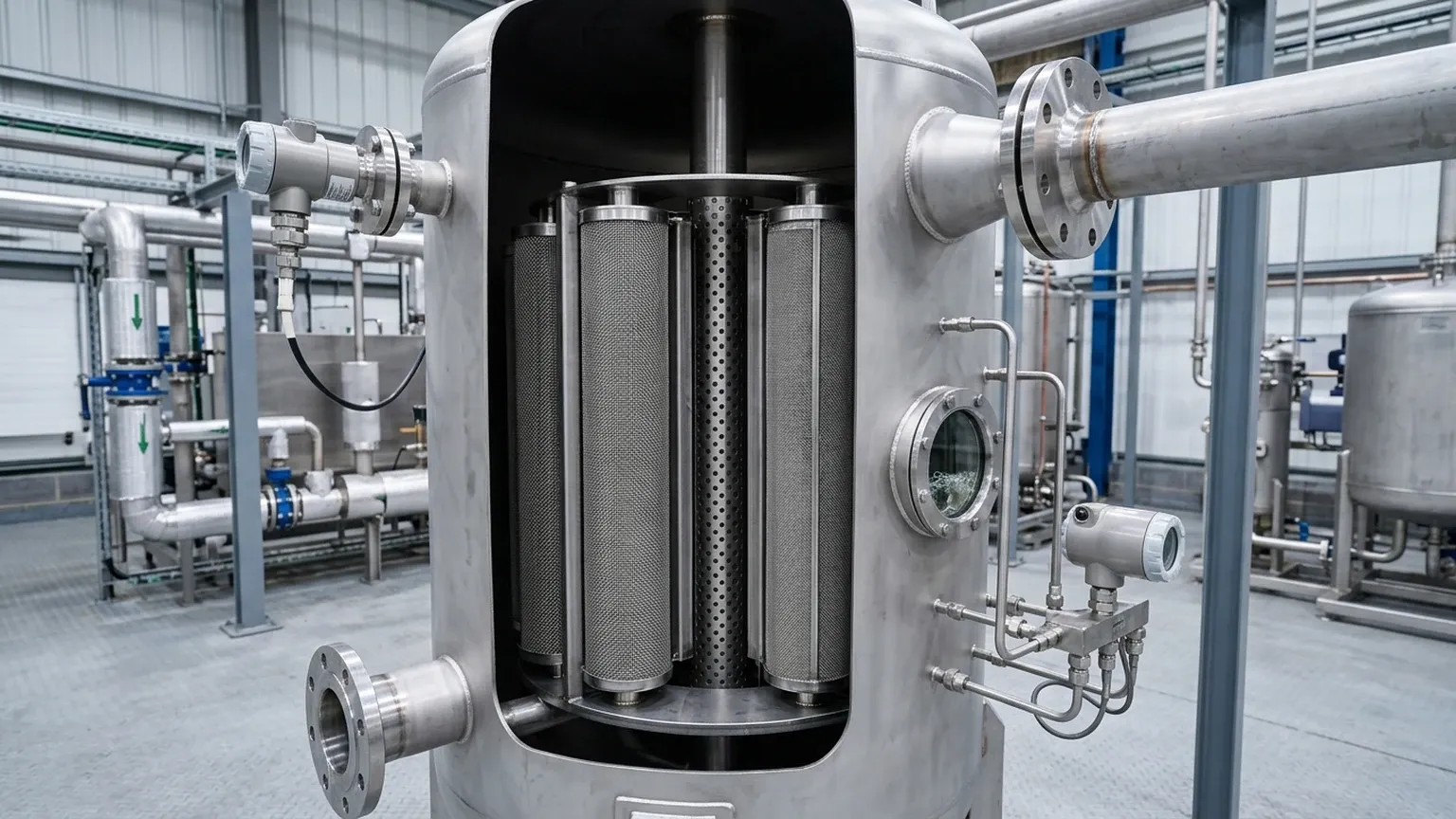
* Multi-Layer Sintered Mesh: This involves bonding multiple layers of wire mesh through a heat-treatment process. The result is a filter medium that combines the fine filtration of a thin mesh with the mechanical support of a coarse mesh, creating a highly durable, rigid structure that does not require an internal support core.
Reinforcement and Support
For high-pressure applications, the mesh is often supported by a perforated metal core or an external cage. This prevents the mesh from deforming or bursting under high differential pressure. The choice of support structure must account for the total flow rate to ensure it does not contribute significantly to the pressure drop.
End Fittings and Sealing
The method of attachment—whether via threaded connections, flanges, or O-ring seals—is critical for preventing bypass. Precision welding (TIG or Plasma) is used to attach end caps to the mesh cylinder, ensuring a leak-proof transition that maintains the integrity of the filtration rating.
Installation Constraints and Operational Risks
Proper installation is as critical as the filter design itself. Engineers should consider the following constraints during the system design phase:
* Flow Direction: Most cylindrical filters are designed for outside-to-inside flow, which allows for easier inspection of the outer surface. However, inside-to-outside flow may be required in specific applications to trap debris within the tube for easier removal during maintenance.
* Housing Tolerance: The fit between the filter element and the housing must be precise. Excessive clearance can lead to fluid bypass, while an overly tight fit can damage the mesh during installation or removal.
* Thermal Expansion: In high-temperature applications, the difference in expansion rates between the stainless steel filter and the housing material must be accounted for to prevent mechanical stress on the seals.
Application Risks
One of the primary risks in using an ss wire mesh filter is "blinding" or clogging. This occurs when particles become wedged in the mesh openings, reducing the open area and increasing pressure drop. This is often caused by selecting an incorrect micron rating or using a weave type that is unsuitable for the particle morphology (e.g., using a plain weave for fibrous contaminants).
Maintenance and Cleaning for Extended Service Life
One of the most significant advantages of stainless steel filtration is the ability to clean and reuse the elements, which significantly lowers the total cost of ownership compared to disposable filters.
Cleaning Methods
1. Backwashing: Reversing the fluid flow to dislodge particles from the mesh surface. This is effective for surface-loaded contaminants.
2. Ultrasonic Cleaning: Using high-frequency sound waves in a cleaning solvent to create cavitation bubbles that dislodge fine particles trapped within the mesh pores. This is the most effective method for restoring the original flow characteristics of a blinded filter.
3. Chemical Cleaning: Utilizing acids, alkalis, or specialized solvents to dissolve organic or inorganic scale. It is imperative to ensure the cleaning chemicals are compatible with the specific grade of stainless steel (e.g., avoiding high concentrations of hydrochloric acid on 304/316L).
Replacement Indicators
While reusable, an ss wire mesh filter has a finite lifespan. Indicators that a filter needs replacement include:
* Permanent Pressure Drop: When the clean pressure drop after cleaning is significantly higher than the original clean pressure drop.
* Mechanical Deformation: Any signs of buckling, pleat collapse, or mesh separation.
* Media Migration: The presence of wire fragments or downstream contamination, indicating that the mesh has suffered fatigue or corrosion failure.
Procurement Checklist for International Buyers
When sourcing Wire Mesh Filter Cylinders & Tubes for industrial projects, providing comprehensive technical specifications to the manufacturer is essential for ensuring performance. International buyers should confirm the following details before finalizing a purchase order:
1. Material Certification: Request Mill Test Reports (MTRs) to verify the alloy grade (e.g., 316L) and chemical composition.
2. Filtration Accuracy: Specify whether the micron rating is absolute or nominal and request the bubble point test data if applicable.
3. Dimensional Tolerances: Provide clear drawings indicating OD, ID, overall length, and the specific dimensions of any end fittings.
4. Operating Conditions: Disclose the maximum operating temperature, maximum differential pressure, and the chemical nature of the fluid.
5. Quality Standards: Ensure the manufacturer adheres to ISO 9001 or equivalent quality management systems, particularly regarding welding integrity and mesh consistency.
By focusing on these technical parameters, engineering and procurement teams can ensure that their choice of ss wire mesh filter provides the necessary protection for their industrial processes, balancing initial capital expenditure with long-term operational efficiency.
