


Engineering Guide to Stainless Steel Wire Mesh Filter Solutions
In industrial process engineering, the selection of filtration media is a critical decision that impacts equipment longevity, product purity, and operational overhead. Among the various technologies available, the stainless steel wire mesh filter stands out as a versatile, high-durability solution capable of performing in environments where polymer-based filters fail. These components are engineered to provide precise particulate separation while maintaining structural integrity under significant thermal and mechanical stress.
This guide examines the technical specifications, selection criteria, and operational considerations for integrating stainless steel filtration components into industrial systems, with a specific focus on the design and application of Wire Mesh Filter Cylinders & Tubes.
1. Operating Principles of Wire Mesh Filtration
Stainless steel wire mesh operates primarily on the principle of surface filtration. Unlike depth filters (such as wound or melt-blown cartridges) that trap particles within a thick matrix, a wire mesh filter captures contaminants on the upstream surface of the media. This characteristic allows for more predictable cleaning and a more consistent pressure drop profile over the life of the filter.
Pore Geometry and Sieve Effect
The filtration accuracy of a stainless steel wire mesh filter is determined by its pore size, which is a function of the wire diameter and the weave pattern. In a precision-manufactured mesh, the openings are uniform, ensuring that any particle larger than the physical aperture is retained. This "sieve effect" provides an absolute micron rating, which is essential for applications requiring strict adherence to particle size limits, such as in pharmaceutical manufacturing or fine chemical processing.
Flow Dynamics and Pressure Drop
As fluid passes through the mesh, it encounters resistance. The initial pressure drop (clean ΔP) is influenced by the open area percentage of the mesh. A higher open area allows for higher flow rates with lower resistance, but may compromise the structural strength of the mesh if the wire diameter is too thin. Engineers must balance the required filtration fineness with the allowable pressure drop and the mechanical demands of the system.
2. Engineering Selection Criteria: Weave Types and Materials
Selecting the right mesh involves more than just choosing a micron rating. The physical structure of the weave dictates how the filter will behave under pressure and how easily it can be cleaned.
Common Weave Patterns
1. Plain Weave: The most straightforward construction where each warp wire crosses over and under each weft wire. It offers the highest open area and is ideal for low-pressure, high-flow applications.
2. Twill Weave: Each wire passes over two and under two wires. This allows for the use of heavier wires for a given micron rating, increasing the mechanical strength of the filter.
3. Plain Dutch Weave: This utilizes a larger diameter warp wire and a smaller diameter weft wire driven closely together. The result is a dense, strong mesh with a tortuous path, providing excellent filtration for high-pressure systems.
4. Twill Dutch Weave: Combining twill and dutch weave techniques, this provides the finest filtration levels (down to 5-10 microns) and the highest structural stability, often used in hydraulic and aerospace applications.
Material Considerations
The choice of stainless steel grade is dictated by the chemical environment and temperature of the process fluid:
* SS304: The standard grade for general industrial use, providing good corrosion resistance and durability in non-acidic environments.
* SS316L: Contains molybdenum, which significantly enhances resistance to chlorides and pitting. It is the preferred choice for marine, pharmaceutical, and food-grade applications.
* Specialty Alloys: For extreme conditions involving high concentrations of acids or temperatures exceeding 500°C, alloys like Inconel or Monel may be integrated into the mesh design.
3. Design and Application of Wire Mesh Filter Cylinders & Tubes
In most industrial housings, the mesh is formed into specific geometries to maximize surface area and facilitate installation. Wire Mesh Filter Cylinders & Tubes are the most common configurations used in liquid and gas filtration systems.
Structural Reinforcement
Because thin wire mesh can deform under high differential pressure, these cylinders often incorporate a multi-layer design. A typical high-performance tube might consist of:
* An inner support core: A perforated metal tube or heavy-duty coarse mesh that provides the primary structural framework.
* The filtration layer: The specific stainless steel wire mesh filter layer that determines the micron rating.
* An outer protective layer: A coarser mesh or perforated shroud that protects the fine filtration layer from mechanical damage during handling or backwashing.
Customization of Cylindrical Filters
Industrial applications often require bespoke dimensions to fit existing housings. Custom Wire Mesh Filter Cylinders & Tubes can be manufactured with various end-cap configurations, including Double Open End (DOE), Single Open End (SOE) with O-ring seals (such as 222 or 226 fittings), or threaded connections. Ensuring a leak-proof seal at the end caps is as critical as the quality of the mesh itself, as any bypass will compromise the entire filtration process.
4. Installation Constraints and Operational Challenges
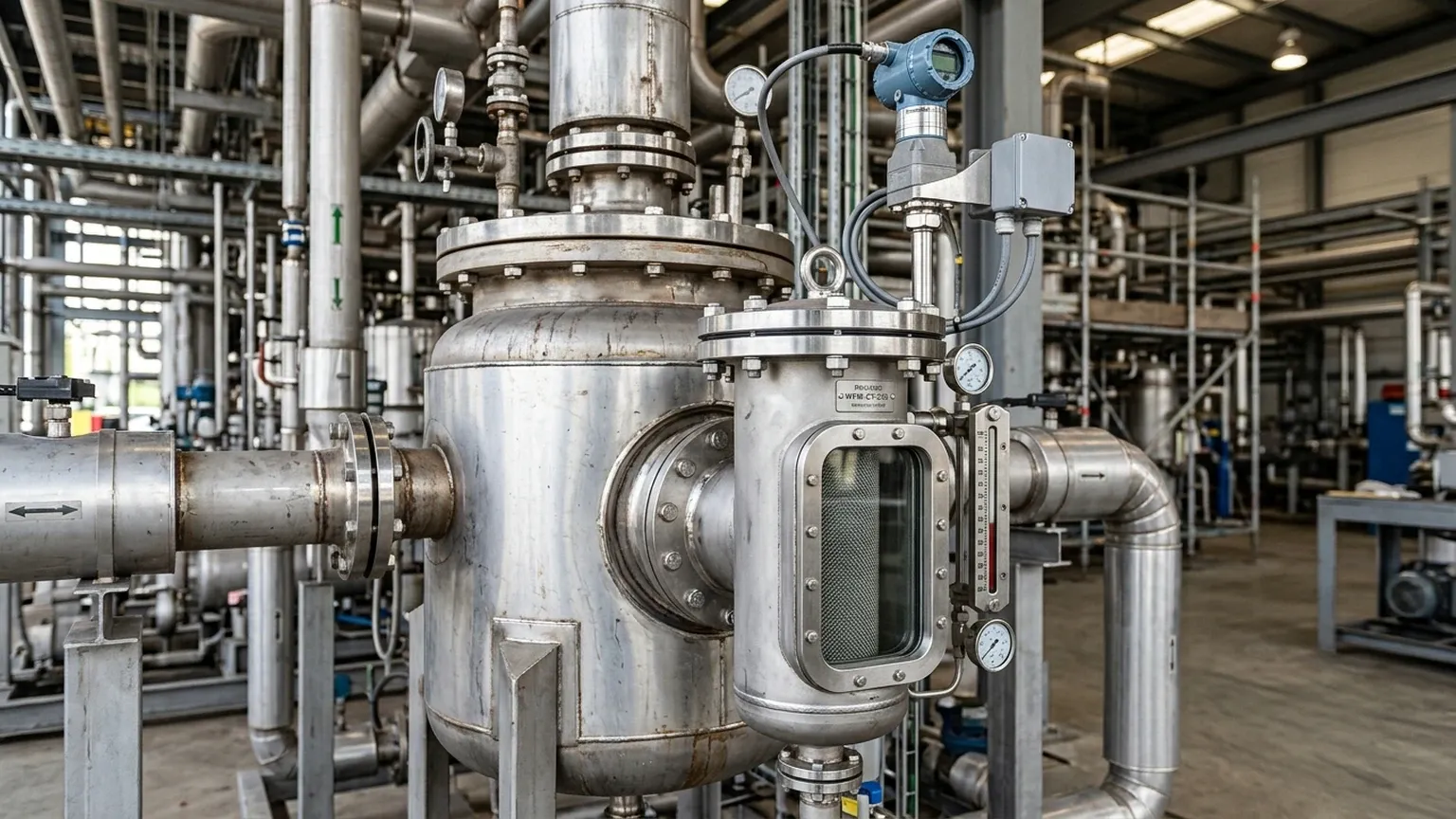
Proper installation is paramount to ensuring the performance of a stainless steel filter. Engineers must consider the following constraints during the design and integration phase:
Flow Direction
Most cylindrical wire mesh filters are designed for outside-to-inside flow. This allows contaminants to collect on the exterior surface, making them easier to inspect and clean. However, in certain backwashing systems, the flow may be reversed. The filter must be engineered to withstand the pressure in both directions if backpulsing is part of the maintenance cycle.
Sealing and Gaskets
The interface between the filter element and the housing must be perfectly sealed. Common gasket materials include EPDM, Viton (FKM), and PTFE. The choice of gasket must match the chemical compatibility of the process fluid and the operating temperature. A failure in the seal is the most common cause of "filtration failure" in systems where the mesh itself is still intact.
Thermal Expansion
In high-temperature applications, the difference in thermal expansion coefficients between the stainless steel filter and the housing material (if different) must be accounted for. If the filter is rigidly fixed at both ends without room for expansion, it may buckle or crack at the weld points.
5. Maintenance, Cleaning, and Replacement Cycles
One of the primary B2B advantages of a stainless steel wire mesh filter is its cleanability, which significantly reduces the Total Cost of Ownership (TCO) compared to disposable cartridges.
Cleaning Methods
* Backwashing: Reversing the flow of the process fluid to dislodge particles from the surface. This is often automated in continuous flow systems.
* Ultrasonic Cleaning: For fine meshes or stubborn contaminants, removing the filter and placing it in an ultrasonic bath with a compatible cleaning agent can restore the filter to near-original differential pressure.
* Chemical Cleaning (CIP): Using acids, alkalis, or solvents to dissolve organic or mineral buildup. This is common in food and beverage and pharmaceutical processing.
Determining Replacement
While stainless steel filters are durable, they are not infinite. Replacement is typically required when:
1. Permanent Pressure Drop: The "clean" pressure drop after cleaning is significantly higher than the original specification, indicating deep-seated blinding of the mesh.
2. Mechanical Fatigue: Repeated pressure cycles or vibration can lead to work hardening and eventual cracking of the wires or weld joints.
3. Corrosion: Even 316L can succumb to corrosion if process conditions change (e.g., increased acidity or temperature), leading to a loss of filtration integrity.
6. Risk Assessment and Performance Longevity
Engineers must evaluate potential risks that could lead to premature filter failure or process contamination:
* Bypass Leakage: Often caused by improper installation or damaged seals. Even a 1mm gap can allow thousands of oversized particles to pass through, rendering the 10-micron mesh ineffective.
* Media Migration: In low-quality filters, individual wires may break and enter the downstream flow. This is mitigated by selecting high-quality sintered or well-bonded mesh and ensuring the filter is rated for the system's vibration levels.
* Pressure Spikes: Sudden surges in flow (water hammer) can exceed the collapse pressure of a filter tube. Incorporating a heavy-duty support core in Wire Mesh Filter Cylinders & Tubes is the standard engineering defense against this risk.
7. Procurement Checklist for Technical Buyers
When sourcing stainless steel filtration components, international buyers and engineers should confirm the following technical details with the manufacturer to ensure the product meets the application requirements:
1. Material Certification: Request MTRs (Material Test Reports) to verify the grade of stainless steel (e.g., 304 vs 316L).
2. Micron Rating Accuracy: Confirm whether the rating is "nominal" (approximate) or "absolute" (guaranteed). For critical applications, ask for bubble point test data.
3. Structural Limits: Define the maximum allowable differential pressure (collapse pressure) and the maximum operating temperature.
4. End-Cap Geometry: Provide exact dimensions or standard codes (e.g., Code 7, DOE) to ensure compatibility with existing housings.
5. Cleaning Compatibility: Verify that the mesh and the assembly method (e.g., welding vs. epoxy bonding) can withstand the intended cleaning chemicals and temperatures.
Conclusion
Stainless steel wire mesh filters represent a high-performance, sustainable choice for industrial filtration. By understanding the nuances of weave patterns, material grades, and structural designs like Wire Mesh Filter Cylinders & Tubes, engineering teams can optimize their processes for maximum efficiency and minimum downtime. Whether protecting sensitive hydraulic valves or ensuring the clarity of a chemical intermediate, the precision of a well-engineered stainless steel wire mesh filter is an essential component of modern industrial infrastructure.
