


Hayward Strainers
In industrial fluid handling, the protection of downstream equipment is a primary engineering concern. Hayward strainers have long been a standard in the industry for removing unwanted solids from liquid piping systems. Whether used in chemical processing, water treatment, or aquatic applications, these components serve as the first line of defense for pumps, valves, meters, and spray nozzles. Understanding the technical nuances of these strainers—ranging from material compatibility to internal basket design—is essential for maintaining system integrity and optimizing flow efficiency.
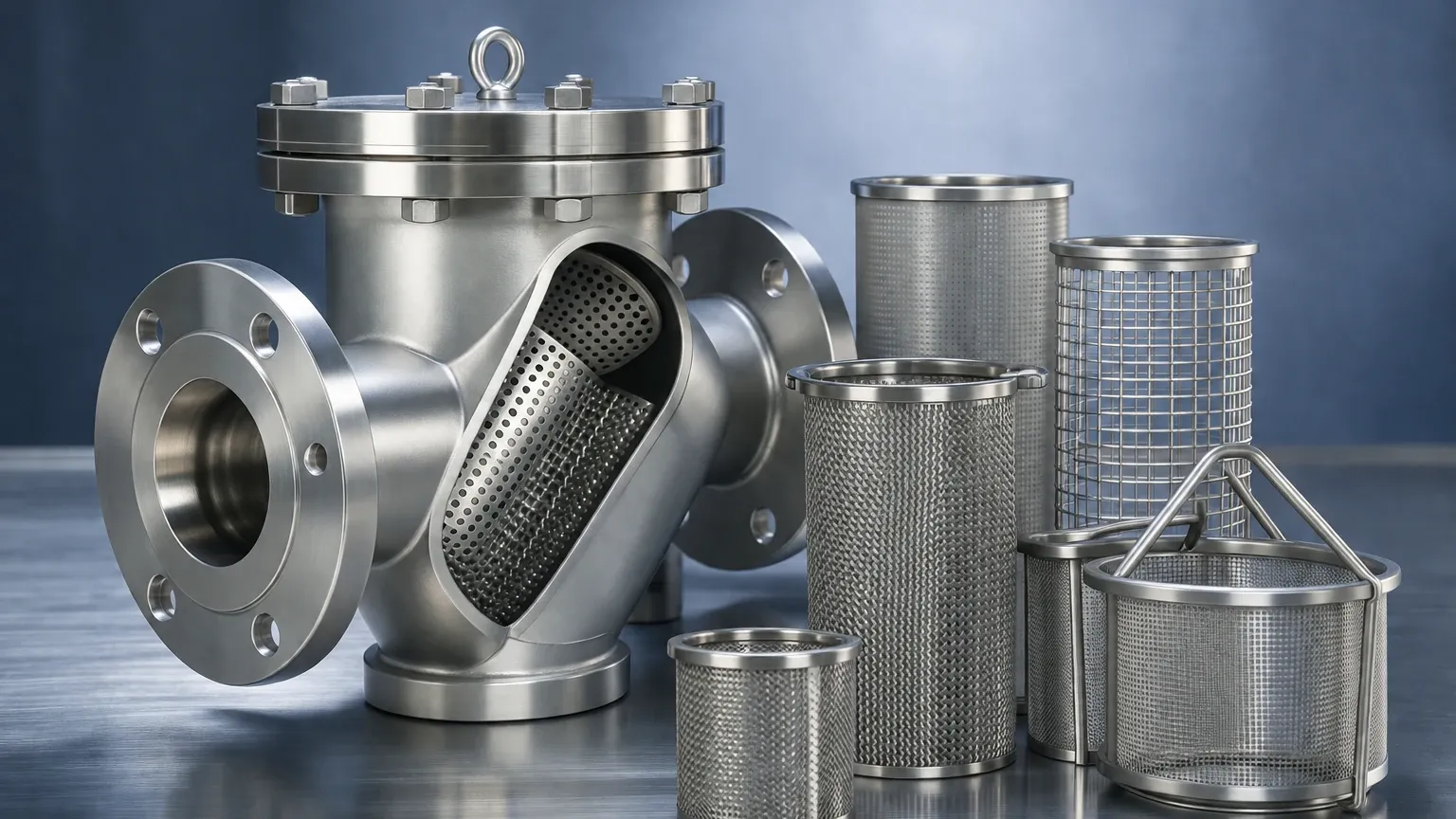
While the market offers a wide array of off-the-shelf filtration products, industrial applications often demand specific performance characteristics that standard models may not fully address. This is particularly true when dealing with high-temperature fluids, corrosive chemicals, or high-pressure environments where stainless steel Strainers & Baskets provide the necessary mechanical strength and chemical resistance that thermoplastic alternatives cannot match.
The Function of Strainers in Industrial Piping
The primary role of hayward strainers is the mechanical removal of solids from a flowing liquid. Unlike filters, which are typically designed to remove particles in the sub-micron range and are often disposable, strainers are intended to capture larger particulates and are designed for repeated cleaning.
In a typical installation, a strainer is placed upstream of sensitive equipment. As fluid enters the strainer housing, it is directed through a perforated or mesh-lined basket. The solids are trapped within the basket while the clean fluid passes through to the outlet. This simple yet effective mechanism prevents debris from clogging heat exchanger tubes, eroding pump impellers, or interfering with the precision of flow meters.
Simplex vs. Duplex Configurations
When selecting hayward strainers, engineers must first decide between simplex and duplex configurations based on the required system uptime.
1. Simplex Strainers: These are used in systems where the flow can be intermittently shut down for basket cleaning. They are cost-effective and compact, making them ideal for batch processes or systems with redundant piping loops.
2. Duplex (Twin) Strainers: These consist of two separate strainer chambers connected by a diverter valve. When one basket becomes clogged, the flow is diverted to the clean chamber without interrupting the process. This is critical for continuous-flow applications such as power generation cooling or large-scale chemical manufacturing.
Material Science: Thermoplastics vs. Stainless Steel
Hayward is widely recognized for its expertise in thermoplastic strainers, utilizing materials like PVC, CPVC, GFPP (Glass Filled Polypropylene), and PVDF. These materials offer excellent corrosion resistance against salts, acids, and bases, and are lightweight, making installation easier.
However, thermoplastic materials have inherent limitations regarding temperature and pressure. As the temperature of the process fluid increases, the pressure-bearing capacity of a plastic housing drops significantly. For instance, a PVC strainer rated for 150 PSI at 70°F may only be rated for a fraction of that at 140°F.
In contrast, stainless steel Strainers & Baskets are the preferred choice for demanding industrial environments. Stainless steel 304 and 316L offer:
* High Temperature Tolerance: Maintaining structural integrity at temperatures well exceeding 400°F.
* High Pressure Ratings: Capable of handling ASME Class 150, 300, and higher pressure requirements.
* Mechanical Durability: Resistance to water hammer, external impacts, and vibration that could crack thermoplastic housings.
* Sanitary Compliance: Essential for food, beverage, and pharmaceutical applications where non-porous surfaces and steam-in-place (SIP) capabilities are required.
Engineering the Internal Basket
The performance of hayward strainers is fundamentally determined by the design of the internal basket. A poorly specified basket can lead to excessive pressure drops, frequent clogging, or bypass of contaminants.
Perforation and Mesh Selection
Baskets are typically constructed from perforated metal sheet, which provides the structural framework. For finer filtration, a wire mesh liner is diffusion bonded or spot welded to the interior or exterior of the perforated metal.
* Perforation Size: Common hole sizes range from 1/32" to 1/2". The goal is to select a perforation that is small enough to catch the target debris but large enough to provide a high "open area ratio."
* Mesh Count: For removing finer particles, stainless steel wire mesh is used. This is measured by the number of openings per linear inch. A 100-mesh screen, for example, has 100 openings per inch and can capture particles down to approximately 140 microns.
The Importance of Open Area Ratio
A critical engineering metric for any strainer is the Ratio of Open Area (ROA). This is the relationship between the total open area of the basket holes and the cross-sectional area of the inlet pipe. A standard industrial strainer should ideally have an ROA of at least 6:1. A high ROA ensures that the strainer can accumulate a significant amount of debris before the pressure drop (Delta P) reaches a level that requires cleaning. This extends the service interval and protects the pump from cavitation caused by excessive suction-side restriction.
Performance Metrics: Understanding Pressure Drop
Every component in a piping system creates a restriction to flow, resulting in a loss of pressure. For hayward strainers, calculating the clean pressure drop is a vital step in pump sizing.
Pressure drop is influenced by:
* Fluid Viscosity: Thicker fluids (like oils or resins) create much higher pressure drops than water.
* Specific Gravity: Heavier liquids require more force to move through the mesh.
* Flow Velocity: Pressure drop increases with the square of the flow rate. Doubling the flow rate will quadruple the pressure drop.
* Mesh Loading: As the basket fills with debris, the available open area decreases, and the pressure drop rises exponentially.
Engineers should utilize Flow Coefficient (Cv) values provided by manufacturers to predict performance. The Cv represents the number of gallons per minute of 60°F water that will flow through the strainer with a 1 PSI pressure drop. By knowing the Cv, an engineer can accurately calculate the expected Delta P for their specific operating conditions.
Custom Baskets for Specialized Applications
While standard hayward strainers come with factory baskets, many industrial processes benefit from customized Strainers & Baskets. Customization allows for the optimization of the filtration media to match the specific geometry and nature of the contaminants.
For example, in the pulp and paper industry, fibrous debris can quickly blind a standard perforated basket. A custom basket utilizing wedge wire (V-wire) technology can provide a non-clogging surface that is much easier to clean. Similarly, in the oil and gas sector, magnetic inserts can be added to baskets to capture fine ferrous particles that might otherwise pass through a standard mesh.
Kaifil specializes in the manufacturing of these precision metal filter components. By utilizing advanced welding and machining techniques, it is possible to produce replacement baskets that fit perfectly into existing Hayward housings but offer enhanced durability or finer filtration levels than the original equipment manufacturer (OEM) parts.
Maintenance and Operational Best Practices
To ensure the longevity of hayward strainers and the equipment they protect, a rigorous maintenance schedule must be implemented.
Differential Pressure Monitoring
The most effective way to manage strainer maintenance is through the use of differential pressure gauges. By measuring the pressure at the inlet and the outlet, operators can see exactly how much the basket is loaded. A general rule of thumb is to clean the basket when the pressure drop reaches 5-10 PSI above the clean pressure drop. Waiting too long can result in "basket burst," where the pressure differential becomes so great that the metal basket collapses or the mesh tears, releasing all captured debris downstream.
Cleaning Procedures
When cleaning a strainer basket, it is important to avoid mechanical damage.
1. Isolation: Ensure the unit is depressurized and drained before opening the cover.
2. Inspection: Once removed, the basket should be inspected for signs of corrosion, thinning metal, or broken welds.
3. Cleaning: Use a soft brush or high-pressure water/air from the outside in (backwashing) to dislodge particles. Avoid using sharp metal tools that could puncture the wire mesh.
4. Gasket Replacement: The cover O-ring or gasket should be inspected and lubricated during every cleaning cycle. A compromised seal can lead to external leaks or, worse, air ingress on the suction side of a pump.
Total Cost of Ownership (TCO) Considerations
When specifying filtration for a project, the initial purchase price of hayward strainers is only one component of the total cost of ownership. Purchasing teams must also consider:
* Maintenance Labor: How easy is the cover to remove? Tool-less covers can save significant man-hours over the life of the product.
* Replacement Part Availability: Are baskets and gaskets readily available, or is there a long lead time for proprietary parts?
* Energy Costs: A strainer with a low Cv (high restriction) will force the pump to work harder, increasing electrical consumption over time.
* Durability: In corrosive environments, a cheaper material may require replacement every two years, whereas a high-grade stainless steel basket might last a decade.
By focusing on high-quality Strainers & Baskets and robust housing designs, facilities can reduce unplanned downtime and lower their long-term operational expenses.
Conclusion
Hayward strainers remain a cornerstone of industrial fluid management due to their versatile design and proven reliability. However, the effectiveness of any strainer system depends on the correct alignment of material properties, basket engineering, and maintenance protocols with the specific demands of the application.
For engineers and procurement professionals, the key to success lies in looking beyond the housing and focusing on the technical specifications of the internal filtration media. Whether you are replacing an existing basket or designing a new high-pressure system, selecting high-performance stainless steel components ensures that your process remains efficient, your equipment stays protected, and your maintenance requirements remain manageable. As industrial processes become more complex and the cost of downtime continues to rise, the value of precision-engineered filtration solutions has never been higher.
