


Strainer Housing
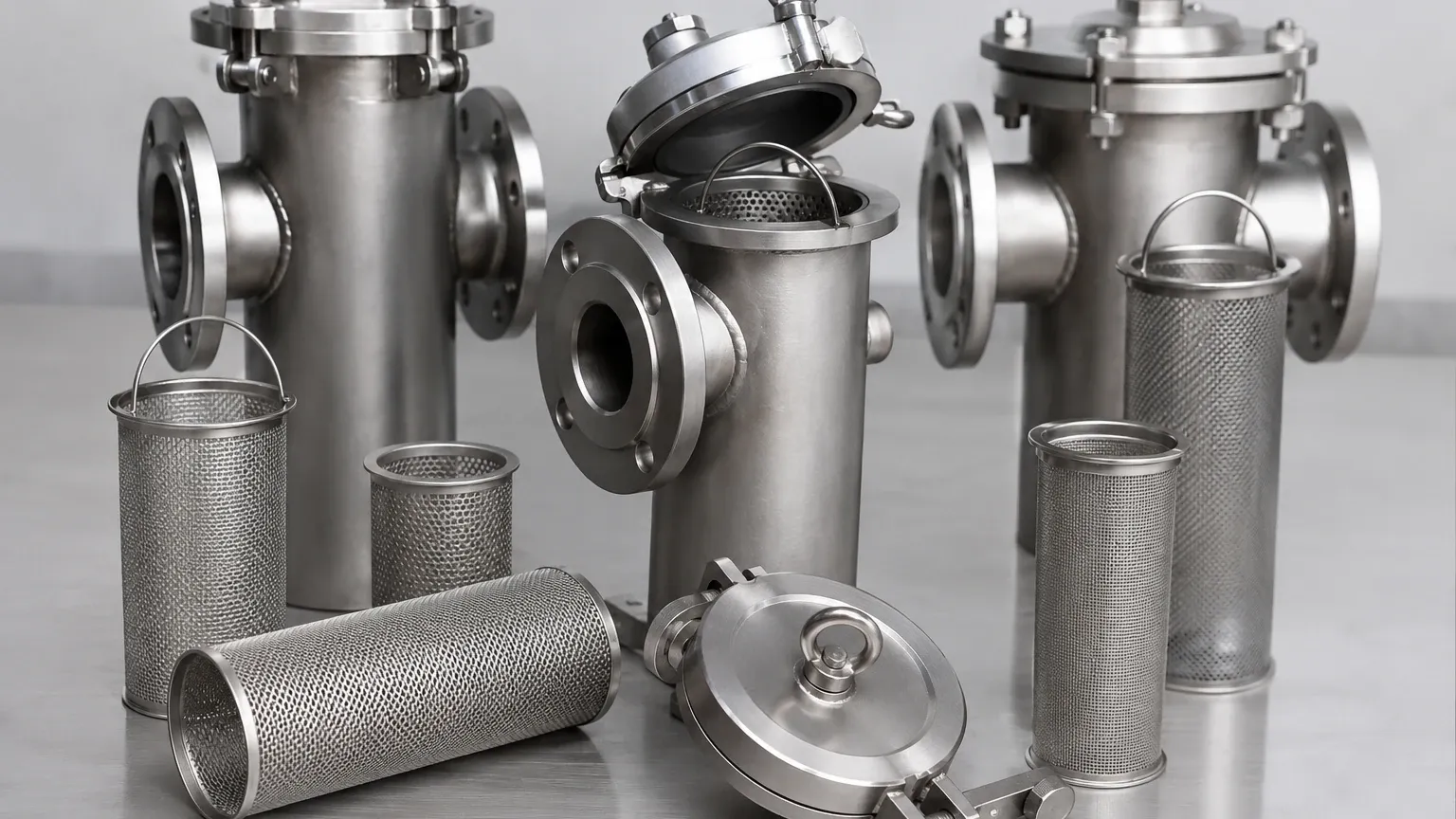
In industrial fluid handling systems, the strainer housing serves as the critical pressure vessel that contains and supports the internal filtration media. Whether used for coarse straining or fine filtration, the integrity and design of the housing directly impact the safety, efficiency, and longevity of the entire process line. For engineers and procurement professionals, selecting the correct strainer housing requires a technical understanding of fluid dynamics, material science, and mechanical engineering standards.
Industrial filtration systems rely on Strainers & Baskets to remove unwanted solids from liquids, protecting downstream equipment such as pumps, valves, and heat exchangers. The housing is the structural component that must withstand system pressures while facilitating easy access for maintenance and cleaning. This guide examines the engineering considerations, material requirements, and selection criteria essential for specifying a high-performance strainer housing.
Engineering Fundamentals of Strainer Housing Design
The primary function of a strainer housing is to provide a secure environment for the filtration process. Because these components are often integrated into high-pressure or high-temperature lines, their design must adhere to rigorous mechanical standards.
Pressure Ratings and Compliance
Most industrial housings are designed according to ASME (American Society of Mechanical Engineers) Section VIII standards for pressure vessels. This ensures that the wall thickness, welding quality, and closure mechanisms can handle the maximum allowable working pressure (MAWP) of the system. Engineers must confirm that the housing's pressure rating exceeds the peak operating pressure, including potential surges or water hammer effects.
Flow Dynamics and Pressure Drop
The internal geometry of the strainer housing significantly influences the flow characteristics of the fluid. A well-designed housing minimizes turbulence and pressure drop ($ΔP$). The "clean pressure drop" is the initial resistance caused by the housing and a clean basket. As debris accumulates, the pressure drop increases. If the housing is undersized for the required flow rate, the velocity of the fluid will increase, leading to accelerated wear on the internal components and potential cavitation in downstream pumps.
Connection Types
Housings are integrated into piping systems via various connection methods, including:
* Flanged Connections: Common in large-diameter piping, providing a robust and leak-proof seal suitable for high-pressure applications.
* Threaded (NPT/BSPT) Connections: Typically used for smaller housings where ease of installation is a priority.
* Sanitary/Tri-Clamp Connections: Essential for the food, beverage, and pharmaceutical industries, where smooth internal surfaces and easy disassembly for cleaning are required.
Material Selection and Chemical Compatibility
The material of construction for a strainer housing is determined by the chemical properties of the fluid being processed and the environmental conditions of the facility. Stainless steel is the industry standard for high-performance applications due to its durability and resistance to corrosion.
304 vs. 316L Stainless Steel
* Type 304 Stainless Steel: This is the most common material for general industrial use. It offers excellent strength and good corrosion resistance for water treatment and mild chemical applications.
* Type 316L Stainless Steel: Containing molybdenum, 316L provides superior resistance to chlorides and pitting. It is the preferred choice for marine environments, chemical processing, and pharmaceutical applications where high purity and corrosion resistance are mandatory.
Seal and Gasket Materials
While the housing itself is metal, the seals and O-rings ensure a leak-tight closure. Material selection for seals depends on temperature and chemical compatibility:
* Buna-N (Nitrile): Suitable for water, oils, and some solvents at moderate temperatures.
* EPDM: Excellent for steam, water, and polar solvents; not compatible with petroleum-based fluids.
* Viton (FKM): High-temperature resistance and broad chemical compatibility, making it ideal for aggressive industrial fluids.
* PTFE (Teflon): Virtually inert to all chemicals but offers less elasticity than elastomers, often used as an encapsulated seal.
Types of Strainers & Baskets Configurations
Strainer housings are categorized by their configuration and how they manage fluid flow during maintenance. Choosing between these types depends on whether the process can be interrupted for cleaning.
Simplex Strainer Housings
A simplex housing contains a single basket element. It is used in systems where the flow can be temporarily shut down to remove and clean the strainer. These are cost-effective solutions for batch processes or systems with redundant lines.
Duplex Strainer Housings
Duplex systems consist of two separate strainer housings connected by a diverter valve. This design allows fluid to be routed through one side while the other is being cleaned. Duplex housings are essential for continuous-flow applications where downtime is not permissible, such as lubricating oil systems for turbines or cooling water for power plants.
Y-Type and T-Type Strainers
* Y-Strainers: Compact housings typically used for steam or gas applications where the amount of solids to be removed is relatively low. They can be installed horizontally or vertically.
* T-Type (Basket) Strainers: These feature a larger dirt-holding capacity and are generally used for liquid applications. The vertical orientation of the basket allows for easier removal of heavy debris.
Key Evaluation Criteria for Industrial Applications
When specifying a strainer housing, engineers must look beyond the initial purchase price and consider the total cost of ownership and operational efficiency.
Filtration Accuracy (Micron Rating)
The housing must be compatible with the required filtration fineness. While the housing itself doesn't determine the micron rating, its internal support structure must be able to hold the specific wire mesh or perforated basket required for the application. For fine filtration, the housing must provide a precise seal to prevent "bypass," where unfiltered fluid leaks around the edges of the basket.
Dirt-Holding Capacity
A larger strainer housing allows for a larger basket surface area. This increases the dirt-holding capacity, which directly correlates to the interval between cleaning cycles. In high-solids applications, investing in a larger housing can significantly reduce labor costs and maintenance frequency.
Ease of Maintenance
Maintenance is a recurring operational cost. Housings with quick-opening covers (such as swing bolts or V-band clamps) allow technicians to access the basket without specialized tools, reducing downtime. Additionally, the inclusion of drain and vent ports is essential for safely depressurizing and draining the housing before service.
Maintenance, Safety, and Operational Considerations
Proper operation of a strainer housing is critical for plant safety. Because these are pressure vessels, failure to follow maintenance protocols can lead to equipment damage or personnel injury.
Differential Pressure Monitoring
The most effective way to manage a strainer housing is by monitoring the differential pressure (ΔP). Installing pressure gauges on both the inlet and outlet allows operators to see exactly when the basket is becoming clogged. Many modern systems use differential pressure switches that trigger an alarm or automatically switch flow in duplex systems when a pre-set limit is reached.
Cleaning Cycles and Replacement
Unlike disposable filter cartridges, the baskets within a strainer housing are typically permanent and cleanable. However, repeated cleaning can eventually lead to mechanical fatigue or damage to the wire mesh. Baskets should be inspected during every cleaning cycle for signs of deformation, broken welds, or holes. Using a damaged basket can lead to downstream contamination and catastrophic pump failure.
Safety Venting and Draining
Before opening a strainer housing, it must be completely isolated and depressurized. High-quality housings include a vent plug on the cover to release trapped air or pressure and a drain plug at the bottom to remove the liquid. In hazardous chemical applications, these ports should be piped to a safe recovery system.
Customization and OEM Solutions
Standard off-the-shelf strainer housings may not meet the specific requirements of complex industrial processes. Customization is often necessary to accommodate unique space constraints, specialized flow rates, or specific material requirements.
Tailored Internal Components
Manufacturers like Kaifil specialize in developing custom internal components that fit within standard or bespoke housings. This includes reinforced baskets for high-viscosity fluids, multi-layered sintered mesh for fine filtration, and magnetic inserts for capturing ferrous particles.
Surface Finishes and Coatings
For industries such as food processing or pharmaceuticals, the internal and external surfaces of the housing may require specific treatments. Electropolishing can be used to achieve a mirror-like finish (Ra < 0.4 μm), which prevents bacterial growth and makes the housing easier to sanitize. In highly corrosive environments, specialized coatings or exotic alloys like Hastelloy may be required.
Conclusion: Selecting the Right Solution
The selection of a strainer housing is a balance between technical requirements and economic reality. An undersized or poorly constructed housing will lead to high operational costs, frequent maintenance, and potential safety risks. Conversely, a well-engineered stainless steel housing, matched with the appropriate Strainers & Baskets, provides a reliable barrier that ensures the purity of the process fluid and the protection of expensive machinery.
Engineers should prioritize manufacturers who offer deep technical expertise and the ability to customize solutions based on specific application data. By confirming pressure requirements, material compatibility, and flow characteristics during the design phase, purchasing teams can ensure they are investing in a filtration solution that delivers long-term value and consistent performance in demanding industrial environments.
