


How to Use Wire Strainers
In industrial fluid handling systems, the integrity of downstream equipment—such as pumps, valves, meters, and spray nozzles—depends heavily on the removal of oversized particulate matter. Industrial wire strainers serve as the primary mechanical defense against debris that could cause mechanical failure or product contamination. Understanding how to use wire strainers effectively involves more than simple installation; it requires a deep dive into engineering specifications, maintenance protocols, and application-specific selection.
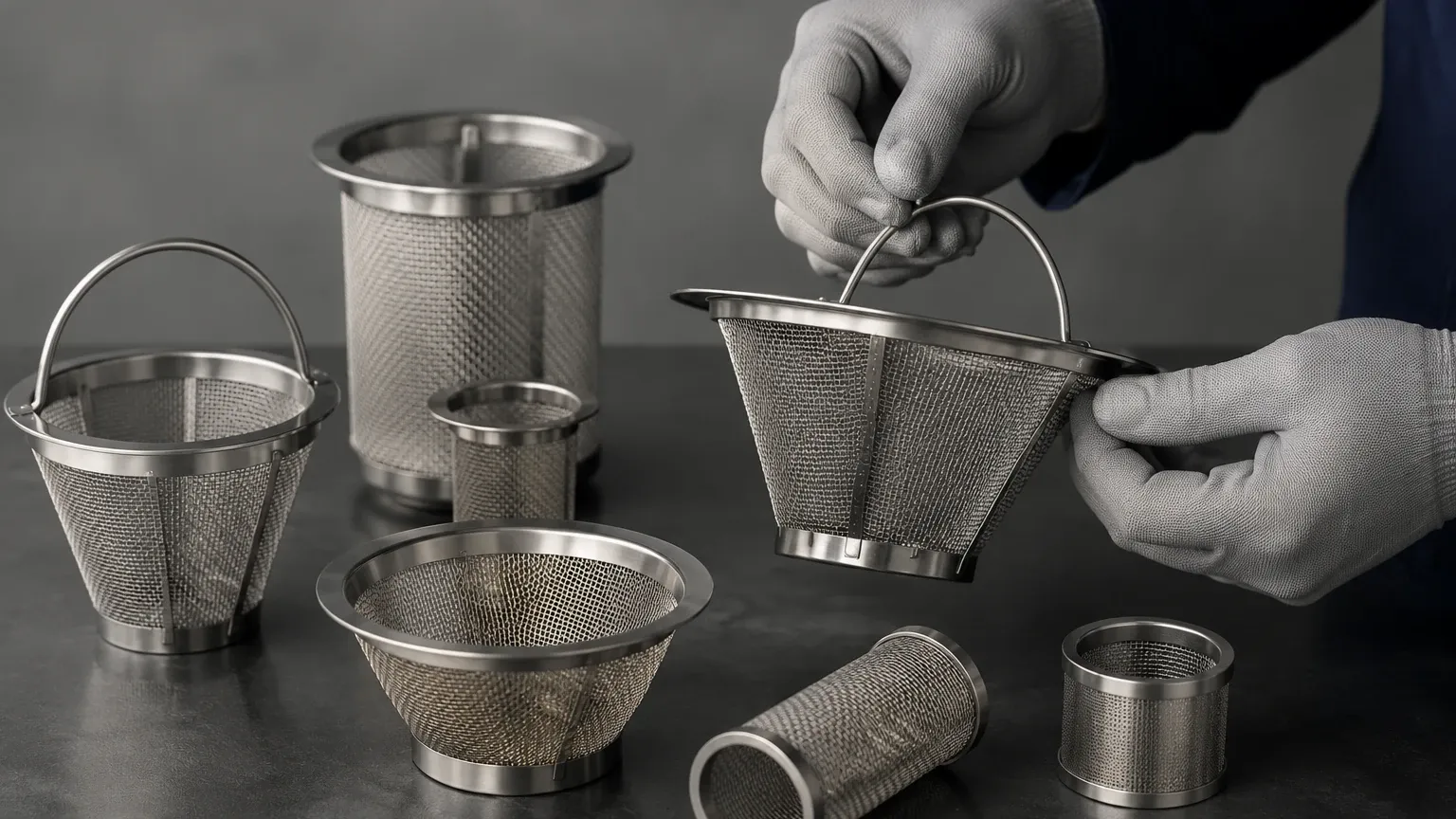
As a specialized manufacturer, Kaifil provides precision-engineered Strainers & Baskets designed for demanding environments. This guide outlines the technical considerations for integrating these components into your process flow to ensure maximum efficiency and equipment longevity.
The Role of Wire Strainers in Industrial Filtration
Before addressing the specifics of operation, it is essential to distinguish between straining and filtration. While the terms are often used interchangeably, straining typically refers to the removal of larger particles (usually 40 microns and above) from a liquid or gas stream using a perforated metal or wire mesh medium.
Industrial wire strainers are designed for high-flow applications where the solid loading is relatively low. They are categorized by their housing geometry—most commonly Y-type, T-type, and basket (simplex or duplex) configurations. The choice of strainer impacts how the system is operated and maintained. For instance, basket strainers offer a larger surface area and lower pressure drop compared to Y-strainers, making them ideal for high-viscosity fluids or systems with higher particulate concentrations.
Installation Best Practices: How to Use Wire Strainers Correctly
Proper installation is the foundation of effective straining. Misalignment or incorrect orientation can lead to bypass, excessive pressure drops, or even structural failure of the mesh element.
Orientation and Flow Direction
Every industrial strainer is designed for a specific flow direction, usually indicated by an arrow cast or etched onto the housing. For Y-strainers installed in horizontal lines, the "leg" containing the wire mesh element should point downward. This allows the collected debris to settle in the pocket, preventing it from re-entering the stream when the flow stops. In vertical installations, Y-strainers should only be used if the flow is downward, ensuring gravity assists in capturing particles.
Basket strainers are almost exclusively installed in horizontal pipelines. When learning how to use wire strainers of the basket variety, ensure the unit is level to allow the basket to seat properly against the internal seals. If the basket is not seated correctly, fluid will take the path of least resistance, bypassing the mesh entirely.
Supporting the Piping System
Wire strainers, particularly large-diameter basket types, can be heavy when filled with fluid and debris. Ensure the piping is adequately supported near the inlet and outlet flanges to prevent stress on the strainer housing. Thermal expansion should also be considered in high-temperature chemical or steam applications to avoid cracking the strainer body or compromising the gaskets.
Monitoring Performance via Differential Pressure
The most critical aspect of using wire strainers in an active industrial process is monitoring the differential pressure ($ΔP$). This is the difference in pressure between the inlet and the outlet of the strainer.
The Importance of ΔP
As the wire mesh captures debris, the open area of the screen decreases, causing the pressure drop to increase. Operating a system with a clogged strainer can lead to several issues:
1. Pump Cavitation: If the strainer is on the suction side of a pump, a high pressure drop can starve the pump, leading to cavitation and mechanical seal failure.
2. Element Collapse: If the pressure differential exceeds the structural strength of the wire mesh or the perforated support basket, the element may collapse, sending both the debris and pieces of the mesh downstream.
3. Reduced Flow Rates: In gravity-fed or low-pressure systems, a clogged strainer can significantly bottleneck production.
Establishing a Baseline
When a new strainer or a freshly cleaned basket is installed, record the "clean" differential pressure at the standard operating flow rate. Engineers typically recommend cleaning or replacing the strainer element when the $ΔP$ reaches 5-10 psi above the clean baseline, or as specified by the equipment manufacturer. Installing differential pressure gauges or transmitters is the most reliable way to manage this.
Maintenance and Cleaning Protocols
To maintain the efficiency of Strainers & Baskets, a rigorous maintenance schedule is required. The frequency of cleaning depends on the fluid's cleanliness and the micron rating of the mesh.
Safe Removal of the Element
Before opening a strainer for maintenance, the system must be depressurized and drained. This is a critical safety step, especially when handling hazardous chemicals or high-temperature fluids. For simplex basket strainers, this requires a temporary shutdown of the flow. If continuous operation is necessary, a duplex strainer (which features two chambers and a diverter valve) should be used, allowing one side to be cleaned while the other remains in service.
Cleaning Techniques for Stainless Steel Mesh
Stainless steel wire strainers are valued for their durability and cleanability. Depending on the type of contaminant, several methods can be employed:
* Manual Rinsing: For loose debris, a high-pressure water or air hose can be used to back-flush the basket from the outside in.
* Ultrasonic Cleaning: For fine particles trapped within the weave of the mesh, ultrasonic baths are highly effective at dislodging contaminants without damaging the wire structure.
* Chemical Soaking: In applications involving resins, oils, or organic buildup, soaking the element in a compatible solvent or caustic solution may be necessary. Always verify that the cleaning agent is compatible with the grade of stainless steel (e.g., 304 or 316L).
Inspection for Damage
After cleaning, inspect the wire mesh for signs of fatigue, corrosion, or broken wires. Even a small hole in the mesh can allow oversized particles to pass through, defeating the purpose of the strainer. Check the gaskets and O-rings for compression set or brittleness and replace them as needed to ensure a leak-free seal upon reassembly.
Engineering Considerations for Customization
Not all industrial applications can be served by off-the-shelf components. When determining how to use wire strainers in specialized environments, such as pharmaceutical or food processing, customization is often required.
Material Selection
While stainless steel is the standard, the specific grade matters. Type 304 is suitable for general-purpose applications, but Type 316L is preferred for environments involving chlorides or high acidity due to its superior corrosion resistance. For highly aggressive chemical processing, specialized alloys may be necessary.
Micron Rating vs. Open Area
There is always a trade-off between filtration fineness and flow capacity. A finer mesh (higher mesh count) provides better protection but results in a higher initial pressure drop and requires more frequent cleaning. Engineers must calculate the "Open Area Ratio" (OAR). A common industry standard is an OAR of 4:1, meaning the total open area of the strainer mesh should be four times the cross-sectional area of the inlet pipe. This ensures that the strainer does not become a significant source of friction loss in the system.
Custom Structural Reinforcement
In high-pressure or high-viscosity applications, a standard wire mesh may not have the structural integrity to withstand the flow forces. In these cases, Kaifil designs custom baskets where the fine wire mesh is sintered to or supported by a heavier perforated metal plate. This hybrid construction provides the precision of fine mesh with the mechanical strength of a heavy-duty basket.
Avoiding Common Risks and Operational Errors
Even with high-quality components, improper usage can lead to system failures. Technical teams should be aware of the following risks:
* Bypassing: This occurs when the strainer element is not seated correctly or when the seals are damaged. It is often invisible until downstream equipment fails. Regular inspection of the internal seating surfaces is mandatory.
* Incorrect Mesh Sizing: Using a mesh that is too coarse allows damaging particles through. Using a mesh that is too fine leads to constant clogging and potential pump damage. Sizing should be based on the smallest orifice or the tightest tolerance in the downstream equipment.
* Corrosion Fatigue: In cyclic pressure applications, stainless steel wire can experience fatigue. If the fluid is corrosive, this process is accelerated. Regular replacement cycles should be established based on the specific severity of the application rather than waiting for a failure to occur.
Total Cost of Ownership and Replacement Cycles
When evaluating Strainers & Baskets, purchasing teams should look beyond the initial acquisition cost. The total cost of ownership (TCO) includes maintenance labor, downtime for cleaning, and the cost of replacement elements.
Investing in high-quality, precision-manufactured strainers from Kaifil reduces TCO by extending the life of the mesh and ensuring that the housing remains leak-free over years of service. For many industrial facilities, the cost of a single hour of unplanned downtime far exceeds the price of a premium stainless steel strainer basket. Therefore, maintaining a stock of spare baskets and gaskets is a recommended best practice to ensure rapid turnaround during maintenance intervals.
Conclusion
Mastering how to use wire strainers is essential for any engineer or plant manager responsible for fluid system integrity. By selecting the correct material, ensuring proper installation orientation, and implementing a data-driven maintenance schedule based on differential pressure, you can significantly enhance the reliability of your industrial process.
Kaifil continues to support global industries with customized, high-performance filtration solutions. Whether you require standard Y-strainer replacements or custom-engineered heavy-duty baskets for complex chemical processing, our technical expertise ensures your filtration components meet the most demanding specifications. For further technical assistance or to discuss custom designs, review our available options and engineering support to optimize your system's performance.
