


Pleated Wire Mesh Filter: Engineering Principles and Selection Guide
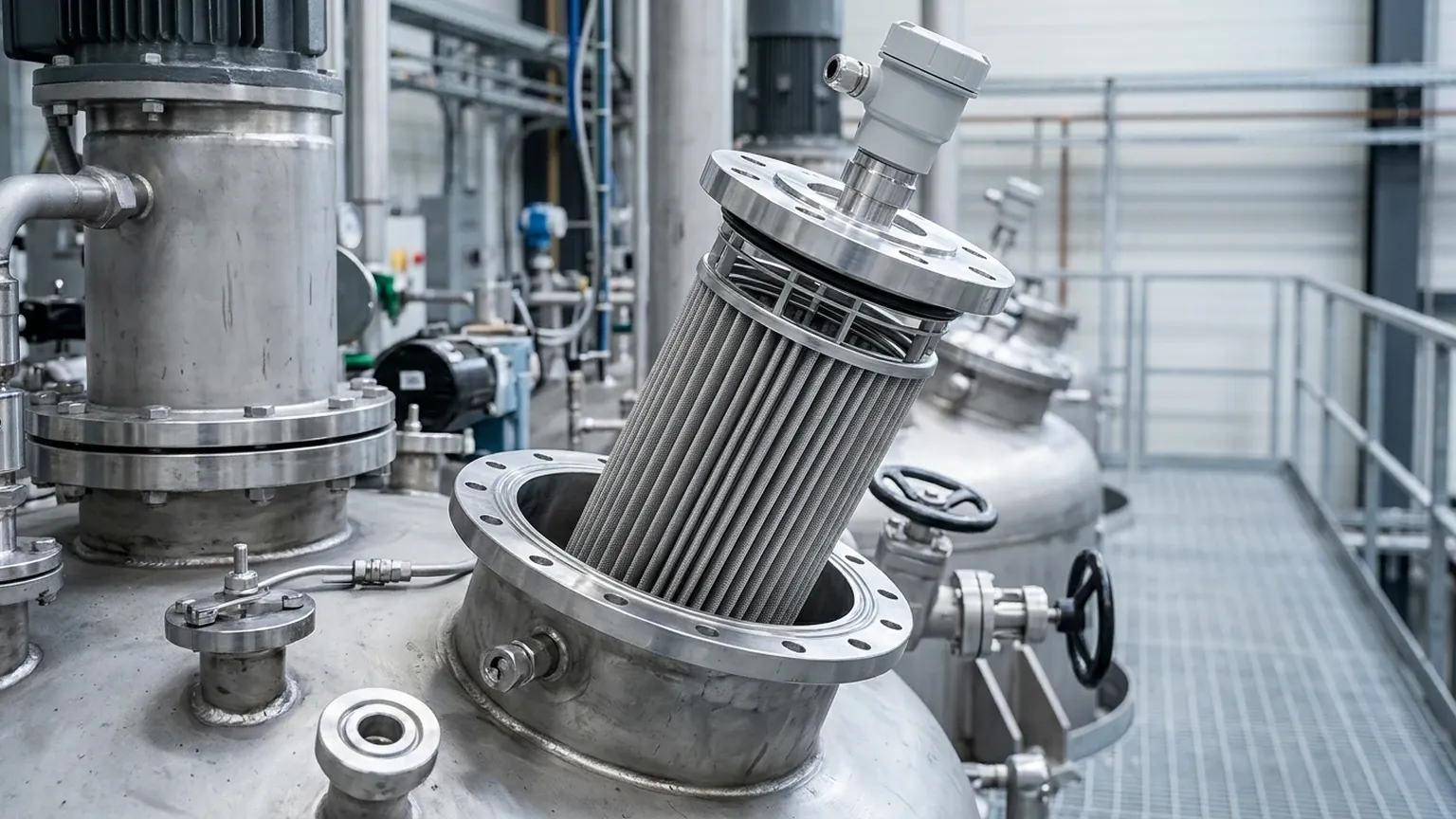
In industrial filtration, the primary challenge for engineers is balancing filtration efficiency with operational longevity. While standard cylindrical filters provide a baseline for many applications, the pleated wire mesh filter represents a significant engineering advancement designed to maximize the effective filtration area (EFA) within a fixed housing volume. By folding the stainless steel wire cloth into a series of pleats, manufacturers can increase the surface area by three to nine times compared to a traditional smooth-surface cylinder.
This guide examines the technical specifications, design considerations, and selection criteria for pleated wire mesh filters, providing procurement teams and plant engineers with the factual data required to optimize their filtration systems. For those evaluating specific structural formats, understanding the role of Wire Mesh Filter Cylinders & Tubes is essential, as these serve as the foundational architecture for pleated configurations.
1. Engineering Principles of Pleated Filtration
The fundamental advantage of a pleated wire mesh filter is the reduction of the "flux rate" (the volume of fluid passing through a unit area of the filter medium per unit of time). By increasing the EFA, the velocity of the fluid through the mesh pores decreases. This leads to several critical performance improvements:
* Lower Initial Pressure Drop (ΔP): A larger surface area offers less resistance to flow, reducing the energy required for pumping.
* Increased Dirt Holding Capacity: More surface area allows for a greater volume of particulate matter to be trapped before the filter reaches its terminal pressure drop.
* Extended Service Life: Because the filter takes longer to clog, the intervals between cleaning or replacement cycles are significantly lengthened, reducing maintenance downtime.
The Pleating Geometry
The geometry of the pleat is a critical engineering variable. If pleats are packed too densely (over-pleating), the fluid cannot reach the bottom of the pleat (the root), leading to "blind spots" and uneven cake buildup. Conversely, if pleats are too sparse, the filter fails to maximize the available space. Professional manufacturers like Kaifil calculate the optimal pleat height and count based on the fluid's viscosity, particle load, and the structural limits of the stainless steel mesh.
2. Material Science and Construction
Industrial pleated filters are almost exclusively constructed from stainless steel due to its mechanical strength and thermal stability. The choice of alloy depends on the chemical environment of the application.
Alloy Selection
* 304 Stainless Steel: The standard for general industrial use, offering good corrosion resistance and cost-effectiveness in non-acidic environments.
* 316L Stainless Steel: Contains molybdenum, providing superior resistance to chlorides and pitting. This is the preferred choice for pharmaceutical, food and beverage, and marine applications.
* Specialty Alloys: For extreme environments involving high-concentration acids or high temperatures (above 500°C), alloys like 904L, Inconel, or Monel may be utilized.
Multi-Layer Mesh Structures
A pleated wire mesh filter is rarely a single layer of cloth. To withstand high differential pressures, a multi-layer composite is often used:
1. Filtration Layer: The middle layer, usually a fine Dutch weave or square weave mesh, determines the micron rating.
2. Support Layers: Heavier, coarser mesh layers are placed on both sides of the filtration layer. These prevent the fine mesh from collapsing or deforming under the pressure of the fluid flow.
3. Inner Core: A perforated stainless steel tube provides the central structural spine, ensuring the entire assembly does not implode under vacuum or high-pressure conditions.
3. Key Selection Criteria for Engineers
When specifying a pleated filter, several technical parameters must be defined to ensure the component performs as expected within the process loop.
Micron Rating: Absolute vs. Nominal
Engineers must distinguish between nominal and absolute ratings. A nominal rating refers to the filter's ability to retain a percentage (usually 60% to 90%) of particles of a certain size. An absolute rating, achieved through precision-woven wire cloth, ensures that 99.9% of particles above the specified micron size are captured. For critical applications like hydraulic valve protection or pharmaceutical sterilization, absolute ratings are mandatory.
Pressure Drop and Flow Rate
The relationship between flow rate and pressure drop is non-linear. As viscosity increases, the pressure drop across the mesh increases. Pleated designs are particularly effective for high-viscosity fluids (such as polymers or heavy oils) because the increased surface area compensates for the higher resistance of the fluid.
End Cap Configurations
The method by which the filter seals into the housing is a common point of failure if mis-specified. Standard configurations include:
* Double Open End (DOE): Requires gaskets on both ends to seal against the housing flat surfaces.
* Single Open End (SOE): Often features a 222 or 226 O-ring plug at one end and a flat or finned cap at the other. The 226 configuration includes a locking tab to prevent the filter from shifting during pressure surges.
* Threaded Connections: NPT or BSP threads for high-pressure applications where a mechanical seal is required.
4. Installation Constraints and Application Risks
While the pleated wire mesh filter offers superior performance, it introduces specific installation and operational risks that must be managed.
Pleat Collapse and Fatigue
In systems with pulsating flow or frequent hydraulic shocks, the pleats can experience mechanical fatigue. If the support layers are insufficient, the pleats may "blind" (press together), effectively negating the surface area advantage. Engineers should specify reinforced pleat tips or outer cages for applications with high-frequency pressure cycles.
Bypass Risks
Any filtration system is only as good as its seals. In high-temperature applications, the thermal expansion of the stainless steel filter may differ from the housing material. If the seals are not designed to accommodate this expansion, fluid will bypass the filter medium entirely. Metal-to-metal seals or specialized high-temperature elastomers (such as Kalrez) are often required.
Cleaning and Recovery
Unlike disposable polymer filters, stainless steel pleated filters are cleanable. However, the pleat roots can trap fine particulates that are difficult to remove via standard backwashing. For deep cleaning, ultrasonic baths or chemical cleaning (solvent/acid pickling) are recommended. It is vital to verify the chemical compatibility of the cleaning agent with both the mesh and the brazing or welding materials used in the filter's construction.
5. Industrial Applications and Use Cases
The versatility of the pleated design allows it to serve in various demanding sectors:
* Chemical Processing: Filtering catalysts from process streams where high temperatures and corrosive chemicals would degrade synthetic media.
* Food and Beverage: Used in steam filtration (culinary steam) and for the removal of carbon fines in beverage polishing. The 316L stainless steel construction ensures compliance with hygiene standards.
* Hydraulic Systems: Protecting sensitive servo-valves from metallic wear debris. The high collapse strength of the pleated metal mesh is critical here.
* Polymer Melt Filtration: In the production of synthetic fibers and films, pleated filters remove gels and impurities from high-viscosity melts at extreme pressures.
6. Procurement Checklist: What to Confirm with Manufacturers
To ensure a successful OEM or custom order, international buyers should provide the following data points to the manufacturer:
1. Fluid Characteristics: Fluid name, viscosity (cP), operating temperature, and pH level.
2. Contaminant Profile: Type of solids (hard, soft, fibrous), particle size distribution, and concentration (ppm).
3. Operating Parameters: Normal flow rate, maximum allowable pressure drop (ΔP), and maximum system pressure.
4. Dimensional Constraints: Overall length, outer diameter (OD), and inner diameter (ID) requirements.
5. Sealing Requirements: O-ring material (Viton, EPDM, PTFE) and end cap style.
6. Certification Needs: Is there a requirement for FDA compliance, material mill test reports (MTRs), or pressure vessel codes?
7. Total Cost of Ownership (TCO) Considerations
While the initial purchase price of a pleated wire mesh filter is higher than that of a standard Wire Mesh Filter Cylinders & Tubes or a disposable cartridge, the TCO is often lower. The ability to clean and reuse the filter hundreds of times eliminates the recurring cost of replacement media and reduces the environmental impact of waste disposal. Furthermore, the reduction in downtime associated with longer service intervals provides significant indirect cost savings in high-volume production environments.
Conclusion
The pleated wire mesh filter is a high-performance solution for industrial filtration challenges that demand durability, precision, and efficiency. By understanding the mechanical nuances of pleat density, material compatibility, and structural support, engineers can specify filtration components that not only protect downstream equipment but also optimize the overall process economy. As manufacturing requirements become increasingly stringent, the transition from disposable media to high-quality, customized stainless steel filtration remains a strategic move for industrial reliability.
