


Hayes Strainers
In the landscape of industrial fluid management, the protection of downstream equipment is a primary engineering concern. Whether managing cooling water, chemical reagents, or hydraulic fluids, the presence of particulate matter can lead to catastrophic pump failure, clogged nozzles, and compromised heat exchanger efficiency. Hayes strainers represent a specific category of industrial filtration components designed to intercept these solids before they can cause damage. For engineers and procurement specialists, understanding the technical nuances of these components—and how they integrate into broader systems of Strainers & Baskets—is essential for maintaining operational uptime and reducing total cost of ownership.
Industrial strainers are generally classified as coarse filters, typically removing particles larger than 40 microns. Unlike fine membrane filters, strainers are built for high-flow capacity and durability. The term "Hayes strainers" often refers to a legacy of robust design used in HVAC, municipal water, and industrial processing, where reliability under varying pressure conditions is non-negotiable.
Technical Engineering of Hayes Strainers
The performance of any strainer is dictated by its geometry, material composition, and the ratio of the filtering surface area to the pipe cross-section. Hayes-style designs typically utilize a basket or Y-pattern configuration to maximize the collection of debris while minimizing the impact on system pressure.
Pressure Drop and Flow Dynamics
One of the most critical metrics in strainer selection is the pressure drop ($ΔP$). An excessive pressure drop across the strainer can lead to pump cavitation and reduced system flow. Engineers must calculate the "Clean Pressure Drop" based on the fluid's viscosity, specific gravity, and flow rate. High-quality strainers are engineered with a high Open Area Ratio (OAR). The OAR is the relationship between the total open area of the strainer mesh and the internal cross-sectional area of the inlet pipe. A well-designed basket strainer typically offers an OAR of at least 6:1 or 8:1, ensuring that the system can continue to operate efficiently even as the basket begins to fill with debris.
Material Selection for Durability
Material compatibility is a cornerstone of industrial filtration. Hayes strainers and their internal components are often manufactured from various alloys to suit specific environments:
- Carbon Steel: Suitable for non-corrosive services such as oil and high-temperature steam.
- Stainless Steel (SS304/SS316): The industry standard for chemical processing, food and beverage, and pharmaceutical applications. SS316, in particular, offers superior resistance to pitting and crevice corrosion in chloride-rich environments.
- Specialty Alloys: In highly aggressive chemical environments, materials like Monel or Hastelloy may be required to prevent premature failure of the strainer housing and internal basket.
Key Components: Baskets and Screens
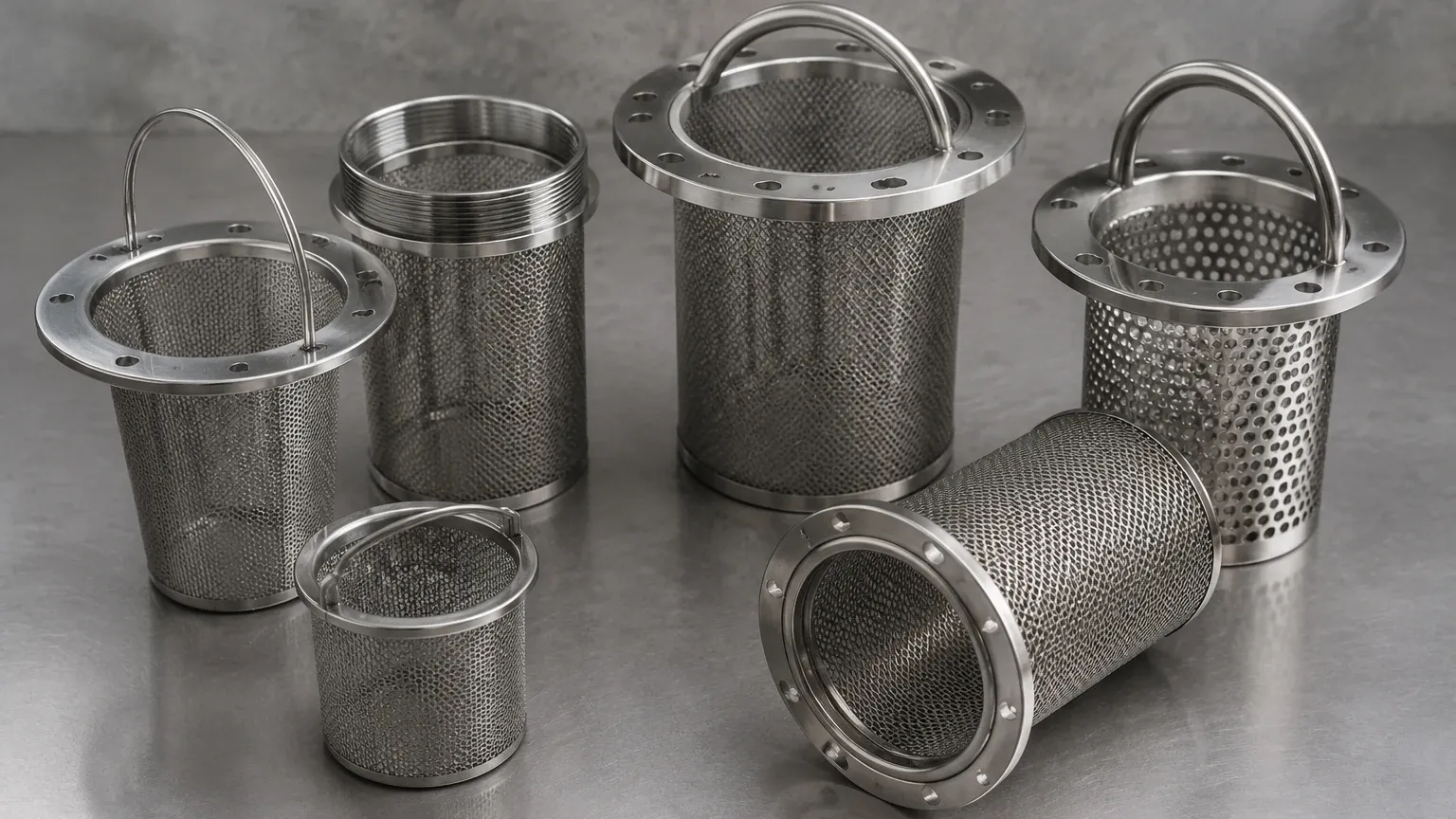
The heart of the strainer is the internal element. In the context of Hayes strainers, the basket design is paramount. Unlike a simple flat screen, a basket provides a larger surface area for accumulation, which extends the intervals between cleaning cycles.
Perforated vs. Mesh Liners
Standard baskets are usually constructed from perforated metal. However, when finer filtration is required, a wire mesh liner is added to the interior or exterior of the perforated support.
1. Perforated Plate: Provides structural integrity and handles the bulk of the mechanical stress from the fluid flow. Common hole sizes range from 1/32" to 1/2".
2. Wire Mesh: Used for precision filtration. For applications requiring the removal of very fine particles, multiple layers of stainless steel wire mesh may be sintered together or layered to provide both fine filtration and mechanical strength.
Structural Reinforcement
In high-pressure or high-viscosity applications, the basket is subject to significant differential pressure as it becomes clogged. Engineering designs must include reinforced handles, heavy-duty binding, and precision-welded seams to prevent the basket from collapsing or "blow-by," where debris bypasses the filter element due to structural deformation.
Selection Criteria for Industrial Applications
When specifying or replacing Hayes strainers, engineers must look beyond the basic pipe size. A comprehensive evaluation involves several variables that dictate the long-term success of the filtration solution.
Fluid Characteristics
Viscosity is perhaps the most overlooked factor. High-viscosity fluids (such as heavy oils or syrups) require significantly larger strainers and coarser mesh to maintain flow. Furthermore, the chemical nature of the fluid determines the gasket and seal materials. For example, EPDM seals are common for water applications, while Viton or PTFE may be required for chemical processing to ensure leak-proof operation at the strainer cover.
Operating Temperature and Pressure
Every strainer housing has a specific pressure-temperature rating (often following ASME B16.34 standards). It is vital to confirm that the strainer can handle the maximum potential surge pressure of the system, not just the nominal operating pressure. Thermal expansion must also be considered, particularly in steam applications or cryogenic processes, where material stresses can lead to cracking if not properly accounted for in the design phase.
Filtration Accuracy (Micron Rating)
Selecting a mesh that is too fine will lead to frequent clogging and unnecessary maintenance. Conversely, a mesh that is too coarse will fail to protect downstream equipment. The rule of thumb is to select a mesh size that is slightly smaller than the smallest orifice or clearance in the downstream equipment (e.g., a pump impeller or a spray nozzle).
Maintenance and Operational Longevity
The total cost of ownership for Strainers & Baskets is largely determined by maintenance requirements. A strainer that is difficult to clean will often be neglected, leading to system inefficiencies or failure.
Cleaning Cycles and Indicators
To optimize maintenance, many industrial systems utilize differential pressure gauges across the strainer. When the $ΔP$ reaches a predetermined limit (typically 5-10 psi over the clean pressure drop), it signals that the basket requires cleaning.
- Simplex Strainers: Require the system to be shut down or the flow to be bypassed during cleaning.
- Duplex Strainers: Feature two chambers with a diverting valve, allowing one side to be cleaned while the other remains in operation, which is critical for 24/7 continuous processes.
Replacement and Repair
Over time, even the most durable stainless steel baskets will experience wear. Erosion from high-velocity particles or corrosion from chemical exposure can thin the mesh wires. Regular inspection of the basket seams and the seating surface is necessary. A compromised seat allows "bypass," where unfiltered fluid moves around the basket rather than through it, defeating the purpose of the strainer entirely.
Custom Solutions and OEM Replacements
While standard Hayes strainers meet many needs, specialized industrial processes often require customized filtration components. This is where manufacturing expertise becomes critical. Customization can involve:
- Non-standard Micron Ratings: Tailoring the mesh to a specific particle size distribution.
- Modified Dimensions: Fitting a high-capacity basket into a constrained physical footprint.
- Reinforced Designs: Adding magnetic inserts to capture fine ferrous particles that might otherwise pass through a standard mesh.
As a professional manufacturer, Kaifil specializes in providing these high-performance, custom stainless steel filtration solutions. Whether you are looking for replacement baskets for existing Hayes strainers or designing a new system that requires precision-engineered metal filter components, the focus remains on durability and exact filtration performance. By working closely with engineering teams, manufacturers can ensure that the selected materials and designs are optimized for the specific chemical, thermal, and mechanical demands of the application.
Conclusion
Hayes strainers serve as a vital line of defense in industrial fluid systems. By understanding the engineering principles behind pressure drop, material compatibility, and basket design, purchasing and technical teams can make informed decisions that protect their infrastructure. Proper selection and maintenance of these components not only safeguard expensive machinery but also ensure the consistency and quality of the final product in sectors ranging from pharmaceutical manufacturing to water treatment. When standard off-the-shelf options fall short, leveraging custom OEM capabilities allows for the development of filtration solutions that are perfectly aligned with the unique rigors of demanding industrial environments.
