


Strainers in Spanish
In the global industrial landscape, technical precision is the foundation of successful procurement and engineering. For professionals operating across borders—particularly those coordinating between English-speaking engineering hubs and Spanish-speaking manufacturing or processing sites—understanding the specific terminology for filtration components is essential. When searching for "strainers in spanish," the objective is rarely just a literal translation; it is about ensuring that the technical specifications for Strainers & Baskets are communicated accurately to prevent equipment failure, process downtime, or safety hazards.
Industrial strainers are critical components used to protect downstream equipment such as pumps, valves, and flow meters from damage caused by debris. In Spanish-speaking industrial sectors—ranging from chemical plants in Mexico to food processing facilities in Spain—the terminology can vary based on the specific design and application. This guide provides a technical breakdown of how to specify, select, and communicate requirements for stainless steel strainers and baskets in a cross-linguistic B2B environment.
Technical Terminology: Translating Strainers and Baskets
In a general sense, the word "strainer" translates to *colador* or *filtro*. However, in a professional engineering context, these terms are often too broad. To ensure the correct component is manufactured or purchased, it is necessary to use more specific nomenclature.
1. Coladores de Canasta (Basket Strainers)
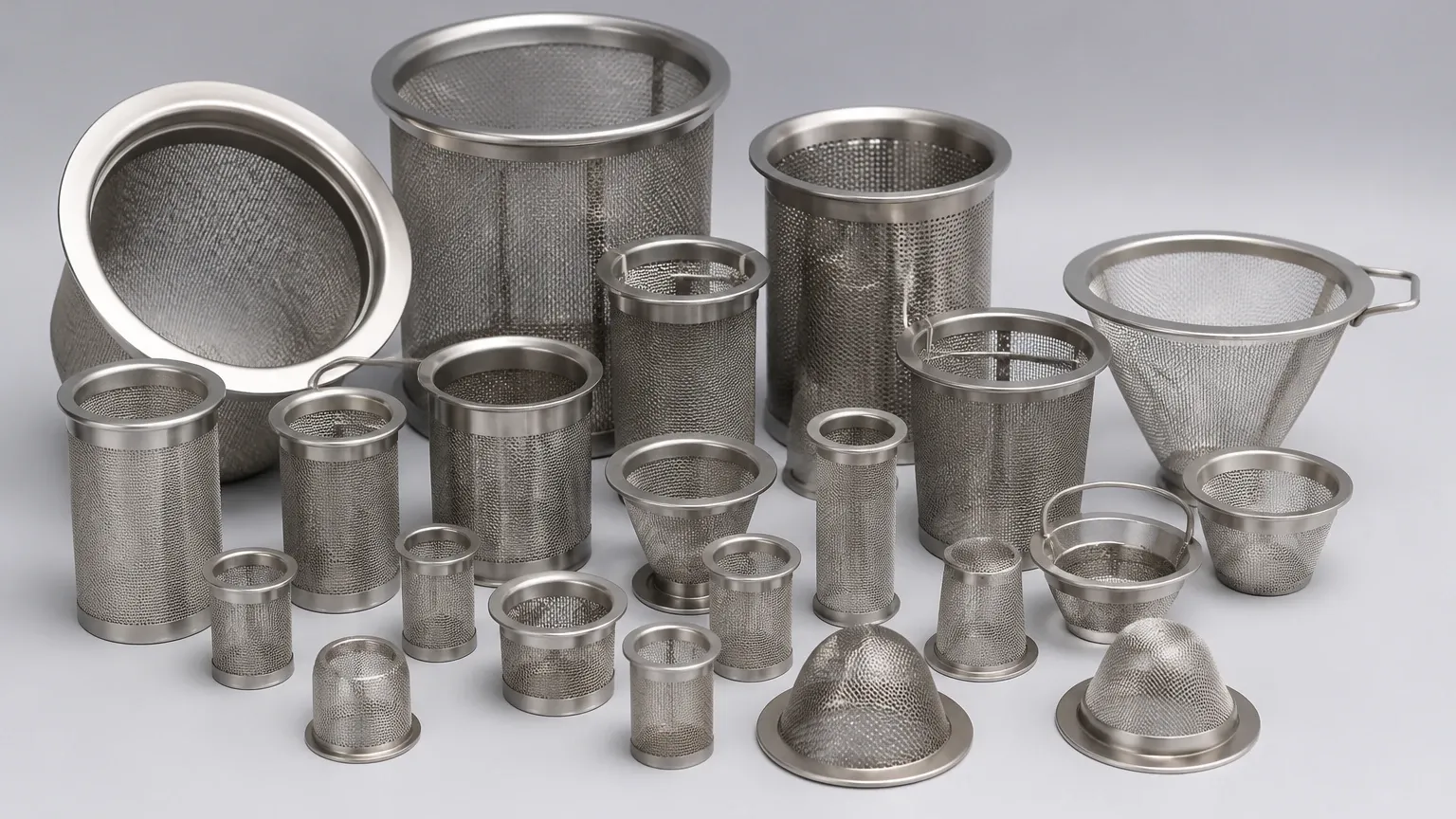
Often referred to as *coladores de cesta*, these are used in piping systems where a high volume of solids needs to be removed. They feature a removable basket that allows for easy cleaning. In Spanish technical manuals, you will often see them described as *coladores de canasta simple* (simplex) or *coladores de canasta doble* (duplex/twin).
2. Coladores en Y (Y-Strainers)
Named for their shape, these are known as *filtros en Y* or *coladores tipo Y*. They are typically used in pressurized lines, either liquid or gas, to protect small-bore equipment. The term *filtro de tamiz* is also used when referring to the internal mesh element.
3. Tamices y Mallas (Sieves and Meshes)
The actual filtration media inside the strainer is referred to as the *malla* (mesh) or *tamiz* (sieve). When discussing filtration accuracy, engineers will use the term *micraje* (micron rating) or *número de malla* (mesh count).
Engineering Considerations for Industrial Strainers
When specifying strainers in Spanish-speaking markets, the technical requirements remain consistent with international standards, but the documentation must reflect precise engineering values. At Kaifil, we emphasize that the performance of a strainer is determined by its material integrity and structural design.
Material Selection: Acero Inoxidable
Stainless steel is the industry standard for demanding applications. In Spanish, this is *acero inoxidable*. The two most common grades used in the manufacturing of strainers and baskets are:
* AISI 304 (Acero 304): Suitable for general industrial use, water treatment, and food processing where moderate corrosion resistance is required.
* AISI 316 (Acero 316): Enhanced with molybdenum, this grade offers superior resistance to chlorides and acids, making it the preferred choice for *procesamiento químico* (chemical processing) and marine environments.
Filtration Accuracy and Open Area
A critical factor in strainer design is the *área libre* (open area) or *relación de área abierta* (open area ratio). This represents the ratio between the total area of the mesh openings and the cross-sectional area of the inlet pipe. A higher ratio ensures a lower *caída de presión* (pressure drop) and longer intervals between cleanings. When communicating with Spanish-speaking procurement teams, it is vital to specify whether the filtration requirement is for *filtración gruesa* (coarse filtration) or *filtración fina* (fine filtration).
Selection Criteria for Industrial Applications
Choosing the right Strainers & Baskets requires a deep understanding of the fluid dynamics within a system. Whether you are drafting a request for proposal (RFP) in English or reviewing a technical data sheet for "strainers in spanish," the following criteria must be confirmed:
Flow Rate and Viscosity
The flow rate (*caudal*) and the viscosity (*viscosidad*) of the fluid directly impact the size of the strainer needed. High-viscosity fluids, such as oils or syrups in food processing, require larger surface areas to maintain efficient flow without excessive pressure loss.
Operating Pressure and Temperature
Every strainer must be rated for its maximum *presión de trabajo* (working pressure) and *temperatura de operación* (operating temperature). In many Spanish-speaking regions, pressure may be measured in *bares* (bar) or *kilogramos por centímetro cuadrado* (kg/cm²), while temperature is measured in *grados Celsius* (°C). Converting these values accurately is essential for safety compliance.
Particle Retention Requirements
What is the size of the smallest particle that must be removed? This is defined by the *tamaño de partícula* or *retención de sólidos*. For precision metal filter components, specifying the exact micron rating ensures that the *malla de alambre* (wire mesh) is woven to the correct density.
Common Risks in Cross-Border Filtration Procurement
Inaccurate communication regarding "strainers in spanish" can lead to several industrial risks. Avoiding these requires a focus on technical documentation rather than just linguistic translation.
1. Material Mismatch: Confusing *acero al carbono* (carbon steel) with *acero inoxidable* can lead to rapid corrosion and system failure in chemical applications.
2. Incorrect Connection Types: Ensure that the connection type is clearly defined—whether it is *bridado* (flanged), *roscado* (threaded), or *para soldar* (socket weld). Different regions may follow different standards, such as ANSI (American) or DIN (European/International).
3. Sizing Errors: A strainer that is too small for the *caudal* will cause a significant *caída de presión*, potentially damaging pumps or slowing down production cycles.
To mitigate these risks, Kaifil provides detailed technical drawings and material certifications (MTRs) that use standardized engineering symbols and terminology, bridging the gap between different languages and regional standards.
Maintenance and Total Cost of Ownership
In the context of industrial filtration, the initial purchase price of Strainers & Baskets is only one part of the total cost of ownership (TCO). For Spanish-speaking plant managers (*gerentes de planta*), the focus is often on *durabilidad* (durability) and *facilidad de mantenimiento* (ease of maintenance).
Cleaning Cycles
How often does the *canasta* need to be cleaned? This depends on the *carga de sólidos* (solids loading) in the fluid. Designing a custom solution with a larger dirt-holding capacity can significantly reduce labor costs and downtime.
Replacement Parts
Having access to *repuestos* (spare parts), specifically replacement mesh liners or baskets, is crucial. Custom manufacturers like Kaifil specialize in OEM solutions, ensuring that replacement components fit perfectly into existing housings, regardless of whether the original equipment was sourced locally or internationally.
Bridging the Gap: How to Specify Strainers for Global Projects
When working on projects that involve Spanish-speaking stakeholders, the most effective way to ensure quality is to provide a comprehensive technical data sheet. This document should include:
* Type of Strainer: (e.g., *Colador de Canasta Simplex*)
* Body Material: (e.g., *Cuerpo de Acero Inoxidable 316*)
* Mesh/Micron Rating: (e.g., *Malla de 100 micras*)
* Connection Size and Type: (e.g., *Conexión bridada de 2 pulgadas ANSI 150#*)
* Seal Material: (e.g., *Juntas de Viton* or *EPDM*)
By focusing on these factual boundaries, engineers can move past the simple search for "strainers in spanish" and move toward a robust technical partnership. Kaifil’s expertise in custom stainless steel filtration allows us to support global customers by providing high-performance components that meet these rigorous specifications.
Conclusion
Navigating the technical nuances of industrial filtration requires more than a dictionary; it requires an understanding of how different terms relate to engineering performance. Whether you are specifying a *colador de canasta* for a chemical plant or a *tamiz de acero inoxidable* for a food production line, the priority is always precision, durability, and filtration accuracy. By aligning technical terminology with high-quality manufacturing standards, B2B buyers and engineers can ensure their systems operate at peak efficiency across all geographic and linguistic boundaries.
