


Ikea Strainers
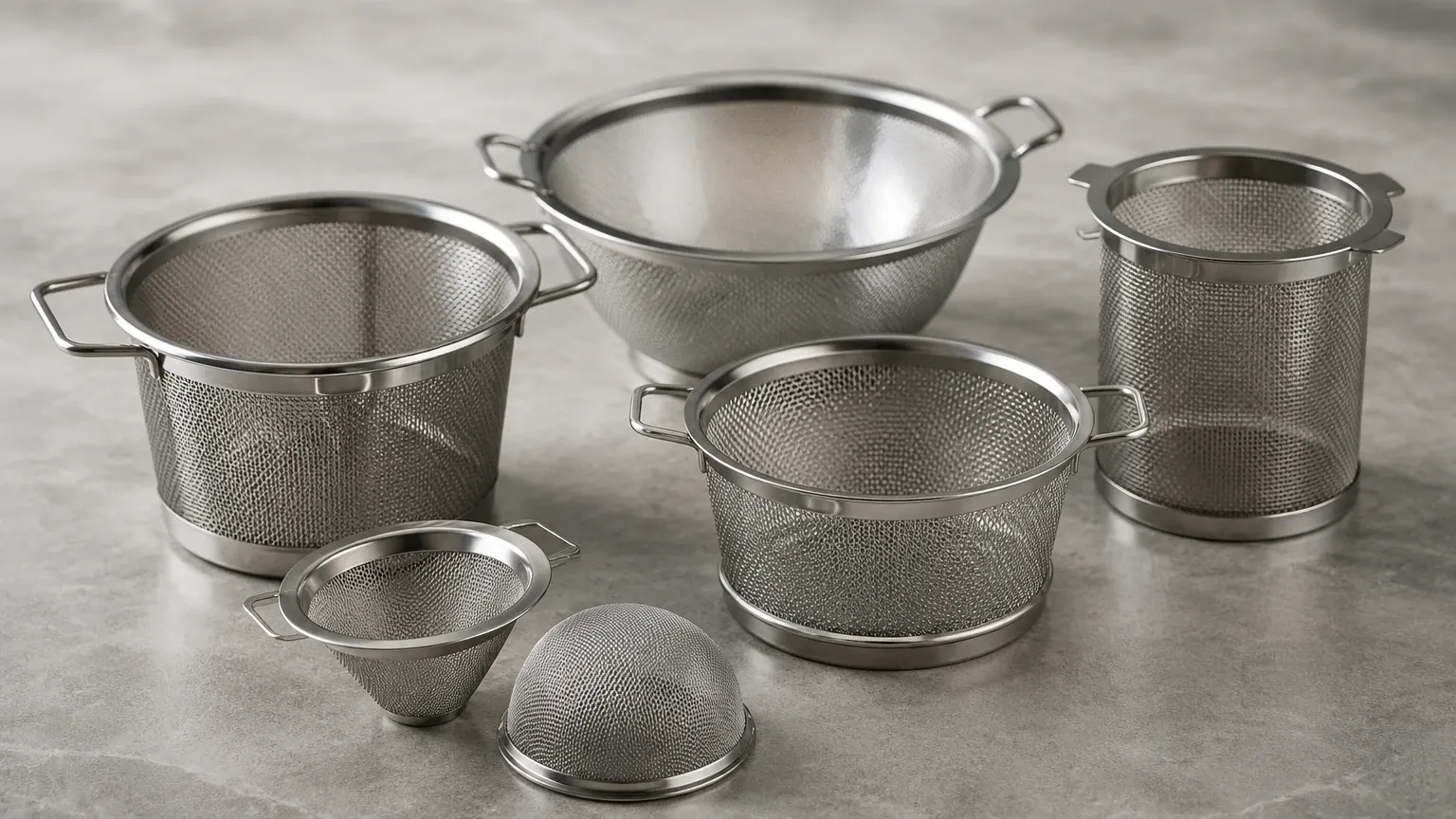
In the world of fluid handling and material separation, the term "strainer" encompasses a vast spectrum of products, ranging from simple household kitchen tools to high-precision industrial components. While consumer-grade products like ikea strainers are staples in residential kitchens for rinsing vegetables or straining pasta, they represent the entry-level tier of filtration technology. For engineers, procurement specialists, and plant managers operating in the chemical, pharmaceutical, or food processing sectors, the requirements for Strainers & Baskets are significantly more rigorous.
Understanding the distinction between consumer-grade equipment and industrial-grade filtration solutions is critical for maintaining process integrity, ensuring equipment longevity, and meeting stringent regulatory standards. This article examines the technical boundaries of light-duty strainers and explores the engineering considerations necessary when selecting industrial-grade baskets for demanding applications.
Understanding the Limitations of Consumer-Grade Strainers in Industrial Settings
Consumer products, such as those found in the IKEA catalog, are designed for intermittent use, atmospheric pressure, and low-viscosity fluids (primarily water). They are typically manufactured using thin-gauge stainless steel or polymer materials that prioritize cost-effectiveness and aesthetics over mechanical strength.
In an industrial environment, a strainer must withstand constant flow, varying pressure differentials, and potentially abrasive or corrosive media. The primary limitations of consumer-grade ikea strainers in a B2B context include:
* Mechanical Integrity: Industrial baskets must resist deformation under high-pressure drops. Consumer mesh is often crimped or lightly soldered, whereas industrial strainers utilize TIG (Tungsten Inert Gas) welding or plasma welding to ensure structural stability.
* Material Specification: While household strainers are often labeled as "stainless steel," they rarely specify the exact grade (e.g., 304 vs. 316L). Industrial applications require certified materials to prevent galvanic corrosion or chemical degradation.
* Filtration Accuracy: Consumer strainers offer a "one size fits all" mesh density. Industrial processes require specific micron ratings to protect downstream equipment like pumps, nozzles, and heat exchangers.
Material Science: Stainless Steel Grades and Corrosion Resistance
When transitioning from basic household tools to industrial Strainers & Baskets, material selection becomes the most critical engineering decision. Most high-quality industrial strainers are fabricated from 300-series stainless steel, but the specific choice depends on the chemical environment.
304 Stainless Steel
This is the standard grade for many industrial applications. It offers good corrosion resistance to most oxidizing acids and is frequently used in food and beverage processing. However, it is susceptible to corrosion from chloride solutions (such as saline) or high-salinity environments.
316L Stainless Steel
For pharmaceutical and chemical processing, 316L is the preferred choice. The addition of molybdenum enhances resistance to pitting and crevice corrosion in chloride-rich environments. The "L" denotes low carbon content, which minimizes carbide precipitation during welding, ensuring the strainer remains corrosion-resistant at the joints.
Specialty Alloys
In extreme cases where standard stainless steel fails, industrial manufacturers like Kaifil utilize specialty alloys such as Hastelloy, Monel, or Inconel. These materials are necessary for handling highly acidic or high-temperature fluids where a standard ikea strainers material would disintegrate within hours.
Engineering Specifications for Industrial Strainers & Baskets
Industrial filtration components are engineered systems. Unlike a simple kitchen colander, an industrial basket is designed with a specific "Open Area Ratio." This ratio compares the total area of the holes in the mesh to the total area of the pipe inlet. A standard industrial design target is a 6:1 or 8:1 ratio, ensuring that the strainer does not create a significant bottleneck in the system.
Mesh vs. Perforated Plate
Industrial strainers often utilize a two-stage construction:
1. The Support Basket: A heavy-duty perforated metal cylinder that provides the structural framework.
2. The Filter Media: A fine wire mesh lining (either woven or wedge wire) that performs the actual separation.
This dual-layer approach allows the strainer to capture fine particulates while withstanding the mechanical force of the fluid flow—a feature entirely absent in lightweight consumer products.
Weave Types
The geometry of the wire weave determines the strainer's performance. Common industrial weaves include:
* Plain Weave: The simplest form, where wires cross over and under each other. Suitable for coarse straining.
* Dutch Weave: Uses heavier warp wires and smaller shute wires, creating a dense, strong mesh capable of fine filtration and high-pressure resistance.
* Twilled Weave: Allows for a heavier wire diameter in a given mesh count, increasing the durability of the basket.
Performance Metrics: Flow Rate, Pressure Drop, and Micron Ratings
In a B2B procurement process, the selection of Strainers & Baskets is driven by data rather than visual preference. Engineers must calculate the "Clean Pressure Drop" (ΔP). If the mesh is too fine for the application, the pressure drop will be too high, forcing the pump to work harder and increasing energy costs.
Micron Ratings and Capture Efficiency
While ikea strainers might be described as "fine" or "coarse," industrial strainers are defined by precise micron (μm) ratings. A micron is one-millionth of a meter. For context:
* A human hair is approximately 70 microns.
* Industrial strainers can be engineered to capture particles as small as 5 to 10 microns.
Determining the correct micron rating requires an analysis of the smallest particle that could damage downstream equipment. If a pump can tolerate particles up to 200 microns, selecting a 50-micron strainer is counterproductive, as it will clog more frequently without providing additional necessary protection.
Customization and OEM Solutions for Demanding Applications
One of the primary advantages of working with a professional manufacturer like Kaifil is the ability to customize the filtration component to fit existing infrastructure. Consumer-grade ikea strainers come in fixed sizes that rarely align with industrial piping standards (ANSI, DIN, or JIS).
Custom Interface Designs
Industrial baskets can be manufactured with various top-ring configurations to ensure a bypass-free seal within the strainer housing. These include:
* Flanged Tops: For secure seating in heavy-duty housings.
* Slotted Tops: To allow for easy removal with specialized lifting tools.
* O-ring Grooves: For applications requiring a hermetic seal to prevent any fluid bypass.
Handle and Lifting Options
In large-scale industrial systems, a strainer basket full of debris can weigh significantly. Custom handles, reinforced bails, or even mechanical lifting lugs are engineered into the design to ensure maintenance personnel can safely remove and clean the component.
Total Cost of Ownership: Replacement Cycles vs. Durability
When evaluating the procurement of filtration components, it is essential to look beyond the initial purchase price. A consumer-grade or low-quality commercial strainer may have a lower upfront cost than a precision-engineered industrial basket, but the total cost of ownership (TCO) is often much higher.
Durability and Fatigue
Industrial Strainers & Baskets are designed for years of service. They can be cleaned through backwashing, ultrasonic cleaning, or chemical baths and returned to service. In contrast, lighter strainers often suffer from "wire migration" or mesh fatigue, where the constant vibration of the fluid flow causes the wires to shift or break, leading to bypass and potential downstream damage.
Downtime Costs
The cost of a single hour of unplanned downtime in a chemical plant or food production line can far exceed the price of the most expensive industrial strainer. By investing in a robust, custom-engineered solution, facilities reduce the risk of catastrophic equipment failure caused by a ruptured or bypassed strainer.
Conclusion: Selecting the Right Filtration Partner
While ikea strainers serve their purpose in the domestic kitchen, the complexities of industrial fluid dynamics demand a more sophisticated approach. Selecting the right Strainers & Baskets involves a detailed analysis of flow rates, chemical compatibility, pressure requirements, and particle size distribution.
For engineers and purchasing teams, the goal is to find a balance between filtration efficiency and system performance. By partnering with a manufacturer that understands the nuances of wire mesh technology and industrial engineering, companies can ensure their processes remain efficient, compliant, and cost-effective over the long term. Whether you require a standard replacement basket or a fully customized OEM filtration component, focusing on technical specifications and material quality is the only way to guarantee reliable performance in demanding environments.
