


Islip Strainers
In industrial fluid handling and process piping, the integrity of downstream equipment—such as pumps, valves, and flow meters—depends heavily on the efficiency of primary filtration components. Among the most recognized names in the sector, islip strainers have established a reputation for robust construction and reliable performance in demanding environments. For engineers and procurement specialists, understanding the technical nuances of these components is essential for optimizing system uptime and reducing long-term maintenance costs.
Industrial Strainers & Baskets serve as the first line of defense, removing coarse particles from liquid or gas streams. Whether the application involves high-pressure steam, corrosive chemical processing, or sensitive food and beverage production, the selection of the correct strainer configuration determines the overall efficiency of the hydraulic system. This guide examines the engineering principles, material considerations, and selection criteria relevant to islip strainers and broader industrial filtration solutions.
Engineering Fundamentals of Industrial Strainers
At its core, a strainer is a pressure vessel that utilizes a perforated plate or wire mesh element to intercept solids. The design of islip strainers typically follows rigorous engineering standards to ensure they can withstand the mechanical stresses of high-flow environments. Unlike fine filters, which are often measured in sub-micron levels, strainers are designed for high-capacity debris removal, focusing on particles that could cause mechanical damage or blockages.
Flow Dynamics and Pressure Drop
One of the most critical factors in strainer engineering is the pressure drop, or "Delta P." Every filtration component introduces a degree of resistance to the flow. Engineers must calculate the clean pressure drop to ensure the system pump can maintain the required flow rate. Islip strainers are often designed with a high Open Area Ratio (OAR). The OAR is the relationship between the total area of the openings in the strainer element and the internal cross-sectional area of the inlet pipe. A higher OAR (typically 4:1 or 6:1) allows for longer periods between cleanings and minimizes the energy required to move fluid through the system.
Housing Configurations
Industrial strainers are generally categorized by their housing shape, each offering specific advantages:
- Y-Strainers: Named for their "Y" shape, these are compact and ideal for high-pressure applications where space is limited. They are most effective in horizontal or vertical downward-flow pipelines.
- Basket (Simplex) Strainers: These feature a vertical cylinder that houses a removable basket. They offer a larger storage capacity for debris compared to Y-strainers and are easier to clean, making them suitable for batches where the process can be momentarily paused.
- Duplex Strainers: For continuous processes that cannot be shut down, duplex systems utilize two separate strainer chambers with a diversion valve. This allows one side to be cleaned while the other remains in operation.
Material Selection for Corrosive and High-Temperature Environments
The longevity of islip strainers is directly tied to the materials used in both the housing and the internal basket. In modern industrial applications, stainless steel has become the gold standard due to its mechanical strength and chemical resistance.
Stainless Steel Grades
- 304 Stainless Steel: Suitable for general industrial use, providing good resistance to atmospheric corrosion and many organic and inorganic chemicals. It is a cost-effective choice for water treatment and light chemical applications.
- 316/316L Stainless Steel: Contains molybdenum, which significantly enhances resistance to chlorides and pitting. This is the preferred material for marine environments, pharmaceutical manufacturing, and aggressive chemical processing.
- Specialty Alloys: For extreme conditions involving high concentrations of acids or high temperatures, materials like Monel, Hastelloy, or Duplex stainless steel may be specified to prevent premature failure.
Gaskets and Seals
While the metal components provide the structure, the seals ensure system integrity. Depending on the fluid compatibility and temperature, engineers may specify EPDM, Viton (FKM), PTFE, or Buna-N. Selecting the wrong seal material can lead to leaks, which not only causes product loss but also poses safety risks in high-pressure or hazardous fluid systems.
Key Selection Criteria for Islip Strainers
When specifying islip strainers for a new project or as replacement components, several technical variables must be confirmed to ensure performance expectations are met.
Micron Rating vs. Mesh Size
The filtration accuracy is defined by the size of the openings in the basket. Mesh size refers to the number of openings per linear inch. For example, a 40-mesh screen has 40 openings per inch. However, as the wire diameter increases, the actual opening size decreases. For precision applications, it is more accurate to specify a micron rating, which defines the maximum particle size that can pass through the mesh. Engineers must balance the need for fine filtration with the risk of frequent clogging.
Connection Types and Standards
Islip strainers must integrate seamlessly into existing piping. Common connection types include:
- Threaded (NPT/BSPT): Typically used for smaller pipe sizes (under 2 inches) and lower pressure ratings.
- Flanged (ANSI/ASME/DIN): The standard for larger industrial lines, providing a secure, leak-proof connection that is easy to disassemble for maintenance.
- Socket Weld: Used in high-pressure, high-temperature systems where a permanent, leak-free joint is required.
Pressure and Temperature Ratings
All strainers are rated according to ASME B16.34 or similar standards. It is vital to confirm that the strainer’s pressure-temperature rating exceeds the maximum operating conditions of the system, including potential surges or thermal expansion events.
Customization and OEM Capabilities in Strainer Manufacturing
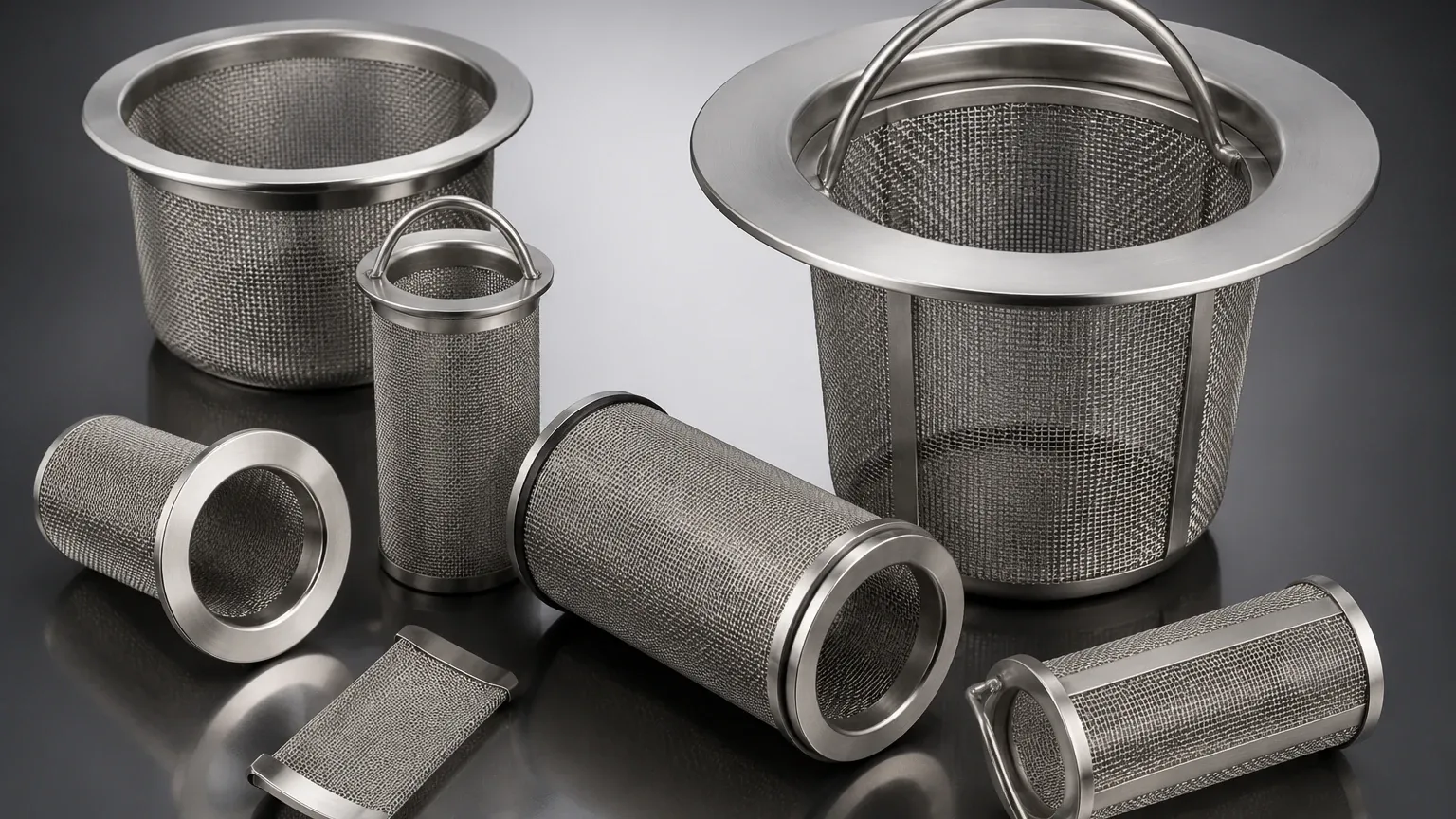
Standard off-the-shelf islip strainers may not always meet the specific requirements of complex industrial systems. This is where custom manufacturing and OEM capabilities become invaluable. Manufacturers like Kaifil specialize in developing bespoke Strainers & Baskets that address unique engineering challenges.
Tailored Basket Designs
In some applications, standard perforated baskets may not provide sufficient structural integrity. Customization options include:
- Heavy-Duty Reinforcement: Adding a perforated metal backup to a fine wire mesh to prevent collapsing under high differential pressure.
- Magnetic Inserts: Incorporating magnets into the basket to capture fine ferrous particles that might otherwise pass through the mesh.
- Handle Variations: Designing custom handles or lift-out mechanisms to facilitate easier removal in cramped spaces.
Precision Metal Components
Beyond the housing, the internal filtration element is the most critical component. Advanced manufacturing techniques, such as precision welding and high-accuracy mesh weaving, ensure that the filtration surface is uniform. This consistency is vital for maintaining predictable flow rates and ensuring that no bypass of unfiltered fluid occurs.
Maintenance, Replacement Cycles, and Total Cost of Ownership
Investing in high-quality islip strainers is a strategy to reduce the Total Cost of Ownership (TCO). While a lower-cost strainer might seem attractive initially, frequent failures or high pressure drops can lead to significant operational expenses.
Cleaning Protocols
A regular maintenance schedule is essential for the longevity of the strainer. Most systems utilize differential pressure gauges to monitor the health of the filter. When the pressure drop across the strainer reaches a predetermined limit (usually 5-10 psi above the clean drop), the basket must be removed and cleaned. For stainless steel baskets, ultrasonic cleaning or high-pressure washing is often effective in restoring the element to its original performance.
Recognizing Wear and Fatigue
Over time, even the most durable stainless steel baskets can experience wear. Signs that a replacement is needed include:
- Mesh Blinding: Permanent clogging of the mesh that cannot be removed by standard cleaning.
- Structural Deformation: Warping or crushing of the basket due to excessive pressure spikes.
- Erosion: Thinning of the metal walls in high-velocity systems, which can lead to holes and filtration bypass.
Total Cost Considerations
When evaluating the cost of islip strainers, engineers should look beyond the purchase price. Consider the cost of downtime, the labor required for cleaning, and the protection provided to more expensive downstream equipment. A well-engineered strainer that lasts five years with minimal maintenance is far more cost-effective than a cheaper alternative that requires annual replacement.
Industry-Specific Applications for Strainers & Baskets
The versatility of islip strainers makes them applicable across a wide range of sectors, each with its own set of regulatory and performance requirements.
Chemical and Petrochemical Processing
In these environments, corrosion resistance is the primary concern. Strainers are used to protect sensitive instrumentation and to remove catalyst fines from process streams. The use of 316L stainless steel and specialized coatings is common here.
Food and Beverage Industry
Filtration in this sector requires compliance with hygienic standards. Strainers must be designed with smooth surfaces to prevent bacterial growth and must be capable of withstanding Clean-In-Place (CIP) procedures. Stainless steel is the preferred material due to its non-reactive nature and ease of sterilization.
Hydraulic and Cooling Systems
In power plants and manufacturing facilities, strainers protect heat exchangers and cooling towers from debris found in raw water sources. These applications often require large-scale basket strainers capable of handling thousands of gallons per minute with minimal pressure loss.
Conclusion
Selecting the right islip strainers involves a deep understanding of fluid dynamics, material science, and the specific demands of the industrial application. By focusing on high-quality construction, appropriate material grades, and precise filtration ratings, engineers can ensure their systems operate at peak efficiency. Whether utilizing standard designs or seeking customized Strainers & Baskets, the goal remains the same: reliable protection of critical infrastructure and optimized process performance. For those managing complex filtration needs, partnering with a manufacturer that understands these technical boundaries is the most effective way to achieve long-term operational success.
