


Strainer Juicer
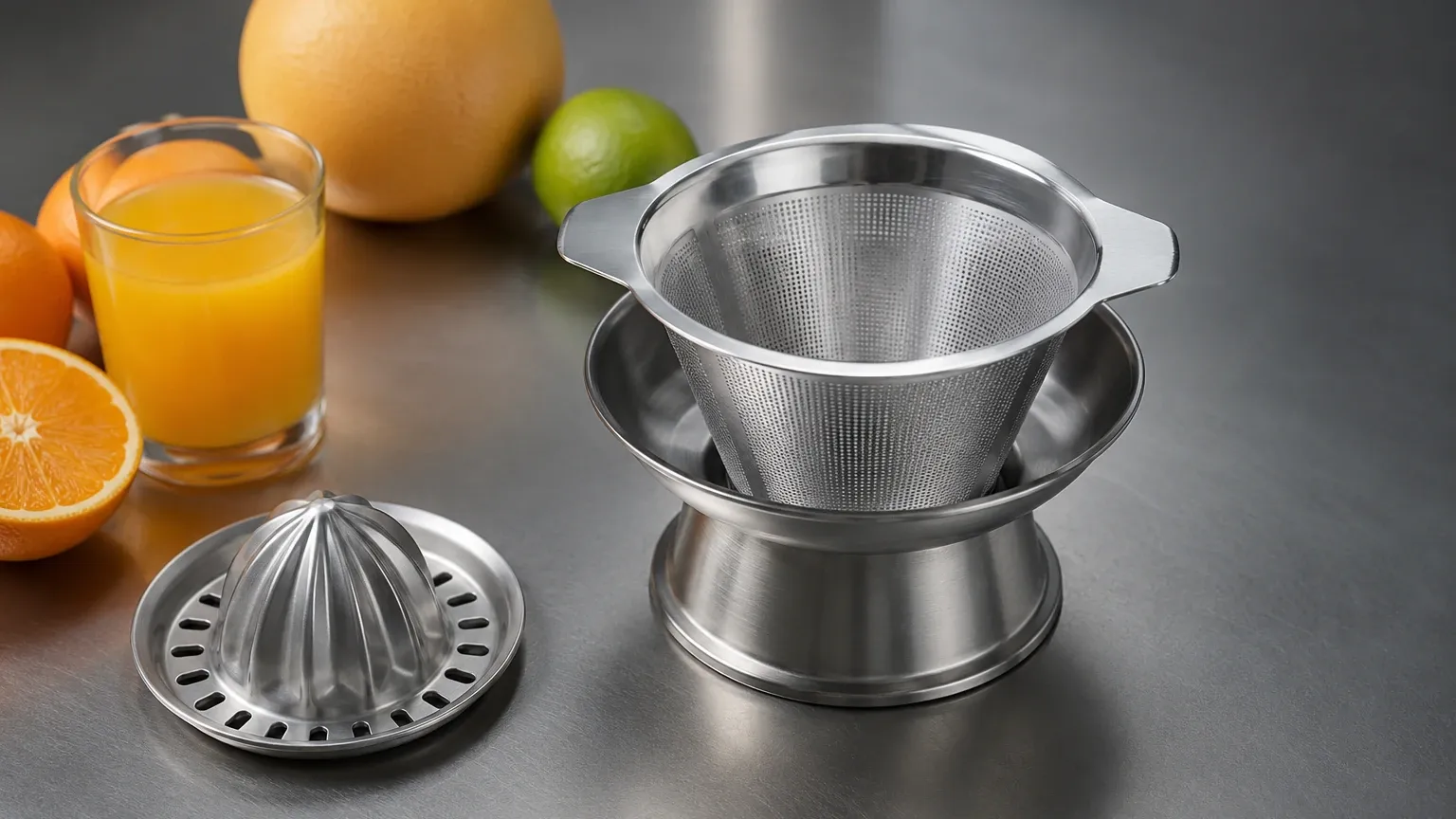
In the industrial food and beverage processing sector, the efficiency of juice extraction and the clarity of the final product depend heavily on the precision of filtration components. The term "strainer juicer" typically refers to the specialized filtration elements—primarily baskets and screens—housed within industrial-scale juicing equipment. These components are responsible for the critical separation of liquid from solid plant matter, including pulp, seeds, and skins. For engineers and procurement managers, selecting the correct Strainers & Baskets is a matter of balancing throughput requirements with the desired texture and clarity of the juice.
Industrial juicing applications demand components that can withstand high mechanical stress, corrosive environments (due to the natural acidity of fruits), and rigorous cleaning protocols. This article examines the technical specifications, engineering considerations, and material requirements for industrial strainer juicer components, providing a framework for informed selection and customization.
The Role of Strainers & Baskets in Industrial Juice Extraction
At the heart of any industrial centrifugal, screw-press, or hydraulic juicer is a filtration assembly. While the machine provides the mechanical force, the strainer juicer component dictates the quality of the output. These components serve two primary functions: providing a structural barrier for the solids and allowing the liquid to pass through at a controlled rate.
In centrifugal systems, the strainer basket rotates at high speeds, using G-force to push the juice through a fine mesh or perforated screen. In screw-press systems, the strainer acts as a sleeve; as the screw compresses the organic material against the screen, the juice is forced through the apertures. In both scenarios, the integrity of the strainer is paramount. A failure in the mesh or a deformation in the basket structure can lead to batch contamination or mechanical damage to the entire processing line.
High-performance Strainers & Baskets are engineered to handle specific viscosities and fiber types. For instance, straining citrus juice requires a different aperture profile than straining dense root vegetables or leafy greens. The engineering focus is always on minimizing "blinding" (clogging of the filter surface) while maximizing the yield of liquid.
Material Selection for Food-Grade Filtration
Material science is the foundation of industrial filtration. Because juice is intended for human consumption and often contains organic acids (such as citric or malic acid), the materials used in a strainer juicer must be both food-safe and chemically resistant.
Stainless Steel Grades
Stainless steel is the industry standard due to its durability and ease of sterilization. Most industrial juicing components utilize:
* Type 304 Stainless Steel: Suitable for many general-purpose juicing applications where the acidity levels are moderate and the cleaning agents are not overly aggressive.
* Type 316L Stainless Steel: Preferred for high-acidity juices (like lemon or lime) and applications involving saline environments. The "L" denotes low carbon content, which improves weldability and reduces the risk of intergranular corrosion near weld joints—a critical factor for the longevity of custom-fabricated baskets.
Surface Finishes and Hygiene
Beyond the alloy grade, the surface finish of the strainer juicer component is vital. Industrial strainers often undergo electropolishing. This process removes surface imperfections at a microscopic level, creating a "mirror" finish that prevents pulp fibers from snagging. A smoother surface not only improves filtration efficiency but also significantly enhances the effectiveness of Clean-In-Place (CIP) systems, reducing the total downtime required for sanitation.
Engineering Specifications: Micron Ratings and Mesh Types
When specifying a strainer juicer component, engineers must define the filtration accuracy, often measured in microns or mesh count. The choice of filter media—whether perforated metal, woven wire mesh, or wedge wire—depends on the specific mechanical demands of the juicing process.
Woven Wire Mesh
Woven wire mesh is frequently used for fine filtration. It offers a high percentage of open area, which translates to high flow rates. For juicing, "Dutch weave" or "twilled weave" patterns are often employed to provide a combination of fine pore size and structural strength. However, in high-pressure environments, wire mesh must be supported by a more rigid structure.
Perforated Metal Supports
For larger industrial baskets, a perforated metal plate often serves as the primary structural element. This plate can be used alone for coarse straining (e.g., removing large seeds) or as a support cage for a finer inner mesh liner. The hole pattern (staggered vs. straight) and the bridge width between holes are calculated to ensure the basket does not collapse under the hydraulic pressure of the juice extraction process.
Micron Rating vs. Open Area
There is a constant trade-off between the micron rating (the size of the particles removed) and the open area (the percentage of the screen that allows flow). A strainer juicer with a very low micron rating will produce a very clear juice but may require more frequent cleaning or a larger surface area to maintain production speeds. Technical teams must confirm the particle size distribution of their pulp to select the optimal mesh that prevents clogging while meeting clarity standards.
Custom Design Considerations for OEM Applications
Standard off-the-shelf filters rarely meet the precise needs of high-volume juice production lines. Customization is often necessary to integrate the strainer juicer component into existing OEM (Original Equipment Manufacturer) machinery. Key areas for customization include:
1. Geometric Configuration: Strainers can be conical, cylindrical, or flat, depending on the machine's drive mechanism. Precise tolerances are required to ensure a perfect fit within the housing, preventing "bypass" where unfiltered pulp leaks into the juice stream.
2. Reinforcement Rings and Flanges: To withstand the torque of high-speed rotation or the axial load of a screw press, baskets are often reinforced with heavy-duty flanges and support rings. These must be precision-machined to ensure balance and alignment.
3. Flow Direction: Depending on the equipment design, filtration may occur from the inside-out or outside-in. The placement of the fine mesh (on the inner or outer diameter of the support cage) is determined by this flow direction to ensure the mesh is pushed against its support rather than away from it.
By working with a manufacturer capable of custom fabrication, engineers can optimize the Strainers & Baskets for their specific equipment, leading to better yield and reduced mechanical wear.
Maintenance, Longevity, and Total Cost of Ownership
In a B2B environment, the purchase price of a strainer juicer is only one part of the total cost of ownership (TCO). The real value is found in the component's durability and the ease with which it can be maintained.
Clogging and Cleaning
Juice fibers, especially pectins and sugars, can be extremely difficult to remove once they have dried or become embedded in the mesh. Industrial strainers must be designed for easy cleaning. This involves selecting mesh types that release solids easily and ensuring that there are no "dead zones" in the basket design where organic material can accumulate and harbor bacteria.
Replacement Cycles
Even the highest quality stainless steel strainers will eventually succumb to fatigue or abrasion. Factors that shorten the lifespan of a strainer juicer include:
* Abrasive Solids: Seeds or grit in the raw product can wear down the edges of the mesh over time.
* Pressure Spikes: Rapid changes in flow rate can cause mechanical stress on the filter media.
* Aggressive Chemicals: If the cleaning cycle uses high concentrations of chlorine or other oxidizers, even 316L stainless steel can experience pitting.
Regular inspection protocols should be established to check for wire displacement, pinholes, or structural deformation. Replacing a strainer before it fails is significantly more cost-effective than dealing with the downstream consequences of a mesh break.
Technical Checklist for Procurement and Engineering Teams
Before placing an order for a strainer juicer or a set of industrial baskets, technical teams should confirm several key parameters to ensure the product is fit for purpose. This due diligence minimizes the risk of operational failure and ensures the filtration system performs as expected.
* Fluid Characteristics: What is the pH level, temperature, and viscosity of the juice? These factors dictate material selection and the required open area.
* Pressure Requirements: What is the maximum operating pressure and the allowable pressure drop (ΔP) across the filter? This determines the thickness of the support structures.
* Filtration Goal: Are you looking for "pulp-free" juice (requiring fine mesh) or a "pulpy" texture (requiring larger perforations)?
* Interface Dimensions: Confirm the exact ID (inner diameter), OD (outer diameter), and length. Even a millimeter of variance can lead to bypass or installation issues.
* Compliance Standards: Ensure the manufacturer provides certifications for food-grade materials (FDA compliance) and that the welding standards meet industrial hygienic requirements.
Conclusion
The strainer juicer component is a small but vital part of the juice production chain. By focusing on high-quality materials like 316L stainless steel, precision engineering of mesh and perforations, and customized designs tailored to specific OEM requirements, manufacturers can achieve superior filtration performance.
Investing in robust Strainers & Baskets reduces downtime, protects downstream equipment, and ensures a consistent, high-quality product for the end consumer. For engineers, the goal is to find a balance between filtration fineness and operational throughput, a task that requires a deep understanding of both the mechanical process and the characteristics of the organic material being processed.
