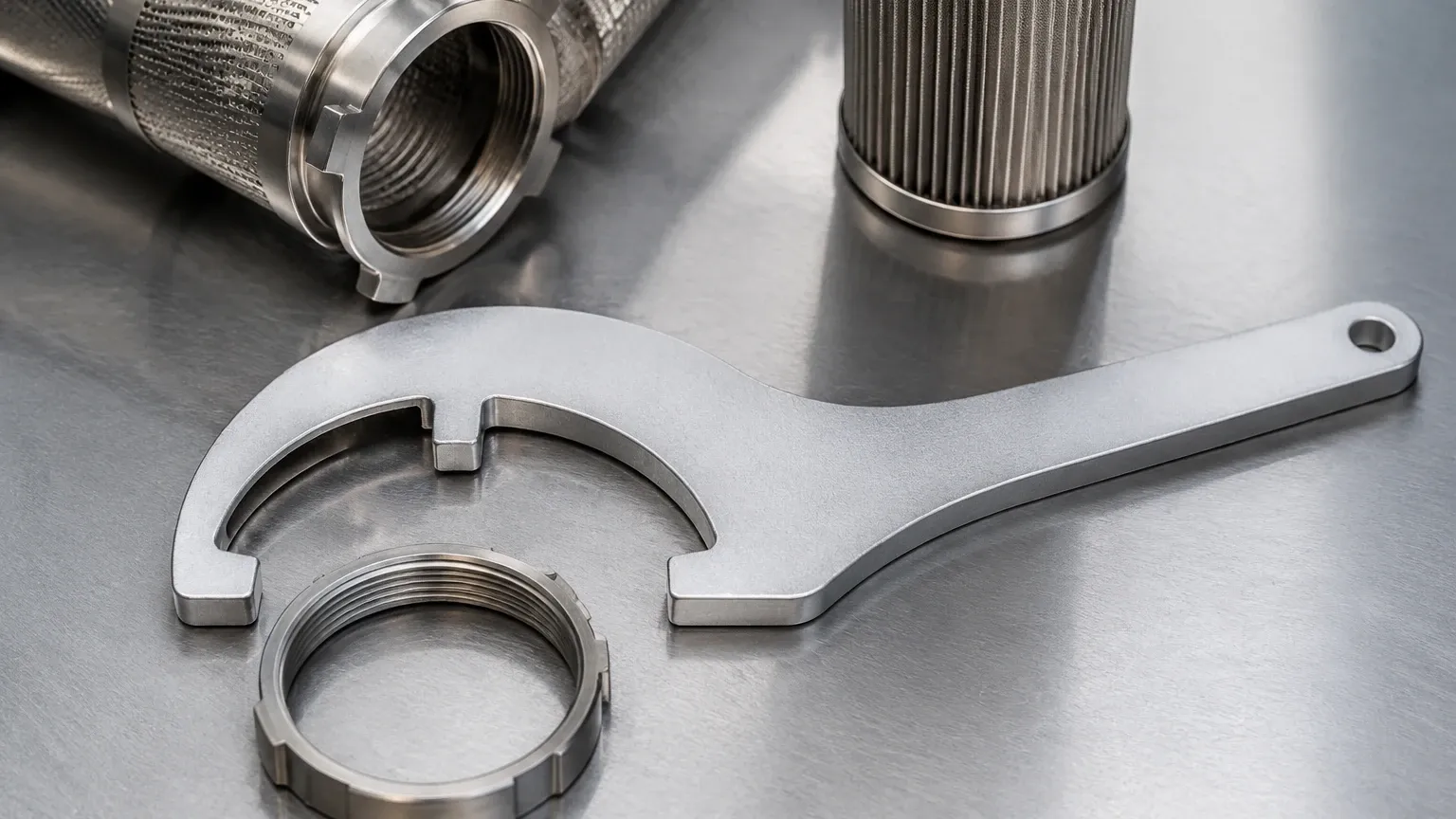
Strainer Locknut Wrench
In industrial filtration systems, the integrity of mechanical connections is as vital as the filtration media itself. While the primary focus of an engineer is often the micron rating or the flow capacity of Strainers & Baskets, the method by which these components are secured within a housing or pipeline determines the long-term reliability of the system. The strainer locknut wrench is a specialized tool designed to interface with the locknuts that secure strainer bodies, baskets, or internal cartridges. In high-pressure or high-vibration environments, using the correct tool for installation and maintenance is not merely a matter of convenience; it is a prerequisite for operational safety and leak prevention.
The Role of Strainers & Baskets in Industrial Filtration
Industrial strainers and baskets serve as the first line of defense in fluid processing systems. Their primary function is the removal of coarse solids from liquids to protect downstream equipment such as pumps, valves, and heat exchangers. Unlike fine membrane filters, these components are designed for high-volume flow and durability, often constructed from stainless steel wire mesh or perforated metal.
Kaifil specializes in custom stainless steel filtration solutions, where the geometry of the basket must be precisely matched to the housing. Whether the application involves chemical processing, food and beverage production, or hydraulic systems, the basket must remain seated correctly under varying pressure differentials. If a basket shifts due to an improperly tightened locknut, bypass can occur, allowing contaminants to pass through the system and potentially causing catastrophic failure of precision components downstream.
Understanding the Strainer Locknut Wrench
A strainer locknut wrench is engineered to provide the necessary leverage and grip to tighten or loosen the large-diameter, low-profile nuts typically found on industrial strainers. Unlike standard pipe wrenches or adjustable wrenches, which can mar the surface of stainless steel or fail to provide a secure grip on specialized nut geometries, a dedicated locknut wrench ensures uniform torque distribution.
Design Variations
In industrial settings, these wrenches often take the form of a spanner wrench or a heavy-duty socket-style tool. The design must account for:
1. Nut Geometry: Many industrial locknuts feature notches, holes, or flats that require a specific pin or hook engagement.
2. Space Constraints: Strainers are often installed in tight piping manifolds where a standard wrench cannot rotate. Offset or slim-profile wrenches allow technicians to perform maintenance without dismantling surrounding infrastructure.
3. Material Compatibility: To prevent galvanic corrosion or surface contamination, wrenches used on stainless steel strainers should ideally be made of non-marring materials or high-grade alloys that do not leave carbon steel deposits on the stainless surface.
Engineering Considerations for Strainer Installation
When specifying Strainers & Baskets for a new project, engineers must look beyond the mesh size. The mechanical interface—specifically the locknut and the tool required to secure it—impacts the total cost of ownership (TCO) and maintenance efficiency.
Sealing Integrity and Torque
Achieving a liquid-tight seal requires precise compression of the gasket or O-ring situated between the strainer basket and the housing seat. Under-tightening leads to bypass, while over-tightening can deform the gasket or strip the threads of the locknut. A strainer locknut wrench allows for more controlled torque application compared to improvised tools. In critical pharmaceutical or chemical applications, maintenance protocols may specify exact torque values to ensure repeatability across multiple filtration stages.
Vibration and Thermal Expansion
Industrial systems often operate under conditions of thermal cycling and mechanical vibration. These forces can cause standard threaded connections to loosen over time. Locknuts, when properly torqued with the correct wrench, provide the frictional resistance necessary to maintain the seal. In some designs, the locknut may incorporate a secondary locking mechanism, such as a set screw or a serrated face, which requires specific tool alignment during installation.
Selection Criteria for Industrial Strainers & Baskets
Selecting the right filtration component involves balancing several technical parameters. Kaifil’s manufacturing expertise allows for customization across these variables to meet specific industrial demands.
* Filtration Accuracy: This is determined by the wire mesh count or the diameter of the perforations. For coarse straining, perforated plate is common, while fine filtration requires multi-layered sintered wire mesh.
* Material Selection: Stainless steel 304 and 316L are the industry standards due to their corrosion resistance. For highly acidic or saline environments, specialized alloys may be required.
* Structural Integrity: The basket must withstand the "burst pressure" or the maximum pressure differential expected when the filter is fully loaded with contaminants. This often necessitates the use of internal support cages or heavier gauge materials.
* Ease of Maintenance: The design of the locknut and the availability of a matching strainer locknut wrench directly influence how quickly a technician can clean or replace the basket during a scheduled shutdown.
Common Risks in Strainer Maintenance
Improper maintenance of industrial strainers is a leading cause of unscheduled downtime. Using the wrong tools or neglecting the locknut assembly can lead to several issues:
1. Thread Galling: Stainless steel is particularly susceptible to galling, a form of wear caused by adhesion between sliding surfaces. If a locknut is forced with an ill-fitting wrench or turned too quickly without lubrication, the threads can seize, necessitating the replacement of the entire strainer housing.
2. Surface Marring: Scratches on the surface of a stainless steel strainer can become focal points for pitting corrosion, especially in food-grade or pharmaceutical applications where a smooth surface finish (Ra) is required for sanitation.
3. Gasket Displacement: If the locknut is not tightened evenly, the gasket may pinch or shift, creating a leak path that is difficult to detect until the system is pressurized.
Optimizing Filtration Performance with Custom Solutions
At Kaifil, we recognize that every industrial environment has unique requirements. A standard off-the-shelf strainer may not provide the optimal balance of flow rate and filtration efficiency for a specialized chemical process. Our OEM and customization capabilities allow us to design Strainers & Baskets that integrate seamlessly into existing systems.
When developing a custom filtration solution, we consider the entire assembly. This includes the basket geometry, the mesh type, and the mechanical fastening system. By providing technical data on thread types and recommended installation tools, such as the strainer locknut wrench, we help engineering teams establish robust maintenance procedures from day one.
Technical Confirmation for Purchasing Teams
Before procuring strainers or maintenance tools, purchasing teams and engineers should confirm the following technical details to ensure compatibility and performance:
* Thread Specifications: Confirm whether the locknut uses NPT, BSP, or metric threading, as this dictates the type of wrench and replacement parts required.
* Material Certification: Ensure that both the strainer and the locknut meet the required material standards (e.g., ASTM or AISI) and have undergone necessary treatments like passivation.
* Operating Parameters: Verify the maximum operating pressure and temperature, as these will influence the torque requirements for the locknut assembly.
* Tooling Availability: Confirm if a specialized strainer locknut wrench is required for the specific model and whether it is included or needs to be sourced separately.
Conclusion
The efficiency of an industrial filtration system depends on the synergy between high-quality components and proper maintenance practices. While the strainer basket performs the critical task of particle separation, the mechanical security provided by the locknut and the precision of the strainer locknut wrench ensure that the system operates without bypass or leakage. By focusing on technical accuracy in both product selection and maintenance tooling, industrial facilities can achieve longer service life for their filtration equipment and reduce the total cost of ownership. For engineers seeking reliable, custom-engineered solutions, Kaifil provides the expertise and manufacturing precision necessary to meet the most demanding filtration challenges.