


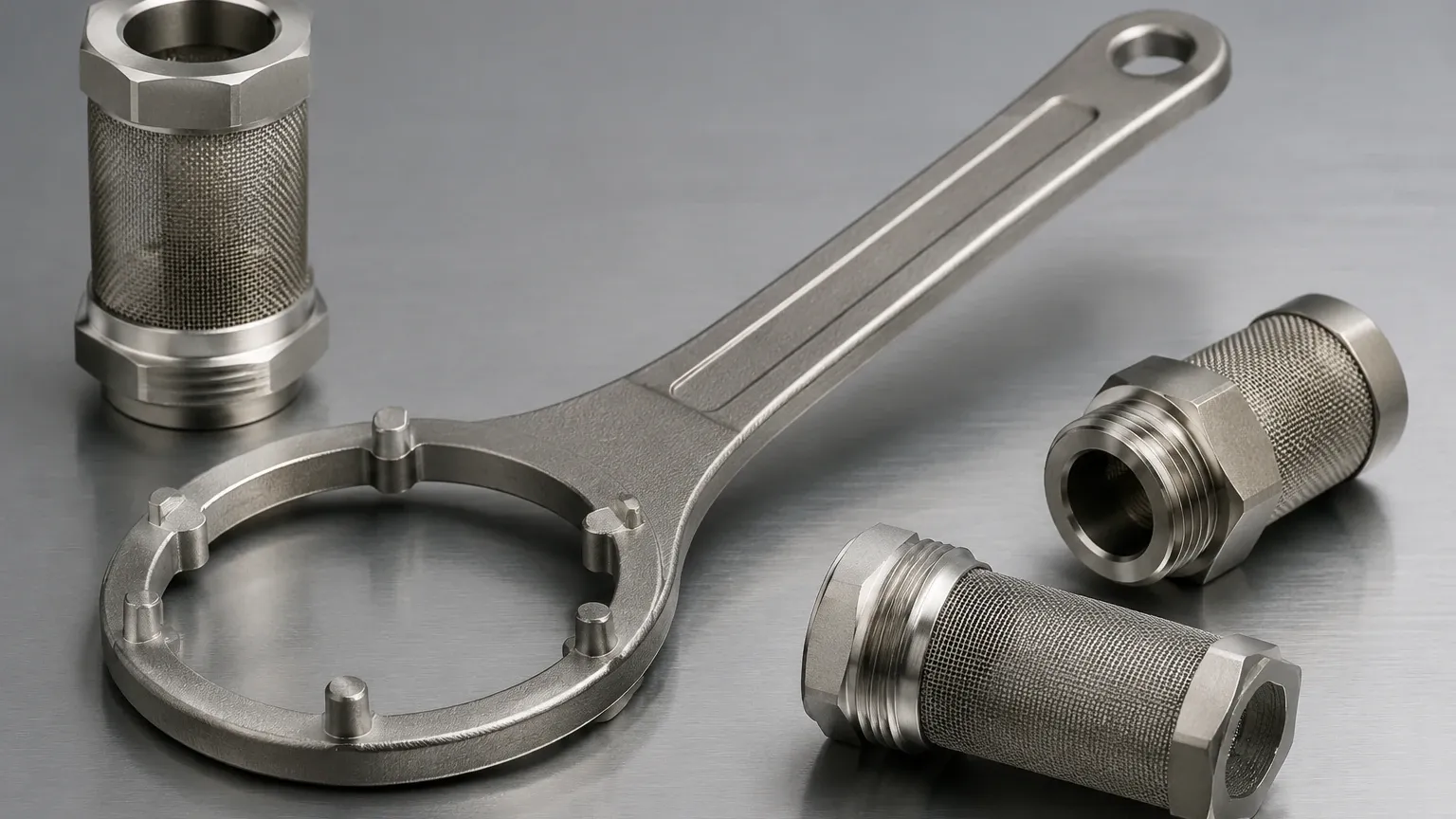
Strainer Nut Wrench
In industrial fluid handling and processing, the integrity of a filtration system depends not only on the quality of the filter media but also on the precision of the assembly and the reliability of the maintenance tools used. Among these tools, the strainer nut wrench serves as a specialized instrument designed to facilitate the installation and removal of strainer components without compromising the structural integrity of the housing or the sealing surfaces. For engineers and maintenance professionals managing complex piping systems, understanding the synergy between high-performance Strainers & Baskets and the specialized tools required to maintain them is essential for operational efficiency.
Industrial strainers are the first line of defense against particulate contamination in pumps, valves, and downstream equipment. However, because these components are designed to capture debris, they require regular inspection and cleaning. The use of a proper strainer nut wrench ensures that the access points—often secured by large, high-torque nuts or specialized fittings—can be opened and closed safely, maintaining a leak-proof seal throughout the system's lifecycle.
The Role of the Strainer Nut Wrench in Industrial Maintenance
A strainer nut wrench is specifically engineered to engage with the unique geometry of the nuts used to secure strainer housings or basket assemblies. Unlike standard adjustable wrenches, which may slip or apply uneven pressure, a dedicated strainer nut wrench provides a secure grip on the facets of the nut. This is particularly critical in industrial environments where stainless steel components are prevalent.
Stainless steel, while highly durable and corrosion-resistant, is susceptible to a phenomenon known as galling—a form of wear caused by adhesion between sliding surfaces. When a nut is overtightened or removed using improper tools, the friction can cause the threads to seize. A precision-engineered wrench allows for the application of controlled torque, reducing the risk of thread damage and ensuring that the Strainers & Baskets can be serviced repeatedly without requiring expensive housing replacements.
Types of Nut Configurations
In industrial filtration, you will encounter several nut designs that may require a specific strainer nut wrench:
* Hexagonal Nuts: Standard six-sided nuts found on smaller Y-strainers or T-strainers.
* Knurled Nuts: Often found on hand-tightened basket strainers, though a wrench may be needed if the seal has become set over time or under high pressure.
* Spanner-Type Nuts: These feature holes or slots on the face or circumference, requiring a pin or hook-style wrench to turn.
* Octagonal or Multi-Point Nuts: Used in high-pressure applications to distribute torque more evenly across the fitting.
Technical Specifications of Industrial Strainers and Baskets
To understand why a strainer nut wrench is necessary, one must look at the design of the filtration components themselves. Industrial strainers are typically categorized by their housing shape and the type of internal element they utilize.
Basket Strainers
Basket strainers are designed for systems where high flow rates are required and the pressure drop must be kept to a minimum. The internal basket provides a large surface area for filtration, allowing for longer intervals between cleanings. These are often used in the chemical processing and food and beverage industries, where the media may contain a high volume of solids. The top-entry design of these strainers usually involves a cover secured by a large nut or a series of bolts, where a strainer nut wrench becomes indispensable for quick access.
Y-Strainers
Named for their shape, Y-strainers are typically used in pressurized lines, either for liquid or gas. They are more compact than basket strainers and are often used in applications where the amount of material to be removed is relatively small. The "leg" of the Y contains the filter element and is capped with a nut or a flange. In tight mechanical rooms or complex skids, a compact strainer nut wrench allows technicians to reach these components in confined spaces.
Material Selection and Engineering
At Kaifil, the focus is on manufacturing Strainers & Baskets from high-grade materials like 304 and 316L stainless steel. These materials are chosen for their ability to withstand aggressive chemicals, high temperatures, and high-pressure differentials. The engineering of the mesh—whether it is a plain weave, twilled weave, or perforated metal—is calculated based on the required micron rating and the viscosity of the fluid being filtered.
Engineering Best Practices for Strainer Installation
Proper installation is the foundation of a reliable filtration system. When integrating a strainer into a B2B industrial process, engineers must account for several variables that influence how the strainer nut wrench should be utilized.
1. Torque Requirements
Every strainer housing has a specified torque range for its closure mechanism. Overtightening can deform the gasket or O-ring, leading to leaks, while undertightening can result in bypass or catastrophic failure under pressure. A strainer nut wrench, often used in conjunction with a torque measuring device, ensures that the assembly meets the manufacturer's specifications.
2. Gasket Seating
Before using a strainer nut wrench to finalize the closure, it is vital to ensure the gasket or O-ring is properly seated. In stainless steel systems, a small amount of food-grade or chemically compatible lubricant on the threads can prevent galling and allow the wrench to turn more smoothly, ensuring a more accurate torque application.
3. Orientation and Accessibility
During the design phase of a piping system, engineers must ensure there is sufficient clearance for maintenance tools. If a strainer is placed too close to a wall or another pipe, a standard wrench may not fit. This is where specialized, low-profile strainer nut wrenches or offset wrenches are required to maintain the equipment.
Maintenance Cycles and the Importance of Proper Tooling
The total cost of ownership (TCO) for an industrial filtration system is heavily influenced by maintenance efficiency. If a technician struggles to open a strainer housing due to the lack of a proper strainer nut wrench, the resulting downtime can cost a facility thousands of dollars per hour.
Monitoring Differential Pressure
The primary indicator that a strainer needs cleaning is a rise in differential pressure (DP). When the DP reaches a predetermined limit, the system must be bypassed or shut down so the basket can be removed. Using a dedicated strainer nut wrench speeds up this process, allowing for a rapid "blow-down" or manual cleaning of the Strainers & Baskets.
Inspection for Wear
During the maintenance cycle, the nut and the threads of the housing should be inspected for signs of wear. If the corners of a hex nut begin to round off, it is a sign that an incorrect tool was used in the past. Replacing these components early and switching to the correct strainer nut wrench can prevent a future scenario where the housing becomes impossible to open without destructive methods.
Custom OEM Solutions for Complex Filtration Systems
Many industrial applications require more than off-the-shelf components. Kaifil specializes in providing custom stainless steel filtration solutions that meet specific engineering challenges. When a custom strainer is designed, the closure mechanism is often tailored to the specific pressure and space constraints of the application.
Customized Filter Elements
Whether the application requires a specific micron rating for pharmaceutical processing or a heavy-duty reinforced basket for hydraulic oil filtration, customization ensures that the filter performs exactly as needed. This customization often extends to the housing fittings. If a client requires a specific type of locking nut to match their existing tool inventory, such as a specific strainer nut wrench size, Kaifil can accommodate these design requirements.
Engineering Support
Working with a manufacturer like Kaifil provides access to engineering expertise regarding material compatibility and filtration efficiency. When selecting Strainers & Baskets, it is important to consider the nature of the fluid—its acidity, temperature, and flow velocity. These factors influence not only the mesh selection but also the type of seals and the mechanical design of the closure system.
Common Challenges in Strainer Maintenance
Even with high-quality components, certain challenges can arise in the field. Addressing these through proper tool selection and technique is key to longevity.
Corrosion and Environmental Factors
In water treatment or marine applications, salt air and moisture can lead to external corrosion on the strainer housing. If the nut becomes corroded, a standard wrench may slip. A heavy-duty strainer nut wrench with a wide contact surface area provides the necessary leverage to break the bond of corrosion without shearing the fitting.
High-Temperature Seizing
In steam applications or high-temperature chemical processing, thermal expansion can cause the strainer nut to tighten significantly during operation. When the system cools for maintenance, the nut may be difficult to move. Professionals often use a strainer nut wrench with a longer handle for increased leverage, or apply heat-stable anti-seize compounds during the initial assembly to facilitate future removal.
Conclusion
In the world of industrial filtration, the small details often dictate the success of large-scale operations. While the focus is frequently on the filtration accuracy and flow capacity of Strainers & Baskets, the mechanical aspects of their maintenance cannot be ignored. The strainer nut wrench is a vital link in the maintenance chain, ensuring that high-quality stainless steel filters can be serviced safely, quickly, and effectively.
By combining advanced manufacturing capabilities with a deep understanding of the practicalities of field maintenance, Kaifil delivers filtration solutions that are both high-performing and user-friendly. For engineers and purchasing teams, investing in quality filtration components and the correct tools to maintain them is a strategy that pays dividends in reduced downtime, longer equipment life, and consistent product quality. Whether you are dealing with standard water treatment or complex chemical processing, the right combination of engineering and tooling is the key to a reliable, efficient system.
