


Novelty Tea Strainers
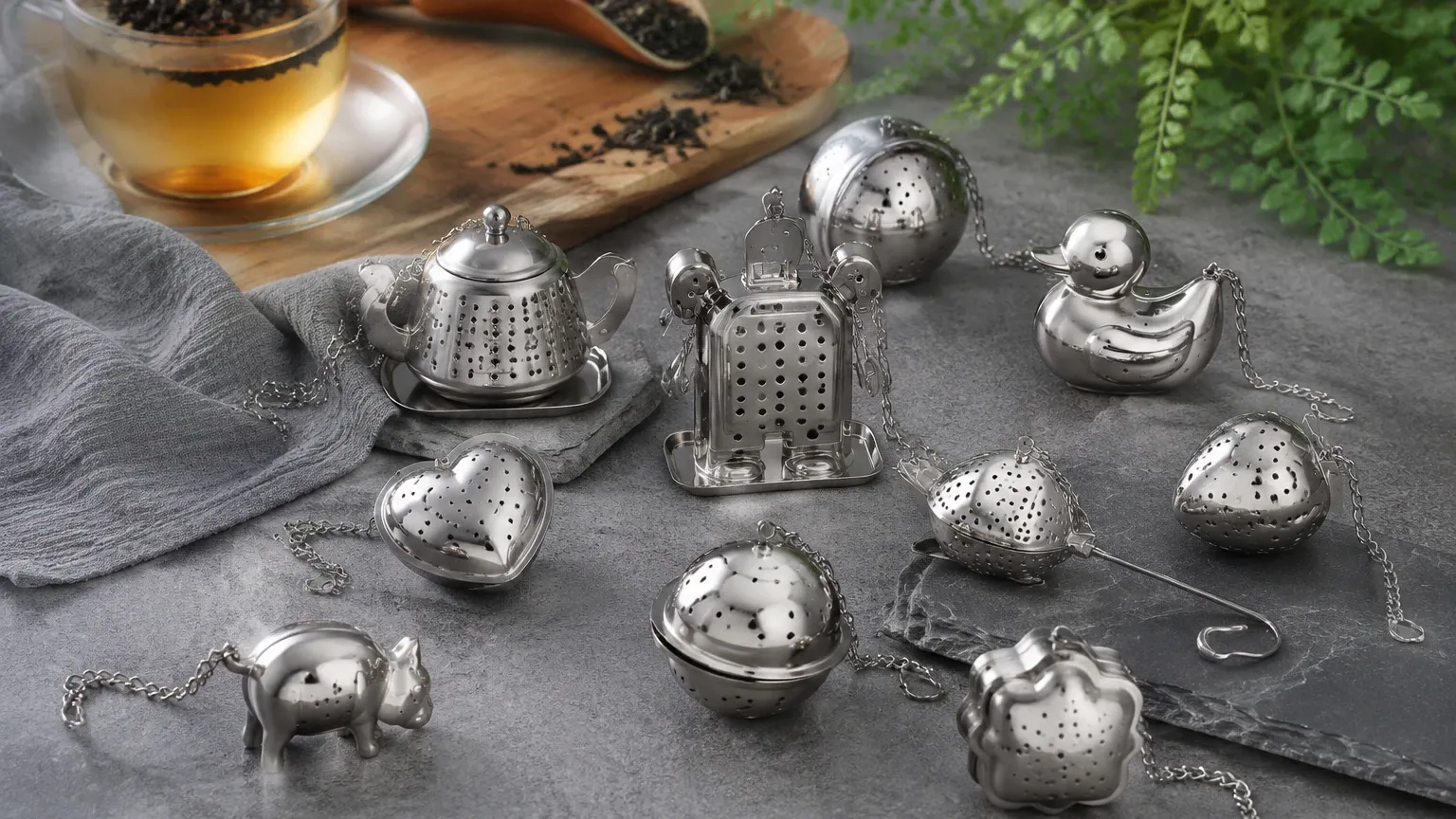
In the specialized world of food and beverage equipment manufacturing, the term "novelty" often belies the rigorous engineering required to produce high-quality filtration components. While consumer-facing novelty tea strainers are frequently associated with unique shapes and aesthetic appeal, the underlying technical requirements for these products—especially when produced for OEM or industrial-scale applications—demand a sophisticated understanding of material science, fluid dynamics, and precision manufacturing. For engineers and procurement professionals, sourcing custom-shaped filtration components requires a transition from viewing these items as mere accessories to treating them as critical precision metal components.
Kaifil, as a manufacturer of custom stainless steel filtration solutions, approaches the production of specialized strainers with the same technical rigor applied to industrial-grade Strainers & Baskets. Whether a design is intended for high-end retail or specialized laboratory use, the performance of the filter is dictated by its structural integrity and the accuracy of its mesh.
The Engineering Behind Custom-Shaped Filtration
The development of novelty tea strainers involves more than just creative industrial design; it requires a deep dive into how geometry affects filtration efficiency. When a strainer deviates from standard cylindrical or hemispherical shapes, several engineering challenges arise.
First, the distribution of the wire mesh across a non-linear surface must be managed to prevent "blinding" or uneven flow. In custom shapes, the tension of the mesh can vary, which may lead to aperture distortion. If the apertures of the mesh are stretched or compressed during the forming process, the micron rating of the strainer becomes inconsistent, allowing larger particles (fines) to pass through in some areas while restricting flow in others.
Second, the structural support of the mesh is paramount. In industrial applications, a basket strainer might use a perforated metal backing to support a fine mesh lining. In smaller-scale novelty tea strainers, the mesh itself often serves as the structural body. This requires the use of high-tensile stainless steel wire that can maintain its shape through repeated thermal cycles—from room temperature to boiling water—without losing its geometric precision.
Material Selection: Why Stainless Steel is Non-Negotiable
For any filtration component involving human consumption or chemical processing, material selection is the most critical factor in ensuring safety and longevity. In the context of novelty tea strainers, the use of low-grade alloys or plastics can lead to leaching, off-gassing, or structural failure.
Professional-grade strainers utilize 304 or 316L stainless steel. These alloys are selected for several specific reasons:
1. Corrosion Resistance: Tea contains various organic acids and tannins that can be mildly corrosive over time. 304 stainless steel provides excellent resistance to these elements, while 316L offers additional protection against chlorides, making it suitable for more aggressive cleaning agents.
2. Thermal Stability: Stainless steel maintains its mechanical properties at high temperatures. This is essential for strainers that are frequently submerged in boiling water and then rapidly cooled.
3. Surface Inertness: Unlike plastics or inferior metals, high-quality stainless steel does not react with the tea or impart any metallic taste, ensuring the purity of the final beverage.
4. Cleanability: Stainless steel can be electropolished to a mirror finish. This process removes surface irregularities at a microscopic level, preventing the buildup of organic residues and making the component easier to sanitize.
Technical Specifications of Fine Wire Mesh
When specifying a novelty tea strainer for production, engineers must define the mesh count and wire diameter. These parameters determine the "open area" percentage, which directly impacts the flow rate and the clarity of the tea.
* Mesh Count: This refers to the number of openings per linear inch. For tea filtration, a mesh count between 80 and 200 is typically used. A higher mesh count provides finer filtration but may require more frequent cleaning as it is more prone to clogging with fine particulates.
* Wire Diameter: The thickness of the wire affects the strength of the mesh. However, thicker wires reduce the open area. Balancing wire diameter with mesh count is a critical optimization step in the design phase.
* Aperture Size: This is the clear distance between two adjacent wires. For premium tea applications, an aperture size that captures the smallest fannings while allowing essential oils and flavors to pass through is the goal.
In industrial Strainers & Baskets, these same calculations are used to ensure that the filtration system does not create an excessive pressure drop while protecting downstream equipment from debris.
Manufacturing Processes for Custom Metal Filters
The transition from a CAD drawing to a finished novelty tea strainer involves several precise manufacturing steps. Kaifil utilizes advanced techniques to ensure that even the most complex designs meet industrial standards.
Precision Stamping and Forming
For custom shapes, precision dies are used to stamp the mesh into the required form. This process must be carefully controlled to ensure that the mesh is not thinned or torn at the corners of the design. In many cases, a multi-stage forming process is used to gradually reach the final shape, preserving the integrity of the wire weave.
Advanced Welding Techniques
Joining the mesh to a solid frame or joining two halves of a novelty shape requires specialized welding. Resistance spot welding and TIG (Tungsten Inert Gas) welding are commonly used. These methods provide strong, clean bonds without the need for additional filler metals that could contaminate the product. In high-end applications, laser welding is employed for its ability to create incredibly fine, precise seams that are almost invisible to the naked eye.
Edge Finishing and Safety
A common failure point in lower-quality strainers is the presence of sharp edges or loose wire ends. In a B2B context, ensuring that all edges are hemmed or encased in a solid metal binding is essential for both user safety and the structural durability of the unit. This is often achieved through a process called "coining" or by integrating a precision-machined ring around the perimeter of the mesh.
Evaluation Criteria for Purchasing Teams
When evaluating a manufacturer for custom filtration components, purchasing teams should look beyond the surface design. The following criteria are essential for ensuring total cost of ownership and product reliability:
* Material Certification: Does the manufacturer provide Mill Test Reports (MTRs) to verify the grade of stainless steel used?
* Filtration Consistency: What are the tolerances for aperture size across a production run? Consistency is key to maintaining brand reputation for the end-user.
* Durability Testing: Has the design been tested for fatigue? For novelty tea strainers that incorporate moving parts (like hinges or locking mechanisms), the mechanical longevity of these components is as important as the filtration performance.
* Compliance: Does the product meet FDA or international food-grade standards? This includes not only the metal itself but also any lubricants used during the stamping process.
The Role of Customization in Industrial Filtration
While the market for novelty tea strainers focuses on the consumer experience, the ability to customize filtration components is a vital service for many industrial sectors. The same engineering principles used to create a unique tea infuser are applied by Kaifil to develop bespoke Strainers & Baskets for chemical reactors, hydraulic systems, and pharmaceutical processing lines.
Customization allows engineers to:
* Optimize Space: Fit a high-surface-area filter into a constrained footprint.
* Target Specific Contaminants: Tailor the mesh weave to the exact particle size distribution of the process fluid.
* Enhance Maintenance Cycles: Design baskets that are easier to remove, clean, and reinstall, thereby reducing downtime.
Conclusion: Selecting a Technical Partner
The production of novelty tea strainers and specialized industrial baskets requires a partner that understands the nuances of metal fabrication and filtration science. By focusing on high-grade materials like 304 and 316 stainless steel and employing precision manufacturing techniques, Kaifil ensures that even the most creative designs perform with industrial-grade reliability.
For engineers and procurement professionals, the goal is to find a manufacturer that doesn't just treat these items as "novelties," but as engineered components that must meet strict performance and safety standards. Whether you are developing a new retail product or need a custom solution for an industrial filtration challenge, prioritizing technical expertise and material quality will lead to superior results and long-term cost savings.
