


Engineering Guide: Metal Mesh Filter for AC Unit and Industrial HVAC Applications
In industrial and commercial HVAC (Heating, Ventilation, and Air Conditioning) systems, the selection of filtration media directly impacts equipment longevity, energy efficiency, and indoor air quality. While disposable synthetic or fiberglass filters are common in residential settings, demanding industrial environments require the structural integrity and reusability of a metal mesh filter for ac unit applications. These components are engineered to withstand high face velocities, moisture, and chemical exposure that would compromise standard media.
For engineers and procurement specialists, understanding the technical nuances of Wire Mesh Filter Cylinders & Tubes and flat panel mesh filters is essential for optimizing system performance. This guide explores the engineering principles, material considerations, and selection criteria for metal mesh filtration in industrial cooling and ventilation systems.
The Role of Metal Mesh in Industrial AC Filtration
Industrial AC units often operate in environments where the air contains more than just common dust. They may encounter oil mist, moisture, corrosive vapors, or large particulate matter that can quickly clog or collapse a standard pleated paper filter. A metal mesh filter for ac unit serves several critical functions:
1. Pre-filtration: Protecting high-efficiency secondary filters (such as HEPA or ULPA) by capturing larger particles (typically >10 microns), thereby extending the service life of more expensive components.
2. Moisture and Mist Elimination: In industrial cooling, air often carries water droplets or oil mists. The metallic surface of the wire mesh acts as a coalescer, causing droplets to accumulate and drain away from the airflow.
3. Flame and Spark Arrestance: Unlike synthetic media, stainless steel and aluminum mesh are non-combustible, providing a safety barrier in environments where sparks might be present in the air intake.
4. Structural Rigidity: Under high-pressure conditions, metal mesh maintains its shape, preventing "blow-by" or bypass leakage that occurs when flexible filters deform.
Engineering Principles: Wire Mesh Filter Cylinders & Tubes
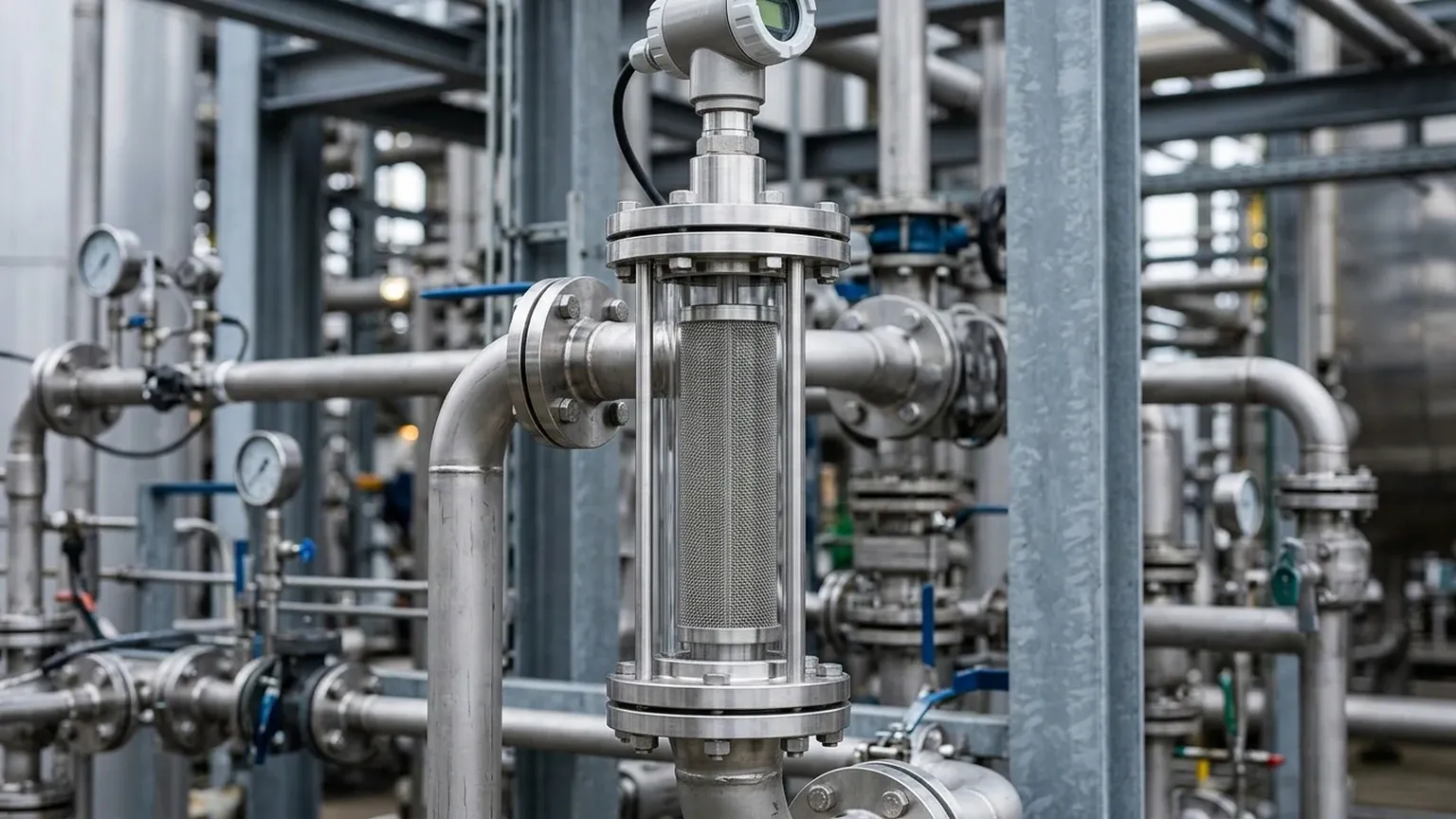
While flat panels are common in standard wall units, many industrial AC and air handling systems utilize Wire Mesh Filter Cylinders & Tubes. These cylindrical geometries offer distinct engineering advantages:
Increased Surface Area
By utilizing a cylindrical or tubular design, engineers can maximize the filtration surface area within a compact footprint. This is often achieved through pleating the mesh before forming it into a cylinder. A higher surface area results in a lower face velocity across the mesh, which significantly reduces the initial pressure drop (ΔP).
Radial Flow Dynamics
In many industrial air intakes, air flows from the outside of the cylinder toward the center (outside-in) or vice versa. This radial flow path allows for more uniform particulate loading compared to a flat panel, where air might concentrate in the center of the duct. The structural stability of stainless steel tubes ensures they can withstand the compressive forces of high-volume air intake without collapsing.
Mechanical Durability
Wire mesh filter cylinders are often constructed with a perforated metal inner core for support. This multi-layer approach allows the filter to handle extreme pressure fluctuations, which are common when fans ramp up or down in variable air volume (VAV) systems.
Material Selection for Corrosive and High-Temperature Environments
The performance of a metal mesh filter for ac unit is largely dictated by the alloy used in its construction. Industrial environments require careful matching of the material to the ambient conditions.
* Aluminum: Lightweight and cost-effective, aluminum mesh filters are suitable for general-purpose HVAC applications where moisture is present but chemical corrosion is not a primary concern. They are often used in commercial kitchen hoods or standard office AHUs (Air Handling Units).
* Stainless Steel 304: The industry standard for industrial filtration. It offers excellent resistance to moisture and a wide range of industrial chemicals. It is highly durable and can withstand rigorous cleaning cycles.
* Stainless Steel 316/316L: Specified for coastal environments or chemical processing plants where salt spray or acidic vapors are present. The addition of molybdenum provides superior resistance to pitting and crevice corrosion.
* Specialty Alloys: In extreme cases involving high-temperature exhaust or highly reactive gases, alloys like Monel or Inconel may be utilized, though these are rare in standard AC applications.
Technical Parameters: Micron Rating and Pressure Drop
When specifying a metal mesh filter for ac unit, engineers must balance filtration efficiency with airflow resistance.
Mesh Count and Micron Rating
The "mesh count" refers to the number of openings per linear inch. A higher mesh count results in a finer micron rating (the ability to capture smaller particles). However, in HVAC applications, a mesh that is too fine will lead to rapid clogging and excessive energy consumption by the fan motors. Most industrial AC pre-filters range from 100 microns to 500 microns.
Differential Pressure (ΔP)
The pressure drop across a clean filter is a critical metric. A high initial ΔP forces the AC unit's blower to work harder, increasing electrical costs and reducing the cooling capacity of the system. Wire mesh filters are favored because they provide a high "open area" percentage (often 40% to 60%), maintaining low resistance while providing effective particulate capture.
Customization and OEM Integration
Standard off-the-shelf filters rarely meet the specific requirements of custom-built industrial cooling systems. Manufacturers like Kaifil specialize in providing customized Wire Mesh Filter Cylinders & Tubes tailored to specific engineering drawings. Customization options include:
* Layering: Combining multiple layers of different mesh counts (e.g., a coarse outer mesh for structural support and a fine inner mesh for filtration).
* End Cap Configurations: Custom flanges, threaded fittings, or gasketed seals to ensure a zero-leakage fit within the housing.
* Pleating: Increasing the effective filtration area by 2x to 5x compared to a smooth cylinder, which is vital for high-dust environments.
* Reinforcement: Adding internal or external cages to prevent deformation under high-velocity air streams.
Total Cost of Ownership (TCO) vs. Disposable Filters
While the initial purchase price of a stainless steel metal mesh filter for ac unit is significantly higher than a disposable polyester or fiberglass filter, the Total Cost of Ownership is often much lower in industrial settings.
1. Elimination of Replacement Costs: A stainless steel filter can last the entire lifespan of the AC unit (10-20 years) if properly maintained.
2. Reduced Waste: Industrial facilities looking to meet ISO 14001 environmental standards benefit from the reduction in landfill waste associated with disposable filters.
3. Cleaning Efficiency: Metal mesh filters can be cleaned via pressure washing, steam cleaning, or ultrasonic baths. This allows maintenance teams to restore the filter to near-original pressure drop levels repeatedly.
4. Energy Savings: Because metal mesh does not "fuzz" or shed fibers like synthetic media, the airflow remains more laminar, and the pressure drop remains more predictable over the filter's life.
Maintenance and Cleaning Protocols
To ensure the longevity of a metal mesh filter for ac unit, a structured maintenance schedule is required. Unlike disposable filters that are monitored via a simple pressure switch, metal filters should be inspected for particulate loading and structural integrity.
* Visual Inspection: Check for signs of physical damage or bypass. In cylindrical filters, ensure the end caps remain securely bonded or welded.
* Cleaning Methods: For light dust, compressed air (blown from the clean side to the dirty side) is often sufficient. For grease or oil-laden air, a mild alkaline detergent or degreaser followed by a low-pressure water rinse is recommended.
* Drying: It is essential to ensure the filter is completely dry before reinstalling it in the AC unit to prevent the growth of biological contaminants or the immediate trapping of dry dust on a wet surface.
Conclusion: Selecting the Right Filtration Partner
For engineers designing or maintaining industrial cooling systems, the choice of filtration media is a balance of mechanical strength, airflow efficiency, and environmental resistance. Utilizing high-quality Wire Mesh Filter Cylinders & Tubes ensures that the system remains protected from particulate contamination without the recurring costs and waste of disposable media.
When sourcing a metal mesh filter for ac unit, it is vital to work with a manufacturer that understands the technical demands of industrial instrumentation and filtration. Precision in mesh weaving, welding integrity, and material certification are the hallmarks of a reliable filtration component. By focusing on these technical boundaries, procurement teams can secure solutions that optimize the performance and reliability of their HVAC infrastructure.
