


Ratchet Strainers
In the specialized field of industrial filtration and wire mesh management, the structural integrity of a system is as critical as the filtration media itself. Ratchet strainers represent a fundamental mechanical component used to achieve and maintain the necessary tension in wire-based systems. Whether utilized in the assembly of large-scale industrial filtration frames, perimeter security for processing plants, or the structural support of heavy-duty Strainers & Baskets, these devices ensure that the wire mesh remains taut, functional, and resistant to mechanical deformation.
For engineers and procurement professionals, understanding the technical nuances of ratchet strainers is essential for ensuring long-term operational reliability. As a manufacturer specializing in stainless steel filtration solutions, Kaifil emphasizes the importance of material selection and mechanical precision in these components to prevent system failure in demanding industrial environments.
The Role of Ratchet Strainers in Industrial Infrastructure
A ratchet strainer is a mechanical tensioning device designed to tighten wire by winding it onto a spool or hub. In industrial contexts, the term "strainer" often refers to two distinct but related concepts: fluid filtration components and mechanical tensioning tools. Within the broader category of industrial equipment, ratchet strainers serve as the primary mechanism for eliminating slack in wire mesh installations.
Maintaining proper tension is not merely a matter of aesthetics; it is a functional requirement. In filtration applications where wire mesh is used as a primary or secondary support layer, insufficient tension can lead to sagging. This sagging creates uneven flow distribution, increases the risk of mesh fatigue, and can ultimately lead to a breach in the filtration barrier. By integrating high-quality ratchet strainers, operators can calibrate the tension to specific Newton-meters (Nm) required for the application's structural load.
Technical Specifications and Mechanical Anatomy
The effectiveness of a ratchet strainer is determined by its mechanical design and the quality of its moving parts. A standard industrial ratchet strainer consists of several key components:
1. The Frame: Usually constructed from heavy-duty steel or stainless steel, the frame houses the internal components and provides the mounting points for the wire.
2. The Spool (or Hub): This is the central cylinder around which the wire is wound. It must be designed to withstand high torque without warping.
3. The Ratchet Wheel: A cogged wheel that allows motion in only one direction. The number of teeth on the wheel determines the precision of the tensioning increments.
4. The Pawl (or Locking Bolt): A spring-loaded or gravity-fed lever that engages with the teeth of the ratchet wheel to prevent the spool from unwinding.
When selecting ratchet strainers for an industrial project, engineers must evaluate the gear ratio and the locking mechanism's reliability. A failure in the pawl engagement can lead to a sudden release of tension, which poses safety risks and can cause catastrophic damage to the wire mesh or the filtration basket assembly.
Material Selection: Stainless Steel vs. Galvanized Options
Material science plays a pivotal role in the longevity of tensioning components. Because these devices are often exposed to harsh processing environments, the choice of metal is a critical engineering decision.
Stainless Steel (SS304 and SS316)
For industries such as chemical processing, food and beverage, and pharmaceuticals, stainless steel is the standard. SS304 provides excellent resistance to oxidation and general corrosion. However, in environments involving high chloride concentrations or marine conditions, SS316 is preferred due to the addition of molybdenum, which enhances pitting resistance. Kaifil’s focus on stainless steel ensures that the ratchet mechanisms do not seize due to rust, which is a common failure point in lower-grade components.
Galvanized Steel
In less corrosive environments, such as outdoor perimeter fencing or general industrial support, hot-dipped galvanized steel may be used. While cost-effective, galvanized coatings can wear off over time, especially at the friction points between the pawl and the ratchet wheel. For any application involving fluid contact or high humidity, stainless steel remains the superior technical choice to maintain the integrity of Strainers & Baskets.
Engineering the Tension: Impact on Filtration Efficiency
In the context of industrial filtration, the relationship between mesh tension and filtration performance is direct. If a wire mesh screen within a large basket strainer is not properly tensioned, several issues arise:
* Vibration Fatigue: Loose mesh is susceptible to harmonic vibrations caused by fluid flow. Over time, this leads to work-hardening of the wires and eventual cracking.
* Bypass Risks: If the mesh sags away from its support frame, unfiltered fluid may bypass the media, compromising the purity of the output.
* Cleaning Inefficiency: During backwashing or manual cleaning, a taut mesh surface releases particles more effectively than a loose, fluctuating surface.
Ratchet strainers allow for the precise adjustment of this tension. During the installation of large-scale filtration panels, engineers use these strainers to apply uniform force across the entire surface area, ensuring that the micron-rated mesh performs according to its technical specifications.
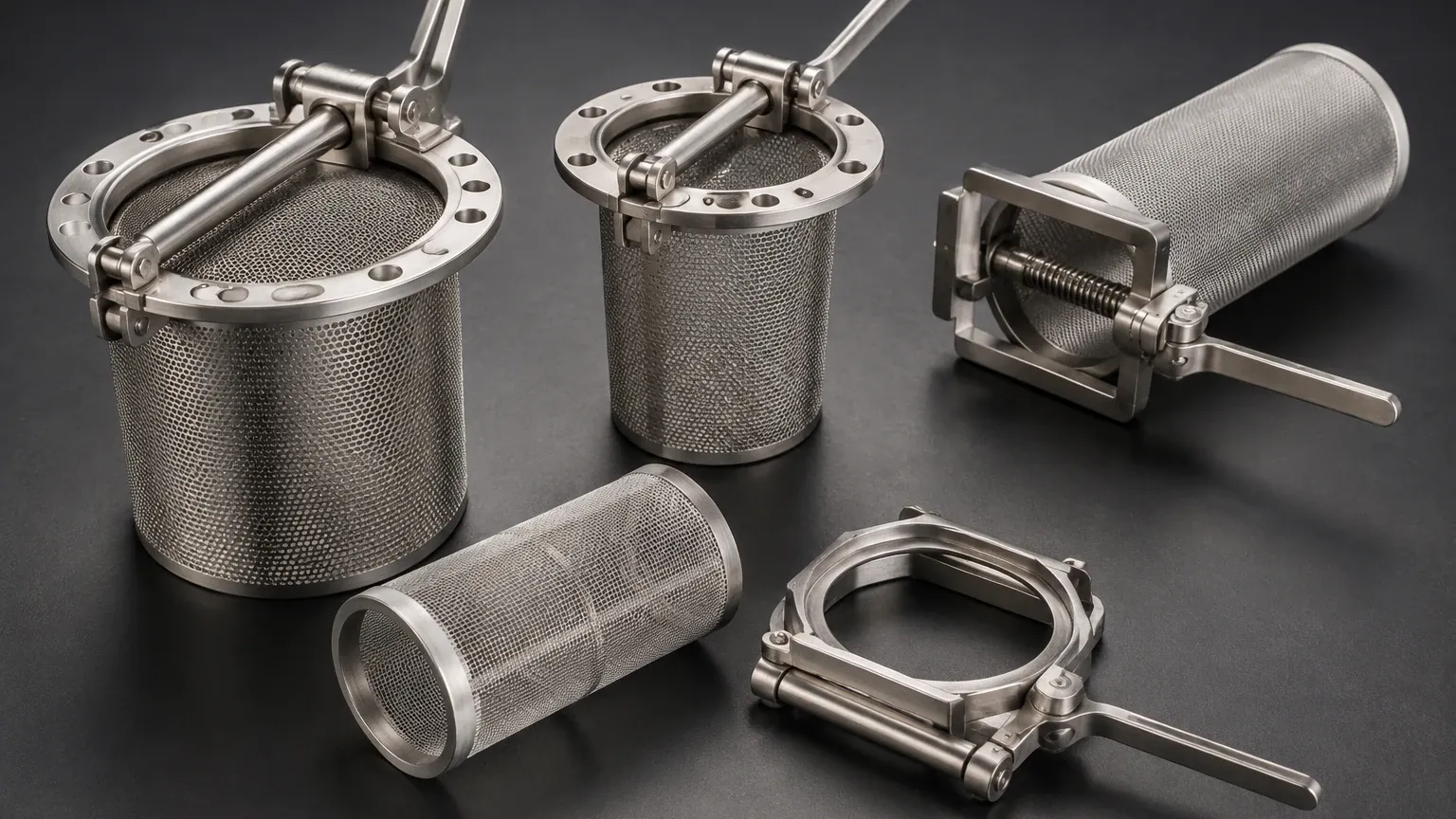
Comparative Analysis: Standard vs. Heavy-Duty Ratchet Strainers
Not all ratchet strainers are designed for the same load capacities. Selecting the wrong grade can lead to mechanical shearing under stress.
| Feature | Standard Industrial Strainer | Heavy-Duty Ratchet Strainer |
| :— | :— | :— |
| Typical Load Capacity | Up to 500 kg | 1,000 kg+ |
| Material Grade | Galvanized Steel / SS304 | SS316 / Reinforced Alloy |
| Locking Mechanism | Single Pawl | Double Pawl or Locking Pin |
| Application | Light fencing, small mesh panels | Large filtration baskets, structural tensioning |
| Corrosion Resistance | Moderate | High (Acid/Alkali Resistant) |
For heavy-duty applications, such as those found in mining or wastewater treatment, the ratchet wheel must have a thicker profile to prevent tooth deformation. Engineers should always confirm the maximum breaking strain (MBS) of the strainer before integration.
Installation and Maintenance Best Practices
Proper installation is required to maximize the service life of ratchet strainers and the wire systems they support. Following a structured engineering approach ensures safety and performance.
Installation Steps
1. Alignment: Ensure the strainer is aligned perfectly with the direction of the wire pull. Misalignment introduces lateral stress on the spool, which can lead to uneven wear.
2. Threading: Secure the wire through the hub hole, ensuring at least two full wraps around the spool before significant tension is applied. This prevents the wire from slipping out of the hub.
3. Tensioning: Use a dedicated tensioning tool or wrench to turn the spool. Tension should be applied gradually. For large systems, it is recommended to use a tension gauge to ensure the wire remains within its elastic limit.
4. Locking: Verify that the pawl is fully seated in the ratchet tooth. In high-vibration environments, a secondary locking wire or pin may be used for added security.
Maintenance Protocols
Despite being relatively simple mechanical devices, ratchet strainers require periodic inspection. In chemical processing plants, the buildup of precipitates can interfere with the pawl movement. Maintenance teams should check for:
* Signs of stress corrosion cracking (SCC) in the frame.
* Wear patterns on the ratchet teeth.
* Spring tension in the pawl mechanism (if applicable).
* Integrity of the mounting points.
Sourcing Custom Solutions for Specialized Applications
Standard off-the-shelf components often fail to meet the rigorous demands of specialized industrial filtration. Customization is frequently necessary when dealing with unique geometries, extreme temperatures, or specific chemical exposures.
Kaifil provides OEM and customized filtration components, including the structural elements required for Strainers & Baskets. When sourcing custom ratchet strainers, procurement teams should provide the following data to the manufacturer:
* Operational Environment: Temperature ranges, pH levels, and exposure to specific chemicals.
* Load Requirements: The anticipated constant tension and potential surge loads.
* Dimensional Constraints: Space limitations for the mounting of the tensioning device.
* Material Compatibility: Ensuring the strainer material does not create a galvanic cell with the wire mesh it is tensioning.
Conclusion: The Importance of Precision Tensioning
Ratchet strainers are a small but vital link in the chain of industrial filtration and structural wire management. By providing a reliable method for maintaining tension, these devices protect expensive wire mesh media from premature failure and ensure that filtration systems operate at peak efficiency.
When evaluating components for your next project, prioritize material quality and mechanical robustness. Choosing high-grade stainless steel options and ensuring proper engineering calibration will result in lower total cost of ownership and reduced downtime. For those managing complex filtration requirements, integrating professional-grade tensioning solutions is a prerequisite for operational excellence.
To explore high-performance filtration components and structural support options, Review product options and application support to find the right fit for your specific industrial needs.
