


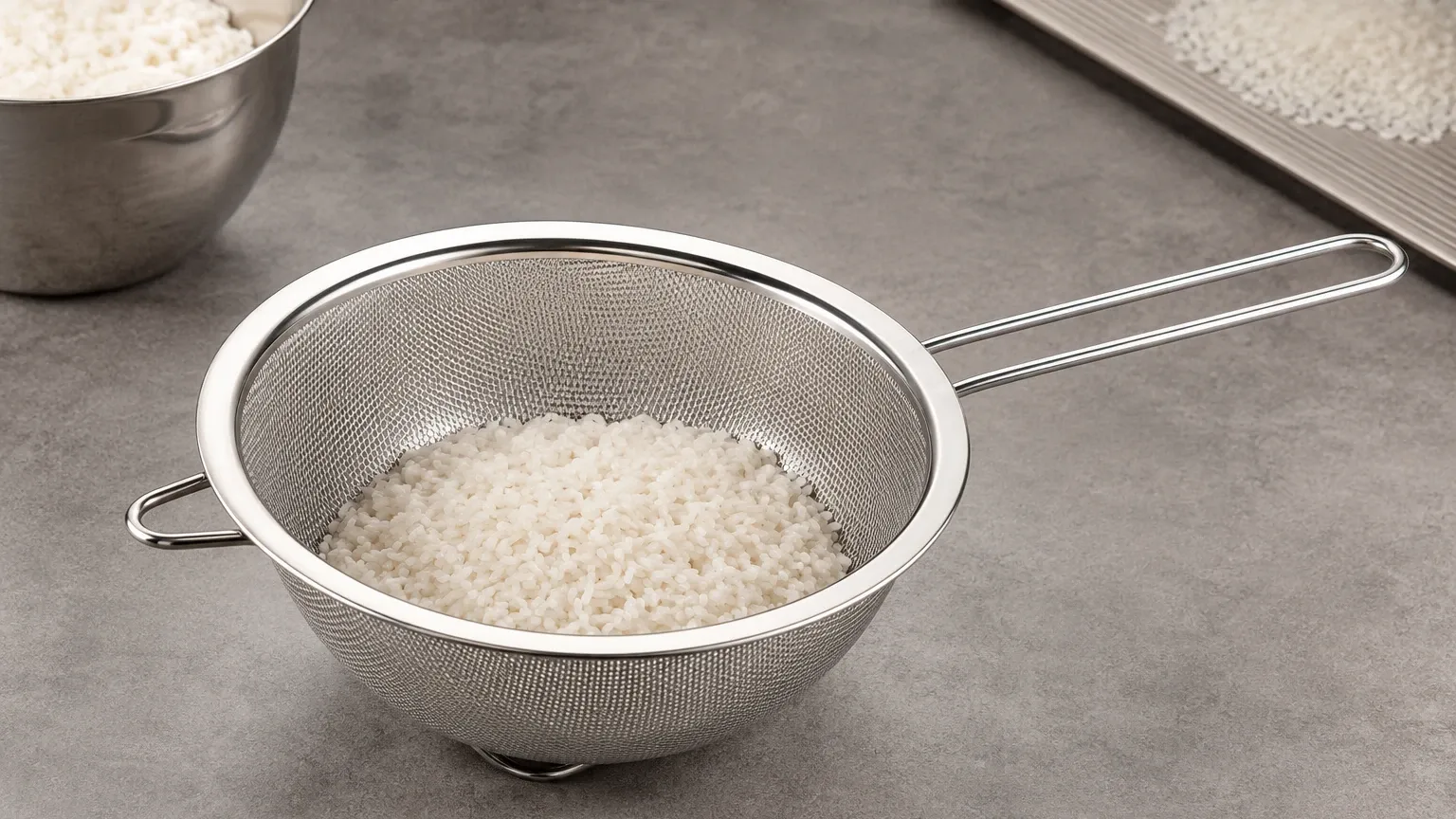
Rice Strainer
In the industrial food processing sector, the term "rice strainer" refers to high-capacity, precision-engineered filtration components designed to facilitate the washing, soaking, blanching, and cooling of rice on a commercial scale. Unlike consumer-grade kitchen tools, an industrial rice strainer is a critical part of a production line, often integrated into automated systems where durability, sanitation, and flow dynamics are paramount. These components typically fall under the broader category of Strainers & Baskets, serving as the primary interface between the raw product and the processing fluids.
For engineers and procurement specialists, selecting the correct rice strainer involves more than just choosing a mesh size. It requires a deep understanding of material science, mechanical stress, and fluid dynamics to ensure that the filtration system does not become a bottleneck or a source of contamination. This guide explores the technical specifications and engineering considerations necessary for integrating professional-grade strainers into industrial rice processing environments.
Engineering Considerations for Industrial Rice Strainers
When designing or specifying a rice strainer for industrial use, several engineering factors must be balanced to achieve optimal performance. The primary goal is to maximize throughput while ensuring 100% retention of the rice grains and minimizing the risk of mechanical failure.
Aperture Size and Wire Diameter
The selection of the mesh aperture is the most critical technical decision. For standard long-grain or short-grain rice, the aperture must be significantly smaller than the grain width to prevent "pegging"—a condition where grains become lodged in the mesh, reducing the effective filtration area. However, an excessively fine mesh increases resistance to flow, which can lead to higher pressure drops and slower processing times. Engineers must calculate the "Open Area Percentage" to ensure that the strainer can handle the required volume of water or steam during the washing or cooking phases.
Structural Integrity and Load Bearing
Wet rice is heavy and exerts significant mechanical force on the strainer walls and base. An industrial rice strainer must be engineered to withstand the static load of the product as well as the dynamic loads encountered during agitation or rapid drainage. This often requires the use of reinforced frames, support ribs, or perforated metal backings that provide structural rigidity without significantly obstructing the flow. For large-scale baskets, the thickness of the stainless steel sheet or the gauge of the wire mesh must be calculated based on the maximum anticipated batch weight.
Material Selection: Why Stainless Steel is Essential
In food-grade applications, the material of construction is non-negotiable. Stainless steel is the industry standard due to its corrosion resistance, ease of sterilization, and mechanical strength. Within the category of stainless steel, two primary grades are commonly utilized for a rice strainer.
Grade 304 Stainless Steel
SS304 is the most common choice for general food processing. It offers excellent resistance to water and the mild cleaning agents used in rice processing. It is cost-effective and provides sufficient durability for most washing and soaking applications where the environment is not highly acidic or saline.
Grade 316L Stainless Steel
For environments where the rice may be processed with salt, or where the cleaning protocols involve harsh chemicals, SS316L is preferred. The addition of molybdenum enhances its resistance to pitting and crevice corrosion. Furthermore, the "L" (low carbon) variant is essential if the strainer requires extensive welding during fabrication, as it prevents sensitized areas that could otherwise become prone to intergranular corrosion over time.
Design Variations in Strainers & Baskets for Food Processing
Industrial Strainers & Baskets are available in various configurations to suit specific machinery and process flows. The choice of design impacts how easily the rice can be loaded, processed, and discharged.
Perforated Metal vs. Woven Wire Mesh
* Perforated Metal: These strainers are made from a single sheet of stainless steel with punched holes. They offer superior structural strength and are easier to clean because they lack the overlapping wires found in mesh. However, they typically offer a lower open area percentage compared to wire mesh.
* Woven Wire Mesh: This design provides the highest open area, making it ideal for high-flow drainage and steam penetration. To compensate for the lower structural rigidity of fine mesh, these strainers are often built with a "multi-layer" approach, where a fine inner mesh is supported by a coarser, stronger outer mesh or a perforated metal cage.
Basket Geometry and Handling Features
The physical shape of the rice strainer—whether cylindrical, conical, or rectangular—must match the receiving vessel or the conveyor system. Customization options often include:
* Flanged Rims: For secure seating within a housing or tank.
* Lifting Handles or Bails: Designed for manual or robotic handling, these must be ergonomically positioned and robustly welded to prevent detachment under load.
* Reinforced Bases: Crucial for baskets that are frequently set down on hard surfaces, preventing the mesh from deforming or tearing.
Performance Expectations and Filtration Accuracy
In a B2B context, performance is measured by consistency and longevity. A high-quality rice strainer should maintain its filtration accuracy throughout its service life. This requires precise manufacturing techniques to ensure that the mesh apertures are uniform across the entire surface.
Micron Ratings and Tolerances
While often discussed in terms of mesh count (the number of wires per inch), technical specifications should focus on the micron rating. For rice processing, the goal is usually macro-filtration, but the tolerances must be tight. If a batch of mesh has inconsistent wire spacing, small grains may bypass the strainer, leading to product loss and potential downstream equipment damage, such as clogged pumps or valves.
Flow Dynamics and Drainage Speed
Rapid drainage is essential in rice processing to prevent over-soaking and to maintain the desired texture of the final product. Engineers evaluate the flow coefficient (Cv) of the strainer to predict how quickly fluids will pass through the basket under gravity or pressure. A well-designed rice strainer minimizes turbulence and ensures that water exits the basket evenly, preventing "dead zones" where rice might remain submerged longer than intended.
Sanitation and Maintenance in Food-Grade Applications
Hygiene is the most critical factor in food processing equipment. A rice strainer must be designed to eliminate areas where organic matter can accumulate, which could lead to bacterial growth or cross-contamination between batches.
Surface Finish and Electropolishing
The internal and external surfaces of the strainer should be smooth. Industrial strainers often undergo electropolishing, a chemical process that removes microscopic peaks and valleys from the metal surface. This results in a mirror-like finish that is highly resistant to bacterial adhesion and significantly easier to clean during CIP (Clean-in-Place) or COP (Clean-out-of-Place) cycles.
Weld Quality and Crevice Prevention
In a professional rice strainer, all joints should be full-penetration welds, ground smooth and polished. Lap joints or skip welds create crevices that are nearly impossible to sanitize. Engineers should specify "hygienic welding" standards to ensure the component meets FDA or EHEDG guidelines for food contact surfaces.
Replacement Cycles and Inspection
Even the most durable stainless steel strainers are subject to wear. Vibration, thermal cycling (during blanching), and mechanical abrasion from the rice grains will eventually fatigue the metal. Regular inspection protocols should look for:
1. Mesh Fraying: Broken wires that could contaminate the food product.
2. Deformation: Changes in the basket shape that might affect its seal within the processing equipment.
3. Corrosion: Any signs of staining or pitting that indicate the material is being compromised by cleaning agents.
Customization and OEM Solutions
Standard off-the-shelf strainers rarely meet the specific needs of high-volume industrial rice lines. Customization is often necessary to integrate the strainer into existing OEM machinery. This includes custom dimensions, specialized mounting hardware, and specific mesh configurations tailored to unique grain types (such as broken rice or specialty flours).
When partnering with a manufacturer like Kaifil, engineers can specify the exact parameters required for their application. This collaborative approach ensures that the resulting Strainers & Baskets provide the necessary filtration accuracy while fitting perfectly into the production environment. Custom designs also allow for the optimization of the total cost of ownership (TCO) by selecting materials and construction methods that maximize the lifespan of the component in specific operating conditions.
Conclusion: Selection Checklist for Engineering Teams
Before finalizing a purchase or design for an industrial rice strainer, procurement and engineering teams should confirm the following technical details:
* Product Specifications: What is the minimum grain size, and what is the required micron rating for the mesh?
* Operational Load: What is the maximum weight of the rice and water the basket will hold at any given time?
* Flow Requirements: What is the required drainage rate to maintain production speed?
* Material Compatibility: Is SS304 sufficient, or does the cleaning regime require SS316L?
* Sanitary Standards: Does the design meet the necessary food safety certifications for the target region?
* Integration: Does the strainer require specific flanges, handles, or mounting brackets to interface with existing machinery?
By addressing these factors during the specification phase, industrial facilities can ensure they invest in filtration solutions that enhance efficiency, maintain product quality, and provide long-term reliability in demanding food processing environments.
