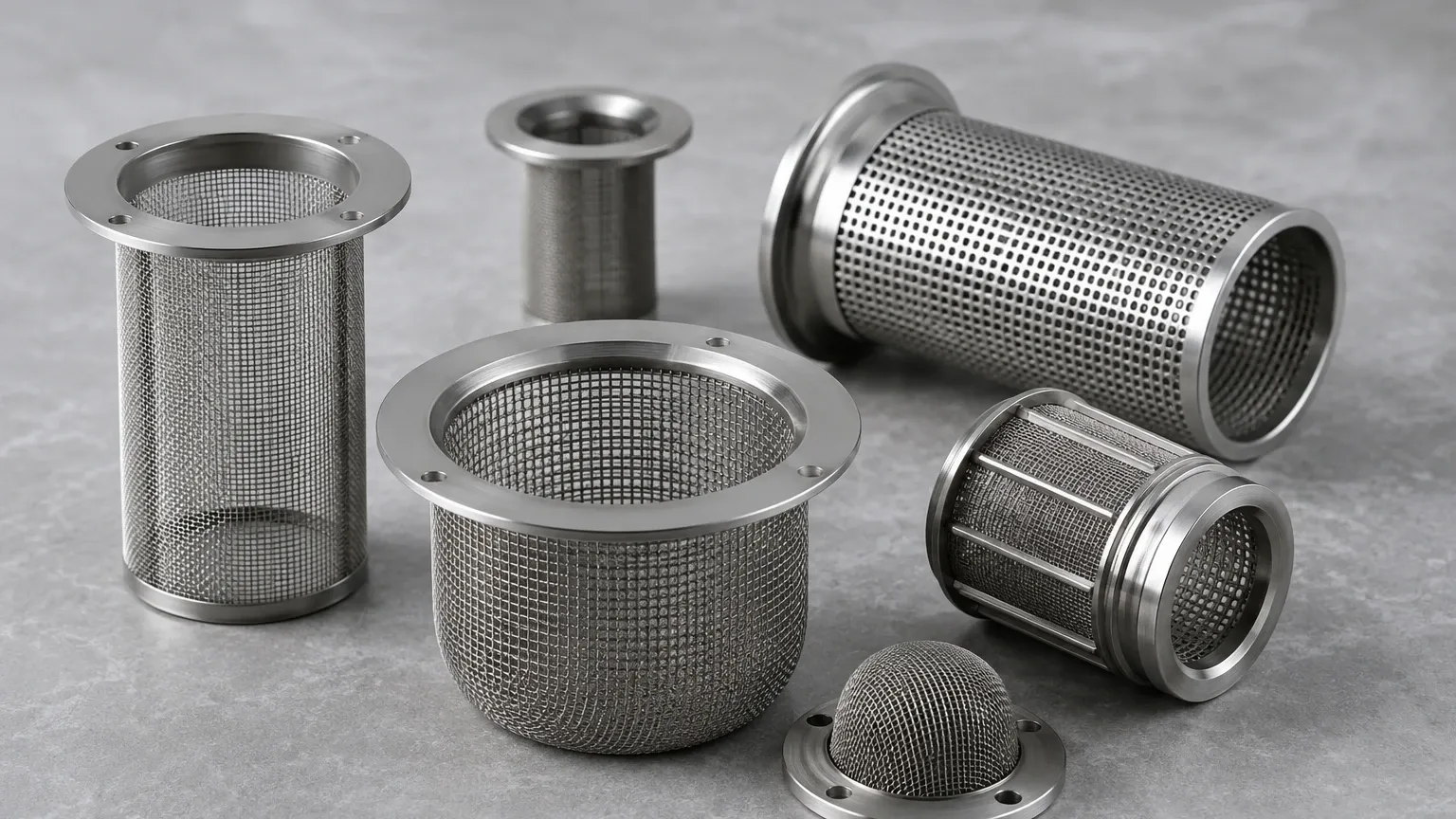
River Strainers
In industrial water management, the intake of raw water from natural sources like rivers presents a unique set of engineering challenges. Unlike treated municipal water, river water contains a diverse array of suspended solids, ranging from microscopic silt and organic matter to large debris such as branches, leaves, and stones. To protect downstream infrastructure—including high-pressure pumps, heat exchangers, and sensitive filtration membranes—the implementation of robust Strainers & Baskets is essential. These components serve as the first line of defense, ensuring that large contaminants are removed before they can cause mechanical wear or system blockages.
The Role of Strainers & Baskets in Raw Water Intake
River strainers are specialized filtration components designed to handle high flow rates while managing significant debris loads. In a typical industrial intake system, these strainers are positioned at the very beginning of the process. Their primary function is to provide "coarse" filtration, which is defined by the removal of particles generally larger than 50 to 100 microns, though many river applications focus on much larger debris in the millimeter range.
The use of high-quality strainers and baskets is critical because river conditions are rarely static. Seasonal changes, heavy rainfall, and industrial runoff can drastically alter the concentration and type of debris in the water. A well-engineered strainer must be capable of maintaining a consistent flow even when the debris load increases suddenly. Failure to effectively strain river water can lead to catastrophic pump failure due to cavitation or the physical lodging of debris in impellers, as well as the fouling of heat exchanger tubes, which reduces thermal efficiency and increases energy consumption.
Material Selection for River Environments
When specifying river strainers, material selection is the most significant factor affecting long-term durability and the total cost of ownership. Because these components are constantly exposed to moving water, which may contain abrasive sediments or corrosive chemical runoff, the choice of alloy is paramount.
Stainless Steel 304 and 316
Stainless steel is the industry standard for river intake applications. Grade 304 offers excellent strength and basic corrosion resistance suitable for many freshwater environments. However, for rivers with higher salinity, brackish water, or proximity to industrial discharge zones, Grade 316 or 316L is preferred. The addition of molybdenum in 316 stainless steel significantly enhances resistance to pitting and crevice corrosion, which are common failure modes in submerged filtration hardware.
Specialty Alloys and Coatings
In highly aggressive environments, such as rivers with high chloride levels or acidic pH, engineers may specify Duplex stainless steel or Super Duplex alloys. These materials provide superior yield strength and exceptional resistance to stress corrosion cracking. Additionally, for applications where biofouling—the growth of algae, mussels, or barnacles—is a concern, specialized coatings or copper-nickel alloys may be considered to inhibit biological attachment, though stainless steel remains the primary choice for structural integrity and mechanical filtration.
Engineering Specifications for River Strainers
Designing an effective river strainer requires a deep understanding of fluid dynamics and the specific characteristics of the water source. Engineers must balance several competing factors to ensure the system operates efficiently.
Filtration Rating and Mesh Design
The filtration rating, or mesh size, determines the smallest particle the strainer will reliably capture. For river strainers, this is often achieved through a combination of a perforated metal support basket and a fine wire mesh liner. The perforated plate provides the necessary structural strength to withstand the pressure of the flowing water, while the wire mesh determines the precision of the filtration. Engineers must specify the wire diameter and weave type (e.g., plain weave, twilled weave) to ensure the mesh can withstand the mechanical stresses of cleaning and high-velocity flow.
Open Area Ratio (OAR)
The Open Area Ratio is the ratio of the total area of the holes in the strainer to the area of the inlet pipe. For river applications, a high OAR is essential. A common industry standard is an OAR of at least 4:1 or 6:1. A higher OAR results in a lower initial pressure drop across the strainer and extends the time between cleaning cycles. If the OAR is too low, the velocity of the water passing through the mesh increases, which can force debris through the openings or cause the mesh to collapse under the pressure differential.
Flow Velocity and Pressure Drop
Intake velocity is a critical engineering constraint, particularly regarding environmental regulations. Many jurisdictions mandate low intake velocities (often less than 0.5 feet per second) to prevent the impingement and entrainment of aquatic life. Beyond regulatory compliance, managing flow velocity is vital for reducing turbulence and preventing the premature wear of the strainer material. Engineers utilize Clean Pressure Drop calculations to predict how the strainer will perform when first installed and determine the maximum allowable pressure drop before cleaning is required.
Structural Designs: From Standard Baskets to Custom Solutions
River strainers are available in several configurations, each suited to different operational requirements. Understanding these designs helps in selecting the most efficient solution for a specific site.
* Simplex Basket Strainers: These are used in systems where the flow can be temporarily shut down for cleaning. They consist of a single basket housed in a pressure vessel. They are cost-effective but require process downtime for maintenance.
* Duplex Basket Strainers: These feature two separate strainer chambers connected by a valve system. This allows one side to be cleaned while the other remains in operation, making them ideal for continuous-process industries where river water intake cannot be interrupted.
* T-Strainers and Y-Strainers: These are typically used for smaller diameter pipes or where space is limited. While they offer a more compact footprint, their debris-holding capacity is generally lower than that of a dedicated basket strainer.
* Custom Fabricated River Strainers: In many large-scale industrial or municipal intakes, standard off-the-shelf components are insufficient. Custom-fabricated strainers can be designed to fit specific intake structures, incorporating features such as reinforced frames, specialized lifting lugs for crane-assisted removal, and multi-stage filtration layers to handle varying debris sizes.
Operational Challenges: Debris Management and Cleaning
The primary operational challenge with river strainers is the management of accumulated debris. As the strainer captures solids, the pressure drop across the unit increases. If not managed, this can lead to reduced flow to downstream processes or physical damage to the strainer basket.
Manual vs. Automatic Cleaning
In systems with low debris loads, manual cleaning of the basket is often sufficient. This involves removing the basket, pressure washing or mechanically removing the debris, and reinstalling it. However, in river environments prone to seasonal "slugs" of debris (such as leaf fall in autumn), automated self-cleaning strainers are often specified. These systems use a backwashing mechanism or a mechanical scraper to remove debris from the mesh surface without interrupting the flow.
Biofouling and Scaling
Over time, river strainers can become coated with biological growth or mineral scale. This reduces the effective open area and increases the frequency of cleaning. Engineers must consider the ease of chemical cleaning or the ability to use high-pressure steam for sterilization, particularly in the food and beverage or pharmaceutical sectors where water quality is strictly controlled.
Environmental and Regulatory Considerations
Modern industrial water intake is subject to stringent environmental protections. River strainers play a dual role: protecting industrial equipment and protecting the river ecosystem.
In the United States, for example, Section 316(b) of the Clean Water Act requires that the location, design, construction, and capacity of cooling water intake structures reflect the Best Technology Available (BTA) for minimizing adverse environmental impact. This often involves the use of specialized "fish-friendly" strainers or screens that utilize fine mesh and low-velocity designs to ensure that fish and larvae are not trapped against the intake. When designing custom river strainers, engineers must ensure that the filtration solution meets these local and federal environmental standards while still providing the necessary protection for the plant's mechanical systems.
Procurement and Total Cost of Ownership (TCO)
When evaluating river strainers for a project, it is a mistake to focus solely on the initial purchase price. The total cost of ownership includes maintenance labor, replacement parts, energy costs associated with pressure drop, and the potential cost of downstream equipment damage.
Customization and OEM Capabilities
Working with a manufacturer that offers OEM and customized filtration solutions is often more cost-effective in the long run. Customization allows for the optimization of the strainer's dimensions, material thickness, and mesh configuration to match the specific flow conditions of the river site. For instance, a strainer designed with a reinforced basket structure may have a significantly longer service life in a river with high-velocity currents and heavy stone movement compared to a standard light-duty basket.
Replacement Cycles and Spare Parts
Engineers should confirm the availability of replacement mesh liners and gaskets. In river applications, the basket itself may last for many years, but the fine mesh liner is a wear item that may need replacement every 12 to 24 months depending on the abrasiveness of the silt and the frequency of cleaning. Specifying a design that allows for easy liner replacement can significantly reduce long-term maintenance costs.
Technical Checklist for Engineers
Before finalizing the specification for a river strainer, the following technical data points should be confirmed:
1. Maximum and Minimum Flow Rates: Ensure the strainer is sized for peak demand without exceeding the maximum allowable velocity.
2. Debris Profile: What is the nature of the contaminants? (e.g., fibrous organic matter, abrasive sand, or large woody debris).
3. Pressure Rating: The housing and the internal basket must be rated for the maximum system pressure, including potential water hammer events.
4. Available Footprint: Determine if there is adequate space for a duplex system or if a more compact custom solution is required.
5. Access for Maintenance: Ensure there is sufficient overhead clearance for removing large baskets and that the system includes appropriate drain and vent valves.
By addressing these engineering considerations, purchasing teams and technical professionals can ensure that their river water intake systems remain reliable and efficient. The selection of high-performance Strainers & Baskets is not merely a hardware choice but a critical decision in the overall reliability of the industrial water circuit. Whether for chemical processing, power generation, or municipal water treatment, a well-designed river strainer protects the heart of the plant from the unpredictable nature of raw water sources.