


How to Clean a Wire Mesh Coffee Filter: An Industrial Maintenance Perspective
In the food and beverage industry, filtration is a critical process that ensures product clarity, flavor consistency, and the removal of unwanted particulates. Stainless steel wire mesh is the material of choice for these applications due to its durability, heat resistance, and, most importantly, its cleanability. Whether dealing with a commercial-scale brewing system or high-precision laboratory equipment, understanding the engineering behind the filter and the protocols for its upkeep is essential for maintaining operational efficiency.
While many users search for how to clean a wire mesh coffee filter at a consumer level, the industrial reality involves complex Wire Mesh Filter Cylinders & Tubes that must be maintained to strict hygiene and performance standards. This guide examines the technical aspects of wire mesh maintenance, the engineering considerations of filter selection, and the professional methods used to restore filtration performance.
Understanding the Engineering of Stainless Steel Wire Mesh
Industrial wire mesh filters are not merely screens; they are precision-engineered components designed to provide specific flow rates and particle retention. At Kaifil, these components are typically manufactured from Grade 304 or 316L stainless steel. The choice of weave—such as plain square weave, twilled weave, or Dutch weave—determines the mechanical strength and the effective pore size of the filter.
In coffee and beverage applications, the mesh must be fine enough to retain sediment while allowing essential oils and soluble solids to pass through. However, the very nature of these solids—oils, proteins, and fine particulates—leads to "blinding" or clogging over time. Unlike disposable paper filters, stainless steel wire mesh is a permanent asset. Its value lies in its ability to be cleaned and reused thousands of times without losing structural integrity or filtration accuracy.
Mechanisms of Contamination in Precision Filtration
To understand how to clean a wire mesh coffee filter effectively, one must first understand what causes the blockage. In industrial brewing and food processing, contamination typically falls into three categories:
1. Organic Oils and Lipids: Coffee beans contain natural oils that adhere to the stainless steel surface. Over time, these oils can oxidize and polymerize, creating a sticky film that narrows the mesh openings.
2. Fine Particulates (Fines): Microscopic particles can become wedged within the intersections of the wire weave. This is particularly common in Dutch weave filters where the flow path is more complex.
3. Mineral Scale: In regions with hard water, calcium and magnesium carbonates can precipitate onto the mesh, especially if the filtration process involves high temperatures.
Failure to remove these contaminants leads to an increased pressure drop across the filter, reduced flow rates, and potential microbial growth, which can compromise the entire production batch.
How to Clean a Wire Mesh Coffee Filter: Industrial Protocols
For commercial and industrial operators, cleaning is a multi-stage process designed to ensure 100% restoration of the filter's open area. The following steps represent the professional approach to maintaining wire mesh filtration components.
1. Immediate Post-Process Rinsing
The most effective way to prevent permanent blinding is a high-pressure rinse immediately after the filtration cycle. This removes the bulk of the "filter cake" before the organic oils have a chance to dry and harden. In automated systems, this is often achieved through a backwash cycle, where the flow is momentarily reversed to dislodge particles from the mesh surface.
2. Chemical Degreasing and Descaling
When organic oils have built up, a simple water rinse is insufficient. Industrial operators use specialized cleaning agents. For coffee-related applications, an oxygen-based cleaner or a mild caustic solution is used to break down lipids and proteins. If mineral scale is present, a food-grade citric acid solution is effective for descaling without pitting the stainless steel surface.
3. Mechanical Agitation and Scrubbing
For larger Wire Mesh Filter Cylinders & Tubes, soft-bristle nylon brushes may be used to gently agitate the surface. It is critical to avoid wire brushes or abrasive pads made of carbon steel, as these can leave behind particles that cause galvanic corrosion, leading to the premature failure of the stainless steel mesh.
Advanced Cleaning Methods for Industrial Filter Cylinders
In many B2B industrial settings, manual cleaning is not thorough enough for high-precision mesh (below 50 microns). In these cases, advanced methods are employed:
Ultrasonic Cleaning
This is the gold standard for cleaning complex wire mesh structures. The filter is submerged in a cleaning solvent, and high-frequency sound waves create microscopic cavitation bubbles. When these bubbles implode, they release energy that dislodges particulates from deep within the weave—areas that brushes and sprays cannot reach. This is often the only way to fully restore a blinded Dutch weave filter.
Steam Sterilization (SIP)
In pharmaceutical and high-end food processing, cleaning is followed by Sterilization-in-Place (SIP). Stainless steel wire mesh is uniquely suited for this, as it can withstand the high temperatures and pressures of saturated steam without deforming, ensuring the filter is biologically inert for the next cycle.
Selection Criteria: Balancing Filtration Accuracy with Cleanability
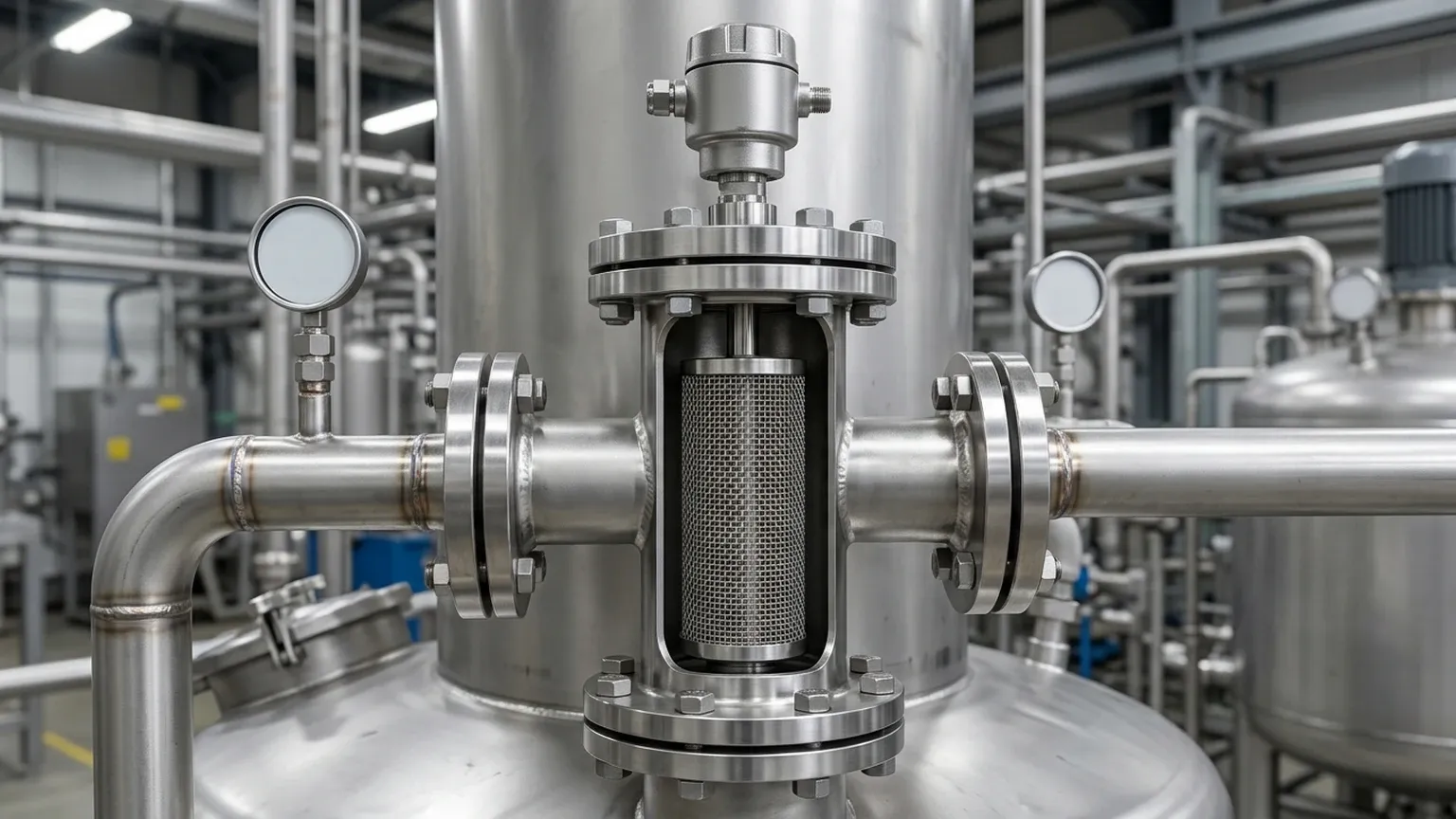
When engineers specify Wire Mesh Filter Cylinders & Tubes, they must balance the required filtration fineness with the ease of maintenance. A tighter weave provides better clarity but clogs more rapidly and requires more intensive cleaning protocols.
Key Engineering Considerations Include:
* Material Grade: 316L stainless steel offers superior resistance to the acidic nature of coffee and the harsh chemicals used in Clean-in-Place (CIP) cycles compared to 304.
* Structural Support: For high-pressure applications, the wire mesh is often pleated or supported by a perforated metal core. While this increases surface area and strength, it also creates crevices that require specialized cleaning attention.
* Surface Treatment: Electropolishing the wire mesh can reduce the surface roughness, making it significantly harder for oils and particulates to adhere to the metal, thereby extending the time between cleaning cycles.
Total Cost Analysis: Cleanable vs. Disposable Filtration Systems
From a purchasing and operations perspective, the decision to use stainless steel wire mesh is often driven by the Total Cost of Ownership (TCO). While the initial capital expenditure for a custom stainless steel filter cylinder is higher than a batch of disposable filters, the long-term savings are substantial.
1. Reduced Waste: Eliminating disposable media aligns with corporate sustainability goals and reduces waste disposal costs.
2. Consistency: Stainless steel mesh does not swell or bypass like some fiber-based filters, ensuring consistent pore size throughout the production run.
3. Durability: A high-quality Kaifil filter, if maintained correctly using the protocols for how to clean a wire mesh coffee filter and industrial cylinders, can last for several years of continuous operation.
However, the TCO must also account for the labor, water, and chemicals required for cleaning. For this reason, many industrial facilities are moving toward automated backwashing systems that minimize manual intervention.
Customization and OEM Solutions
At Kaifil, we recognize that every industrial application has unique requirements. Whether you are designing a new commercial brewing system or retrofitting an existing industrial process, the geometry and specification of the filter are paramount. We provide customized Wire Mesh Filter Cylinders & Tubes tailored to specific micron ratings, flow requirements, and housing constraints.
When ordering custom components, international buyers should confirm the following technical details:
* Micron Rating: The absolute vs. nominal filtration requirement.
* Operating Temperature and Pressure: To ensure the structural integrity of the mesh and supports.
* Chemical Compatibility: Ensuring the mesh and any gaskets or adhesives can withstand the intended cleaning agents.
* Connection Type: Flanged, threaded, or friction-fit ends for seamless integration into existing hardware.
Conclusion
Maintaining the performance of industrial filtration systems requires a disciplined approach to cleaning and a deep understanding of material science. Knowing how to clean a wire mesh coffee filter is the first step in a broader strategy of industrial asset management. By utilizing high-quality stainless steel components and adhering to rigorous maintenance protocols, facilities can achieve superior product quality while optimizing their operational costs.
For engineers and procurement teams seeking reliable, high-performance filtration components, selecting the right manufacturing partner is essential. Kaifil’s expertise in stainless steel wire mesh ensures that your filtration systems are built to last and designed for maximum cleanability in the most demanding industrial environments.
