


Strainer Small
In industrial fluid handling and process engineering, the requirement for localized, high-precision filtration often necessitates the use of compact filtration components. While large-scale basket strainers are common in main process lines, the implementation of a strainer small enough to fit into tight spatial envelopes or protect sensitive point-of-use equipment is a critical engineering consideration. These components, often categorized under the broader heading of Strainers & Baskets, serve as the final line of defense against particulate contamination that could otherwise compromise the integrity of valves, sensors, spray nozzles, and high-pressure pumps.
Selecting the correct small-scale strainer requires a deep understanding of fluid dynamics, material compatibility, and the specific mechanical constraints of the application. This guide explores the technical nuances of compact strainers, providing engineers and purchasing teams with the factual data needed to optimize their filtration systems.
Engineering Considerations for Compact Filtration
The primary challenge in designing or selecting a strainer small in size is the inherent limitation of surface area. In filtration, the Effective Filtration Area (EFA) directly correlates with the pressure drop (Delta P) across the element and the total dirt-holding capacity. When the physical footprint of the strainer is reduced, engineers must compensate through advanced design and material selection to ensure the component does not become a bottleneck in the system.
Pressure Drop and Flow Velocity
In a compact strainer, the ratio of the open area of the mesh or perforated metal to the cross-sectional area of the inlet pipe is a vital metric. For industrial applications, a minimum open area ratio of 3:1 or 4:1 is typically recommended to prevent excessive pressure drop. If a strainer small footprint is required for a high-flow application, manufacturers may utilize pleated wire mesh. Pleating increases the surface area within the same cylindrical volume, significantly reducing the frequency of cleaning cycles and maintaining a lower pressure differential over time.
Structural Integrity under High Differential Pressure
Small strainers are often subjected to the same system pressures as their larger counterparts. However, because the filtration media (such as fine stainless steel mesh) is thinner to allow for higher flow in a small space, it may require internal or external support. Perforated metal backings or internal cages are frequently integrated into the design of Strainers & Baskets to prevent the mesh from collapsing or deforming under the force of accumulated debris or sudden pressure surges.
Material Selection and Chemical Compatibility
Industrial environments demand materials that can withstand corrosive fluids, extreme temperatures, and mechanical wear. For small-scale strainers, stainless steel remains the industry standard due to its versatility and durability.
1. AISI 304 Stainless Steel: Suitable for general industrial use, offering good corrosion resistance in water treatment and mild chemical applications. It is a cost-effective choice for non-acidic environments.
2. AISI 316/316L Stainless Steel: The preferred choice for pharmaceutical, food and beverage, and marine applications. The addition of molybdenum provides superior resistance to chlorides and pitting corrosion. The "L" (low carbon) variant is essential for components requiring extensive welding, as it prevents carbide precipitation and maintains corrosion resistance at the weld joints.
3. Specialty Alloys: In highly aggressive chemical processing or high-temperature steam applications, alloys such as Monel, Hastelloy, or Inconel may be required. These materials ensure that the strainer small components do not fail prematurely due to chemical attack or thermal fatigue.
Technical Specifications: Mesh vs. Perforation
The filtration efficiency of a strainer is determined by its media. When specifying a strainer small enough for precision tasks, engineers must choose between perforated metal and woven wire mesh.
Perforated Metal
Usually used for coarse straining (removing particles larger than 1mm). It provides excellent structural strength and is easy to clean. Common hole patterns include round, square, or staggered, with the percentage of open area varying based on the hole size and pitch.
Woven Wire Mesh
For finer filtration (down to 5 microns), woven wire mesh is utilized. In a compact strainer, the weave type—such as plain weave, twilled weave, or Dutch weave—dictates the flow characteristics and mechanical strength. For instance, a Reverse Dutch Weave offers high strength and is often used in high-pressure hydraulic systems where a strainer small design must handle significant mechanical stress.
Customization and OEM Capabilities
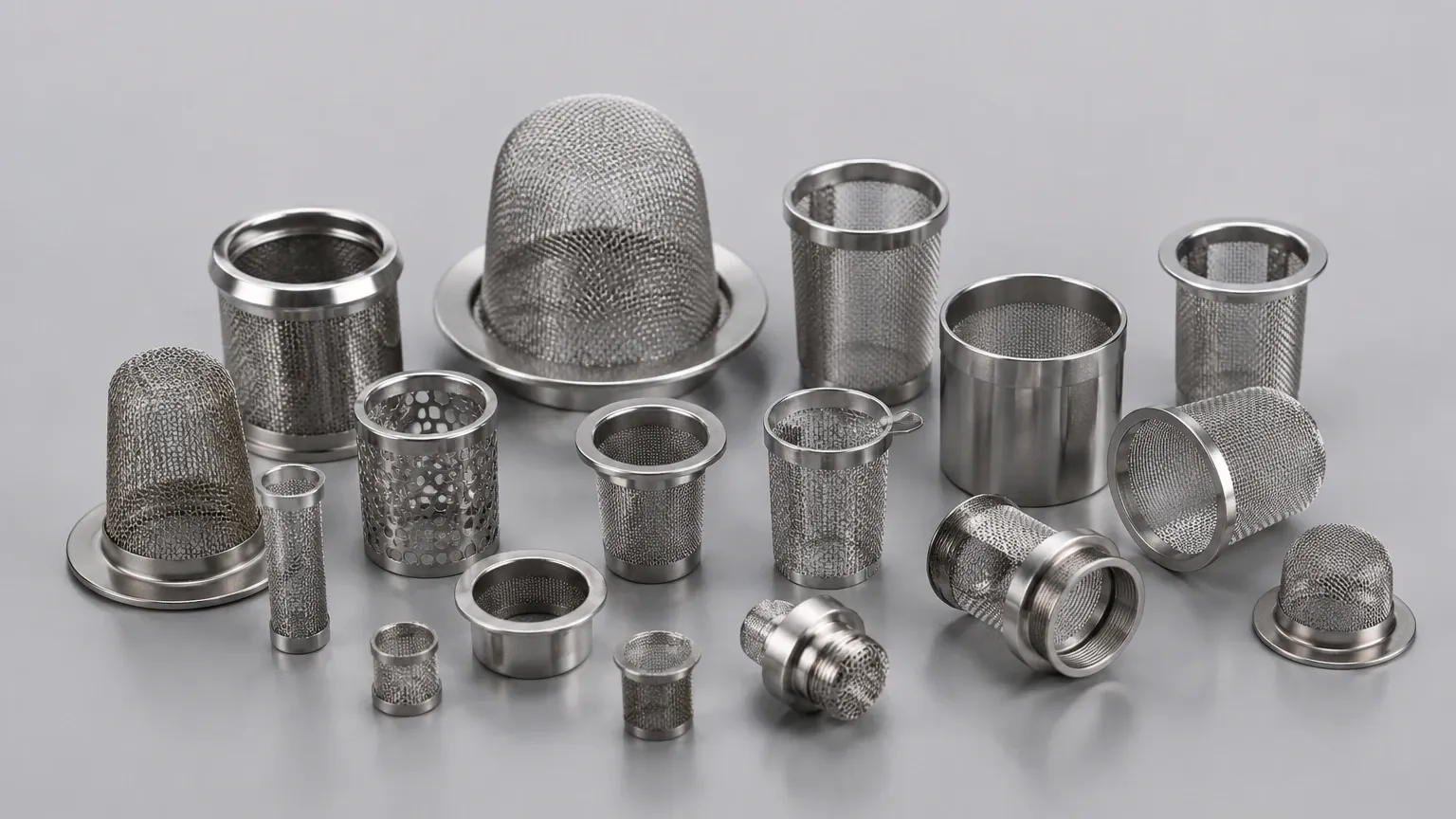
Standard off-the-shelf strainers rarely meet the exact requirements of specialized industrial machinery. Customization is often necessary to ensure seamless integration into existing pipework or equipment housings. Manufacturers like Kaifil specialize in tailoring Strainers & Baskets to specific technical drawings.
Connection Types
Depending on the system's pressure and maintenance requirements, small strainers can be designed with various connection types:
* Threaded (NPT/BSP): Common for small-diameter piping and easy installation.
* Flanged: Used for higher pressure ratings and where frequent removal for cleaning is expected.
* Sanitary/Tri-Clamp: Essential for the food, beverage, and pharmaceutical industries to ensure no bacterial growth in dead spaces.
* Push-fit or Custom Manifold Mounts: Often seen in OEM equipment where the strainer is integrated directly into a pump or valve block.
* Handle and Lifting Options: Even in a strainer small enough to be held in one hand, the inclusion of a specialized handle or pull-ring is necessary for quick extraction from the strainer housing during maintenance.
Industry-Specific Applications
The versatility of compact stainless steel strainers allows them to be deployed across diverse sectors, each with unique performance expectations.
Pharmaceutical and Biotechnology
In these industries, the focus is on purity and cleanability. Small strainers are used in sampling lines and at the point of entry for purified water systems. They must feature high-grade surface finishes (often electropolished) to reach a specific Ra (Roughness Average) value, ensuring that no contaminants can adhere to the metal surface.
Food and Beverage Processing
Small strainers protect filling nozzles from pulp, seeds, or crystallized sugar in bottling lines. The materials must be FDA-compliant, and the design must allow for Clean-in-Place (CIP) or easy manual sterilization. A strainer small enough to be placed immediately upstream of the filling head ensures that no secondary contamination occurs after the main filtration stage.
Hydraulic and Lubrication Systems
Precision hydraulic valves have extremely tight tolerances. A small basket strainer or suction strainer is often placed in the reservoir or the return line to capture wear particles (metal shavings) that could cause valve sticking or pump failure. In these applications, the strainer must be compatible with synthetic and petroleum-based oils.
Chemical and Petrochemical
In chemical dosing systems, small strainers protect sensitive metering pumps. Given the aggressive nature of many chemicals, the choice of 316L stainless steel or specialized coatings is paramount. The strainer small design must also account for potential thermal expansion if the process involves hot fluids.
Maintenance and Total Cost of Ownership
While the initial purchase price of a strainer is a factor, the total cost of ownership (TCO) is largely determined by its durability and ease of maintenance. A well-engineered stainless steel strainer can last for years, whereas lower-quality alternatives may require frequent replacement due to mesh tearing or housing corrosion.
Cleaning Protocols
Because small strainers have less storage capacity for debris, they may require more frequent cleaning. Engineers should consider the downtime associated with maintenance. Features such as quick-release covers or the use of duplex strainer configurations (where one side can be cleaned while the other remains in operation) can mitigate this. For a strainer small in size, manual ultrasonic cleaning is often the most effective way to remove fine particles embedded in the wire mesh.
Replacement Cycles
Regular inspection is necessary to check for signs of "blinding" (permanent clogging) or mechanical fatigue. In high-vibration environments, the welds on the strainer basket should be checked for stress cracks. Using high-quality TIG (Tungsten Inert Gas) welding during the manufacturing of Strainers & Baskets ensures a robust bond that extends the component's service life.
Conclusion: Selecting the Right Partner for Filtration Solutions
Choosing a strainer small enough for your application involves more than just matching pipe sizes. It requires a balance of filtration accuracy, flow rate management, and material science. By focusing on precision-engineered stainless steel solutions, industrial operators can ensure the longevity of their equipment and the purity of their processes.
Kaifil provides comprehensive OEM and customized filtration components, leveraging advanced manufacturing techniques to produce reliable Strainers & Baskets. Whether you require a standard small basket for a water line or a highly customized mesh element for a chemical reactor, understanding these technical boundaries ensures that your filtration system performs at peak efficiency under demanding industrial conditions.
