


Strainer Stainless
In industrial fluid handling, the selection of filtration components is a critical decision that impacts the longevity of downstream equipment, the purity of the final product, and the overall efficiency of the manufacturing process. Among the various materials available for fluid management, the use of a strainer stainless steel configuration is often the standard for demanding environments. These components, primarily categorized under Strainers & Baskets, serve as the primary defense mechanism against coarse particles, debris, and contaminants that could otherwise damage pumps, valves, and instrumentation.
For engineers and procurement specialists, understanding the technical nuances of stainless steel strainers—from alloy selection to structural design—is essential for optimizing system performance and minimizing the total cost of ownership. This guide explores the engineering considerations, material properties, and selection criteria necessary for implementing effective stainless steel filtration solutions.
Material Science: Selecting the Right Strainer Stainless Alloy
The primary reason for specifying a strainer stainless solution is the material's inherent resistance to corrosion, temperature extremes, and mechanical stress. However, "stainless steel" is a broad category, and selecting the wrong grade can lead to premature failure in specific chemical environments.
Type 304 Stainless Steel
Type 304 is the most common austenitic stainless steel used in industrial straining. It contains approximately 18% chromium and 8% nickel. It offers excellent corrosion resistance in a wide range of atmospheric environments and many corrosive media. For general water treatment, food and beverage applications, and standard hydraulic systems, 304 stainless steel provides a cost-effective balance of durability and performance.
Type 316 Stainless Steel
In more aggressive environments, such as chemical processing plants or marine applications, Type 316 is the preferred choice. The addition of 2-3% molybdenum significantly enhances its resistance to pitting and crevice corrosion, particularly in chloride-rich environments. When a process involves acids, salts, or high-temperature steam, a strainer stainless 316 component ensures a longer service life compared to 304.
Specialty Alloys
For extreme conditions, such as highly acidic chemical processing or high-pressure pharmaceutical filtration, engineers may specify 316L (low carbon to prevent sensitization during welding) or even exotic alloys like Monel or Duplex stainless steel. These materials are chosen when standard austenitic grades cannot withstand the specific chemical reactivity or thermal cycling of the application.
Technical Specifications: Mesh, Perforation, and Open Area
A strainer’s performance is defined by its ability to capture particles of a specific size while allowing fluid to pass with minimal resistance. This is achieved through two primary types of filtration media: perforated metal and wire mesh.
Perforated Metal Bases
Most industrial baskets utilize a perforated metal sheet as the structural foundation. The hole size, typically measured in fractions of an inch or millimeters, determines the "rough" filtration capability. Common patterns include staggered round holes, which provide a balance of strength and open area. In many strainer stainless designs, the perforated basket acts as a support for a finer wire mesh lining.
Wire Mesh Linings
When finer filtration is required—down to the micron level—stainless steel wire mesh is employed. The mesh count refers to the number of openings per linear inch. A higher mesh count indicates a finer filtration capability. For example, a 100-mesh screen has 100 openings per inch, capable of capturing particles larger than approximately 140 microns. Engineers must consider the wire diameter as well; thicker wires increase the strength of the mesh but decrease the total open area.
The Importance of Open Area
The "Open Area Ratio" is the ratio of the total area of the holes to the total area of the screen. A higher open area results in a lower initial pressure drop across the strainer. Ideally, a basket strainer should have an open area ratio of at least 6:1 relative to the cross-sectional area of the inlet pipe. This ensures that the strainer can accumulate a significant amount of debris before the pressure drop necessitates cleaning.
Structural Configurations: Basket vs. Y-Strainer Designs
The physical housing of the strainer stainless component dictates how it is integrated into a piping system and how it is maintained.
Y-Strainers
Y-strainers are characterized by their compact, "Y" shaped body. They are typically used in pressurized lines, either liquid or gas, where the amount of debris to be removed is relatively small. Because the dirt-holding capacity of a Y-strainer is lower than that of a basket strainer, they are best suited for applications where cleaning is infrequent. They can be installed in either horizontal or vertical positions, provided the "leg" of the Y points downward to collect debris.
Basket Strainers (Simplex and Duplex)
Basket strainers feature a larger, vertical chamber that houses a removable basket. This design allows for a much higher dirt-holding capacity than Y-strainers.
* Simplex Strainers: These are used in systems where the flow can be intermittently shut down for cleaning. The basket is accessed by removing a top cover, making it ideal for batch processing or systems with redundant lines.
* Duplex Strainers: For continuous-flow applications where the system cannot be shut down, duplex strainers utilize two separate chambers connected by a diverting valve. When one basket becomes clogged, the flow is diverted to the clean chamber, allowing the dirty basket to be serviced without interrupting the process.
Engineering Considerations for Optimal Flow and Pressure
When integrating Strainers & Baskets into an industrial system, engineers must calculate several variables to ensure the component does not become a bottleneck.
Pressure Drop (Delta P)
The pressure drop is the difference in pressure between the inlet and outlet of the strainer. Every strainer causes some resistance to flow. As the basket fills with debris, the pressure drop increases. It is critical to establish a "clean pressure drop" baseline. If the initial pressure drop is too high, the system's pump may be overworked, leading to cavitation or mechanical failure.
Flow Velocity
Fluid velocity through the strainer should generally be kept within 5 to 10 feet per second for liquids. High-velocity flow can cause turbulence, which may push contaminants through the mesh or cause erosion of the stainless steel housing over time. Proper sizing of the strainer body—often selecting a strainer one size larger than the pipe—can mitigate high-velocity issues.
Viscosity Adjustments
The viscosity of the fluid significantly impacts the pressure drop. Thicker fluids, such as heavy oils or resins, require larger mesh openings or larger strainer bodies to maintain acceptable flow rates. When specifying a strainer stainless solution for high-viscosity media, the standard water-based flow charts must be adjusted using viscosity correction factors.
Customization and OEM Requirements for Specialized Applications
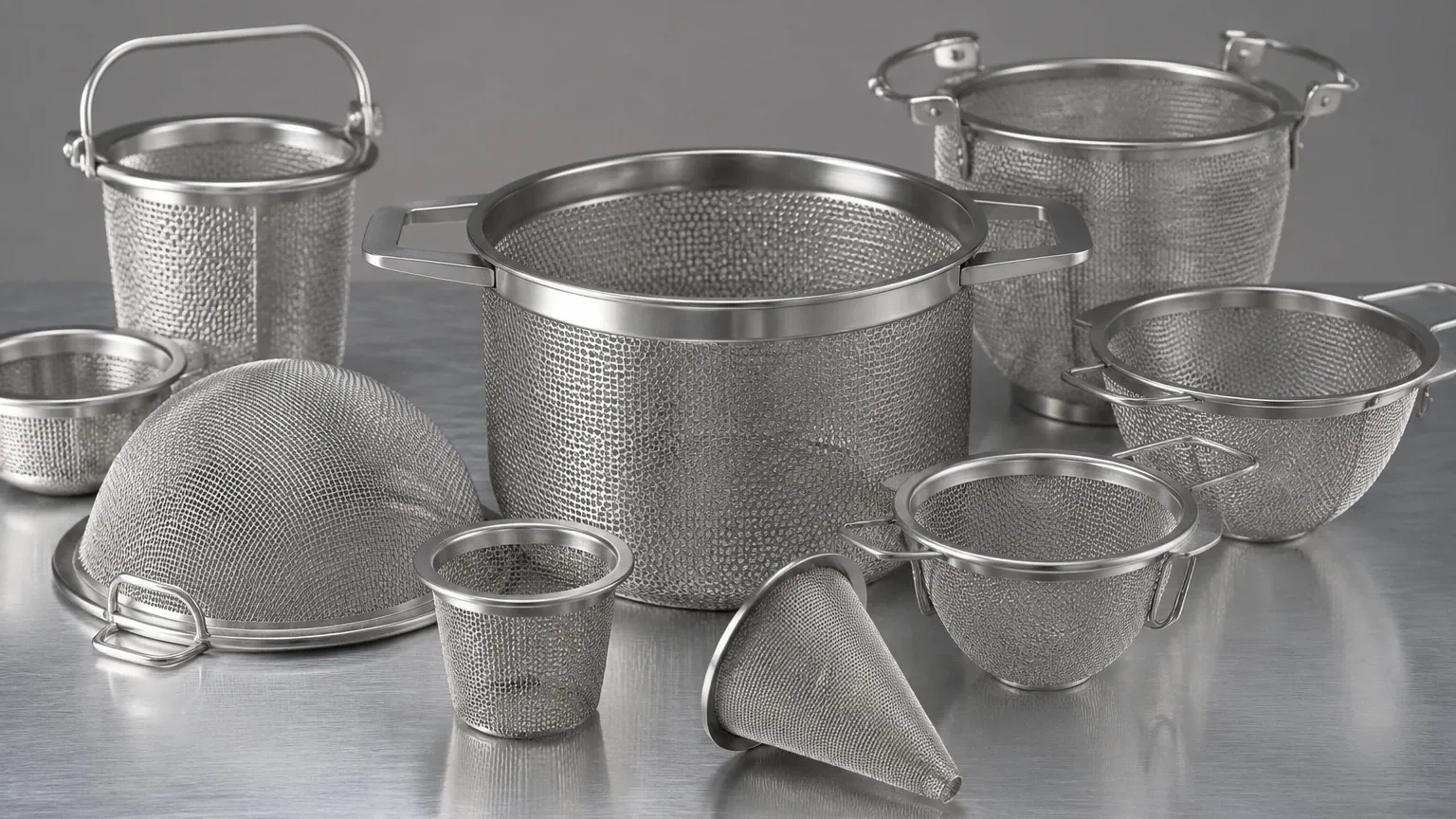
Standard off-the-shelf strainers often fail to meet the rigorous demands of specialized industrial processes. This is where custom-engineered solutions become necessary. Manufacturers like Kaifil specialize in developing bespoke filtration components tailored to specific operational parameters.
Custom Dimensions and Connections
In many retrofit projects, space constraints dictate the physical dimensions of the strainer. Custom housings can be engineered to fit into tight footprints while maintaining the required filtration surface area. Furthermore, connection types—whether flanged, threaded, or socket-weld—must be matched to the existing piping standards (ANSI, DIN, or JIS).
Reinforced Construction
In high-pressure or high-vibration environments, standard mesh linings may collapse or tear. Custom strainer stainless designs often include internal support cages, reinforced seams, and heavy-duty handles to ensure the basket remains structurally sound during extraction and cleaning. For pharmaceutical or food-grade applications, the internal surfaces may require electropolishing to reach a specific Ra (roughness average) to prevent bacterial growth.
Maintenance, Cleaning, and Longevity of Stainless Components
The primary advantage of a stainless steel strainer over disposable filters is its cleanability and reusability. However, the longevity of the component depends on a disciplined maintenance schedule.
Cleaning Protocols
When the differential pressure reaches a predetermined limit (usually 10-15 psi over the clean baseline), the basket must be cleaned. For coarse perforated baskets, manual debris removal and hosing are often sufficient. For fine wire mesh, more intensive methods such as ultrasonic cleaning or high-pressure backwashing may be required to dislodge particles trapped within the weave.
Inspection for Material Fatigue
During cleaning, the strainer stainless element should be inspected for signs of mechanical wear. This includes checking for broken wires in the mesh, thinning of the perforated metal due to erosion, or deformation of the basket frame. Because stainless steel is susceptible to stress corrosion cracking in certain environments, any signs of discoloration or micro-cracks should be addressed immediately.
Total Cost of Ownership (TCO)
While the initial purchase price of a high-quality stainless steel strainer is higher than plastic or carbon steel alternatives, the TCO is significantly lower. The durability of the material, combined with the ability to clean and reuse the basket thousands of times, eliminates the recurring cost of replacement cartridges and reduces the environmental impact of the facility.
Conclusion: Confirming Technical Details Before Procurement
Before finalizing a purchase for industrial Strainers & Baskets, technical teams should confirm several key data points with their manufacturer. These include the maximum operating pressure and temperature, the specific chemical composition of the fluid, the desired micron rating, and the allowable pressure drop for the system.
By focusing on the precision of the strainer stainless alloy and the structural integrity of the basket design, engineers can ensure that their filtration system provides reliable, long-term protection for their most critical industrial assets. Whether for chemical processing, hydraulic systems, or food production, a well-engineered stainless steel strainer is an investment in process stability and equipment longevity.
