


How to Clean a Range Hood Mesh Wire Filter: An Engineering and Maintenance Guide
In industrial and commercial kitchen environments, the efficiency of ventilation systems is directly tied to the performance of grease filtration components. Range hood mesh filters serve as the primary line of defense, capturing airborne grease, steam, and particulate matter before they enter the ductwork. Over time, the accumulation of these substances—often referred to as "loading"—increases resistance to airflow, reduces extraction efficiency, and poses a significant fire hazard.
Understanding how to clean a range hood mesh wire filter is not merely a matter of maintenance; it is a critical operational procedure to ensure system longevity and compliance with safety standards. This guide provides a technical overview of the cleaning process, the engineering principles of mesh filtration, and the criteria for determining when to transition from maintenance to replacement using high-quality Wire Mesh Filter Cylinders & Tubes.
1. The Engineering Principles of Mesh Grease Filtration
Before addressing the cleaning protocol, it is essential to understand how these filters function. Most industrial range hood filters utilize multiple layers of knitted or woven stainless steel wire mesh. The filtration mechanism is primarily based on impingement.
As grease-laden air passes through the tortuous path created by the layered mesh, the heavier grease particles cannot follow the rapid changes in air direction. Consequently, they collide with the wire surfaces and adhere to them. Over time, these droplets coalesce and drain into a collection trough.
Material Considerations
While aluminum filters are common in light-duty applications, industrial-grade systems typically utilize Stainless Steel 304 or 316. Stainless steel offers superior resistance to the corrosive effects of fatty acids and the high-temperature environments found in commercial exhaust systems. Furthermore, stainless steel can withstand more aggressive chemical cleaning agents than aluminum, which is prone to oxidation and pitting when exposed to high-pH degreasers.
2. Technical Guide: How to Clean a Range Hood Mesh Wire Filter
The objective of cleaning is to restore the original pressure drop (ΔP) across the filter by removing carbonized grease and sticky oils without damaging the delicate wire structure.
Step 1: Assessment and Removal
Prior to removal, the system should be powered down. Inspect the filter for structural integrity. If the mesh is frayed, punctured, or if the frame is warped, cleaning may not restore functionality, and a replacement Wire Mesh Filter Cylinders & Tubes or panel may be required.
Step 2: The Pre-Soak Phase
For heavy industrial loading, a simple rinse is insufficient. The filters should be submerged in a hot water bath (typically 60°C to 80°C) mixed with a specialized alkaline degreaser.
* Chemical Concentration: Follow the manufacturer’s specifications for the surfactant-to-water ratio.
* Dwell Time: Allow the filters to soak for 30 to 60 minutes. This allows the chemicals to penetrate the multi-layered mesh and break the molecular bonds of the grease.
Step 3: Mechanical Agitation and Rinsing
After soaking, use a low-pressure spray to rinse away the loosened debris.
* Warning: Avoid high-pressure power washers. Excessive PSI can deform the wire mesh, altering the micron rating and reducing the impingement surface area.
* Directional Flow: Rinse from the "clean side" (the side facing the fan) toward the "dirty side" (the side facing the cooking surface) to push contaminants out of the mesh rather than deeper into it.
Step 4: Ultrasonic Cleaning (Recommended for Industrial Use)
In high-volume environments, manual soaking often fails to reach the innermost layers of a multi-layer mesh filter. Ultrasonic cleaning utilizes high-frequency sound waves to create cavitation bubbles in a cleaning solution. When these bubbles implode, they release energy that dislodges grease from the most intricate parts of the wire mesh. This is the most effective method for maintaining the performance of complex Wire Mesh Filter Cylinders & Tubes.
Step 5: Drying and Reinstallation
Filters must be completely dry before reinstallation. Moisture trapped within the mesh can lead to bacterial growth or contribute to the rapid re-accumulation of dust and grease. Air drying is preferred, provided the environment is clean.
3. Evaluating Cleaning Efficacy and Pressure Drop
In a B2B or industrial context, "cleanliness" is measured by performance metrics rather than visual inspection. The most reliable indicator of a clean filter is the pressure drop.
1. Initial ΔP: The pressure difference across a new or perfectly clean filter at a specific flow rate.
2. Operating ΔP: The pressure difference as the filter loads with grease.
3. Post-Cleaning ΔP: If the pressure drop after cleaning remains significantly higher than the initial ΔP, it indicates "blinding." Blinding occurs when carbonized grease becomes permanently lodged within the mesh intersections. At this stage, the filter has reached the end of its functional life.
4. Maintenance Cycles and Total Cost of Ownership (TCO)
Establishing a rigorous maintenance schedule is essential for optimizing the Total Cost of Ownership. Factors influencing the cleaning frequency include:
* Type of Effluent: Heavy frying and charbroiling produce more particulate matter than steaming or boiling.
* Airflow Velocity: Higher velocities can lead to deeper penetration of grease into the mesh layers.
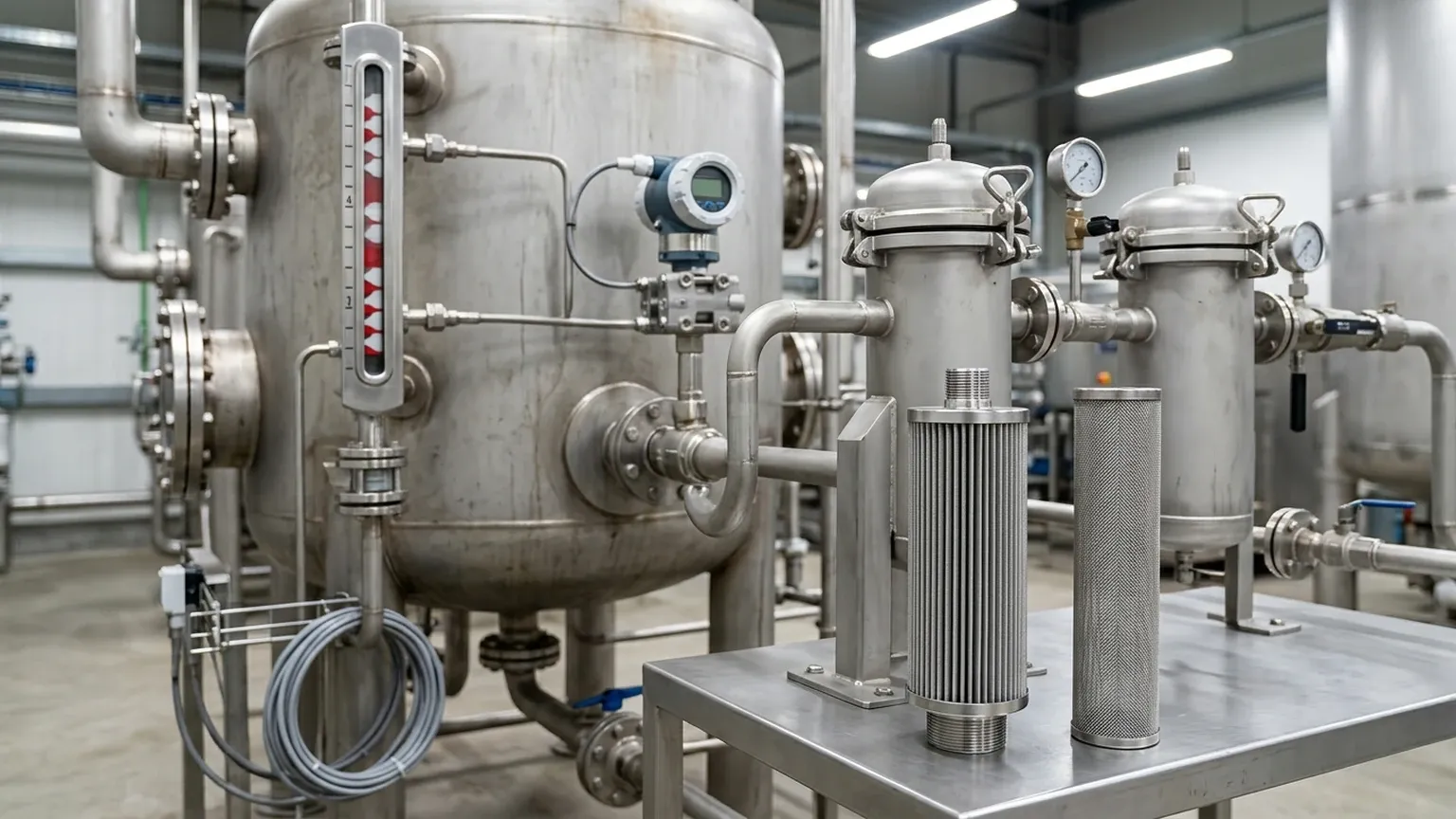
* Filter Volume: Larger surface areas or cylindrical designs, such as those found in Wire Mesh Filter Cylinders & Tubes, may allow for longer intervals between cleanings due to increased holding capacity.
From an engineering perspective, it is often more cost-effective to replace filters once the labor and chemical costs of cleaning exceed the marginal gain in filtration efficiency. High-quality stainless steel filters from manufacturers like Kaifil are designed for high "cleanability," extending the time between replacements.
5. Industrial Applications Beyond the Kitchen
While the term "range hood" typically implies a culinary setting, the principles of cleaning and maintaining wire mesh filters apply to various industrial mist elimination and air purification sectors.
Mist Elimination in Machining
In CNC machining and metalworking, oil mist is a byproduct that must be filtered to protect workers and equipment. The filters used here are often Wire Mesh Filter Cylinders & Tubes, which provide a high surface-area-to-volume ratio. The cleaning process for these industrial components follows the same logic: chemical degreasing, ultrasonic agitation, and performance verification.
Hydraulic and Fluid Filtration
In hydraulic systems, wire mesh tubes serve as suction strainers. While these are not "range hood" filters, the methodology of how to clean a range hood mesh wire filter—specifically the focus on solvent compatibility and preventing mesh deformation—is directly applicable to maintaining these critical hydraulic components.
6. Selecting the Right Filter for Durability
When cleaning is no longer sufficient, selecting a replacement requires careful consideration of technical specifications. Not all mesh filters are created equal. When sourcing Wire Mesh Filter Cylinders & Tubes, engineers should confirm the following with their supplier:
* Mesh Count and Wire Diameter: These dictate the filtration fineness and structural strength. A thicker wire diameter generally allows for more aggressive cleaning cycles.
* Layer Configuration: Sintered or multi-layer mesh provides better structural integrity than single-layer mesh, preventing the "sagging" that can occur after repeated cleaning.
* Alloy Grade: Ensure the alloy is compatible with the cleaning chemicals used in your facility (e.g., SS316 for high-salinity or highly acidic environments).
* Customization Options: For specialized industrial hoods, custom-sized cylinders or tubes may be necessary to ensure a bypass-free fit.
7. Conclusion: The Importance of a Systematic Approach
Knowing how to clean a range hood mesh wire filter is a fundamental skill for facility managers and maintenance engineers. By moving away from haphazard cleaning methods and adopting a technical, chemical-based approach, organizations can significantly improve their indoor air quality, reduce fire risks, and lower energy consumption by maintaining optimal fan performance.
However, maintenance has its limits. When the wire mesh begins to show signs of mechanical fatigue or irreversible blinding, upgrading to precision-engineered Wire Mesh Filter Cylinders & Tubes is the most prudent course of action. High-quality filtration components, such as those manufactured by Kaifil, offer the durability and performance required to withstand the rigors of industrial use and repeated cleaning cycles, ensuring that your ventilation system operates at peak efficiency for years to come.
For engineers and purchasing teams, the focus should always remain on the balance between filtration efficiency and ease of maintenance. By selecting the right materials and following a standardized cleaning protocol, you protect both your equipment and your operational bottom line.
Download How to Clean a Range Hood Mesh Wire Filter as a PDF
