


Vintage Strainers
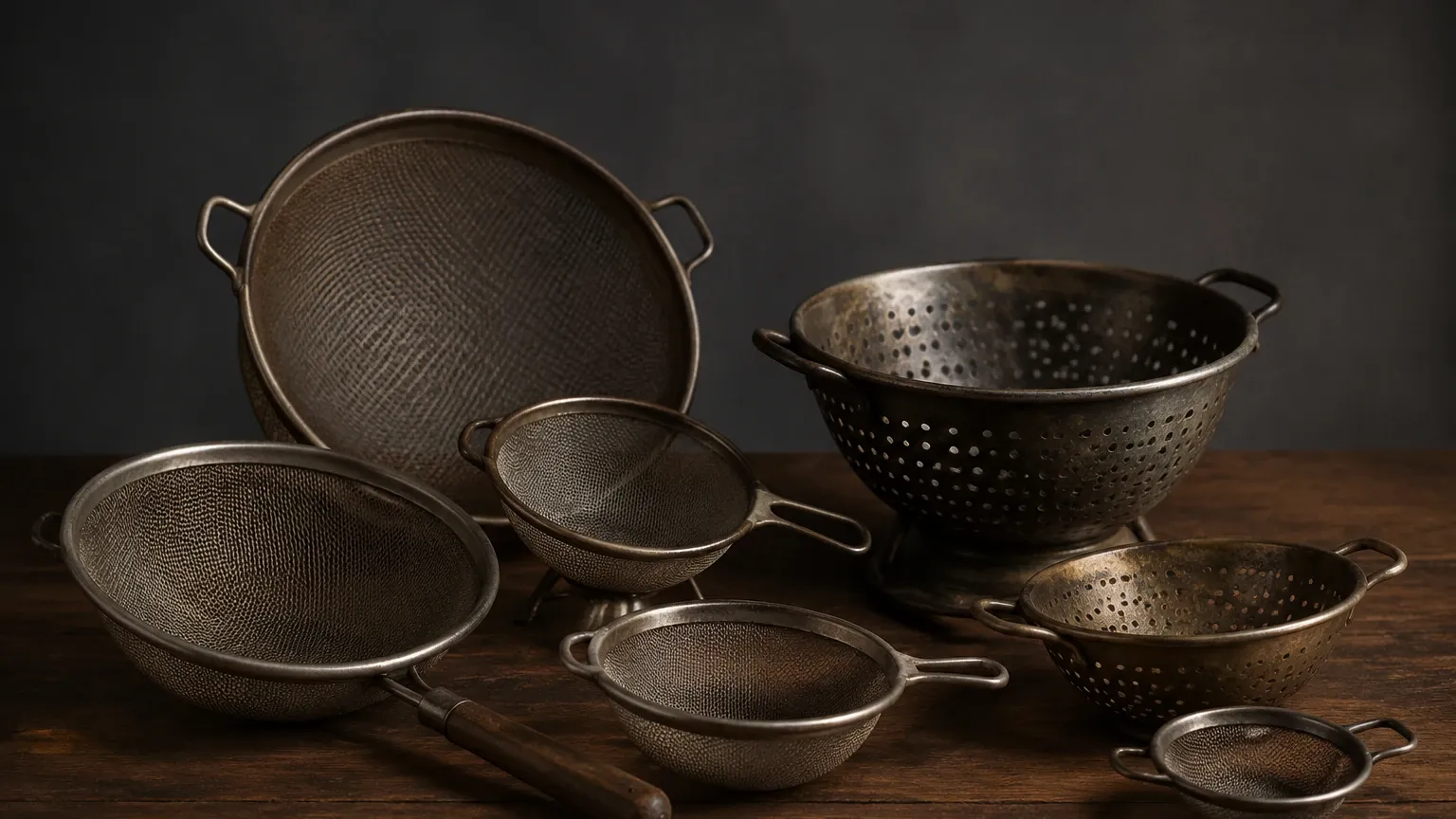
In the context of industrial fluid handling and process engineering, the term "vintage strainers" refers to legacy filtration components that have been in service for several decades or are designed to fit into aging infrastructure. While the term often evokes imagery of household antiques, in a B2B industrial setting, it signifies a specific set of engineering challenges related to maintenance, material fatigue, and the necessity for precision-engineered replacements. Many chemical processing plants, water treatment facilities, and hydraulic systems continue to operate using housings and piping configurations established in the mid-20th century, requiring a deep understanding of how these older Strainers & Baskets function and how they can be modernized without compromising system integrity.
Maintaining or replacing vintage strainers requires more than a simple off-the-shelf purchase. It involves technical evaluation of flow dynamics, metallurgical compatibility, and the transition from obsolete specifications to modern performance standards. This guide examines the technical considerations for engineers and procurement teams tasked with managing legacy filtration systems.
The Role of Legacy Strainers in Modern Industrial Infrastructure
Industrial facilities often have lifespans exceeding 50 years. Within these environments, the primary filtration stages—often consisting of heavy-duty basket strainers or Y-strainers—are integrated into permanent piping. The "vintage" nature of these systems presents a unique set of constraints. Unlike modern modular systems, legacy strainers were often over-engineered for durability but may lack the precision or ease of maintenance found in contemporary designs.
For an engineer, the objective when dealing with vintage strainers is rarely to find an actual "antique" part, but rather to source a modern component that adheres to the dimensional constraints of the original housing while providing superior filtration efficiency. These components are critical for protecting downstream equipment such as pumps, valves, and heat exchangers from particulate matter that could cause catastrophic failure.
Engineering Challenges with Vintage Filtration Components
When evaluating vintage strainers, several technical hurdles typically emerge. These challenges dictate whether a component can be refurbished or if a custom-fabricated replacement is required.
1. Dimensional Non-Standardization
Before the widespread adoption of international ISO and ANSI standards for filtration inserts, many manufacturers utilized proprietary dimensions. A vintage strainer basket may have a unique flange thickness, handle height, or taper angle that is no longer standard. Replacing these requires precise measurement and custom fabrication to ensure a proper seal within the existing housing. An improper fit leads to "bypass," where unfiltered fluid escapes around the edges of the basket, defeating the purpose of the filtration stage.
2. Material Fatigue and Corrosion
Vintage strainers often utilize older grades of stainless steel or even galvanized carbon steel. Over decades of exposure to corrosive process fluids or high-pressure cycles, these materials undergo stress corrosion cracking (SCC) or general thinning. Even if the mesh appears intact, the structural frame of the basket may be compromised, leading to a risk of collapse under sudden pressure surges.
3. Obsolete Mesh Specifications
Filtration requirements have become more stringent over the years. A vintage strainer might have been designed to remove only large debris (e.g., 1/8" perforations), whereas modern process requirements may demand 100-micron or finer filtration. Retrofitting a vintage housing with a high-precision mesh requires a careful balance between filtration fineness and the resulting pressure drop (Delta P).
Evaluating Material Integrity in Older Strainers & Baskets
For procurement teams, the decision to replace a vintage strainer basket often hinges on a material audit. Modern stainless steel alloys offer significantly better performance than the materials available 40 years ago. When commissioning a replacement for a vintage application, the following material considerations are paramount:
* Alloy Selection: While 304 stainless steel was the historical standard for many applications, modern replacements often utilize 316L for its superior resistance to pitting and crevice corrosion, particularly in chloride-rich environments.
* Weld Quality: Older fabrication methods for strainers often relied on spot welding that can fail over time. Modern TIG (Tungsten Inert Gas) or plasma welding provides a much more robust bond, ensuring that the basket can withstand high differential pressures during cleaning cycles.
* Surface Finish: Vintage components often have rougher surface finishes, which can promote bacterial growth in food and beverage or pharmaceutical applications. Modern electropolishing can be applied to replacement baskets to meet current sanitary standards while maintaining the vintage footprint.
Retrofitting vs. Custom Fabrication
When a vintage strainer reaches the end of its functional life, engineers face a choice: replace the entire housing or custom-fabricate the internal Strainers & Baskets.
Replacing the housing is often cost-prohibitive because it involves cutting and welding existing piping, which may require system-wide shutdowns and updated pressure vessel certifications. Consequently, custom fabrication of the internal components is usually the most cost-effective path. This process involves:
1. Physical Mapping: Taking exact measurements of the existing basket, including the O-ring grooves, flange diameters, and overall length.
2. Flow Analysis: Determining if the original hole pattern provides sufficient open area. Many vintage designs had low open-area ratios, which increased energy costs due to higher pumping requirements.
3. Mesh Integration: Selecting a modern wire cloth or wedge wire media that can be reinforced by the original heavy-duty perforated metal structure. This "dual-layer" approach provides both the structural strength of the vintage design and the filtration precision of modern technology.
Performance Expectations and Pressure Drop
A common mistake when replacing vintage strainers is failing to account for changes in the clean pressure drop. If a modern, finer mesh is installed in a vintage housing without increasing the surface area, the system may experience frequent clogging and reduced flow rates.
Engineers must calculate the Open Area Ratio (OAR). A high-quality replacement basket should ideally have an OAR of at least 6:1 relative to the internal pipe cross-section. This ensures that even as the strainer collects debris, there is enough remaining surface area to prevent a significant spike in pressure that could damage the pump or trigger a system bypass.
Maintenance and Replacement Cycles for Legacy Systems
Vintage systems require a more rigorous maintenance schedule than modern, self-cleaning systems. Because these older strainers are typically manual (requiring the operator to open the housing and physically remove the basket), the durability of the basket handle and the integrity of the sealing surface are vital.
* Inspection Frequency: In high-load applications, vintage baskets should be inspected quarterly for signs of "wire shifting" or broken welds.
* Cleaning Protocols: Older mesh can be more difficult to clean if it has been subjected to decades of scaling. Ultrasonic cleaning is often recommended for stainless steel mesh to remove embedded particulates without causing the mechanical damage associated with high-pressure hosing or manual scrubbing.
* Total Cost of Ownership (TCO): While a custom-fabricated replacement for a vintage strainer may have a higher upfront cost than a standard part, the TCO is lower when considering the avoidance of piping modifications and the extended service life provided by modern metallurgy.
Technical Specifications for Sourcing
When contacting a manufacturer for a replacement vintage-style strainer, engineers should be prepared to provide the following data points to ensure compatibility:
| Parameter | Description |
| :— | :— |
| Housing Type | Y-Strainer, Simplex Basket, or Duplex Basket |
| Flange OD | The outer diameter of the top support ring |
| Perforation Size | The diameter of the holes in the structural backing |
| Mesh Micron Rating | The specific particle size retention required |
| Fluid Viscosity | Essential for calculating the allowable pressure drop |
| Operating Temperature | Dictates the choice of gasket materials and alloy expansion factors |
Conclusion
Managing vintage strainers is a critical task for maintaining the efficiency of long-standing industrial operations. By focusing on high-quality material selection and precision custom fabrication, facilities can bridge the gap between legacy infrastructure and modern filtration requirements. Replacing worn-out components with engineered Strainers & Baskets ensures that even the oldest systems continue to meet the rigorous demands of today’s industrial processes, preventing downtime and protecting valuable downstream assets.
For engineers, the goal is to preserve the structural utility of the vintage housing while upgrading the internal filtration technology to current industry benchmarks. Through careful measurement and a focus on metallurgical integrity, legacy systems can achieve performance levels that rival modern installations.
