


Strainers Wire
In industrial filtration, the term "strainers wire" refers to the precision-engineered wire mesh or cloth that serves as the primary functional component within Strainers & Baskets. These components are critical for protecting downstream equipment—such as pumps, valves, and heat exchangers—from particulate contamination. For engineers and procurement specialists, understanding the technical nuances of the wire used in these systems is essential for ensuring operational efficiency, reducing maintenance downtime, and extending the service life of the filtration assembly.
Selecting the appropriate strainers wire involves more than simply choosing a mesh size. It requires a comprehensive analysis of material properties, weave patterns, mechanical strength, and chemical compatibility. As a specialized manufacturer, Kaifil provides customized filtration solutions that address these complex engineering requirements across diverse industrial sectors.
Technical Fundamentals of Strainer Wire Mesh
The performance of a strainer is largely dictated by the characteristics of the wire mesh. The mesh is defined by several key parameters that engineers must evaluate during the design phase.
Material Selection and Metallurgy
Stainless steel is the industry standard for industrial strainers due to its inherent corrosion resistance and mechanical durability. The choice of grade is typically determined by the operating environment:
* Type 304 Stainless Steel: The most common grade, offering excellent cost-effectiveness and resistance to atmospheric corrosion. It is widely used in food processing and general industrial water applications.
* Type 316L Stainless Steel: Contains molybdenum, which provides superior resistance to chlorides and pitting. This is the preferred choice for marine environments, chemical processing, and pharmaceutical applications where high-purity standards are mandatory.
* Specialty Alloys: In extreme environments involving high temperatures or highly aggressive chemicals, alloys such as Monel, Hastelloy, or Inconel may be utilized to prevent premature failure.
Weave Types and Their Impact
The way the strainers wire is woven significantly affects the filtration accuracy (micron rating) and the structural integrity of the basket.
1. Plain Weave: The most straightforward pattern where each warp wire crosses over and under each shute wire. It provides high flow rates and is easy to clean, making it ideal for coarse filtration.
2. Twill Weave: Each warp wire passes over and under two shute wires. This allows for the use of heavier wires for a given mesh count, increasing the mechanical strength of the mesh.
3. Dutch Weave (Plain or Twill): This weave utilizes different diameters for warp and shute wires, resulting in a much tighter, denser mesh. Dutch weaves are used for fine filtration and provide excellent pressure resistance.
Engineering Considerations for Flow and Pressure
When integrating strainers wire into a system, the relationship between flow rate and pressure drop (Delta P) is a primary concern. An improperly specified mesh can lead to excessive energy consumption or system cavitation.
Effective Filtration Area (EFA)
The EFA is the total area of the openings in the mesh through which fluid can pass. A higher EFA results in a lower initial pressure drop and longer intervals between cleaning cycles. Engineers must balance the need for fine filtration (smaller apertures) with the requirement for high flow rates. Using a larger basket or a pleated wire mesh design can increase the EFA without increasing the footprint of the strainer housing.
Open Area Percentage
The percentage of open area is calculated based on the wire diameter and the mesh count. For example, a mesh with a high open-area percentage will facilitate higher flow but may be more susceptible to mechanical deformation under high-pressure surges. Kaifil’s engineering team often assists clients in calculating the optimal balance to ensure the Strainers & Baskets perform reliably under peak load conditions.
Structural Reinforcement and Customization
In many industrial applications, the strainers wire alone is not strong enough to withstand the differential pressure that occurs as the mesh becomes loaded with contaminants. To prevent the mesh from collapsing or "ballooning," structural reinforcements are integrated into the design.
Perforated Metal Backing
For high-pressure applications, the fine wire mesh is often bonded to or supported by a perforated metal plate. The perforated plate provides the necessary mechanical rigidity, while the wire mesh provides the required filtration accuracy. This composite structure is essential in hydraulic systems and high-viscosity fluid processing.
Custom Basket Geometry
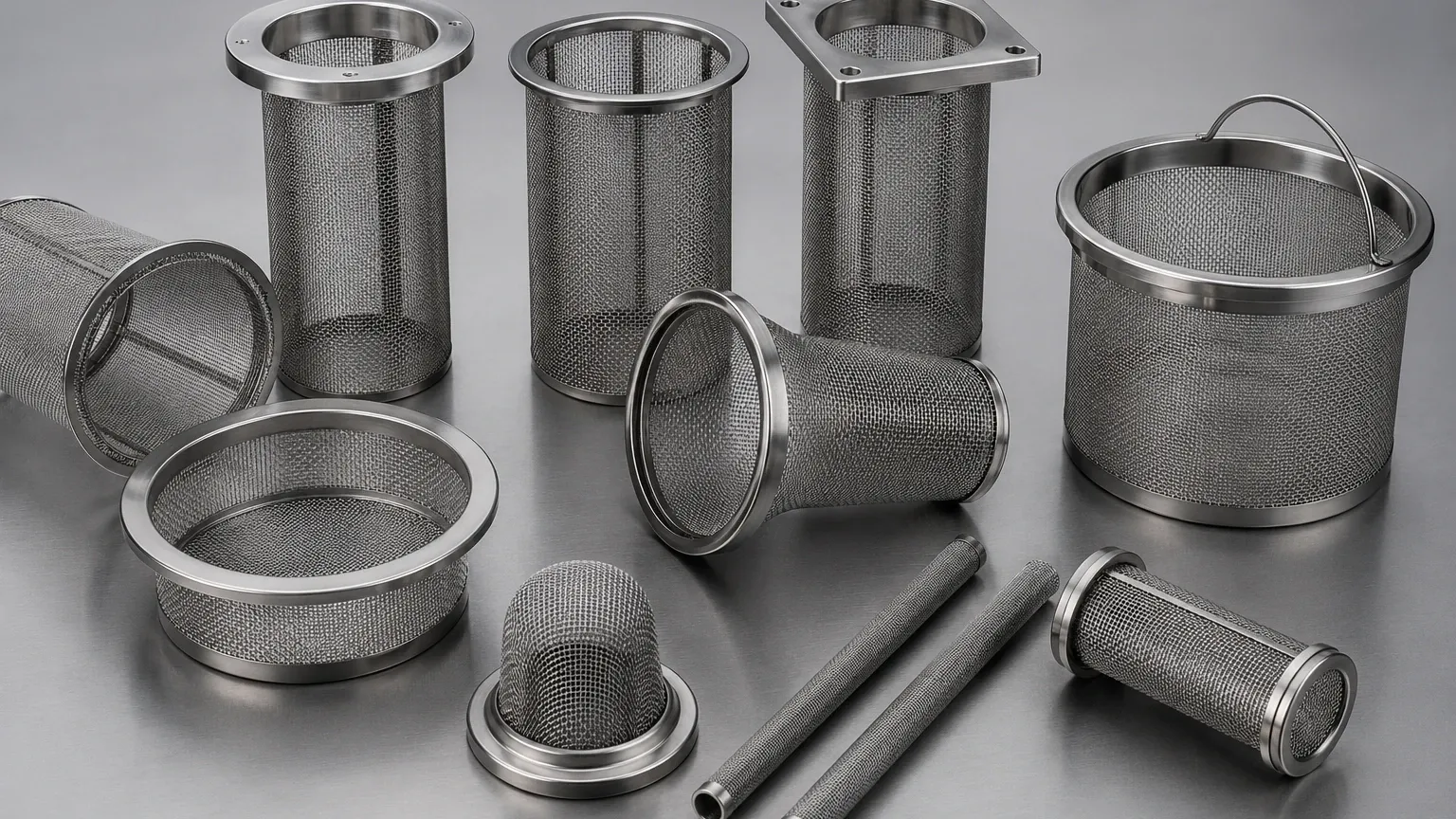
Industrial processes rarely fit a "one size fits all" model. Customization options for strainers wire assemblies include:
* Conical Strainers: Often used for temporary filtration during system start-up.
* Cylindrical Baskets: The standard for most basket strainers, offering a balance of capacity and ease of maintenance.
* Multi-layered Sintered Mesh: For applications requiring extreme durability and precise micron ratings, multiple layers of wire mesh are sintered together to create a robust, integrated filter medium.
Application-Specific Requirements
The choice of strainers wire must be aligned with the specific demands of the industry in which it operates.
Chemical and Petrochemical Processing
In these environments, resistance to corrosive media is paramount. The wire must maintain its integrity despite exposure to acids, alkalis, and high temperatures. Engineers often specify 316L or higher-grade alloys to ensure the longevity of the filtration components.
Food and Beverage Industry
Hygiene and cleanability are the top priorities. The strainers wire must be manufactured to high standards to ensure there are no crevices where bacteria can grow. Furthermore, the materials used must be FDA-compliant. Stainless steel mesh is preferred because it can withstand rigorous Clean-in-Place (CIP) procedures involving hot water and caustic agents.
Pharmaceutical Manufacturing
Precision is critical in pharmaceutical applications. The micron rating of the strainers wire must be absolute, ensuring that even the smallest contaminants are removed to protect product purity and sensitive downstream equipment.
Maintenance and Total Cost of Ownership
While the initial purchase price of a strainer basket is an important factor, the Total Cost of Ownership (TCO) is a more accurate measure of value. TCO includes the cost of replacement parts, labor for cleaning, and the potential cost of lost production during downtime.
Durability and Replacement Cycles
High-quality strainers wire that is properly specified for the application will last significantly longer than cheaper, off-the-shelf alternatives. Investing in superior materials and reinforced designs reduces the frequency of replacements. Kaifil focuses on manufacturing durable components that withstand repeated cleaning cycles, whether through backwashing, ultrasonic cleaning, or manual scrubbing.
Signs of Wear and Failure
Engineers should monitor for signs that the strainers wire is reaching the end of its functional life. These include:
* Permanent Deformation: Visible bulging or stretching of the mesh.
* Wire Fraying: Broken wires at the edges or seams of the basket, which can lead to bypass or downstream contamination.
* Persistent Pressure Drop: If the pressure drop remains high even after cleaning, it may indicate that the mesh is "blinded" by particles lodged deep within the weave.
Selection Criteria for Procurement Teams
When requesting a quote or designing a new filtration system, providing the following information to the manufacturer will ensure the most accurate and effective solution:
1. Fluid Characteristics: Viscosity, density, and chemical composition.
2. Operating Conditions: Maximum flow rate, operating temperature, and maximum allowable pressure drop.
3. Contaminant Profile: The nature of the particles being removed (hard, soft, fibrous) and the expected loading concentration.
4. Filtration Goal: The specific micron rating required to protect downstream assets.
5. Connection and Housing Details: Dimensions and flange types to ensure proper fitment of the Strainers & Baskets.
Why Quality Manufacturing Matters
The integrity of the strainers wire is only as good as the manufacturing process used to create the final product. Precision in cutting, forming, and welding is essential. For instance, TIG (Tungsten Inert Gas) welding is often preferred for stainless steel baskets to provide clean, strong joints that do not introduce contaminants or weak points into the assembly.
At Kaifil, the focus is on delivering reliable, high-performance filtration components. By combining advanced manufacturing capabilities with deep engineering expertise, we help global customers solve their most challenging filtration problems. Whether you require a standard replacement or a fully customized filtration solution, understanding the technical requirements of the wire mesh is the first step toward optimized system performance.
In conclusion, the selection of strainers wire is a critical engineering decision that impacts the safety, efficiency, and cost-effectiveness of industrial operations. By considering material science, weave geometry, and structural design, technical professionals can ensure their filtration systems provide dependable protection for years to come.
