


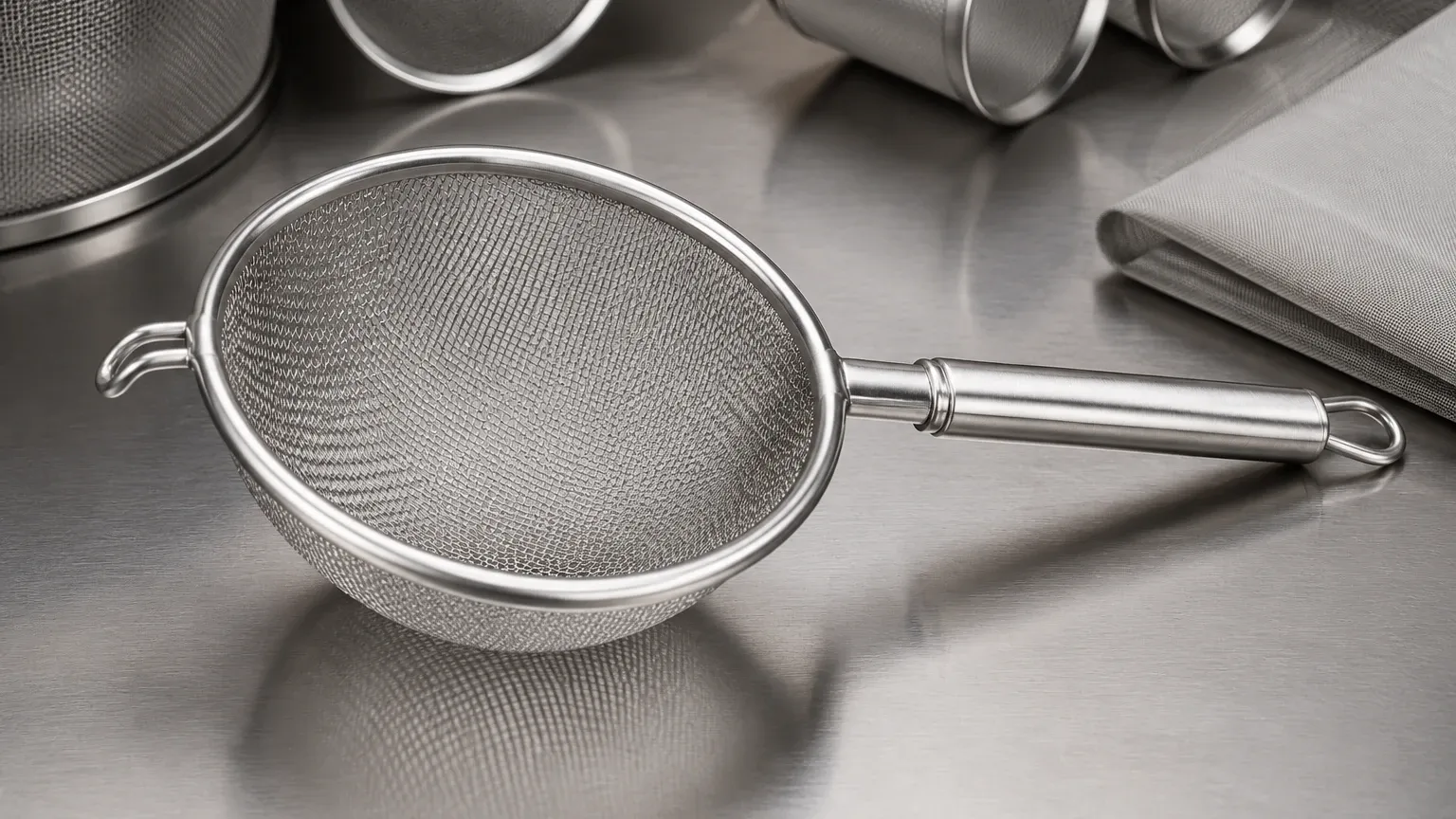
Strainer with Handle
In industrial filtration, the efficiency of a system is often measured not just by its ability to remove contaminants, but by the ease with which it can be maintained. Strainers & Baskets serve as the primary line of defense for downstream equipment, protecting pumps, valves, and heat exchangers from damage caused by particulate matter. Among the various configurations available, the strainer with handle represents a critical design evolution aimed at optimizing manual handling, reducing downtime, and ensuring operator safety in demanding environments such as chemical processing, food production, and water treatment.
Selecting the right strainer involves more than simply choosing a mesh size. It requires an understanding of the mechanical stresses, chemical compatibility, and ergonomic requirements of the specific application. This guide examines the engineering considerations, material science, and operational benefits of integrated handle designs in industrial basket strainers.
The Engineering Logic Behind the Strainer with Handle
Industrial basket strainers are designed to collect a significant volume of solids. As these solids accumulate, the weight of the basket increases, and the differential pressure across the filter media rises. A strainer with handle is engineered to facilitate the rapid removal of the basket from its housing once the pressure limit is reached.
Handle Configurations and Mechanical Integrity
From an engineering perspective, the handle is a load-bearing component. It must be securely attached to the basket rim—typically via TIG (Tungsten Inert Gas) welding—to ensure it can withstand the weight of a fully loaded basket without deforming. Common handle types include:
* Bail Handles (Swing Handles): These are semi-circular handles that can fold down when the strainer is in operation. They are ideal for top-entry housings where vertical clearance might be limited but ease of grasping is paramount.
* Fixed Bar Handles: A rigid bar welded across the diameter of the basket. While these provide the highest structural strength, they can sometimes interfere with flow distribution if not properly positioned.
* Side-Mounted Handles: Often used in larger or deeper baskets where two-handed lifting is required for safety and stability.
Structural Reinforcement
Because the handle is the primary point of contact during maintenance, the top ring or flange of the basket must be reinforced. A heavy-duty flange prevents the basket from bypassing (leaking) and ensures that the lifting force applied to the handle is distributed evenly across the basket’s frame. This prevents the wire mesh from tearing away from the support structure during extraction.
Material Selection for Industrial Environments
The performance of a strainer with handle is heavily dependent on its material composition. Industrial applications rarely permit the use of carbon steel or plastics due to concerns regarding corrosion, temperature resistance, and contamination.
Stainless Steel 304 vs. 316L
Most high-quality industrial strainers are manufactured from stainless steel.
1. SS304: Suitable for general-purpose applications, including water filtration and some food-grade processes. It offers excellent strength and basic corrosion resistance.
2. SS316L: The "L" denotes low carbon, which is essential for components that undergo extensive welding, such as the attachment points for handles. SS316L contains molybdenum, providing superior resistance to chlorides and acidic environments, making it the standard for pharmaceutical and chemical processing.
Surface Finishes and Treatments
In sanitary applications, the surface finish is as important as the material itself. A strainer with handle used in the dairy or beverage industry often requires electropolishing. This process removes microscopic peaks and valleys from the metal surface, reducing the ability of bacteria to adhere and making the cleaning process more effective. For industrial chemical applications, passivation is used to enhance the protective oxide layer, ensuring longevity against aggressive fluids.
Performance Metrics: Mesh, Perforation, and Flow
The primary function of the basket is filtration accuracy. When specifying a strainer with handle, engineers must balance the micron rating with the required flow rate.
Media Types
* Perforated Metal: Used as a primary strainer for large particles or as a support cage for finer mesh. The hole size and "open area" percentage determine the initial pressure drop.
* Woven Wire Mesh: Available in various weaves (plain, twill, or dutch), wire mesh allows for much finer filtration, down to 5 microns or less. In a basket configuration, the mesh is often pleated to increase the surface area, extending the time between cleaning cycles.
Flow Dynamics and Pressure Drop
A well-designed strainer with handle ensures that the handle does not create significant turbulence or a "dead zone" where solids can settle and bypass the main collection area. Engineers calculate the "Clean Pressure Drop" to ensure the pump system can handle the resistance. As the basket fills, the "Dirty Pressure Drop" is monitored; the handle allows for a quick swap once the threshold is reached, maintaining system equilibrium.
Application-Specific Considerations
Different industries impose unique requirements on the design of Strainers & Baskets.
Chemical and Petrochemical Processing
In these sectors, the fluid may be hazardous or at high temperatures. The handle must be designed to be gripped by operators wearing heavy protective gloves. Furthermore, the compatibility of the gasket or O-ring seal with the handle’s seating position is vital to prevent leaks under high pressure.
Food and Beverage Industry
Sanitary standards (such as 3A or FDA compliance) dictate that the strainer must have no "blind spots" where organic material can collect and rot. The handle attachment points must be smooth and crevice-free. A strainer with handle in this context is often removed multiple times per shift for cleaning, so durability is non-negotiable.
Hydraulic and Lube Oil Systems
In hydraulic systems, strainers protect sensitive servo-valves. The handle facilitates the inspection of the basket for metal shavings, which can provide early warning of component wear or impending system failure.
Maintenance, Cleaning, and Total Cost of Ownership
The inclusion of a handle significantly impacts the Total Cost of Ownership (TCO) of a filtration system. While a basket without a handle might have a lower initial purchase price, the labor costs associated with difficult removals and the risk of damaging the filter media during extraction quickly negate those savings.
Cleaning Procedures
Because a strainer with handle is designed for reuse, the cleaning protocol is essential.
1. Ultrasonic Cleaning: For fine mesh baskets, ultrasonic baths can remove particles lodged deep within the weave.
2. Backwashing: Some systems allow for in-situ cleaning, but manual removal via the handle remains the most reliable way to ensure 100% contaminant removal.
3. Inspection: During cleaning, the handle and its welds should be inspected for stress cracks. A failure of the handle during extraction can lead to the basket falling back into the housing, potentially causing significant mechanical damage.
Replacement Cycles
Even the most durable stainless steel strainer has a finite lifespan. Factors that necessitate replacement include:
* Work Hardening: Repeated pressure cycles can cause the metal to become brittle.
* Erosion: High-velocity fluids containing abrasive particles can thin the wire mesh over time.
* Deformation: If the basket is operated beyond its rated differential pressure, the frame (and handle) may warp.
Customization and OEM Solutions
Many industrial systems do not conform to standard sizes. This is where custom manufacturing becomes essential. When sourcing a strainer with handle, engineers should confirm several factors with the manufacturer:
* Dimensional Accuracy: Does the basket height include the handle in its folded or upright position? This is critical for housing clearance.
* Micron Rating vs. Structural Strength: In high-flow applications, a fine mesh may require a heavier perforated backup to prevent collapsing.
* Handle Ergonomics: Can the handle be customized for specific lifting tools or automated extraction arms?
Kaifil specializes in these types of customized solutions, providing the technical expertise required to bridge the gap between standard filtration components and application-specific engineering. By focusing on material integrity and precise manufacturing, Kaifil ensures that every strainer with handle meets the rigorous demands of industrial service.
Conclusion: Making an Informed Procurement Decision
When evaluating Strainers & Baskets for a new or existing system, the handle should be viewed as a functional engineering feature rather than a simple convenience. It is the interface between the machine and the operator, and its design directly influences the safety and efficiency of the maintenance workflow.
Before finalizing a purchase, technical teams should confirm the chemical compatibility of the alloys, the mechanical load rating of the handle, and the specific filtration efficiency required for the process. By prioritizing quality construction and ergonomic design, facilities can ensure long-term reliability and optimized performance in their filtration processes.
