


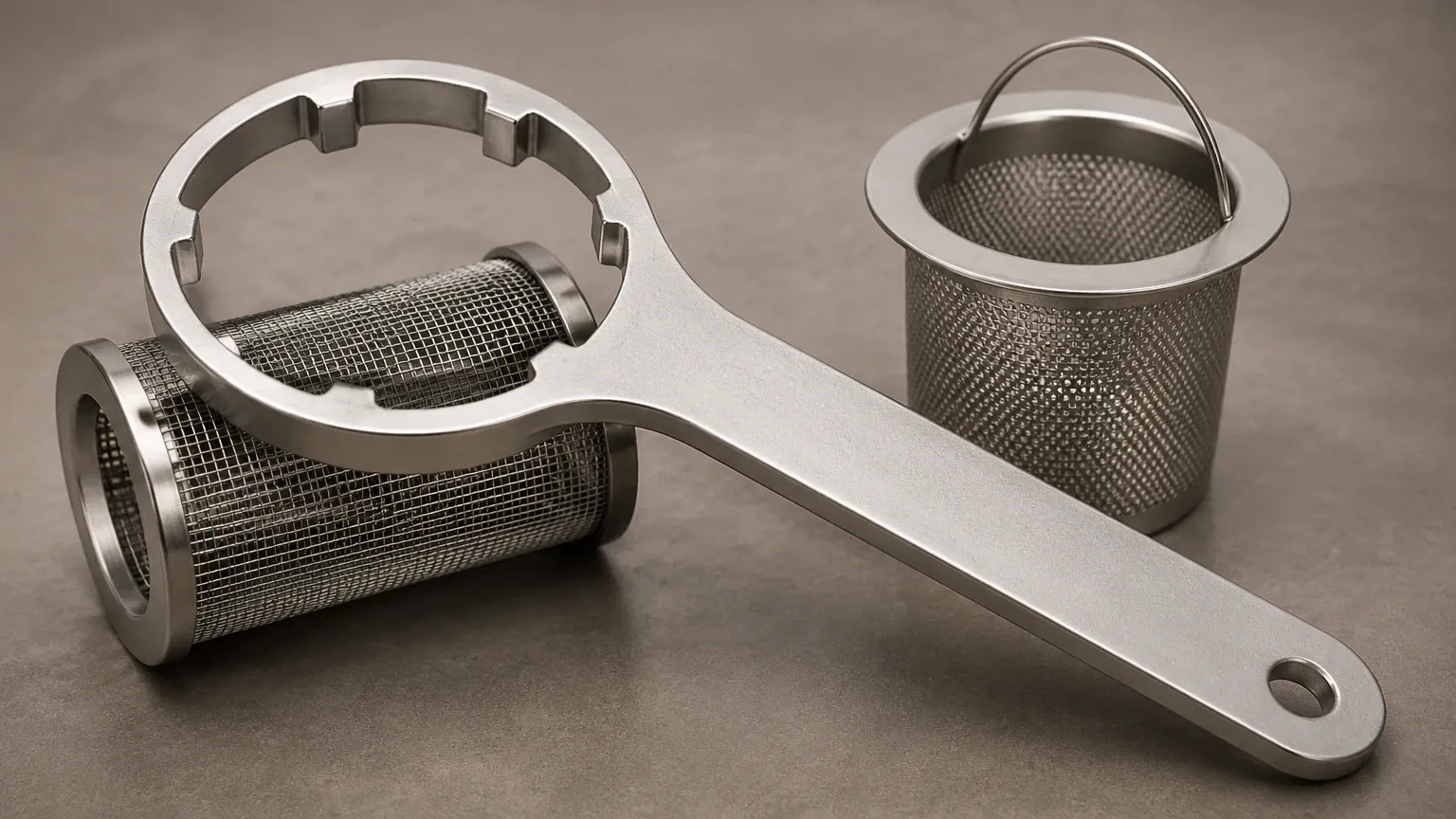
Strainer Wrench
In industrial filtration systems, the integrity of the seal and the ease of maintenance are paramount to operational efficiency. A strainer wrench is a specialized tool designed to facilitate the installation, removal, and maintenance of various filtration components, specifically those found in Strainers & Baskets. While often overlooked in favor of the primary filtration media, the tools used to service these systems directly impact the longevity of the equipment and the safety of the personnel involved.
For engineers and maintenance teams working with stainless steel filtration solutions, understanding the mechanical requirements of a strainer wrench is essential. These tools must provide sufficient leverage to break seals that may have become bound due to chemical exposure, high temperatures, or pressure cycles, all while ensuring that the precision-engineered threads and surfaces of the filter housing remain undamaged.
The Role of Specialized Tooling in Industrial Filtration
Industrial filtration environments, such as those in chemical processing or pharmaceutical manufacturing, demand high levels of precision. When a filter basket or cartridge needs to be replaced or cleaned, the housing must be opened and closed with specific torque levels to prevent leaks or mechanical failure. A standard pipe wrench or adjustable wrench is often inadequate for these tasks because they can mar the surface of stainless steel components or fail to grip the specialized geometries of industrial strainer caps.
A strainer wrench is typically engineered to fit the specific notches, lugs, or hex-flats of a strainer’s cover or locknut. By providing a secure, non-slip interface, these wrenches allow for the application of uniform force. This is particularly critical when dealing with high-performance stainless steel systems where even minor surface scratches can become focal points for stress corrosion or bacterial growth in food-grade applications.
Engineering Considerations for Maintenance Tools
When selecting or designing a strainer wrench for industrial use, several engineering factors must be evaluated to ensure compatibility with the filtration system.
Material Compatibility and Contamination Risks
In industries such as pharmaceutical and food and beverage processing, material compatibility is not limited to the filter media itself but extends to the tools used for maintenance. Using a carbon steel wrench on a stainless steel strainer housing can lead to "iron contamination." Small particles of carbon steel can be transferred to the stainless surface, leading to localized rusting and compromising the corrosion resistance of the entire system. Therefore, wrenches used in these environments are often made from aluminum, bronze, or high-grade stainless steel to prevent cross-contamination.
Leverage and Torque Management
The length of the wrench handle dictates the amount of torque that can be applied. In large-scale hydraulic or water treatment plants, Strainers & Baskets may be under significant pressure, and the seals can become exceptionally tight over time. A wrench with an optimized handle length allows the operator to apply the necessary force without resorting to unsafe practices, such as using "cheater bars," which can result in sudden tool failure or damage to the filter housing.
Grip Geometry
Industrial strainers often feature unique closure designs, such as T-bolts, swing bolts, or threaded caps. A specialized strainer wrench is often designed with a specific "spud" or "hook" configuration to match these designs. For basket strainers, the wrench may need to engage with a locknut or a specialized flange. Precision-fit tools ensure that the force is distributed evenly across the contact points, reducing the risk of rounding off corners or stripping threads.
Types of Strainers and Their Specific Tooling Needs
Different filtration configurations require different maintenance approaches. Understanding the nuances of the equipment helps in selecting the correct wrenching solution.
Basket Strainers
Basket strainers are designed for high-flow applications where the pressure drop must be minimized. The internal basket is accessed through a top cover. In many OEM designs, this cover is held in place by a large threaded nut or a series of bolts. A basket strainer wrench is often a heavy-duty tool with a wide jaw or a specialized pin-style head designed to engage with the perimeter of the cover. This ensures that the gasket is compressed evenly during reassembly, maintaining a bubble-tight seal.
Y-Strainers
Y-strainers are commonly used in steam, liquid, or gas lines where the amount of material to be removed is relatively small. The maintenance of a Y-strainer involves removing the "blow-off" plug or the entire Y-cap to access the screen. Because these are often located in tight piping configurations, a compact strainer wrench with a specific offset may be required to clear surrounding valves and instrumentation.
Duplex Strainers
Duplex strainers allow for continuous operation by diverting flow from one basket to another. The complexity of the diverting valve and the dual-chamber design means that maintenance must be performed quickly and accurately. Specialized wrenches that can quickly loosen the cover nuts without interfering with the diverting handle are essential for minimizing downtime in critical chemical processing lines.
Performance Expectations and Replacement Cycles
The performance of a filtration system is only as good as its maintenance routine. A high-quality strainer wrench contributes to the overall reliability of the system by ensuring that the Strainers & Baskets can be serviced according to the manufacturer’s recommended schedule.
* Seal Integrity: Proper use of a wrench ensures that gaskets and O-rings are seated correctly. Over-tightening can crush a gasket, leading to premature failure, while under-tightening can lead to bypass or external leaks.
* Thread Longevity: By providing a square, even grip, a strainer wrench prevents the cross-threading of large-diameter filter housings, which can be an expensive and time-consuming repair.
* Operator Safety: Tools that are specifically designed for the task reduce the risk of slips and injuries. In industrial environments, safety is a primary driver of tool selection.
Maintenance teams should also be aware of the replacement cycles for the filtration components themselves. While the wrench is a durable tool, the baskets and screens within the system are subject to wear, erosion, and blinding. Regular inspection using the correct tools allows for the early detection of mesh deformation or structural fatigue in the filter media.
Customization and OEM Solutions
At Kaifil, we recognize that standard off-the-shelf filtration components do not always meet the rigorous demands of specialized industrial applications. Our focus on custom stainless steel filtration solutions includes the design of components that are not only efficient in their filtration performance but also practical to maintain.
When developing customized filtration systems, engineers must consider the maintenance environment. For example, if a filter is located in a confined space, the housing closure and the corresponding strainer wrench must be designed to function within those spatial constraints. Custom OEM solutions often include the provision of specialized tools that are matched to the unique geometry of the filter housing, ensuring that the end-user can maintain the system to its original performance specifications.
Total Cost of Ownership (TCO) Considerations
The total cost of ownership for an industrial filtration system includes the initial purchase price, the cost of replacement media, and the labor costs associated with maintenance. Investing in the correct strainer wrench and high-quality Strainers & Baskets reduces TCO in several ways:
1. Reduced Downtime: Faster maintenance cycles mean the system returns to service more quickly.
2. Lower Repair Costs: Preventing damage to housings and threads avoids the need for costly component replacements.
3. Extended Component Life: Proper cleaning and handling, enabled by the right tools, extend the functional life of stainless steel filter baskets.
4. Optimized Filtration Performance: Ensuring a proper seal prevents bypass, which protects downstream equipment and maintains product quality.
Conclusion
A strainer wrench is more than just a simple hand tool; it is a critical component of a professional industrial maintenance strategy. Whether dealing with wire mesh filters, stainless steel cartridges, or precision metal filter components, the use of the correct tool ensures that filtration systems operate at peak efficiency. By focusing on material compatibility, mechanical precision, and application-specific design, engineers can protect their investment in high-quality filtration hardware.
For those managing complex industrial processes, selecting the right Strainers & Baskets and the associated maintenance tools is essential for achieving reliable, long-term performance. Kaifil remains committed to providing the technical expertise and high-quality stainless steel components necessary to meet these demanding requirements, supporting global industries with durable and precise filtration solutions.
