


Watts Strainers
In industrial fluid handling and commercial piping systems, the protection of downstream equipment is a primary engineering concern. Debris such as scale, rust, jointing compounds, and weld metal can cause catastrophic failure or significant wear to expensive components like pumps, meters, control valves, and steam traps. Watts strainers are widely recognized in the industry as a standard solution for mechanical filtration, designed to capture these solids and ensure the longevity of the system.
For engineers and procurement teams, understanding the technical nuances of Strainers & Baskets is essential for maintaining system efficiency and minimizing downtime. Whether dealing with water, oil, gas, or steam, the selection of the correct strainer configuration—ranging from simple Y-strainers to high-capacity basket strainers—determines the overall reliability of the process line.
The Role of Strainers & Baskets in Fluid Control
The fundamental purpose of any strainer is to remove unwanted solids from a flowing medium through a perforated or wire mesh straining element. While the term "watts strainers" often refers to a specific range of commercial and industrial products, the engineering principles remain consistent across the category of strainers & baskets. These components act as the first line of defense in a piping network.
In a typical installation, the fluid enters the strainer housing and passes through the internal screen or basket. The size of the openings in this element determines the filtration accuracy. Anything larger than the mesh or perforation size is trapped within the element, while the cleaned fluid continues downstream. This mechanical separation is vital in applications such as:
* Boiler Feed Water: Preventing scale from entering sensitive pump internals.
* Chemical Processing: Protecting flow meters from particulate matter that could skew readings or cause mechanical damage.
* HVAC Systems: Maintaining the efficiency of heat exchangers by preventing the buildup of debris on thermal transfer surfaces.
* Potable Water Lines: Ensuring that sediment does not reach end-use fixtures or sensitive pressure-reducing valves.
Engineering Classifications: Y-Strainers vs. Basket Strainers
When evaluating watts strainers, engineers typically choose between two primary designs based on the application’s flow rate, pressure drop requirements, and maintenance frequency.
Y-Strainers
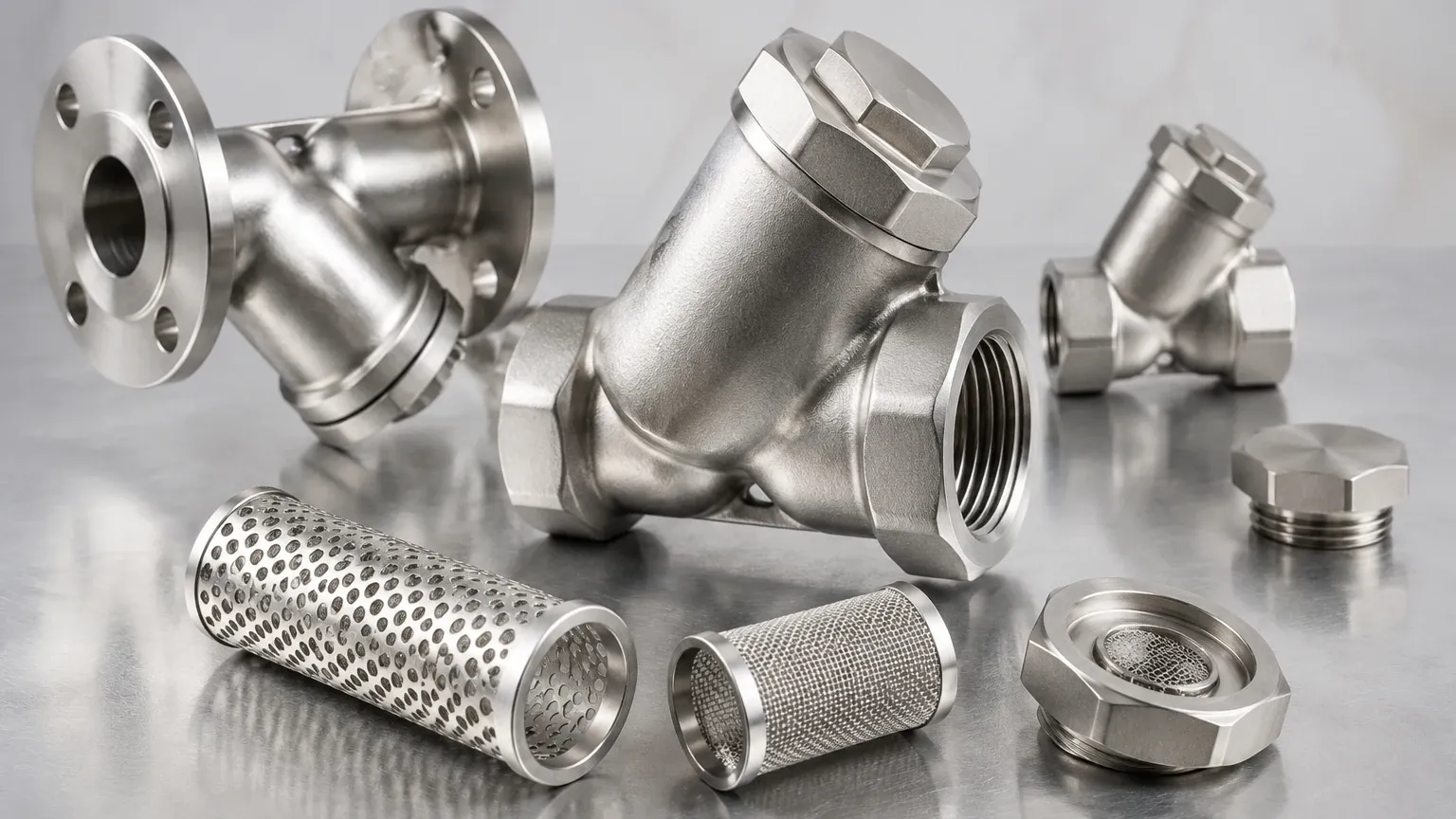
Named for their "Y" shape, these are the most common type of strainer for high-pressure applications. They are compact and can be installed in either horizontal or vertical piping runs (provided the "leg" points downward to collect debris). Y-strainers are generally used where the amount of debris to be removed is relatively small, meaning the screen does not require frequent cleaning. Because they can handle high pressures (often up to 600 PSI or more depending on the material), they are the preferred choice for steam and high-pressure gas lines.
Basket Strainers
Basket strainers feature a larger housing and a vertically oriented cylinder or "basket" to hold debris. This design offers a much higher dirt-holding capacity and a lower pressure drop than a Y-strainer of the same pipe size. Basket strainers are almost exclusively used in horizontal pipelines. They are ideal for liquid applications where high flow rates are required and where the fluid may contain a higher concentration of solids. The primary advantage of the basket design is the ease of maintenance; the top cover can be removed, and the basket lifted out for cleaning without draining the entire piping system.
Material Selection and Chemical Compatibility
The durability of watts strainers depends heavily on the materials used for both the housing and the internal straining element. Industrial environments demand materials that can withstand corrosive fluids, thermal shock, and mechanical stress.
1. Cast Iron and Ductile Iron: Frequently used in water and HVAC applications due to their cost-effectiveness and adequate strength for moderate pressure ratings.
2. Bronze and Brass: Preferred for potable water and marine environments where resistance to dezincification and corrosion is necessary.
3. Carbon Steel: Utilized in oil and gas applications where high temperatures and pressures are common.
4. Stainless Steel (304/316): The gold standard for chemical processing, pharmaceutical, and food-grade applications. Stainless steel provides superior resistance to a wide range of corrosive chemicals and ensures that the filtration process does not introduce contaminants into the fluid stream.
For the internal Strainers & Baskets, stainless steel is the most common material regardless of the housing type. This is because the mesh must maintain its structural integrity and pore size even when subjected to high-velocity flow and the abrasive impact of trapped particles.
Technical Specifications: Mesh, Perforation, and Micron Ratings
A critical step in specifying watts strainers is determining the appropriate level of filtration. Over-filtering (selecting a mesh that is too fine) leads to excessive pressure drop and frequent cleaning cycles. Under-filtering allows harmful particles to pass through.
* Perforated Plate: These are metal sheets with punched holes, typically ranging from 1/32" to 1/4". They are used for "coarse" straining to remove large rocks, bolts, or scale.
* Wire Mesh: For finer filtration, a wire mesh is lined inside a perforated metal support. Mesh is defined by the number of openings per linear inch. For example, a 20-mesh screen has 20 openings per inch.
* Micron Rating: In precision industrial applications, engineers may specify a micron rating. One micron is one-millionth of a meter. Converting mesh sizes to microns is necessary when protecting sensitive equipment like spray nozzles or high-pressure seals.
When selecting the internal components for strainers & baskets, it is also important to consider the "Open Area Ratio" (OAR). The OAR is the ratio of the total area of the holes in the screen to the cross-sectional area of the inlet pipe. A high OAR (typically 4:1 or higher) ensures that the strainer can accumulate a significant amount of debris before the pressure drop becomes unacceptable.
Sizing and Pressure Drop Considerations
Every strainer induces a pressure drop (Delta P) across the system. This is caused by the restriction of the flow path and the friction of the fluid passing through the mesh. For watts strainers, the pressure drop is a function of the fluid's velocity, viscosity, and specific gravity, as well as the percentage of the screen that is clogged.
Engineers use the $C_v$ flow coefficient—the volume of water in gallons per minute that will flow through the strainer with a 1 PSI pressure drop—to calculate the expected loss. It is a common mistake to size a strainer based solely on the pipe size. In high-viscosity applications, such as heavy oils, it may be necessary to "oversize" the strainer housing to maintain a low velocity and prevent an excessive pressure drop that could lead to pump cavitation.
Maintenance and Operational Best Practices
The performance of watts strainers is only as good as the maintenance program supporting them. A clogged strainer increases the workload on pumps and can eventually lead to a "blow-off" where the screen collapses under the pressure of the accumulated debris.
Differential Pressure Monitoring
The most effective way to manage maintenance is by installing pressure gauges upstream and downstream of the strainer. When the differential pressure reaches a pre-determined limit (usually 5-10 PSI over the clean pressure drop), the strainer should be cleaned.
Cleaning Procedures
For Y-strainers, a "blow-down" valve can be installed on the strainer cap. Opening this valve allows the system pressure to flush out accumulated debris without stopping the flow. For basket strainers, the system must be isolated (or a duplex strainer used) to allow for the manual removal and cleaning of the basket. It is critical to inspect the gaskets and seals during every cleaning cycle to prevent external leaks.
Customization and OEM Solutions in Filtration
While standard watts strainers meet the needs of many commercial applications, specialized industrial processes often require customized solutions. This is where manufacturing expertise in stainless steel filtration becomes essential. Many plants find that standard off-the-shelf baskets do not provide the necessary durability or filtration precision for their specific chemical or thermal environment.
Customized Strainers & Baskets can be engineered with reinforced frames, specific alloy compositions (like Monel or Hastelloy), or multi-layered sintered mesh to handle extreme conditions. For OEM equipment manufacturers, having a partner who can produce precision metal filter components to exact tolerances ensures that the integrated filtration system performs reliably over the long term.
Conclusion: Selecting the Right Solution
Choosing the right watts strainers involves more than just matching a pipe diameter. It requires a thorough analysis of the fluid properties, flow rates, pressure requirements, and the specific nature of the contaminants. By focusing on high-quality materials, appropriate mesh sizing, and a robust maintenance strategy, engineers can significantly reduce the total cost of ownership and protect the integrity of their industrial systems. Whether utilizing standard configurations or seeking customized stainless steel filtration components, the goal remains the same: efficient, durable, and dependable performance in the most demanding environments.
