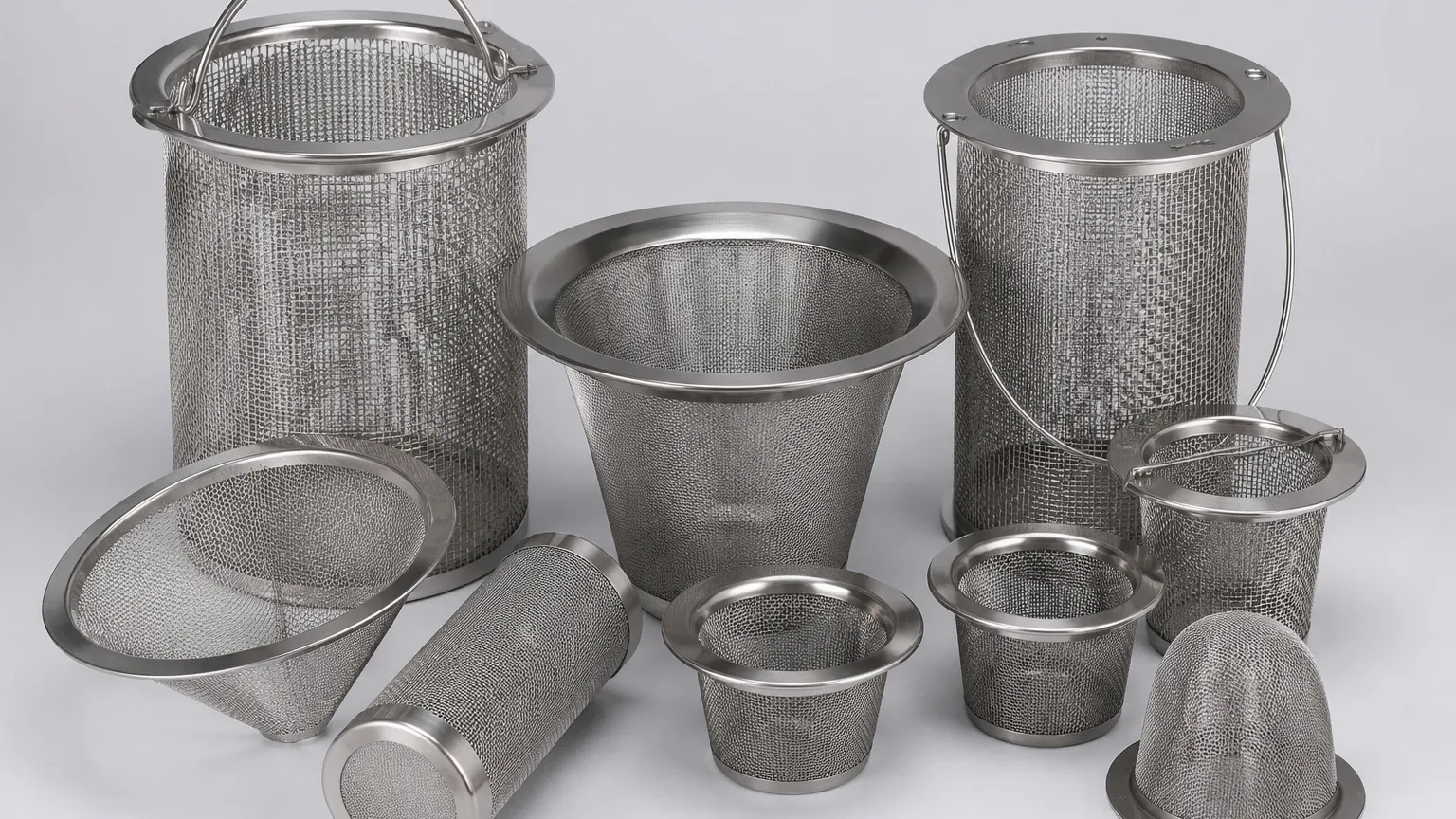
Water Strainers
In industrial fluid handling, the protection of downstream equipment is a primary engineering priority. Water strainers serve as the first line of defense, removing suspended solids and debris from process water, cooling loops, and intake systems. Unlike fine filters that may target sub-micron particles, industrial water strainers are designed to handle high flow rates and significant debris loads while maintaining a low pressure drop. Selecting the correct configuration of Strainers & Baskets is essential for ensuring system longevity and operational efficiency.
The Role of Water Strainers in Industrial Systems
Water strainers are mechanical devices installed in piping systems to remove large particles, scale, and foreign matter. Their primary function is to protect sensitive components—such as pumps, valves, heat exchangers, and spray nozzles—from damage or clogging. In many industrial environments, water is sourced from rivers, lakes, or recycled process loops, all of which contain varying levels of particulate matter.
Without effective straining, these particles can cause abrasive wear on pump impellers, block the narrow passages of plate heat exchangers, or result in costly downtime for manual cleaning of downstream equipment. By implementing robust water strainers, facilities can transition from reactive maintenance to a scheduled, predictable maintenance model.
Engineering Classifications: Simplex, Duplex, and Y-Strainers
The choice of strainer housing design depends heavily on the continuity of the process and the anticipated debris load. Engineers typically categorize these components into three main types:
1. Simplex Basket Strainers
Simplex strainers are used in systems where the flow can be intermittently shut down for cleaning. They feature a single basket chamber. When the pressure differential reaches a specific threshold, the system is paused, the cover is removed, and the basket is cleaned or replaced. These are ideal for batch processes or cooling systems with redundant loops.
2. Duplex (Twin) Basket Strainers
In critical applications where flow cannot be interrupted, duplex strainers are the standard. These units consist of two separate strainer chambers connected by a diverter valve. When one basket becomes clogged, the flow is diverted to the clean chamber, allowing the operator to service the first basket without stopping the process. This is common in chemical processing and continuous cooling water applications.
3. Y-Strainers
Y-strainers are typically used for smaller-diameter pipes or in applications with lower debris concentrations. Their compact, angular design allows for installation in both horizontal and vertical pipelines. While they offer a smaller holding capacity than basket strainers, they are effective for protecting steam traps and sensitive instrumentation.
Material Selection and Corrosion Resistance
For industrial water applications, material compatibility is the most critical factor in determining the service life of the strainer. While cast iron or carbon steel may be sufficient for some closed-loop systems, stainless steel is the preferred material for most demanding environments.
* 304 Stainless Steel: Suitable for general industrial water, food and beverage processing, and mildly corrosive environments. It offers excellent structural integrity and resistance to oxidation.
* 316 Stainless Steel: Recommended for applications involving saline water, chemical-laden process water, or pharmaceutical production. The addition of molybdenum provides enhanced resistance to pitting and crevice corrosion.
* Specialty Alloys: In highly aggressive environments, such as seawater intake or acidic chemical processing, alloys like Monel or Hastelloy may be required for the internal mesh and baskets to prevent premature failure.
Technical Specifications: Mesh, Perforation, and Micron Ratings
The performance of water strainers is defined by the media used within the basket. This media is generally categorized into two layers: the structural perforated plate and the fine wire mesh lining.
Perforated Plate
The outer layer of the basket provides mechanical strength. Common perforation sizes range from 1/32" to 1/2". For coarse straining, the perforated plate may be used alone. However, for finer requirements, it acts as a support for the wire mesh.
Wire Mesh Lining
To achieve higher filtration accuracy, stainless steel wire mesh is layered inside the basket. Mesh count refers to the number of openings per linear inch. A higher mesh count indicates a finer level of straining. For example, a 100-mesh screen will trap particles larger than 150 microns. Engineers must balance the need for fine straining with the risk of rapid clogging and increased pressure drop.
Understanding Pressure Drop (Delta P)
Every component added to a piping system introduces resistance to flow, measured as pressure drop (ΔP). For water strainers, calculating the clean pressure drop is a fundamental step in system design.
A common engineering mistake is undersizing the strainer to save on initial costs, which leads to high velocity through the mesh and excessive pressure loss. A well-designed system should typically aim for a clean pressure drop of less than 2 PSI. As debris accumulates, the pressure drop increases. Most industrial systems are equipped with differential pressure gauges to alert operators when the ΔP reaches a critical level (usually 5-10 PSI), indicating that the basket requires cleaning.
Customization in Industrial Filtration
Standard off-the-shelf strainers often fail to meet the specific geometric or performance requirements of complex industrial plants. Customization is where manufacturers like Kaifil provide significant value. Custom Strainers & Baskets can be engineered to fit existing piping footprints, accommodate unique flow rates, or feature reinforced structures for high-pressure applications.
Customization options include:
* Varying Connection Types: Flanged (ANSI, DIN, JIS), NPT threaded, or socket weld connections to match existing infrastructure.
* Reinforced Baskets: For high-viscosity fluids or high-pressure differentials, baskets can be reinforced with internal ribs or heavier gauge perforated metal.
* Magnetic Inserts: For systems where fine iron or steel particles (sharf) are present, magnetic rods can be added to the basket to capture metallic debris that might otherwise pass through the mesh.
* Specialized Seals: Depending on the temperature and chemical composition of the water, seals can be specified in Buna-N, EPDM, Viton, or PTFE.
Maintenance and Total Cost of Ownership (TCO)
When evaluating water strainers, the initial purchase price is only one component of the total cost of ownership. Engineers should also consider:
1. Ease of Access: Does the housing design allow for quick tool-less entry? Swing-bolt covers are significantly faster to service than bolted-flange covers.
2. Cleaning Cycles: A larger basket area extends the time between cleanings, reducing labor costs and potential downtime.
3. Durability of Internals: High-quality stainless steel baskets manufactured with precision welding will withstand repeated cleaning cycles and ultrasonic baths better than lower-quality alternatives.
4. Disposal Costs: Unlike disposable cartridge filters, stainless steel baskets are cleanable and reusable, making them a more sustainable and cost-effective choice for heavy debris applications.
Application Profiles for Water Strainers
Chemical and Petrochemical Processing
In these sectors, water is used for cooling, steam generation, and as a solvent. Strainers must handle potentially corrosive fluids and operate under high-temperature conditions. 316L stainless steel is often the baseline requirement here to ensure safety and environmental compliance.
Food and Beverage Industry
Water used in food production must meet strict hygiene standards. Strainers in this sector often require polished internal surfaces to prevent bacterial growth and must be compatible with Clean-in-Place (CIP) procedures.
Power Generation and Cooling Towers
Cooling towers are prone to collecting atmospheric dust, biological growth, and scale. Large-scale basket strainers are essential to protect the heat exchangers within the power plant from fouling, which would otherwise drastically reduce thermal efficiency.
Municipal and Industrial Water Treatment
Before water enters a membrane filtration or UV disinfection system, it must be pre-strained to remove large solids. This protects the expensive downstream membranes from physical damage and ensures the efficacy of the treatment process.
Selecting the Right Partner for Filtration Solutions
Choosing the correct water strainer involves more than just matching pipe sizes. It requires a deep understanding of fluid dynamics, material science, and the specific nuances of the application. Engineers should look for manufacturers that offer comprehensive technical support, from initial material selection to the design of custom internal components.
Kaifil specializes in the production of high-performance stainless steel filtration components, providing OEM and customized solutions that address the specific challenges of industrial filtration. By focusing on durability and precision, Kaifil helps technical teams optimize their processes and reduce long-term maintenance burdens.
Conclusion: Confirming Specifications Before Procurement
Before finalizing a purchase for water strainers, procurement and engineering teams should confirm the following data points:
* Maximum Flow Rate: Ensure the housing can handle the peak flow without exceeding velocity limits.
* Particle Size Distribution: Determine the smallest particle that must be removed to protect downstream equipment.
* Operating Pressure and Temperature: Verify that the housing and seal materials are rated for the system’s extremes.
* Available Space: Confirm that there is sufficient clearance for basket removal and maintenance.
By addressing these technical boundaries early in the design phase, facilities can implement a filtration solution that provides reliable protection for years to come. For more information on tailored filtration components, engineers can review product options and application support to find the ideal configuration for their specific industrial needs.