


Disc Filter Ss
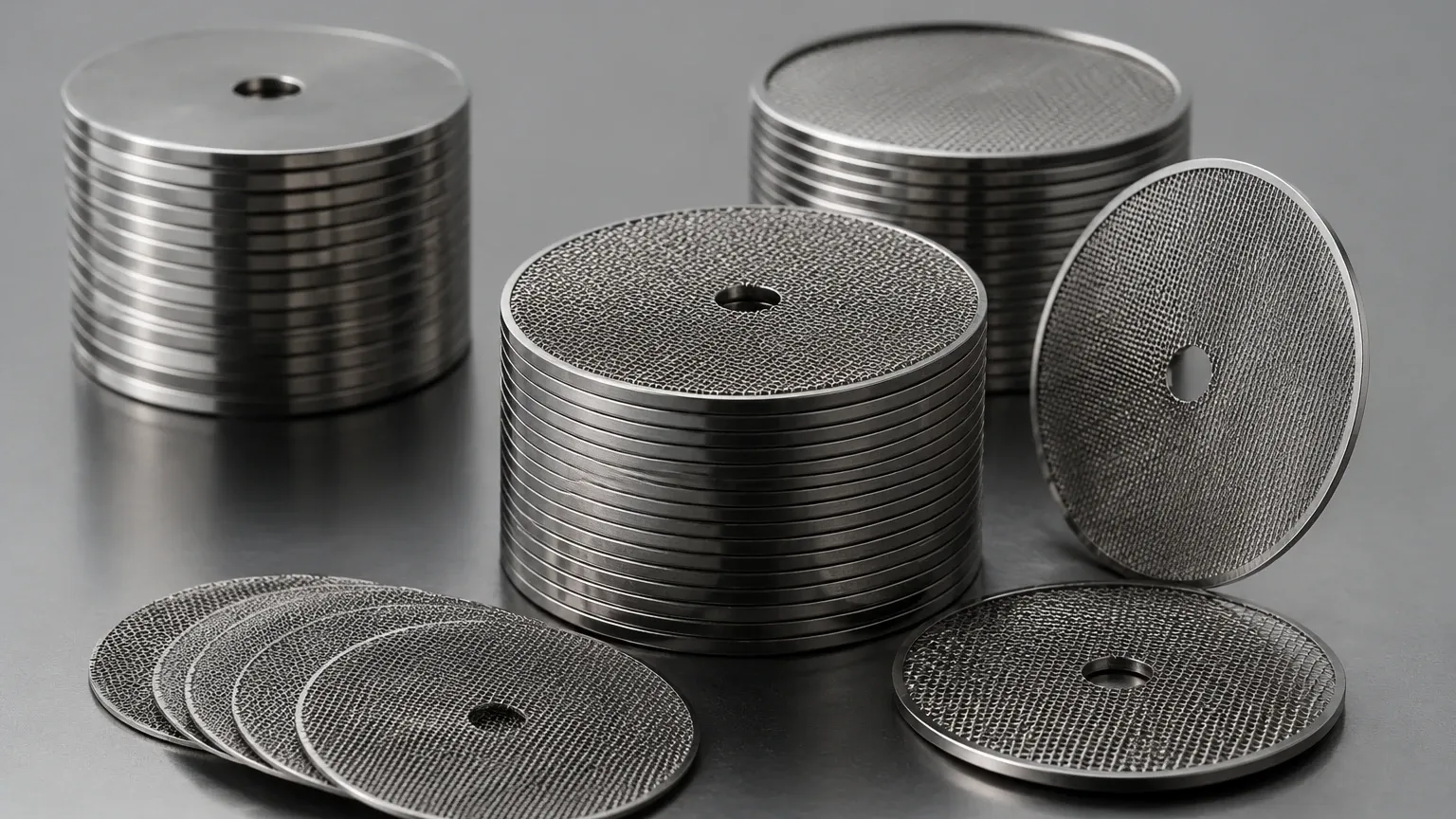
In industrial filtration, the selection of media is a critical decision that impacts the efficiency, longevity, and safety of a production line. The disc filter ss (stainless steel) is a fundamental component used across diverse sectors, including chemical processing, polymer filtration, and pharmaceutical manufacturing. These components are valued for their mechanical strength, thermal stability, and resistance to corrosive environments. As a professional manufacturer, Kaifil provides precision-engineered stainless steel filtration solutions designed to meet the rigorous demands of modern industrial applications.
Understanding the technical nuances of stainless steel filter discs is essential for engineers and purchasing teams. This guide examines the material properties, construction methods, and engineering considerations required to optimize filtration performance.
Material Science and Alloy Selection
The performance of a disc filter ss begins with the alloy. While various metals can be used for filtration, stainless steel remains the industry standard due to its versatility and durability. The most common alloys used in the production of Filter Discs & Packs include AISI 304, 316, and 316L.
AISI 304
This is the most common grade of stainless steel. It offers excellent corrosion resistance in many environments and is highly cost-effective. However, in applications involving high concentrations of chlorides or acidic solutions, it may be susceptible to pitting.
AISI 316 and 316L
Grade 316 contains molybdenum, which significantly enhances its resistance to chloride-induced corrosion and crevice corrosion. 316L is the low-carbon version of 316, which is preferred for components that require extensive welding. The lower carbon content prevents carbide precipitation during the welding process, maintaining the integrity of the corrosion resistance at the joints. For pharmaceutical and food-grade applications, 316L is often the mandatory specification to ensure hygiene and prevent batch contamination.
Weave Types and Filtration Mechanics
The filtration characteristics of a disc filter ss are determined by the weave pattern of the wire mesh. Each weave offers distinct advantages regarding flow rate, pressure drop, and particle retention.
Plain Weave
This is the simplest and most common weave, where each warp wire crosses over and under each shute wire. It provides a consistent aperture size and is ideal for straightforward liquid and gas filtration where high flow rates are a priority.
Twill Weave
In a twill weave, each warp wire passes over and under two shute wires. This allows for the use of heavier wires in a given mesh count, resulting in a more robust mesh. It is often used for finer filtration tasks where the mesh must withstand higher mechanical loads.
Dutch Weave (Plain and Twill)
Dutch weaves use a combination of different wire diameters for the warp and shute. This creates a dense, strong mesh with very small, triangular openings. Dutch weaves are excellent for high-pressure applications, such as hydraulic systems and polymer melt filtration, as they offer superior strength and precise micron ratings.
The Engineering of Multi-Layer Filter Packs
Single-layer filter discs are often insufficient for high-pressure or high-viscosity applications. In these scenarios, engineers specify multi-layer Filter Discs & Packs. These packs consist of several layers of wire mesh, each serving a specific function within the filtration stack.
1. Filtration Layer: The core layer that determines the micron rating of the pack. It is selected based on the specific particle size that must be removed from the process stream.
2. Support Layer: Positioned on the downstream side, this layer consists of a coarser, heavier mesh. Its primary role is to provide mechanical support to the finer filtration layer, preventing it from deforming or rupturing under high differential pressure.
3. Drainage/Protective Layer: Often placed on the upstream side, this layer protects the filtration media from large debris and helps distribute the fluid flow evenly across the surface of the disc.
By combining layers, manufacturers can create a graduated filtration effect, which increases the total dirt-holding capacity and extends the service life of the filter between cleaning cycles.
Manufacturing Processes and Edge Treatment
The integrity of a disc filter ss is not only dependent on the mesh but also on how the disc is finished. Precision in cutting and edging is vital to ensure a proper seal within the filter housing and to prevent bypass.
Stamping and Cutting
Filter discs are typically produced using high-precision stamping dies. This ensures dimensional accuracy and repeatability across large production runs. For custom shapes or small batches, laser cutting or water-jet cutting may be employed to achieve complex geometries without the need for dedicated tooling.
Edging and Binding
To prevent the wire mesh from fraying and to ensure a leak-proof fit, various edging methods are used:
* Spot Welding: Multiple layers are welded together at the perimeter. This is a cost-effective method for simple packs.
* Aluminum or Stainless Steel Rims: The edges of the disc are encased in a metal frame (rim). This provides significant structural rigidity and a flat sealing surface, which is essential for high-pressure housings.
* Sintered Edges: In some high-performance applications, the edges are sintered (diffusion bonded) to create a monolithic structure that is virtually impossible to delaminate.
Performance Evaluation Criteria
When specifying a disc filter ss, engineers must evaluate several performance metrics to ensure the component is fit for purpose. These include:
* Micron Rating (Absolute vs. Nominal): The nominal rating refers to the ability of the filter to retain a certain percentage of particles of a specific size. The absolute rating identifies the largest particle that can pass through the mesh. For critical applications, absolute ratings are generally required.
* Permeability and Pressure Drop: The resistance the filter offers to fluid flow. A high pressure drop can lead to increased energy consumption and potential system failure. Engineers must balance filtration fineness with the required flow rate.
* Dirt Holding Capacity: This indicates how much contaminant the filter can retain before the pressure drop reaches a critical limit. Multi-layer packs typically offer superior dirt-holding capacity compared to single-layer discs.
* Thermal and Chemical Compatibility: The filter must be able to withstand the operating temperature and the chemical composition of the fluid without losing structural integrity or corroding.
Industrial Applications for Stainless Steel Discs
The versatility of the disc filter ss makes it indispensable in several key industries:
Chemical and Petrochemical
In these environments, filters are exposed to aggressive solvents and high temperatures. Stainless steel discs are used to remove catalysts from process streams and to protect sensitive downstream equipment from particulate contamination.
Pharmaceutical and Biotechnology
Hygiene and cleanability are paramount in these sectors. 316L stainless steel filter discs are used in the production of Active Pharmaceutical Ingredients (APIs) and in sterile air filtration. The smooth surface of the wire mesh allows for effective sterilization and prevents bacterial growth.
Food and Beverage
Stainless steel is a "food-safe" material. Filter discs are used in the processing of edible oils, beverages, and syrups to ensure product clarity and the removal of unwanted solids. They are designed to withstand frequent Clean-in-Place (CIP) cycles.
Plastics and Polymer Extrusion
In polymer melt filtration, the filter must withstand extreme pressures and temperatures. Multi-layer packs are used to remove gels and degraded polymers from the melt, ensuring the quality of the final extruded product.
Maintenance and Total Cost of Ownership
One of the primary advantages of a disc filter ss over disposable media is its cleanability. While the initial acquisition cost of a stainless steel disc is higher than that of a paper or fabric filter, the total cost of ownership (TCO) is often lower due to its extended lifespan.
Cleaning Methods
* Ultrasonic Cleaning: High-frequency sound waves create cavitation bubbles that dislodge fine particles trapped deep within the mesh pores.
* Backwashing: Reversing the flow of the fluid through the filter to flush out accumulated contaminants.
* Chemical Cleaning: Using specialized solvents to dissolve organic or inorganic deposits. It is crucial to ensure the cleaning agent is compatible with the stainless steel grade.
* Burn-off/Pyrolysis: In polymer applications, the filter packs can be placed in a furnace to burn off residual plastic, followed by ultrasonic cleaning to restore the mesh.
Replacement Cycles
The replacement cycle of a disc filter ss depends on the severity of the application and the effectiveness of the cleaning process. Over time, repeated cleaning and mechanical stress may lead to work hardening or mesh deformation. Regular inspection for wire breaks or pore enlargement is necessary to maintain filtration standards.
Technical Selection Guide for Engineers
Before purchasing or designing a custom disc filter ss, engineers should confirm the following parameters to ensure optimal performance:
1. What is the target particle size? This determines the micron rating and weave type.
2. What is the maximum operating pressure and temperature? This influences the choice of alloy and the number of support layers required.
3. What is the chemical composition of the fluid? This dictates whether 304, 316, or a more specialized alloy is needed.
4. What are the housing dimensions? Precise measurements are required for the diameter, thickness, and edging style to ensure a proper seal.
5. Is the application batch-based or continuous? This helps determine the required dirt-holding capacity and the feasibility of cleaning cycles.
By addressing these technical requirements, purchasing teams can procure filtration components that not only meet process specifications but also contribute to the overall reliability and efficiency of the industrial system. Kaifil’s expertise in manufacturing custom stainless steel filtration solutions ensures that each disc filter ss is built to the exact standards required for demanding industrial environments.
