


X Large Strainer
In industrial fluid handling, the transition from standard filtration components to high-capacity systems requires a fundamental shift in engineering focus. An x large strainer is not merely a scaled-up version of a standard component; it is a critical piece of infrastructure designed to manage high flow rates, significant particulate loads, and the mechanical stresses inherent in large-diameter piping systems. For engineers and procurement teams in sectors such as chemical processing, water treatment, and heavy industrial manufacturing, selecting the right large-scale filtration solution is essential for protecting downstream equipment like pumps, heat exchangers, and sensitive instrumentation.
Industrial filtration relies on the efficient removal of solids from liquids or gases. When dealing with "extra-large" specifications—typically involving pipe sizes from 8 inches to 24 inches and beyond—the complexity of the design increases. The goal is to maximize the effective filtration area while minimizing the pressure drop across the system. This guide examines the technical considerations, material requirements, and engineering nuances of Strainers & Baskets at an industrial scale.
Engineering Considerations for High-Capacity Strainers
When designing or specifying an x large strainer, the primary engineering challenge is balancing flow velocity with structural integrity. As the diameter of the strainer housing increases, the surface area of the internal basket must increase proportionally to maintain an acceptable Open Area Ratio (OAR). The OAR is the relationship between the total open area of the strainer element and the internal cross-sectional area of the inlet pipe.
For high-capacity applications, a minimum OAR of 4:1 is often recommended. This ensures that even as the basket begins to collect debris, the system does not experience a catastrophic spike in differential pressure (ΔP). Engineers must calculate the clean pressure drop based on the fluid's viscosity and specific gravity. In large-scale systems, a high ΔP can lead to pump cavitation or mechanical failure of the strainer element itself. Therefore, the internal support structure of the basket is just as critical as the filtration mesh.
Furthermore, the velocity of the fluid entering the strainer must be managed. High-velocity flow can cause turbulence within the housing, leading to uneven distribution of particulates and premature clogging of specific sections of the mesh. Large-scale strainers often incorporate internal baffles or specialized inlet geometries to normalize flow and ensure the entire surface area of the basket is utilized effectively.
Material Selection and Corrosion Resistance
The longevity of an x large strainer in demanding environments, such as chemical processing or marine applications, depends heavily on material selection. Stainless steel remains the industry standard due to its superior mechanical properties and resistance to a wide range of corrosive agents.
1. Grade 304 Stainless Steel: This is the most common choice for general industrial applications. It offers excellent durability and resistance to oxidation. It is suitable for water treatment, food and beverage processing, and many chemical environments where high-temperature resistance is required.
2. Grade 316/316L Stainless Steel: For environments involving chlorides, acids, or high-salinity fluids, Grade 316 is preferred. The addition of molybdenum enhances its pitting resistance. The "L" (low carbon) variant is often specified for large welded structures to prevent carbide precipitation during the welding process, which can lead to intergranular corrosion.
3. Specialty Alloys: In extreme cases involving highly aggressive chemicals or ultra-high temperatures, alloys such as Monel, Hastelloy, or Duplex stainless steel may be required. These materials provide the necessary chemical stability to prevent premature failure of the strainer housing and the internal basket.
Beyond the housing and the mesh, engineers must also consider the compatibility of seals and gaskets. In large-scale systems, the surface area of the seal is significant, and any degradation can lead to substantial leaks. Common materials include EPDM for water applications, Viton for high-temperature and chemical resistance, and PTFE for universal chemical compatibility.
Structural Integrity of Large Strainer Baskets
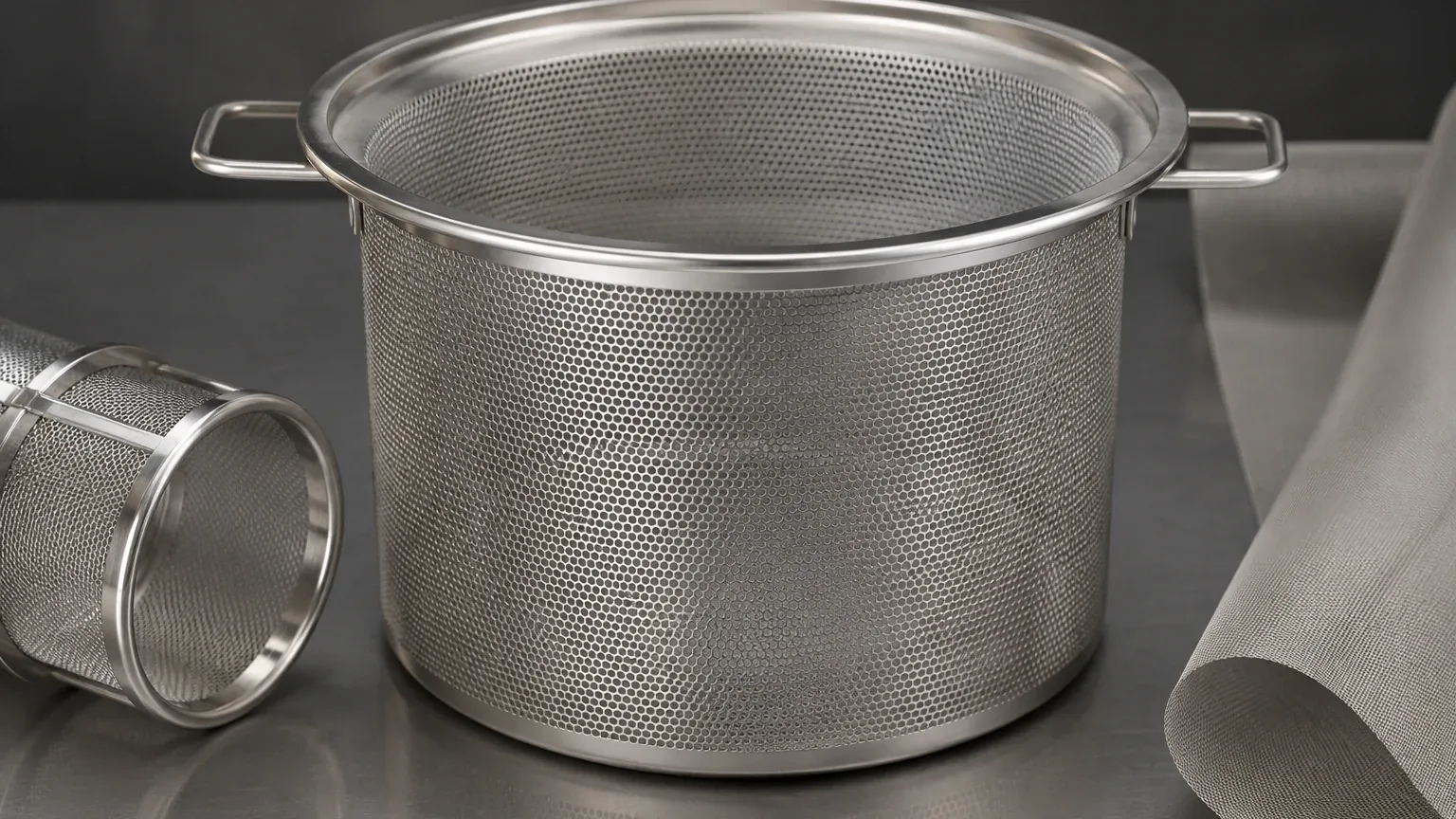
As the physical size of the strainer increases, the mechanical forces acting upon the internal basket become immense. An x large strainer basket must withstand the weight of the collected debris and the force exerted by the fluid flow, especially during surge events or when the basket is heavily loaded.
To prevent the basket from collapsing or deforming, manufacturers like Kaifil utilize reinforced designs. This typically involves a heavy-duty perforated metal backup cylinder that provides the primary structural strength, with a finer wire mesh lining spot-welded or mechanically fastened to the interior or exterior. For extremely large baskets, longitudinal and circumferential stiffening ribs are added to the support cage.
Another critical factor is the "burst pressure" rating of the basket. This is the maximum differential pressure the basket can withstand before mechanical failure occurs. Engineers must ensure that the system's bypass or pressure-relief settings are calibrated to trigger well before the basket's burst pressure is reached. In large-scale operations, a collapsed basket can send debris downstream, causing extensive damage to expensive machinery.
Customization and OEM Requirements
Standard off-the-shelf solutions rarely meet the specific needs of complex industrial plants. Customization is often a necessity when dealing with an x large strainer. Procurement teams must work closely with manufacturers to define the exact parameters of the application.
* Connection Types: While standard ANSI or DIN flanges are common, some systems may require specialized hub connections or custom flange ratings to match existing high-pressure piping.
* Housing Orientation: Depending on the available footprint in a facility, the strainer may need a horizontal, vertical, or offset configuration. Large-scale strainers can be quite heavy, so the design must also include integrated mounting legs or support brackets.
* Filtration Precision: The required micron rating can vary from coarse 1/4" perforations for primary debris removal to fine 20-micron mesh for final stage protection. In large systems, multi-stage baskets (combining different mesh sizes) are sometimes used to extend the maintenance cycle.
* Lifting and Handling: An x large strainer basket, when full of debris, can weigh hundreds of pounds. Custom designs often include lifting lugs, davit arms, or quick-opening covers (such as swing-bolt or T-bolt closures) to facilitate safe and efficient maintenance by a single operator.
Operational Maintenance and Total Cost of Ownership
The total cost of ownership (TCO) for a large-scale filtration system is determined not just by the initial purchase price, but by the efficiency of its maintenance cycle. In high-flow industrial environments, downtime is exceptionally costly. Therefore, the ease of cleaning an x large strainer is a primary operational concern.
Differential pressure gauges are essential for monitoring the state of the strainer. By installing sensors at the inlet and outlet, operators can receive real-time data on the level of clogging. For critical processes where flow cannot be interrupted, a duplex strainer configuration is used. This consists of two large strainer housings connected by a diverter valve, allowing one side to be cleaned while the other remains in operation.
Regular inspection intervals should be established to check for:
* Mesh Integrity: Checking for signs of erosion, wire breakage, or bypass leakage.
* Seal Condition: Inspecting gaskets for compression set or chemical degradation.
* Debris Analysis: Examining the types of solids being captured can provide valuable insights into the health of the upstream system (e.g., excessive metal shavings might indicate pump wear).
By investing in high-quality materials and robust engineering at the outset, companies can significantly reduce the frequency of replacement parts and unexpected system failures. A well-designed stainless steel strainer can last for decades if maintained correctly, providing a reliable barrier against contamination.
Selecting the Right Partner for Large-Scale Filtration
When sourcing an x large strainer, it is vital to partner with a manufacturer that understands the technical rigors of industrial applications. Kaifil provides professional, custom-engineered stainless steel filtration solutions, specializing in the design and production of high-performance Strainers & Baskets for global industrial clients.
From initial material selection and flow calculations to the final manufacturing of precision metal components, the focus remains on durability and filtration accuracy. Whether the application involves chemical processing, hydraulic systems, or large-scale water treatment, the filtration solution must be tailored to the specific flow rates and environmental conditions of the site. By addressing engineering concerns such as pressure drop, structural reinforcement, and material compatibility, technical teams can ensure their systems operate at peak efficiency with minimal risk of contamination or equipment damage.
