


Strainers Y Type
In industrial piping systems, the integrity of downstream equipment such as pumps, control valves, meters, and steam traps depends heavily on the cleanliness of the fluid media. Contaminants—ranging from pipe scale and welding slag to organic debris—can cause catastrophic mechanical failure, erosion, or process contamination. Among the various mechanical tools used to mitigate these risks, strainers y type remain the most versatile and widely utilized solution for the protection of pressurized lines.
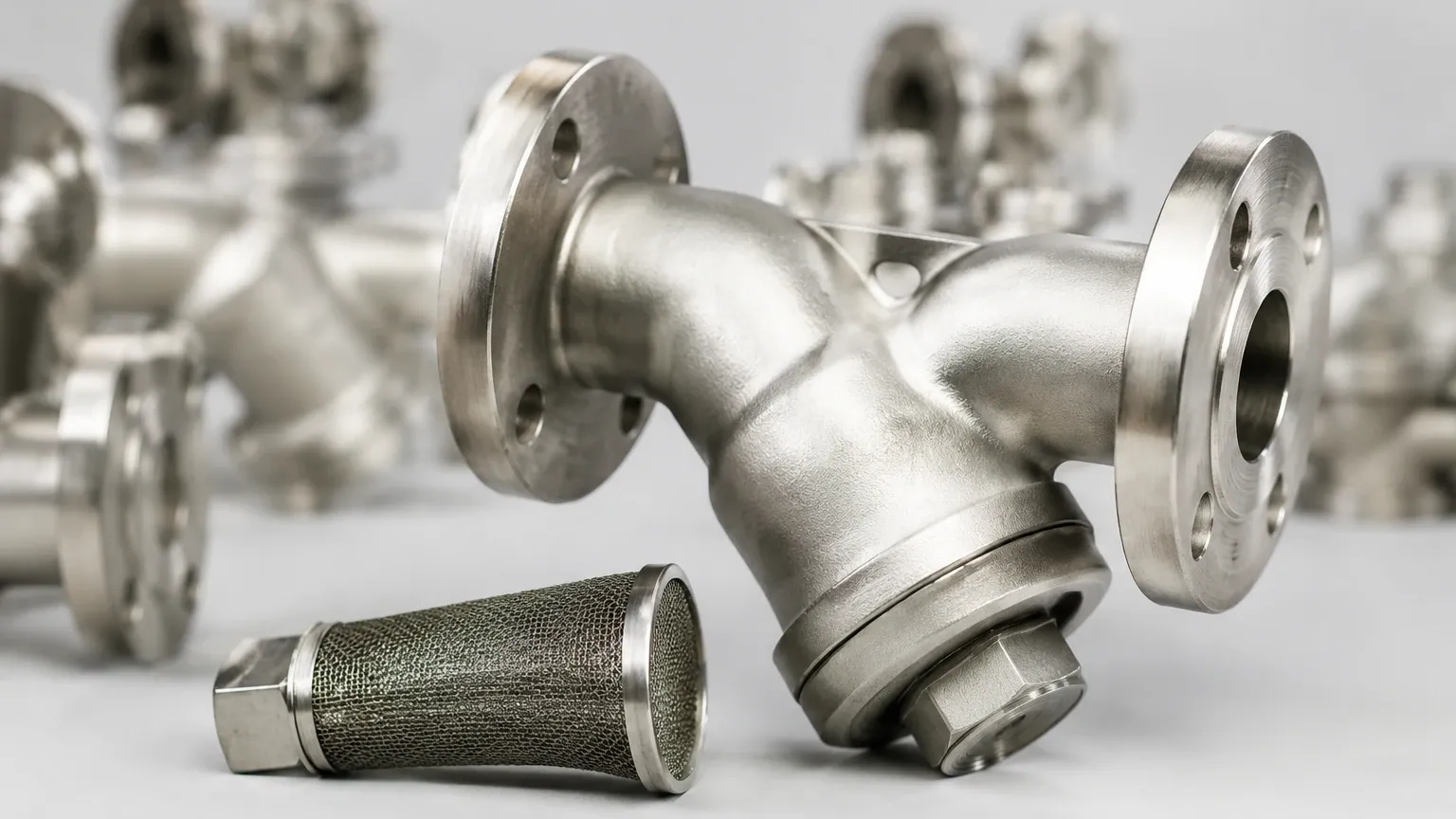
Characterized by their "Y" shaped configuration, these components serve as a fixed-position filtration barrier. Unlike complex filtration systems that may require significant power or automated backwashing, Y-strainers provide a passive, reliable method for removing solids from flowing liquids, gases, or steam. For engineers and procurement teams, selecting the correct configuration requires a deep understanding of fluid dynamics, material compatibility, and the specific mechanical demands of the application environment.
The Role of Y-Type Strainers in Industrial Fluid Systems
The primary function of strainers y type is the mechanical removal of unwanted solids. In a typical industrial setup, these strainers are installed upstream of sensitive components. By capturing particulate matter before it reaches a pump impeller or a precision valve seat, the strainer prevents abrasive wear and clogging.
One of the defining advantages of the Y-type design is its ability to handle high-pressure environments. Because the cylindrical screen is housed within a reinforced body, it can withstand significant internal pressures that might deform or rupture other filter types. This makes them indispensable in steam applications, where high temperatures and pressures are the norm. Furthermore, the compact footprint of the Y-strainer allows it to be integrated into existing piping systems where space is at a premium, providing a high level of protection without requiring extensive structural modifications.
Design Characteristics and Flow Dynamics
The geometry of a Y-strainer is engineered to balance filtration efficiency with minimal flow restriction. The "leg" of the Y, which houses the filter element, is typically set at a 45-degree angle to the main flow path. This design allows the fluid to pass through the internal screen with a relatively low pressure drop (Delta P), provided the screen is properly sized for the application.
When fluid enters the strainer, it is forced through the mesh or perforated screen. The solids are trapped on the interior of the screen, while the clean fluid exits through the outlet. The angle of the debris pocket is critical; it creates a collection zone that keeps the trapped material away from the main flow path for as long as possible, preventing the "scouring" effect where flow pushes debris back into the system or prematurely clogs the effective filtration area.
For engineers, the orientation of the strainer is a key design consideration. In horizontal pipelines, the debris pocket should ideally point downward. In steam or gas lines, the pocket is often oriented horizontally to prevent the accumulation of water (condensate) in the pocket, which could cause water hammer or corrosion. In vertical lines, Y-strainers can only be used if the flow is downward, ensuring that gravity assists in directing debris into the collection pocket.
Material Selection: Why Stainless Steel Dominates
Material selection is perhaps the most critical factor in ensuring the longevity of strainers y type. While cast iron or carbon steel bodies are common in low-pressure water applications, stainless steel is the standard for demanding industrial environments.
Kaifil specializes in the manufacture of stainless steel filtration components, utilizing grades such as 304, 316, and 316L. The choice between these materials is dictated by the chemical composition of the fluid and the operating temperature:
* Grade 304 Stainless Steel: Suitable for general-purpose applications, providing excellent resistance to oxidation and many organic chemicals. It is frequently used in food processing and standard industrial water systems.
* Grade 316/316L Stainless Steel: Contains molybdenum, which significantly enhances resistance to chlorides and pitting corrosion. This is the preferred material for chemical processing, marine environments, and pharmaceutical applications where hygiene and corrosion resistance are paramount.
* Specialty Alloys: In highly aggressive environments involving concentrated acids or high-salinity fluids, exotic alloys may be required to prevent stress corrosion cracking and ensure structural integrity over the component's lifecycle.
Technical Specifications: Mesh, Perforation, and Filtration Accuracy
The performance of a Y-strainer is ultimately determined by its internal element. These elements generally fall into two categories: perforated screens and wire mesh screens.
Perforated Screens
These are created by punching a large number of holes into a flat sheet of metal, which is then rolled into a cylinder. Perforated screens are typically used for "coarse" straining, where the goal is to remove larger debris (e.g., stones, metal fragments). They are characterized by the hole diameter, ranging from 1/32" to 1/2".
Wire Mesh Screens
For finer filtration, a wire mesh is layered over a perforated metal support. This allows for much higher precision, with filtration ratings measured in microns. Engineers must consider the "Open Area Ratio"—the relationship between the total area of the holes and the total area of the screen. A higher open area ratio results in a lower initial pressure drop and longer intervals between cleanings.
When specifying a screen, it is a common mistake to choose the finest mesh available. However, an overly fine mesh will clog rapidly, leading to frequent maintenance and potential system downtime. The rule of professional selection is to choose a mesh that is just fine enough to protect the downstream equipment without unnecessarily restricting flow.
Operational Considerations: Pressure Drop and Flow Rate
Every component added to a piping system introduces a degree of resistance to flow, known as pressure drop. In the context of strainers y type, the pressure drop is influenced by the fluid's viscosity, the flow velocity, and the cleanliness of the screen.
Engineers use the Flow Coefficient (Cv) to calculate the expected pressure drop. The Cv value represents the volume of water (in GPM) that will flow through the strainer with a 1 psi pressure drop. As debris accumulates on the screen, the effective open area decreases, and the pressure drop increases exponentially.
It is essential to install pressure gauges upstream and downstream of the strainer. A significant differential in pressure indicates that the screen is reaching its dirt-holding capacity and requires cleaning. Failure to monitor this can lead to screen collapse, where the pressure differential exceeds the structural strength of the mesh, allowing debris to bypass the filter and enter the downstream system.
Maintenance and the Blow-Off Connection
One of the practical advantages of Y-strainers is the ease of maintenance. Most strainers are equipped with a "blow-off" port in the cover of the debris pocket. By installing a blow-off valve, operators can flush out accumulated debris without shutting down the system or dismantling the strainer. This is particularly effective for removing loose sediment and scale.
However, for a thorough cleaning, the system must be depressurized so the strainer cap can be removed and the screen manually inspected. During this process, the gasket or O-ring should be inspected for wear and replaced if necessary to prevent leaks upon reassembly. For processes that cannot afford any downtime, a duplex strainer system—which allows flow to be diverted between two separate strainer chambers—may be a more appropriate choice than a single Y-type unit.
Selecting Between Y-Strainers and Basket Strainers
While Y-strainers are highly effective, they are not the only option for industrial debris removal. When evaluating Strainers & Baskets, engineers must weigh the trade-offs between size, capacity, and maintenance requirements.
Basket strainers typically offer a larger debris-holding capacity and a lower pressure drop than Y-strainers of the same pipe size. They are designed for horizontal lines and are generally easier to clean manually, as the "basket" can be lifted out of the top of the housing. However, basket strainers are usually larger, heavier, and more expensive.
In contrast, Y-strainers are preferred for:
* High-pressure steam and gas applications.
* Systems where space is limited.
* Applications where the concentration of solids is relatively low.
* Vertical downward flow configurations.
Customization for Specific Industrial Requirements
Standard off-the-shelf strainers may not meet the rigorous demands of specialized industrial processes. Customization is often required to ensure compatibility with specific chemical profiles or unique piping layouts. Kaifil provides extensive OEM capabilities, allowing for the customization of several key parameters:
1. Connection Types: Beyond standard NPT threads, strainers can be manufactured with flanged (ANSI, DIN, JIS), socket weld, or butt weld connections to match the structural requirements of the piping system.
2. Reinforced Elements: For high-pressure differentials, the internal mesh can be reinforced with heavy-duty perforated backing or internal support ribs to prevent deformation.
3. Specialty Coatings: In addition to using high-grade stainless steel, internal surfaces can be treated or coated to provide extra protection against specific corrosive agents.
4. Custom Micron Ratings: Precision-engineered wire mesh can be tailored to capture specific particle sizes required by sensitive pharmaceutical or food-grade processes.
When sourcing strainers y type, it is vital to confirm the total cost of ownership. This includes not just the initial purchase price, but the expected lifespan of the component, the ease of obtaining replacement screens, and the impact of the strainer on overall system energy efficiency. By working with a manufacturer that understands the nuances of stainless steel fabrication and industrial filtration principles, engineering teams can ensure their systems remain protected, efficient, and compliant with industry standards.
