


Engineering Perspectives on Coffee Filter Mesh Size for Industrial Applications
In the industrial production of coffee extracts, cold brew concentrates, and large-scale brewing operations, the precision of filtration components is a primary determinant of both product quality and process efficiency. Unlike consumer-grade paper filters, industrial systems rely heavily on permanent, high-precision stainless steel components. Selecting the appropriate coffee filter mesh size is not merely a matter of sediment control; it is a complex engineering decision that impacts flow rates, pressure differentials, extraction yields, and the structural longevity of the filtration system.
For engineers and procurement specialists, understanding the technical nuances of Wire Mesh Filter Cylinders & Tubes is essential for optimizing production lines. This guide examines the relationship between mesh specifications and industrial coffee processing requirements.
Understanding the Fundamentals of Wire Mesh in Coffee Filtration
The term "mesh size" refers to the number of openings per linear inch of the wire cloth. However, in an industrial engineering context, the mesh count must be evaluated alongside wire diameter and the resulting micron rating. The micron rating defines the largest spherical particle that can pass through the mesh, which is the critical metric for ensuring coffee clarity.
Mesh Count vs. Micron Rating
In stainless steel wire mesh production, as the mesh count increases, the size of the openings decreases. For example, a 100-mesh screen has 100 openings per inch. However, two different 100-mesh screens can have different filtration capabilities depending on the wire diameter used. A thinner wire results in a larger open area and a higher micron rating, whereas a thicker wire increases structural strength but reduces the flow area.
For industrial coffee applications, common mesh sizes range from 60 mesh (approximately 250 microns) for coarse primary filtration to 400 mesh (approximately 37 microns) for fine polishing and sediment removal. Selecting the correct coffee filter mesh size requires balancing the need to retain "fines"—microscopic coffee particles—with the need to maintain a consistent flow rate without excessive blinding (clogging).
The Impact of Coffee Filter Mesh Size on Extraction Dynamics
Filtration in coffee processing is a dynamic event. As the liquid passes through the wire mesh, a "filter cake" of coffee grounds begins to form on the surface of the mesh. This cake itself acts as a secondary filtration layer, often capturing particles smaller than the actual mesh openings.
Flow Rate and Pressure Drop
The open area percentage of a filter cylinder determines the initial pressure drop across the medium. If the mesh is too fine (e.g., 500 mesh), the resistance to flow increases significantly, requiring higher pump pressures which can lead to channel formation in the coffee bed and uneven extraction. Conversely, a mesh that is too coarse allows excessive solids to pass through, potentially damaging downstream equipment or resulting in a cloudy final product.
Sediment Control and Sensory Profile
In B2B coffee ingredient manufacturing, the "mouthfeel" and clarity of the extract are strictly controlled. A 200-mesh (75 micron) filter is often considered the industry standard for high-quality commercial drip or immersion brewing. It effectively captures the majority of insoluble solids while allowing the essential oils to pass through, preserving the aromatic profile that paper filters often strip away.
Material Selection and Durability for Industrial Filter Cylinders
Industrial coffee filtration environments are demanding. They involve constant exposure to organic acids, high-temperature water, and rigorous Clean-in-Place (CIP) cycles. Consequently, the material properties of the Wire Mesh Filter Cylinders & Tubes are as important as the mesh size itself.
Stainless Steel Grades: 304 vs. 316L
* Type 304 Stainless Steel: The standard for most food-grade applications. It offers excellent corrosion resistance and structural integrity at a cost-effective price point.
* Type 316L Stainless Steel: Recommended for applications involving high-salinity water or where aggressive chemical descalers are used during maintenance. The addition of molybdenum provides superior resistance to pitting and crevice corrosion.
Weave Types
The geometry of the weave affects both filtration precision and the ease of cleaning:
* Plain Weave: The most common type, where wires cross over and under each other. It provides a consistent coffee filter mesh size and is easy to backwash.
* Twill Weave: Used for heavier wires or finer meshes where the wire is too stiff for a plain weave. This is often found in high-pressure hydraulic-style coffee extraction.
* Dutch Weave: This weave uses different diameters for the warp and weft wires, creating a dense, tortuous path. Dutch weave cylinders are excellent for high-pressure filtration where extreme durability is required.
Comparative Analysis: Selecting Mesh Sizes for Specific Brewing Methods
Different industrial coffee processes require specific filtration strategies. Engineers must match the mesh specification to the particle size distribution (PSD) of the coffee grounds being processed.
| Application | Typical Mesh Size | Micron Rating (Approx.) | Engineering Rationale |
| :— | :— | :— | :— |
| Cold Brew (Large Scale) | 60 – 100 Mesh | 250 – 150 μ | Coarse grounds require high flow; a larger mesh prevents premature blinding during long steep times. |
| Industrial Drip / Batch | 150 – 200 Mesh | 100 – 75 μ | Standard balance for medium-grind coffee; ensures clarity without stripping oils. |
| Espresso-Based Extracts | 325 – 400 Mesh | 45 – 37 μ | Fine grinds produce significant silt; ultra-fine mesh is required to prevent sediment in concentrates. |
| Pre-Bottling Polishing | Dutch Weave | < 20 μ | Final stage to ensure absolute clarity and shelf stability of RTD (Ready-to-Drink) beverages. |
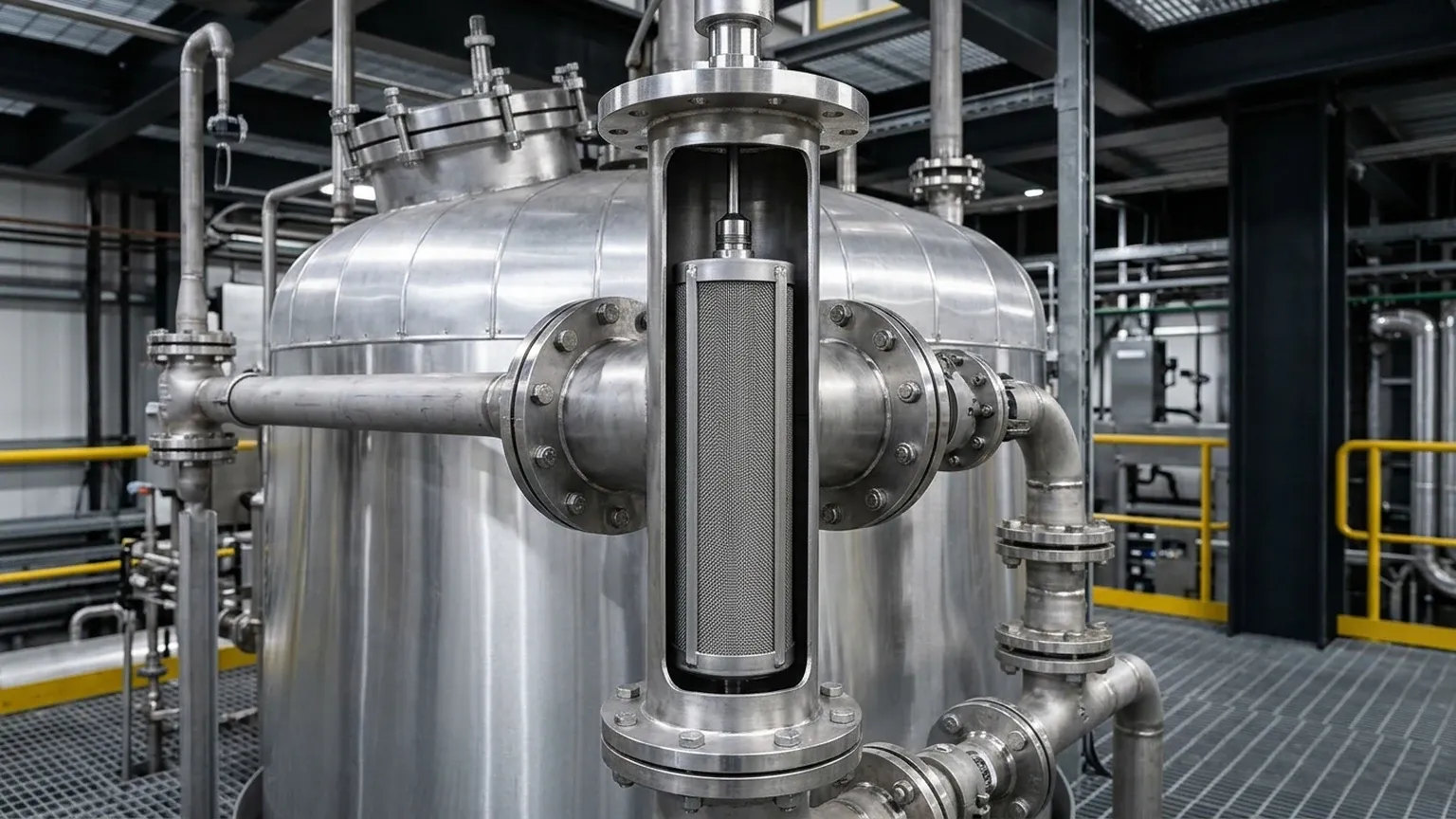
Structural Integrity of Wire Mesh Filter Cylinders & Tubes
In a B2B setting, a filter is often a structural component of a larger machine. When specifying Wire Mesh Filter Cylinders & Tubes, engineers must consider the mechanical loads. A fine 300-mesh screen is delicate; if subjected to high-pressure differentials, it can deform or burst.
To prevent this, industrial filter cylinders are often designed with a multi-layer construction:
1. Filtration Layer: The specific coffee filter mesh size required for the process.
2. Support Layer: A coarser, heavy-duty mesh or perforated metal core that provides the necessary rigidity to withstand pump pressure.
3. Protective Outer Layer: Often used in backwashing systems to protect the fine mesh from mechanical damage during the cleaning cycle.
Advanced welding techniques, such as plasma or laser welding, are critical at the seams. These methods ensure there are no "bypass" points where unfiltered liquid can leak through, and they provide a smooth surface that resists bacterial growth.
Maintenance and Cleaning Protocols for Permanent Stainless Steel Filters
The total cost of ownership (TCO) for industrial filtration is heavily influenced by the ease of maintenance. Unlike disposable filters, stainless steel cylinders are designed for years of service, provided they are cleaned correctly.
Addressing Filter Blinding
Blinding occurs when coffee oils and micro-fines become trapped within the mesh apertures. For fine coffee filter mesh sizes, standard rinsing may be insufficient. Industrial operators typically employ:
* Ultrasonic Cleaning: High-frequency sound waves create cavitation bubbles that dislodge particles from the deepest parts of the weave.
* Chemical CIP: Caustic or acidic solutions are circulated to dissolve coffee oils and mineral scale.
* Backpulsing: Reversing the flow of liquid at high pressure to push trapped solids out of the mesh.
Procurement Considerations: What Engineers Must Specify
When sourcing custom filtration components from a manufacturer like Kaifil, providing a complete technical data sheet is vital for ensuring the final product meets the application's demands. Buyers should confirm the following parameters:
1. Exact Micron Rating: Do not rely on "mesh count" alone; specify the required particle retention.
2. Differential Pressure (Delta P): Define the maximum pressure the cylinder will encounter before cleaning is required.
3. End Cap Configuration: Specify if the tube requires threaded fittings, flanges, or open ends for integration into existing housings.
4. Compliance: Ensure the materials and manufacturing processes meet FDA or equivalent food-safety standards for coffee contact.
Conclusion
Selecting the optimal coffee filter mesh size is a balancing act between fluid dynamics and particulate separation. By utilizing high-quality Wire Mesh Filter Cylinders & Tubes, industrial coffee producers can achieve a consistent, high-quality extract while minimizing downtime and waste. Whether the application is a high-volume cold brew system or a precision extraction unit for coffee concentrates, the engineering of the stainless steel mesh remains the heart of the process. Through careful material selection and structural design, these components provide the reliability and performance required in modern food and beverage manufacturing.
