


Strainer Y Type Flanged
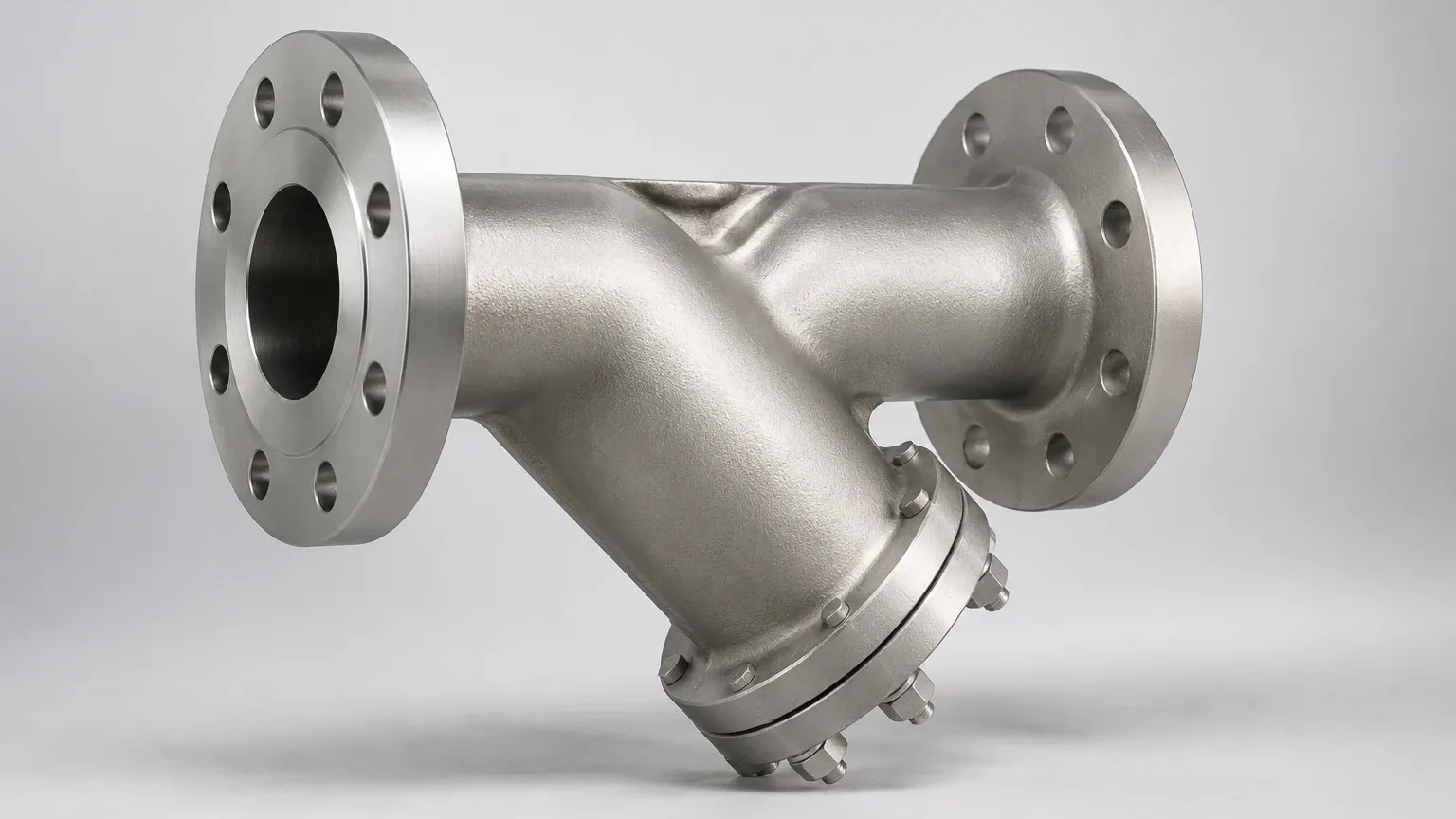
In industrial fluid handling systems, the protection of sensitive downstream equipment is a critical engineering priority. Mechanical components such as pumps, control valves, flow meters, and heat exchangers are susceptible to damage or operational failure caused by entrained solids, scale, and debris. The strainer y type flanged serves as a primary line of defense, utilizing a compact, slanted cylinder design to trap particulate matter while maintaining system flow.
Unlike temporary startup strainers, the flanged Y-type strainer is designed for permanent installation in pressurized pipelines. Its name is derived from its geometric configuration, where the filter element housing intersects the main flow path at an angle, creating a "Y" shape. This design allows for the collection of debris in a pocket that is offset from the primary flow, minimizing the impact on pressure drop until the screen requires cleaning. For engineers and procurement teams, understanding the technical nuances of housing materials, mesh specifications, and flanged connection standards is essential for optimizing system reliability and total cost of ownership.
Engineering Fundamentals of Y-Type Strainers
The fundamental advantage of a strainer y type flanged lies in its versatility across both liquid and gaseous media. While basket strainers are often preferred for high-solids loading in liquid lines, the Y-type configuration is uniquely suited for high-pressure steam, air, and gas applications. The compact profile allows it to withstand higher internal pressures than many other strainer geometries of comparable size.
The "Y" Configuration and Flow Dynamics
When fluid enters the inlet of a Y-type strainer, it is directed into the interior of a cylindrical screen or perforated basket. As the fluid passes through the mesh to the outlet, solids are retained on the upstream side of the media. Because the debris collection chamber is angled, it can be positioned to utilize gravity in horizontal lines, or oriented to accommodate vertical downward flow. This flexibility is a significant advantage in tight mechanical rooms or complex skid designs where space is at a premium.
Pressure Ratings and Standards
Flanged Y-type strainers are typically manufactured to meet specific international standards, such as ASME B16.34 for valves and pressure vessels and ASME B16.5 for pipe flanges. Common pressure classes include Class 150, 300, and 600. The choice of pressure class dictates the thickness of the housing walls and the robust nature of the flanged ends. In high-temperature applications, such as saturated steam lines, the pressure-temperature rating of the material (e.g., CF8M stainless steel or WCB carbon steel) must be cross-referenced with the operating conditions to ensure structural integrity.
The Advantages of Flanged Connections in Industrial Filtration
While threaded or socket-weld connections are common for small-bore piping, the strainer y type flanged is the standard for industrial systems involving larger pipe diameters or high-pressure requirements. Flanged connections offer several distinct engineering benefits:
1. Ease of Installation and Removal: Flanged ends allow the strainer to be bolted directly into the piping system. This simplifies the initial installation and, more importantly, allows for the entire unit to be removed for major overhauls or replacement without cutting the pipe.
2. Superior Sealing Integrity: In systems subject to thermal expansion, vibration, or high pressure, flanged joints—when combined with the appropriate gasket material—provide a more reliable seal than threaded connections, which may develop leaks over time due to thread galling or vibration-induced loosening.
3. Standardization: Using flanged connections ensures compatibility with existing industrial infrastructure. Whether following ANSI (American), DIN (European), or JIS (Japanese) standards, flanged strainers allow for precise alignment and predictable face-to-face dimensions.
For systems requiring frequent maintenance or those handling hazardous chemicals, the ability to quickly isolate and unbolt a flanged unit is a critical safety and efficiency factor. This is particularly relevant when selecting Strainers & Baskets for heavy-duty industrial service.
Material Selection and Chemical Compatibility
Selecting the correct material for a strainer y type flanged is a multi-variable decision involving corrosion resistance, temperature limits, and mechanical stress. At Kaifil, the focus is often on stainless steel alloys due to their durability in demanding environments.
Stainless Steel (304 and 316L)
Stainless steel is the material of choice for the pharmaceutical, food and beverage, and chemical processing industries. Grade 304 provides excellent resistance to atmospheric corrosion and many organic and inorganic chemicals. However, for environments involving chlorides or high-salinity fluids, Grade 316L is preferred. The addition of molybdenum in 316L enhances its resistance to pitting and crevice corrosion. Furthermore, the low carbon content (the "L" in 316L) minimizes carbide precipitation during welding, ensuring the integrity of the flanged joints.
Specialty Alloys and Coatings
In highly aggressive chemical environments, such as those involving concentrated acids, standard stainless steels may be insufficient. In these cases, engineers may specify duplex stainless steels or high-nickel alloys. Additionally, the internal screen—the most vulnerable part of the strainer—must be made of a material at least as resistant as the housing to prevent premature failure of the filtration media.
Sizing and Performance Metrics: Managing Pressure Drop
One of the most common mistakes in strainer selection is sizing based solely on the pipe diameter. A properly engineered strainer y type flanged must be sized based on the flow rate, viscosity of the fluid, and the allowable pressure drop (Clean $\Delta P$).
The Importance of the Screen-to-Pipe Area Ratio
The "open area ratio" is the relationship between the total area of the holes in the strainer screen and the cross-sectional area of the inlet pipe. A higher ratio—typically 4:1 or 6:1—means the strainer can accumulate more debris before the pressure drop becomes excessive. This ratio is influenced by the mesh count; a finer mesh has less open area per square inch, requiring a larger housing or more frequent cleaning to maintain flow.
Calculating Pressure Drop
As fluid passes through the mesh, energy is lost due to friction and turbulence. This is expressed as the pressure drop. If the $\Delta P$ is too high, it can lead to cavitation in downstream pumps or insufficient flow to process equipment. Engineers must account for the viscosity of the fluid; high-viscosity liquids (like heavy oils or syrups) require much larger mesh openings or significantly oversized strainers to keep the pressure drop within acceptable limits.
Maintenance and Operational Longevity
The performance of a strainer y type flanged is directly tied to the consistency of its maintenance. Because these units are designed to collect solid waste, they will eventually clog if not serviced.
Blow-off Connections
Most flanged Y-strainers feature a drain port in the cover or the "leg" of the Y. By installing a blow-off valve, operators can flush out accumulated debris without shutting down the system or opening the strainer. This is effective for loose, granular solids. However, for fibrous materials or sticky residues, manual cleaning of the screen is necessary.
Screen Cleaning and Replacement
When the pressure differential across the strainer reaches a predetermined limit (often 5-10 psi over the clean $\Delta P$), the system should be bypassed or shut down to remove the screen. The flanged cover is unbolted, and the screen is extracted. It is vital to inspect the screen for signs of mechanical deformation or "blindage" (where particles are permanently wedged in the mesh). Using high-quality stainless steel mesh from specialized manufacturers ensures that the screen can withstand multiple cleaning cycles without losing its filtration accuracy.
Gasket Maintenance
Each time the strainer cover is removed for cleaning, the gasket should be inspected. In high-pressure flanged systems, reusing a compressed gasket is a common cause of external leaks. Keeping a stock of compatible gaskets (PTFE, EPDM, or graphite-filled) is a best practice for industrial maintenance teams.
Selecting the Right Strainers & Baskets for Your Application
Choosing between a Y-type and a basket-type strainer depends on the specific operational context. While the strainer y type flanged is excellent for high pressure and gas service, basket strainers offer larger storage capacities and are easier to clean in liquid service.
When evaluating Strainers & Baskets, engineers should confirm the following data points before procurement:
* Fluid Characteristics: Viscosity, density, and chemical composition.
* Particle Profile: The size and type of solids to be removed (this determines the mesh or perforation size).
* Operating Conditions: Maximum operating pressure and temperature.
* Flow Rate: Minimum, normal, and maximum flow rates to calculate velocity and $\Delta P$.
* Installation Orientation: Horizontal or vertical (downward) flow.
By focusing on these technical parameters, purchasing teams can ensure they receive a component that not only fits the physical dimensions of the pipeline but also meets the long-term performance requirements of the facility. A well-specified strainer reduces downtime, protects expensive machinery, and ensures the purity of the process fluid, contributing to the overall efficiency of the industrial operation.
