


Zurn Wye Strainers
In industrial fluid handling and piping systems, the protection of downstream equipment is a primary engineering concern. Debris, scale, and particulate matter can cause catastrophic failure in pumps, control valves, and flow meters. Among the most common mechanical solutions for this issue are wye strainers. While many brands manufacture these components, Zurn wye strainers have become a staple in commercial and light industrial plumbing due to their standardized designs and availability.
However, selecting the right strainer involves more than just picking a brand name. Engineers must evaluate the specific filtration requirements, material compatibility, and flow dynamics of their application. This guide examines the technical aspects of wye strainers, the specific characteristics of Zurn models, and how custom-engineered Strainers & Baskets can optimize performance in demanding industrial environments.
The Fundamental Mechanics of Wye Strainers
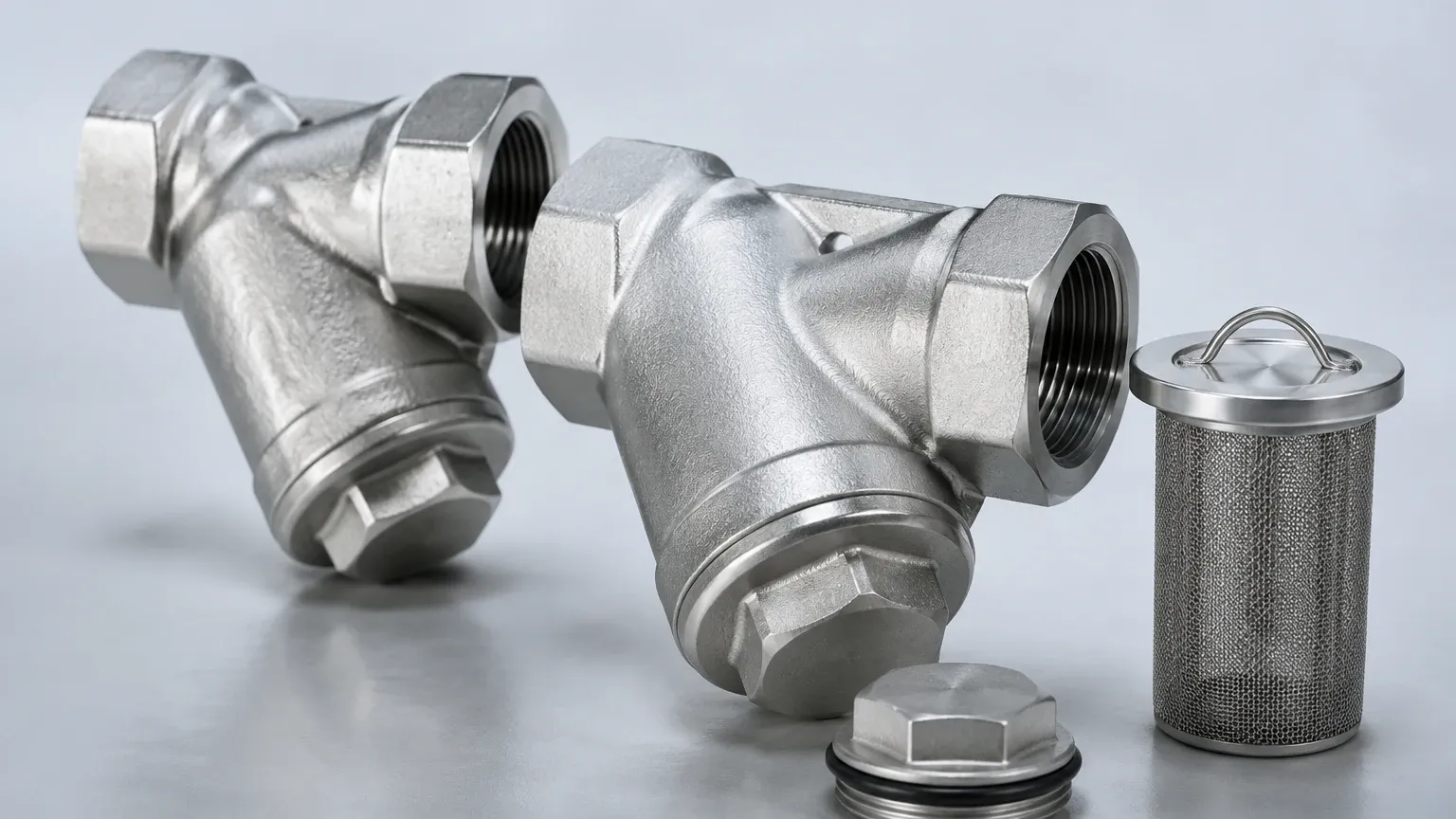
A wye strainer, named for its "Y" shape, is a device used to mechanically remove solids from flowing liquids or gases. The design features a diagonal cylinder that houses the straining element—typically a perforated metal sheet or a wire mesh screen. As fluid enters the strainer, it is forced through the screen, which traps contaminants while allowing the cleaned fluid to continue through the outlet.
The primary advantage of the wye configuration is its versatility. These units can be installed in either horizontal or vertical piping runs. In vertical installations, the flow must be downward to ensure that gravity assists in directing the trapped debris into the collection leg. This configuration is particularly effective in steam applications where condensate needs to be managed alongside particulate removal.
Technical Specifications of Zurn Wye Strainers
When evaluating zurn wye strainers, technical professionals typically focus on several key parameters: material of construction, pressure rating, and connection type. Zurn offers a range of models designed for different service environments:
Material Composition
Standard models are often constructed from cast iron, ductile iron, or bronze.
- Cast Iron: Suitable for non-corrosive environments and moderate temperatures. It is commonly used in HVAC and water distribution.
- Bronze: Preferred for domestic water systems and applications where corrosion resistance is required, though it is limited by higher costs and lower pressure thresholds compared to steel.
- Ductile Iron: Offers higher strength and impact resistance than standard cast iron, making it suitable for more rigorous industrial settings.
Pressure and Temperature Ratings
Zurn wye strainers are generally categorized by their ASME/ANSI classes, such as Class 125 or Class 250. These ratings define the maximum allowable working pressure (MAWP) at specific temperatures. For instance, a Class 125 cast iron strainer might be rated for 200 psi at 150°F, but that rating drops significantly as the temperature of the fluid increases. Engineers must consult pressure-temperature charts to ensure the housing can withstand the surge pressures and thermal stresses of the system.
Connection Types
To facilitate integration into various piping architectures, these strainers are available with threaded (NPT), flanged, or solder-joint connections. Flanged connections are typically preferred in industrial settings for larger pipe diameters (2" and above) because they allow for easier removal and maintenance without cutting the pipe.
Evaluating Filtration Efficiency: Mesh vs. Perforation
The most critical component of any strainer is the internal element. While the housing provides the structural integrity, the screen determines the filtration efficiency. In standard zurn wye strainers, the default screen is often a stainless steel perforated sheet.
Perforated Screens
Perforated screens are characterized by the hole diameter (e.g., 1/16", 1/8"). These are robust and suitable for removing large debris like rocks, weld slag, or pipe scale. However, they are ineffective against fine particulates. In many industrial processes, such as chemical manufacturing or food processing, a perforated screen alone is insufficient.
Wire Mesh Liners
For finer filtration, a wire mesh liner is added to the perforated basket. Mesh is measured by the number of openings per linear inch. A 20-mesh screen has 20 openings per inch, while a 100-mesh screen has much smaller openings capable of trapping particles down to approximately 150 microns.
When specifying Strainers & Baskets, it is essential to calculate the "Open Area Ratio." This is the ratio of the total area of the holes in the screen to the internal cross-sectional area of the inlet pipe. A ratio of 4:1 is generally considered the industry standard for ensuring that the strainer does not cause an excessive pressure drop when partially clogged.
Material Selection and Chemical Compatibility
While Zurn provides reliable standard housings, many industrial applications require specialized materials to prevent corrosion or contamination. Stainless steel (specifically grades 304 and 316) is the preferred material for filtration components in the pharmaceutical, food and beverage, and chemical industries.
304 Stainless Steel
304 stainless steel offers excellent resistance to a wide range of atmospheric environments and many corrosive media. It is the standard for general industrial filtration where high-strength and basic corrosion resistance are required.
316 Stainless Steel
In environments containing chlorides or high temperatures, 316 stainless steel is necessary. The addition of molybdenum enhances its resistance to pitting and crevice corrosion. For engineers working with brine, acidic chemicals, or high-purity water, ensuring that the internal Strainers & Baskets are made of 316L (low carbon) stainless steel is vital for longevity and product integrity.
Installation and Maintenance Best Practices
The performance of zurn wye strainers is heavily dependent on proper installation and a consistent maintenance schedule. Failure to adhere to these practices often leads to increased energy costs due to pressure drops or downstream equipment damage.
Orientation and Flow Direction
Every wye strainer has a flow arrow cast into the body. Reversing the flow will not only result in poor filtration but can also collapse the internal screen. The collection leg must point downward. In steam service, the strainer should be installed horizontally with the leg in a horizontal plane (on its side) to prevent water from collecting in the pocket, which could lead to water hammer.
The Blow-Down Process
Many wye strainers include a plugged hole in the cover of the collection leg. This can be replaced with a blow-down valve. This allows the operator to flush out trapped debris without stopping the flow or disassembling the unit. For high-load systems, automated blow-down valves can be programmed to open at specific intervals.
Monitoring Differential Pressure
The most effective way to determine when a strainer needs cleaning is by monitoring the differential pressure (ΔP) across the unit. As the screen becomes clogged, the pressure drop increases. If the ΔP exceeds the manufacturer's recommended limit (typically 5-10 psi for many industrial applications), the screen must be cleaned. Operating a strainer with an excessive pressure drop can lead to "media migration," where the screen ruptures and sends the trapped debris—and pieces of the screen itself—into the downstream equipment.
Overcoming Limitations of Standard Off-the-Shelf Strainers
While zurn wye strainers are excellent for general-purpose applications, they may lack the precision required for specialized industrial processes. This is where custom manufacturing becomes essential. Standard strainers often come with a limited selection of screen sizes and materials.
Customized filtration solutions allow engineers to specify:
1. Exact Micron Ratings: Tailoring the mesh to the specific particle size that must be excluded.
2. Reinforced Baskets: For high-pressure applications where standard screens might buckle.
3. Magnetic Inserts: To trap fine ferrous particles that might otherwise pass through a standard mesh.
4. Specialty Coatings: Such as PTFE or epoxy for extreme chemical resistance.
By integrating high-performance Strainers & Baskets into existing housings, or by commissioning custom-built strainer assemblies, facilities can achieve higher filtration efficiency and lower total cost of ownership (TCO).
Critical Factors for Procurement and Engineering Teams
Before purchasing or specifying a wye strainer system, technical teams should confirm the following data points to ensure system compatibility:
* Fluid Properties: What is the viscosity and specific gravity of the fluid? Higher viscosity fluids require larger screen surface areas to maintain flow rates.
* Contaminant Loading: Is the debris constant or a one-time occurrence (like startup scale)? High loading requires larger collection legs or duplex strainer configurations.
* Maximum Flow Rate: Ensure the Cv value (flow coefficient) of the strainer matches the system requirements at the maximum expected flow.
* Gasket Compatibility: Standard gaskets (like EPDM or Buna-N) may not be suitable for all chemicals. Confirm that the seals in the strainer cover are compatible with the process fluid.
* Maintenance Access: Is there enough clearance to remove the basket for cleaning? Wye strainers require significant space below or to the side of the pipe for screen removal.
Conclusion
Zurn wye strainers provide a foundational solution for protecting piping systems from large-scale debris. However, for industrial applications where precision, durability, and chemical resistance are paramount, the focus must shift to the engineering of the internal components. Understanding the relationship between the housing and the Strainers & Baskets allows engineers to design systems that are not only reliable but also optimized for specific process requirements. Whether it is selecting the correct mesh for a pharmaceutical line or ensuring the pressure rating is sufficient for a hydraulic system, factual technical evaluation is the key to successful filtration.
