


Zurn Y Strainers
In industrial and commercial piping systems, the protection of downstream equipment is a critical engineering priority. Mechanical components such as pumps, control valves, meters, and steam traps are highly susceptible to damage from scale, rust, jointing compounds, and other foreign debris. Among the most common solutions for this protection are Y-strainers, with Zurn Y strainers serving as a widely recognized standard in the plumbing and industrial sectors.
Understanding the technical specifications, material limitations, and maintenance requirements of these components is essential for engineers and facility managers. While standard off-the-shelf units provide a baseline of protection, the efficiency of any filtration system depends heavily on the internal Strainers & Baskets that perform the actual separation of solids from the fluid stream. This article explores the engineering fundamentals of Y-strainers, their application in demanding environments, and the critical factors involved in selecting the right filtration media.
Engineering Fundamentals and Design Characteristics
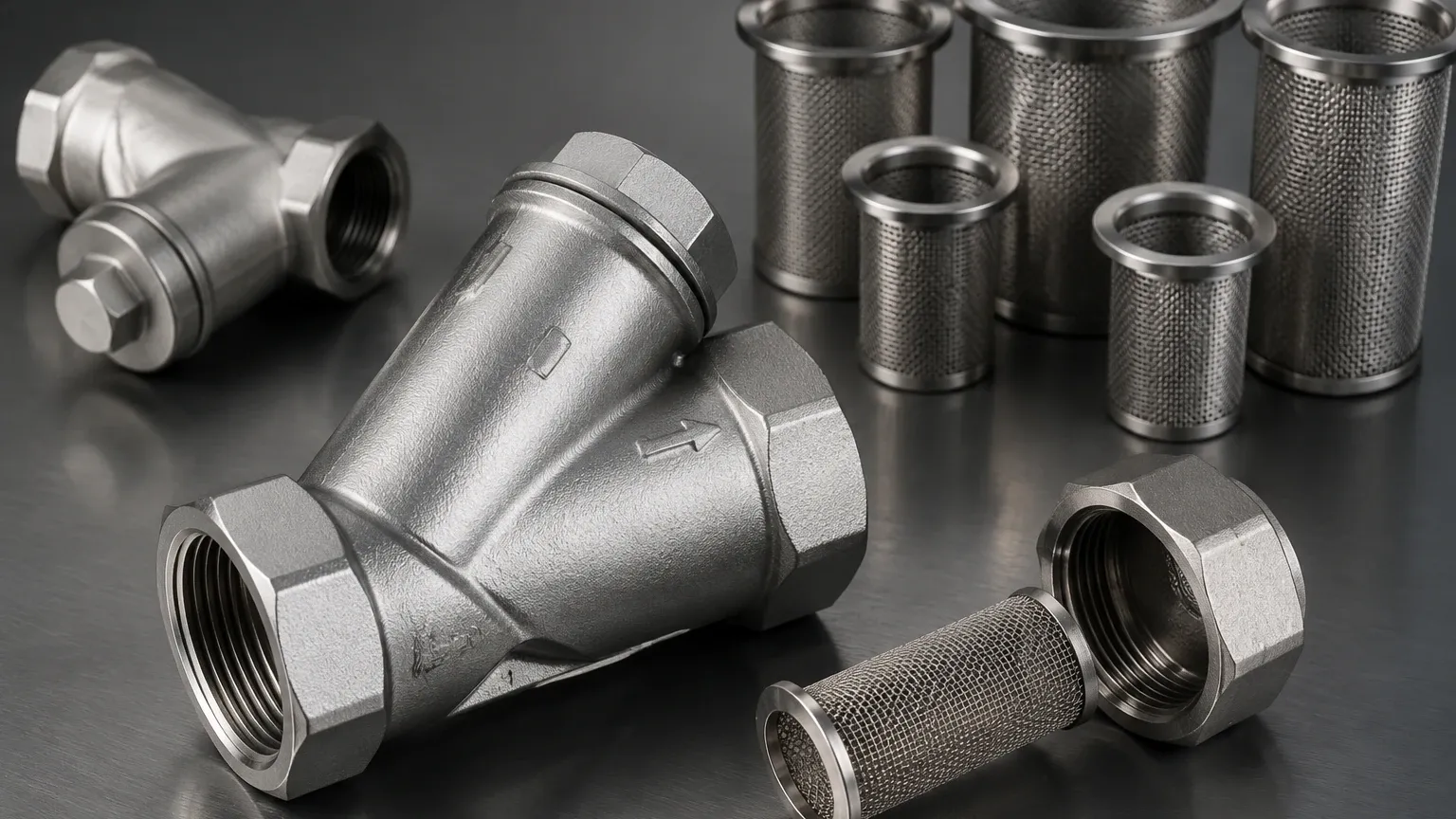
The Y-strainer derives its name from its physical configuration, where the straining leg intersects the main flow pipe at an angle, creating a "Y" shape. This design is engineered to remove solids from flowing liquids or gases using a perforated or wire mesh straining element. The primary advantage of the Y-configuration is its versatility; it can be installed in either horizontal or vertical (downward flow) piping orientations.
From a fluid dynamics perspective, the angle of the straining leg—typically 45 degrees—is designed to minimize pressure drop while providing a collection chamber for debris. As the fluid enters the strainer, it is forced through the internal screen. The debris is trapped on the interior of the screen, while the cleaned fluid continues through the outlet.
Zurn Y strainers are frequently utilized in water-based systems, but their application extends to steam, gas, and oil (WOG) services. The choice of a Y-strainer over a basket strainer usually depends on the concentration of solids in the fluid. Y-strainers have a smaller dirt-holding capacity compared to basket strainers but are more compact and generally rated for higher pressures. They are ideal for applications where the amount of debris is relatively low or where the system can be frequently blown down through a blow-off connection.
Material Selection for Industrial Environments
The longevity of a strainer in an industrial setting is dictated by its material compatibility with the process fluid and the surrounding environment. Standard Zurn Y strainers are manufactured in several primary materials, each suited for specific pressure and temperature ranges:
1. Cast Iron: Commonly used for water and steam services in non-corrosive environments. These are typically rated for Class 125 or Class 250 service. While cost-effective, cast iron is brittle and has limited resistance to thermal shock and corrosion.
2. Bronze: Often selected for potable water applications and marine environments due to its resistance to dezincification and atmospheric corrosion. Bronze strainers are suitable for moderate pressure and temperature applications.
3. Stainless Steel: For pharmaceutical, chemical processing, and food and beverage industries, stainless steel (typically 304 or 316) is the standard. It offers superior resistance to corrosion, high temperatures, and chemical attack.
When evaluating zurn y strainers for specific projects, engineers must also consider the gasket and seal materials. For steam applications, high-temperature graphite or synthetic fiber gaskets are required, whereas nitrile or EPDM seals may be sufficient for standard water service. Failure to align the material specifications with the chemical profile of the fluid can lead to premature housing failure or bypass leakage.
The Role of Internal Strainers & Baskets
The external housing of a strainer provides the pressure vessel, but the internal element—the screen or basket—defines the filtration performance. In the context of industrial filtration, the precision of these Strainers & Baskets is what determines the protection level for downstream equipment.
Perforation vs. Mesh
Most Y-strainers come standard with a perforated metal screen. Perforations are typically measured in inches (e.g., 1/16" or 1/8") and are suitable for removing larger particles. However, many industrial processes require finer filtration, which necessitates the use of a wire mesh liner. Wire mesh is measured by the number of openings per linear inch. For example, a 20-mesh screen has 20 openings per inch, while a 100-mesh screen provides much finer filtration, capable of trapping particles down to approximately 150 microns.
Open Area Ratio
One of the most critical engineering metrics for any strainer is the Open Area Ratio (OAR). This is the ratio of the total area of the holes in the screen to the cross-sectional area of the inlet pipe. A well-designed strainer should have an OAR of at least 3:1 or 4:1. A higher OAR ensures that the strainer can accumulate a significant amount of debris before the pressure drop (Delta P) across the unit reaches a level that interferes with system performance. Custom-manufactured stainless steel internals can be engineered to optimize this ratio for specific flow velocities and viscosity profiles.
Performance Evaluation and Pressure Drop
Every strainer introduces a restriction into the piping system, resulting in a loss of pressure. This pressure drop is a function of the fluid's velocity, viscosity, density, and the cleanliness of the straining element. Engineers use the flow coefficient (Cv) to calculate the expected pressure drop. The Cv value represents the flow rate of water in gallons per minute (GPM) that will pass through the strainer with a 1 psi pressure drop.
When using zurn y strainers in systems with high-viscosity fluids (such as heavy oils), the pressure drop increases significantly. In these cases, selecting a larger strainer body or a custom-designed internal element with a larger surface area is necessary to maintain system efficiency.
Monitoring the pressure drop is the primary method for determining when a strainer requires cleaning. In many industrial installations, differential pressure gauges are installed across the inlet and outlet. A common rule of thumb is to clean or blow down the strainer when the pressure drop increases by 5 to 10 psi over the clean-screen baseline. Operating a system with a clogged strainer not only reduces flow but also risks collapsing the internal screen due to the high differential pressure.
Installation and Maintenance Best Practices
Proper installation is paramount to the functional success of a Y-strainer. For horizontal pipelines, the straining leg should point downward. This allows gravity to help trap debris in the collection chamber and prevents the debris from falling back into the main pipe during cleaning. In vertical pipelines, Y-strainers should only be used if the flow is downward, ensuring that debris is captured in the leg.
Blow-off Connections
Most Zurn Y strainers feature a threaded blow-off port in the cap of the straining leg. By installing a ball valve or gate valve on this port, operators can perform "on-the-fly" cleaning. When the valve is opened, the internal pressure of the system flushes the accumulated debris out of the straining leg without requiring a system shutdown. This is particularly useful in continuous process industries where downtime is costly.
Maintenance Cycles
While blow-off cleaning is effective for loose debris, it does not replace the need for periodic manual cleaning. Over time, certain types of scale or sticky residues can become wedged in the mesh. Manual cleaning involves depressurizing the line, removing the strainer cap, and extracting the screen for inspection. During this process, the screen should be inspected for signs of erosion, corrosion, or mechanical deformation. If the mesh is frayed or the perforated metal is thinned, the internal element must be replaced to prevent bypass.
Customization and OEM Solutions in Filtration
While standard zurn y strainers meet the needs of many general plumbing applications, specialized industrial processes often demand customized solutions. Standard screens may not offer the chemical resistance required for aggressive acids, or they may lack the structural integrity needed for high-pressure steam shocks.
Customization options often include:
* Specialized Alloys: Utilizing Monel, Hastelloy, or 316L stainless steel for the internal filtration elements to withstand specific chemical environments.
* Reinforced Baskets: In high-pressure applications, standard mesh screens can fail. Adding a heavy-duty perforated backup cylinder provides the necessary mechanical strength while the fine mesh liner provides the required filtration accuracy.
* Magnetic Inserts: For systems where fine iron or steel particles (magnetite) are a concern, magnetic rods can be integrated into the Y-strainer cap to capture sub-micron metallic debris that might otherwise pass through the mesh.
* Custom Dimensions: In retrofit scenarios where space is limited, custom-engineered strainer housings or internal components may be required to fit existing piping footprints while maintaining flow requirements.
Total Cost of Ownership and Selection Criteria
When procuring filtration components, the initial purchase price of the strainer is only one component of the Total Cost of Ownership (TCO). Engineers must also account for:
* Energy Costs: Excessive pressure drop caused by an undersized strainer or an inefficient screen design increases the load on pumps, leading to higher electricity consumption.
* Maintenance Labor: The ease of access to the strainer cap and the effectiveness of the blow-off connection directly impact the man-hours required for upkeep.
* Downstream Protection: The cost of a strainer is negligible compared to the cost of repairing a high-precision control valve or a centrifugal pump damaged by debris.
Before finalizing a selection, it is recommended to confirm the fluid properties (temperature, pressure, viscosity, and chemical composition), the maximum allowable pressure drop, and the specific particle size that must be removed. Consulting with a specialist in Strainers & Baskets ensures that the internal components are engineered to meet these specific operational demands, providing a balance between filtration precision and system longevity.
In conclusion, whether utilizing a standard Zurn Y strainer or a custom-engineered filtration solution, the success of the installation depends on a technical understanding of flow dynamics, material science, and maintenance protocols. By selecting high-quality components and adhering to rigorous engineering standards, industrial operators can ensure the long-term reliability and efficiency of their fluid handling systems.
