


Zurn Basket Strainers
In industrial fluid handling and commercial piping systems, the protection of downstream equipment—such as pumps, valves, and heat exchangers—is a primary engineering priority. Zurn basket strainers have long been a staple in these environments, providing a reliable method for removing large-scale debris from liquid lines. For engineers, maintenance managers, and procurement professionals, selecting the right strainer involves more than simply matching pipe sizes; it requires a deep understanding of flow dynamics, material compatibility, and the long-term performance of the internal filtration components.
While Zurn provides the housing and standard configurations for many plumbing and industrial applications, the efficiency of the system often hinges on the quality and specification of the internal baskets. As a manufacturer specializing in custom stainless steel filtration, Kaifil provides the technical expertise necessary to optimize these systems, ensuring that Strainers & Baskets meet the rigorous demands of specific industrial processes.
The Role of Basket Strainers in Industrial Piping Systems
Basket strainers, often referred to as simplex strainers, are designed for applications where the flow can be interrupted for cleaning. Unlike Y-strainers, which are typically used for smaller amounts of debris in high-pressure steam or gas lines, zurn basket strainers are optimized for liquid applications with higher debris loading.
The primary advantage of the basket design is its large storage capacity. The geometry of the basket allows for a greater surface area compared to a Y-strainer of the same pipe size. This results in a lower initial pressure drop and longer intervals between cleaning cycles. In industrial water treatment, HVAC cooling towers, and chemical processing, this capacity is critical for maintaining system uptime.
When evaluating zurn basket strainers, engineers must consider the "Open Area Ratio" (OAR). This is the ratio of the total open area of the strainer basket to the internal cross-sectional area of the inlet pipe. A high OAR (typically 6:1 or higher) ensures that even as the basket begins to fill with debris, the flow remains relatively unrestricted, preventing cavitation in downstream pumps.
Technical Specifications and Material Compatibility
Selecting the appropriate material for a strainer housing and its internal basket is a decision dictated by the chemical properties of the fluid, the operating temperature, and the pressure rating of the system. Zurn basket strainers are commonly available in several metallurgical configurations:
Cast Iron and Ductile Iron
Often used in HVAC and non-corrosive water applications, cast iron (ASTM A126) provides a cost-effective solution for standard pressure ratings (Class 125). Ductile iron offers higher tensile strength and better resistance to thermal and mechanical shock, making it suitable for more demanding industrial environments.
Bronze and Gunmetal
For marine applications or systems handling brackish water, bronze (ASTM B62) is preferred due to its resistance to dezincification and salt-water corrosion. These are frequently used in cooling systems for maritime vessels and coastal facilities.
Stainless Steel
In pharmaceutical, food and beverage, and aggressive chemical processing, stainless steel (304 or 316L) is the standard. Stainless steel provides superior corrosion resistance and prevents metallic contamination of the process fluid. Kaifil specializes in manufacturing high-grade stainless steel replacement baskets that can be retrofitted into existing Zurn housings to improve durability and hygiene in these sensitive applications.
Sealing and Gasket Materials
The integrity of the strainer cover is maintained by high-quality seals. Depending on the fluid, engineers may specify EPDM for general water service, Buna-N for petroleum-based fluids, or Viton for high-temperature and chemical resistance. Ensuring that the gasket material is compatible with the process fluid is essential to prevent leaks and bypass.
Engineering Considerations for Filtration Performance
The performance of zurn basket strainers is defined by the interaction between the fluid velocity and the basket’s filtration media. There are two primary types of basket constructions utilized in industrial settings:
Perforated Plate Baskets
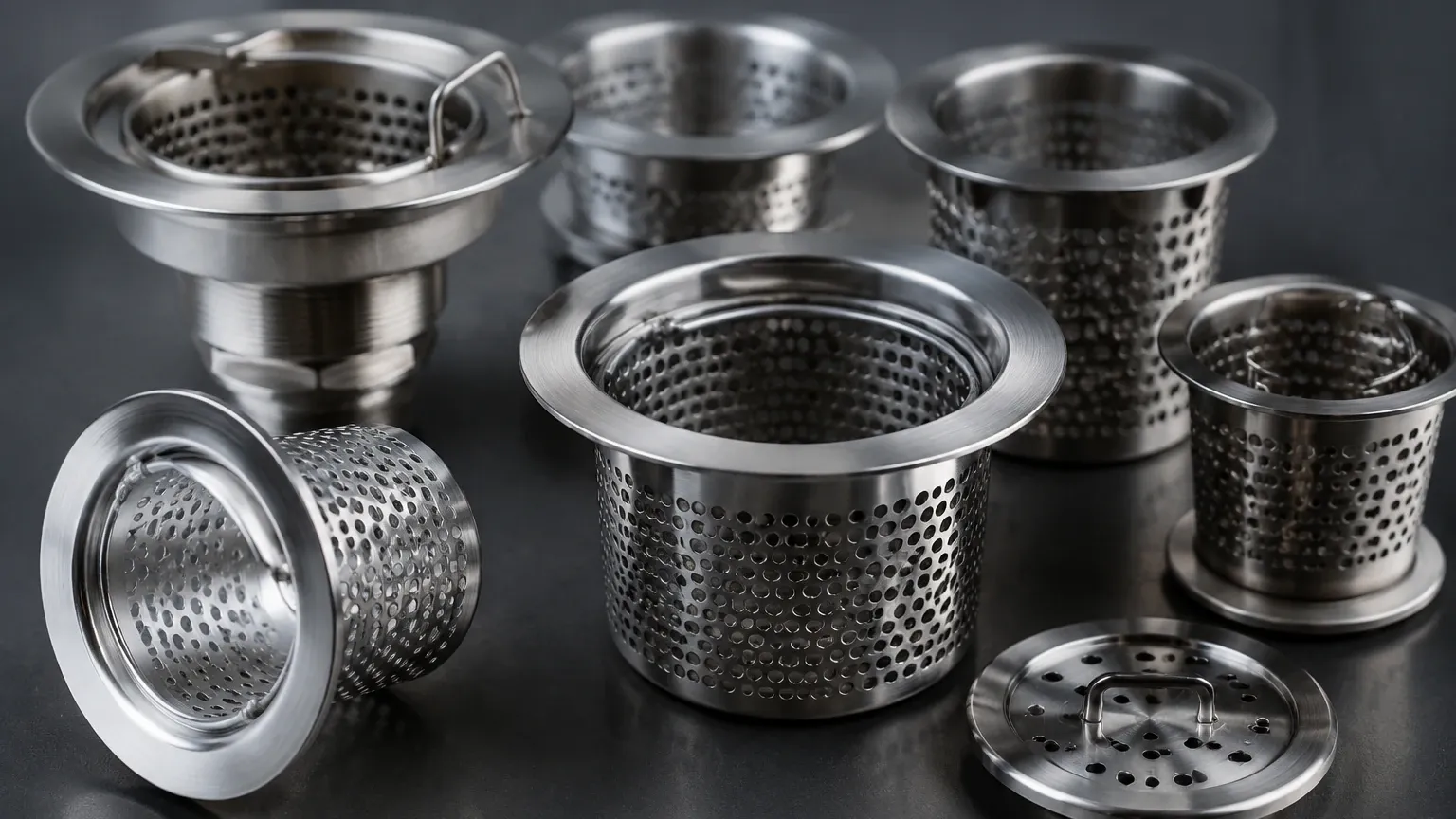
These are constructed from heavy-gauge metal sheets with punched holes. They are ideal for removing large solids and provide high structural strength. Common perforation sizes range from 1/32" to 1/4". For many industrial water intake systems, a perforated basket provides sufficient protection for robust equipment.
Wire Mesh Lined Baskets
When finer filtration is required, a perforated basket is lined with a fine wire mesh. This allows for the removal of particles down to the micron level (e.g., 40, 80, or 100 mesh). However, adding a mesh lining increases the pressure drop across the strainer. Engineers must balance the need for fine filtration with the allowable "Delta P" (pressure differential) of the system.
At Kaifil, we focus on the precision engineering of these mesh linings. By using advanced welding techniques and high-quality stainless steel wire mesh, we ensure that the lining remains securely attached to the perforated support, even under high-velocity flow conditions that might cause lesser components to tear or bypass.
Maintenance Protocols and Replacement Strategies
A basket strainer is only as effective as its maintenance schedule. In many Zurn installations, the pressure drop is monitored via gauges installed on the inlet and outlet ports. A significant increase in the pressure differential indicates that the basket is reaching its holding capacity and requires cleaning.
The Cleaning Process
1. Isolation: The flow must be diverted or shut off using isolation valves.
2. Depressurization: The internal pressure must be vented through a drain or vent plug.
3. Removal: The cover is removed (often via a quick-opening clamp or bolted flange), and the basket is lifted out.
4. Inspection: The basket should be inspected for signs of "blinding" (permanent clogging of the pores) or structural damage such as pitting or erosion.
Identifying When to Replace
While baskets are designed to be cleaned and reused, they are considered wear parts. Over time, the constant impingement of particles can erode the metal, or the stress of pressure fluctuations can cause fatigue in the mesh. If a basket shows signs of thinning metal, broken welds, or distorted geometry, it must be replaced immediately. Using a compromised basket risks "blow-through," where debris passes through the damaged area and reaches sensitive downstream equipment.
Customizing Filtration Solutions for Demanding Environments
Standard off-the-shelf zurn basket strainers are designed for general-purpose applications. However, many industrial processes involve unique challenges that standard components cannot address. This is where custom manufacturing becomes a strategic advantage.
High-Capacity Baskets
In systems with exceptionally high debris loads, a standard basket may fill too quickly, leading to excessive maintenance labor. Custom-engineered baskets with pleated designs or increased depth can significantly increase the surface area within the same Zurn housing footprint, extending the time between cleanings.
Magnetic Inserts
For systems where fine ferrous particles (such as iron filings or pipe scale) are a concern, magnetic inserts can be added to the basket. These magnets capture metallic fines that might otherwise pass through a standard mesh, providing an extra layer of protection for precision pumps and flow meters.
Material Upgrades
If a standard Zurn installation is experiencing premature basket failure due to chemical corrosion, upgrading the internal Strainers & Baskets to a more resilient alloy, such as 316L stainless steel or even Hastelloy, can drastically improve the service life of the component without requiring a full replacement of the strainer housing.
Total Cost of Ownership and Selection Advice
When specifying or purchasing zurn basket strainers, it is important to look beyond the initial purchase price. The Total Cost of Ownership (TCO) includes energy costs, maintenance labor, and the cost of downtime.
1. Energy Efficiency: A strainer with a poorly designed basket or an undersized OAR creates a permanent restriction in the line. This forces pumps to work harder, increasing electrical consumption over the life of the system. Investing in a high-flow basket design can yield significant energy savings.
2. Maintenance Labor: The ease of access and the frequency of cleaning directly impact labor costs. Choosing a strainer with a quick-opening cover and a durable, easy-to-clean basket reduces the man-hours required for upkeep.
3. Equipment Protection: The most significant cost associated with filtration is the failure to filter. If a strainer basket fails and allows a large solid to enter a high-value pump, the repair costs and production losses can be catastrophic. Quality manufacturing and rigorous material selection are the best insurance against such events.
Conclusion
Zurn basket strainers are essential components in the infrastructure of modern industrial and commercial fluid systems. However, the housing is only one part of the equation. The engineering of the internal basket—its material, its mesh size, and its structural integrity—determines the ultimate success of the filtration process.
For engineering teams looking to optimize their systems, it is vital to confirm the specific requirements of the application, including flow rate, particle size, and chemical compatibility. Whether you are maintaining an existing Zurn installation or designing a new process line, focusing on high-performance Strainers & Baskets ensures that your equipment remains protected, your maintenance costs stay low, and your operations run smoothly. Kaifil remains committed to providing the precision-engineered filtration components that support these critical industrial goals.
