


Zurn Drain Strainers
In the landscape of industrial and commercial plumbing, the management of wastewater and process fluids requires precision-engineered components to prevent downstream blockages and equipment damage. Among the most recognized names in commercial drainage is Zurn, known for a wide array of plumbing solutions. However, for engineers and facility managers operating in demanding industrial environments—such as chemical processing, food and beverage production, and pharmaceutical manufacturing—the selection of zurn drain strainers often serves as the starting point for a broader discussion on material durability, filtration efficiency, and custom engineering.
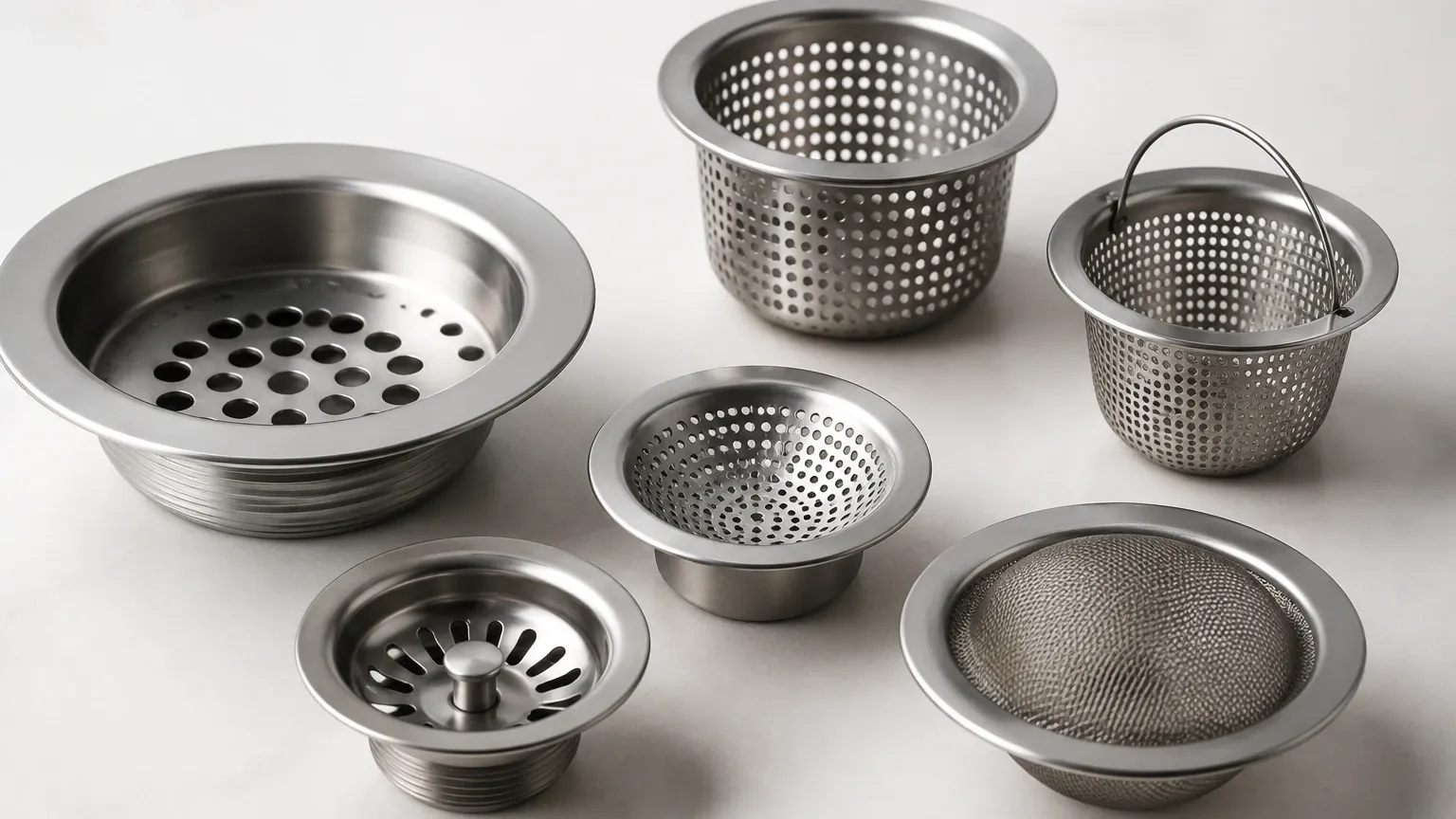
Understanding the technical nuances of these components is essential for optimizing system performance and minimizing maintenance overhead. While standard commercial-grade strainers may suffice for general building drainage, industrial applications frequently necessitate high-performance Strainers & Baskets that can withstand corrosive chemicals, extreme temperatures, and high-velocity flow rates.
Industrial Drainage and the Role of Strainers
The primary function of a drain strainer is to provide a mechanical barrier that captures solid debris while allowing liquid to pass through freely. In an industrial context, this is not merely about preventing a clogged pipe; it is about protecting sensitive pumps, valves, and heat exchangers from particulate damage.
Zurn drain strainers are commonly utilized in floor drains, roof drains, and trench systems. These components are designed to handle specific load ratings and flow capacities. For B2B procurement teams, the challenge lies in identifying whether a standard off-the-shelf component meets the rigorous demands of their specific process. For instance, a drainage system in a poultry processing plant faces significantly different challenges—such as organic fats and high-pressure washdowns—compared to a standard commercial kitchen or a parking garage.
When evaluating drainage solutions, engineers must consider the "Open Area Ratio." This is the ratio of the total area of the holes in the strainer to the cross-sectional area of the pipe. A higher open area ratio reduces the pressure drop across the strainer, ensuring that the drainage system does not back up during peak flow periods. If a standard zurn drain strainer does not provide the necessary open area for a specific industrial process, a custom-manufactured basket may be required to ensure operational safety.
Material Specifications: Beyond Standard Commercial Grades
Material selection is perhaps the most critical factor in the longevity of a drain strainer. Many standard commercial strainers are manufactured from cast iron, nickel bronze, or basic stainless steel. In industrial settings, however, chemical compatibility and corrosion resistance are paramount.
Stainless Steel 304 vs. 316
While Type 304 stainless steel is suitable for many general applications, it can be susceptible to pitting and corrosion in environments with high chloride levels or aggressive cleaning agents. In contrast, Type 316 stainless steel contains molybdenum, which significantly enhances its resistance to corrosion. For facilities dealing with chemical processing or marine environments, upgrading to 316-grade Strainers & Baskets is often a technical necessity rather than an optional upgrade.
Durability and Load Ratings
Industrial drain strainers must also be evaluated based on their mechanical strength. In facilities where heavy machinery or forklifts operate, the strainer grate must meet specific load-bearing standards (such as ASME A112.6.3). A failure in the structural integrity of a drain cover can lead to safety hazards and significant downtime. Engineers must confirm that the replacement strainers or custom inserts they procure are rated for the anticipated traffic and environmental stressors.
Custom Engineering for Specific Application Requirements
One of the limitations of standard zurn drain strainers is their fixed geometry and filtration levels. Industrial processes often require a specific micron rating to capture fine particulates that standard grates would allow to pass. This is where custom-manufactured wire mesh inserts and baskets become essential.
Wire Mesh vs. Perforated Metal
Most standard drain strainers utilize perforated metal with relatively large holes. While effective for large debris, they are insufficient for capturing smaller solids that can damage downstream equipment. By integrating high-precision wire mesh into the design of Strainers & Baskets, manufacturers can achieve much finer filtration levels without sacrificing the structural integrity of the component.
Customization options include:
- Multi-layer mesh structures: Combining a coarse outer support mesh with a fine inner filtration mesh.
- Reinforced handles and rims: Ensuring that baskets can be easily removed and cleaned without deforming under the weight of captured debris.
- Bypass prevention: Engineering the interface between the strainer and the drain body to ensure that no fluid bypasses the filtration media.
Performance Evaluation: Flow Capacity and Filtration Accuracy
When specifying zurn drain strainers or industrial alternatives, engineers must perform a balance between filtration accuracy and flow capacity. A common error in filter selection is choosing a mesh that is too fine for the application, which leads to rapid clogging and frequent maintenance cycles.
To avoid this, technical teams should analyze the "Clean Pressure Drop." This is the initial resistance to flow when the strainer is empty. As the strainer captures debris, the pressure drop increases. In gravity-fed drainage systems, a high pressure drop can lead to localized flooding. Therefore, the design of the basket—including the depth, diameter, and hole pattern—must be optimized for the specific fluid dynamics of the facility.
Furthermore, the "Dirt Holding Capacity" must be considered. In an industrial environment where high volumes of solids are expected, a shallow strainer will require constant attention. Deep-seated Strainers & Baskets provide a larger surface area, allowing for longer intervals between cleanings and reducing the total labor cost associated with maintenance.
Selection Criteria for Industrial Drain Components
Before finalizing a purchase or specifying a replacement for zurn drain strainers, procurement and engineering teams should confirm several key data points to ensure compatibility and performance:
1. Dimensional Accuracy: In replacement scenarios, the exact diameter, flange thickness, and depth are critical. Even a few millimeters of deviation can prevent a proper seal, leading to bypass.
2. Chemical Environment: Identify all chemicals that will come into contact with the strainer, including cleaning agents used during sanitation cycles. This dictates the choice between 304, 316, or more exotic alloys.
3. Debris Profile: What is the size and nature of the solids being captured? Are they sharp, abrasive, or prone to "blinding" (plugging) the mesh?
4. Flow Requirements: What is the maximum anticipated flow rate (GPM)? Does the strainer's open area support this without causing backup?
5. Regulatory Compliance: Does the component meet industry-specific standards, such as FDA or USDA requirements for food contact, or 3-A Sanitary Standards for dairy processing?
Maintenance and Lifecycle Management
The total cost of ownership (TCO) for drainage components is heavily influenced by their maintenance requirements and replacement cycles. Standard zurn drain strainers are designed for durability, but in high-use industrial settings, they are still subject to wear.
Cleaning Protocols
Effective maintenance starts with a defined cleaning schedule. For baskets and strainers, this often involves manual removal and washdown. In some automated systems, backwashing or ultrasonic cleaning may be used. If the strainer is difficult to remove or clean, maintenance staff may neglect it, leading to system failure. Ergonomic design features, such as heavy-duty handles and quick-release mechanisms in Strainers & Baskets, are essential for operational efficiency.
Identifying Wear and Tear
During routine inspections, technical teams should look for signs of:
- Erosion: Thinning of the metal due to high-velocity abrasive particles.
- Stress Cracking: Often found at the welds or joints, indicating mechanical fatigue.
- Gasket Degradation: If the strainer relies on a seal to prevent bypass, the integrity of that seal must be checked regularly.
By selecting high-quality materials and robust designs from the outset, facilities can extend the replacement cycle from months to years, providing a significant return on investment despite a higher initial purchase price.
Conclusion
While zurn drain strainers provide a reliable foundation for commercial plumbing, industrial applications demand a higher level of engineering scrutiny. The transition from standard drainage to high-performance industrial filtration requires a deep understanding of material science, fluid dynamics, and custom manufacturing capabilities. By focusing on precise specifications and choosing the right Strainers & Baskets, engineers can ensure that their drainage systems are not just a passive part of the infrastructure, but an active component in protecting the facility's equipment and operational continuity.
